
- Top Pick: Dont' Break the Budget Educational Financial Literacy Game
- Best Value: The Ultimate Guide to Financial Literacy for Kids: Master Money Skills with Fun and Interactive Ways to Save, Budget, Spend Wisely and Invest with Confidence (Financial Literacy Series)
- Premium Choice: Budgeting for Kids: A Fun, Simple Smart Money Guide That Teaches Children How to Save, Spend Wisely, and Plan Their Money With Confidence
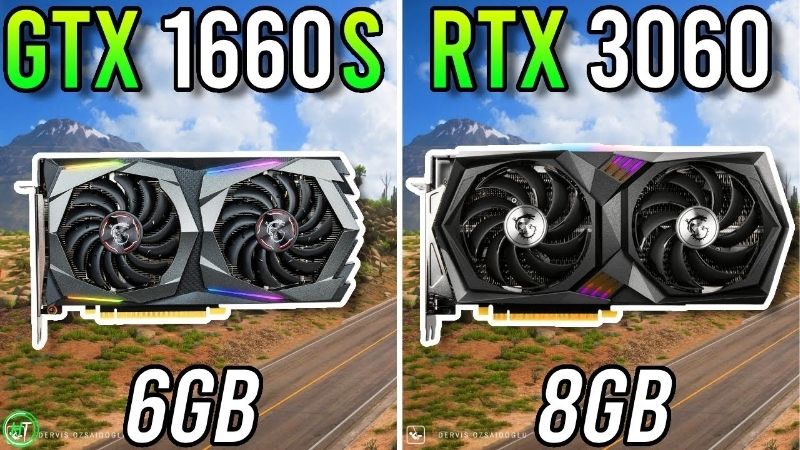
1660 vs 3060 is a question with a hidden problem inside it: there are three different cards called “1660”, and they are not the same. Before you can answer which is better, you need to know which one you actually own. This guide sorts that out in thirty seconds, gives you the verdict in one sentence, then shows the numbers behind it. No ten-minute intro, no jargon you have to look up.
The Short Answer, Then the Details
Here is the verdict up front: the RTX 3060 is roughly 60 to 80 percent faster than any 1660, has twice the memory, and supports DLSS — a feature no 1660 can ever use. It is a real upgrade.
But “better card” and “worth your money” are different questions. The 3060 costs around 329 to 339 new as of July 2026, and at that price other cards beat it. The rest of this guide explains when the upgrade makes sense and when it does not.
Which 1660 Do You Actually Have?
Three cards share the “1660” name. They perform differently, and people compare the wrong one constantly.
| Your card | Cores | Memory | Speed of memory | Power |
|---|---|---|---|---|
| GTX 1660 | 1,408 | 6 GB GDDR5 | 192 GB/s | 120 W |
| GTX 1660 Super | 1,408 | 6 GB GDDR6 | 336 GB/s | 125 W |
| GTX 1660 Ti | 1,536 | 6 GB GDDR6 | 288 GB/s | 120 W |
The surprise in this table is that the Super is usually the fastest of the three, despite the Ti sounding more premium. The Super uses faster memory — 336 GB/s against the Ti’s 288 — and that matters more in most games than the Ti’s extra 128 cores.
The plain GTX 1660 is the weakest by a clear margin. Its GDDR5 memory moves barely half the data of the Super’s GDDR6. If you have this one, the gap to a 3060 is the widest.
All three share one thing: 6 GB of memory, and no DLSS. That is what actually decides this comparison.
The One-Sentence Verdict for Each Version
GTX 1660 → RTX 3060: the biggest jump of the three. Roughly 80 percent faster, plus double the memory. Easiest upgrade to justify.
GTX 1660 Super → RTX 3060: roughly 60 to 80 percent faster. Still a real upgrade, but your Super is the best of the 1660s and holds up better than you might think.
GTX 1660 Ti → RTX 3060: similar to the Super’s situation. Around 60 to 75 percent faster.
In all three cases the memory jump from 6 GB to 12 GB matters more than the speed jump. That sounds counterintuitive, and the next section explains why.
How to Check Your Card in 30 Seconds
If you are not sure which one you have, do this:
- Press Ctrl + Shift + Esc to open Task Manager.
- Click the Performance tab.
- Click GPU in the left column.
- Read the name in the top-right corner. It will say GTX 1660, GTX 1660 SUPER, or GTX 1660 Ti.
That is it. No downloads, no software. If Task Manager shows something else entirely, you have a different card and this comparison does not apply to you.
1660 vs 3060: The Numbers That Matter
Three things separate these cards, and only three. Everything else is detail. The 3060 has more processing power, twice the memory, and access to a feature called DLSS. Understanding what each one does in practice tells you whether the upgrade fixes your specific problem or just moves a number on a chart.
Speed: How Much Faster Is the 3060?
The raw figures: the RTX 3060 has 3,584 cores against the 1660 Super’s 1,408. Its compute rating is about 12.7 TFLOPS against roughly 5.
That looks like a 2.5x gap. In real games it is not — expect 60 to 80 percent faster, depending on the title. Hardware never scales perfectly with its own spec sheet.
Here is the part that matters more than the average. The gap is small in older games and huge in newer ones. Not because the 3060 speeds up, but because the 1660 runs out of memory and falls apart. The average of those two situations describes neither.
Memory: Why 6GB Is the Real Problem
Every 1660 has 6 GB. The RTX 3060 has 12 GB. This is the single most important row in any comparison of these cards.
When a graphics card runs out of processing power, your game runs slower — but smoothly. When it runs out of memory, something worse happens: the game stutters, textures load in late and look blurry for a second, and the whole thing hitches. Lowering settings helps a bit. It does not fix it.
In 2026, 6 GB hits this wall regularly at 1080p on high settings. That is the actual reason to upgrade — not frames per second, but the stutter. If your games feel like they are hiccuping rather than simply running slowly, this is why.
DLSS: The Free Speed Boost You Cannot Get
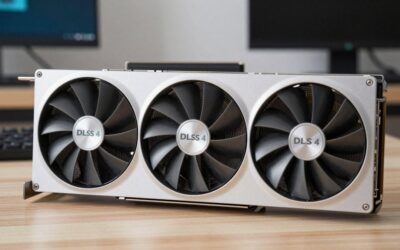
DLSS renders your game at a lower resolution and uses AI to rebuild it at full resolution. The result looks close to native and runs much faster. It is close to free performance.
No 1660 can run it. Not the Super, not the Ti. The reason is physical: DLSS needs special hardware called Tensor Cores, and the entire GTX 16 series shipped without them. This is the odd fact about these cards — they came out at the same time as the RTX 20 series and share its architecture, but with all the RTX features removed.
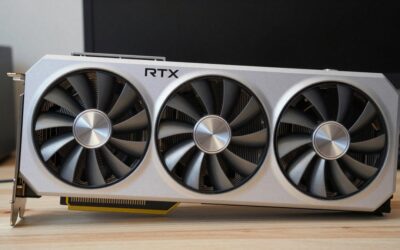
The RTX 3060 has 112 Tensor Cores and runs DLSS. NVIDIA has kept extending newer DLSS versions to the 30 series, so this feature gets better over time without you buying anything. One thing the 3060 does not get is Frame Generation — that needs a 40 or 50 series card. Plenty of comparisons get this wrong.
Pros and Cons: Should You Actually Upgrade?
The 3060 is the better card. That part is not in dispute. Whether you should buy one is a separate question, and the honest answer in 2026 is “it depends on the price you find” — because this card has been through an unusual year.
Good Reasons to Buy the 3060
Your games stutter. This is the strongest reason. 12 GB removes the memory wall completely at 1080p — there is no realistic setting at that resolution that fills it.
You want DLSS. It is genuinely useful, it is free performance, and your 1660 will never have it.
You run AI models at home. 12 GB fits a 13B model at 4-bit; 6 GB does not. If this is you, the comparison is over and price does not really matter.
Good Reasons to Keep Your 1660
You play esports. CS2, Valorant, Fortnite, League — your 1660 already pushes more frames than most monitors display. Faster than you can see is not an upgrade.
The money reaches something better. The RTX 5060 sells for roughly 329 to 359 — about the same as a new 3060, and it beats it in almost everything.
Your problem is not the GPU. If you have 8 GB of system RAM or a mechanical hard drive, that is your bottleneck. A new graphics card will not fix it, and you will be disappointed.
The Traps That Cost People Money
The 8 GB fake. The RTX 3060 came in 12 GB and 8 GB versions. Sellers list the 8 GB one as “RTX 3060 12GB” constantly — audits of secondhand listings have found more than 60 percent either mislabel the memory or hide it. Always check before paying. If the price looks too good, it is the 8 GB card.
Your power supply. The 3060 draws 170 W against your 1660’s 125 W. It needs an 8-pin connector. Check your PSU has one free before you buy.
Buying new at full price. A used 3060 12GB runs around 200 to 250. A new one is 329 to 339. The used one is the same card.
Prices in 2026: Buy Now or Wait?
Something strange happened this month that affects your decision directly. A five-year-old graphics card came back on sale, brand new, at the price it launched for in 2021. That is not normal, and the reason behind it tells you whether waiting is smart or expensive.
Why the 3060 Is Back on Sale in July 2026
The RTX 3060 was discontinued in 2024. Stock ran out in December 2025. Then in early July 2026 it reappeared as new stock — the MSI Ventus 2X at 329.99 on Newegg, a Gigabyte model at 339.99.
The reason is memory. Newer cards need GDDR7 memory, and it is in short supply. The 3060 uses older GDDR6 and an older Samsung chip that nobody else is competing for. So NVIDIA restarted building a 2021 card because it was the cheapest thing it could still make. At CES 2026 Jensen Huang called reviving old cards “a good idea.” Two weeks ago it happened.
What that tells you is blunt: component prices have kept climbing rather than falling back toward 2024 levels, and things are tight enough that rebuilding a five-year-old design is now the sensible move.
Will GPU Prices Drop If You Wait?
Short answer: not soon.
There is real good news, and it should be said plainly. Prices have stopped shooting up the way they did through late 2025. Companies like Framework have reported a stretch of relative calm — while warning that it is not over. But calm is not cheap. Prices stopped rising; they did not fall.
More supply is genuinely coming. Manufacturers are getting memory from new suppliers including CXMT in China, and Micron is building two new plants in Idaho. Both are real.
Neither helps you this year. Those Micron plants do not start producing until 2027 to 2028. Forecasts do not expect meaningful price relief for buyers before late 2027 at the earliest.
What This Means for You
Do the maths on waiting. You would keep a 6 GB card stuttering through another eighteen months of games, to chase a discount that nobody has promised and forecasters do not expect until late 2027.
That is not patience. That is eighteen months of worse gaming for nothing.
The sensible move is to decide on today’s prices. Buy used if you can verify the memory, buy new if you want a warranty, or keep your 1660 and spend the money on the part that is actually holding your PC back.
Check what an RTX 3060, RTX 5060, and Arc B580 cost right now before you decide — the three sit close enough in price that today’s numbers matter more than which generation the card belongs to.
See More:
- NVIDIA
- NVIDIA DeepStream
- NVIDIA GPU driver update
- NVIDIA GeForce NOW download
- NVIDIA RTX A2000 12GB driver
Final Verdict and Recommendation
1660 vs 3060 comes down to one thing: memory. The 3060 is 60 to 80 percent faster, but the reason to upgrade is the 12 GB, not the speed. Six gigabytes is what makes your games stutter in 2026, and no 1660 — Super, Ti, or plain — has more than that.
Buy the RTX 3060 if you find a used one near 200 to 250 with the memory verified as 12 GB. At that price it is excellent value.
Keep your 1660 if you play esports, or if your budget reaches an RTX 5060 or Arc B580 instead — both beat a new 3060 for similar money.
Do not buy a new 3060 at 339 unless you specifically need 12 GB for AI work. Its return to shelves is about supply shortages, not about it being a good deal.
With memory going to AI chips and no real price relief expected before late 2027, waiting does not pay. Decide on today’s prices — and check the VRAM on anything secondhand before you hand over money.
Frequently Asked Questions
How much faster is the RTX 3060?
Expect roughly 40 to 50 percent more performance at 1080p over a GTX 1660, and a larger margin at 1440p where the 3060’s 192-bit bus and 12GB buffer stretch their legs. Add DLSS and the effective gap in supported titles widens well beyond that in favor of the newer card.
Is the 3060’s 12GB of VRAM overkill?
It is generous for the core’s power, but it has aged extremely well. Modern games at high textures now exceed the GTX 1660’s 6GB, causing stutter, while the 3060 keeps loading assets comfortably. The extra capacity also makes it a surprisingly capable entry card for local AI and video work.
Do I need a new power supply for the 3060?
Probably not. The GTX 1660 is a 120W card on a 450W recommendation, and the RTX 3060 is 170W with a 550W recommendation, using a single 8-pin. Any decent 550W or better unit handles the upgrade, though a very old bronze-rated OEM supply is worth replacing regardless.
Will the 3060 bottleneck on an older CPU?
It can. Systems built around a GTX 1660 often pair with a Ryzen 5 1600 or Core i5-8400, which limits frame rates in CPU-heavy modern titles. Confirm your board supports at least PCIe 3.0 x16 and consider a CPU upgrade if you play simulation or open world games.
Is this upgrade still worth doing in 2026?
Only if you find a 3060 cheap. It is a solid 1080p card with DLSS and 12GB, but a current generation 8GB or 16GB part offers frame generation, better encoders and longer driver support. Buy the 3060 as a budget stopgap, not as a card you expect to keep for years.
As an Amazon Associate we earn from qualifying purchases at no extra cost to you.




Ready to decide? Our #1 pick for 2026 is the GTX 1660.
Live price & availability on Amazon.

Write Your Review
No reviews yet. Be the first to share your experience!