
- Top Pick: ASUS TUF Gaming NVIDIA GeForce RTX 3080 V2 OC Edition Graphics Card (PCIe 4.0, 10GB GDDR6X, LHR, HDMI 2.1, DisplayPort 1.4a, Dual Ball Fan Bearings, Military-Grade Certification, GPU Tweak II)
- Best Value: ASUS TUF Gaming NVIDIA GeForce RTX 3080 Graphics Card (PCIe 4.0, 10GB GDDR6X, HDMI 2.1, DisplayPort 1.4a, Dual Ball Fan Bearings, Military-Grade Certification, GPU Tweak II) (Renewed)
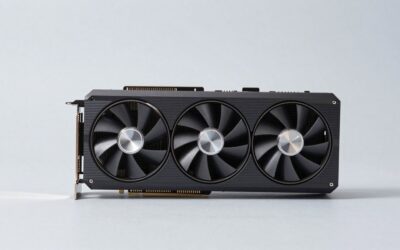
- Premium Choice: Gigabyte Radeon RX 7800 XT Gaming OC 16G Graphics Card, 3X WINDFORCE Fans 16GB 256-bit GDDR6, GV-R78XTGAMING OC-16GD Video Card
The RX 7800 XT is the better buy for most gamers today, because it matches or slightly beats the RTX 3080 in rasterized games, adds 6 GB more VRAM, uses less power and is easier to find new; the RTX 3080 is only the stronger choice for players who prioritise ray tracing and DLSS and can find one used at a clearly lower price. Think of it as a 2020 flagship-class Nvidia card against a 2023 mid-range AMD card that caught up with it at a much lower launch price.
As an Amazon Associate we earn from qualifying purchases at no extra cost to you.



What Separates These Two Cards
The RTX 3080 launched on 1 September 2020 at $699 and was the card most enthusiasts wanted during the Ampere generation. The RX 7800 XT followed on 25 August 2023 at $499, built on AMD’s RDNA 3 architecture with a chiplet design and a 64 MB Infinity Cache. On paper they look nothing alike; in games they land close together.
| Specification | RTX 3080 | RX 7800 XT |
|---|---|---|
| Architecture | Ampere | RDNA 3.0 |
| Release date | 1 September 2020 | 25 August 2023 |
| Launch price | $699 | $499 |
| Shader units | 8,704 | 3,840 |
| Boost clock | 1710 MHz | 2430 MHz |
| Process node | 8 nm | 5 nm |
| TDP | 320 W | 263 W |
| VRAM | 10 GB GDDR6X | 16 GB GDDR6 |
| Bus width | 320-bit | 256-bit |
| Bandwidth | 760.3 GB/s | 624.1 GB/s |
| Cache | 5 MB L2 | 4 MB L2 + 64 MB L3 |
| Power connectors (reference) | 1x 12-pin | 2x 8-pin |
| Length | 285 mm, 2-slot | 267 mm, 2-slot |
| Outputs | 1x HDMI, 3x DisplayPort | 1x HDMI 2.1a, 3x DisplayPort 2.1 |
The VRAM line is the one that has aged worst for the RTX 3080. Ten gigabytes was generous in 2020; in 2026 it is the minimum many developers target for high textures at 1440p.
Frame Rates in Rasterized Games
According to TechSpot and Hardware Unboxed’s RX 7800 XT review, the AMD card runs roughly on par with the RTX 3080 in titles such as A Plague Tale: Requiem and Resident Evil 4, and pulls ahead by around 7% in some others at 1440p. At 1080p the 7800 XT behaves much like an RX 6800 XT, which itself trades blows with the 3080. Third-party aggregate data puts the 7800 XT between level and about 6% ahead at 1440p, while the RTX 3080 can win at 4K in bandwidth-heavy games.
- 1080p: Near parity, often CPU-limited, with game-by-game swings either way.
- 1440p: RX 7800 XT roughly 0-7% ahead on average across modern suites.
- 4K: Close to a tie; the 3080’s wider bus helps, but its 10 GB buffer can hurt in texture-heavy releases.
In practical terms, both cards typically deliver roughly 70-100 FPS in demanding current games at 1440p high settings without upscaling, and in the 40-60 FPS range at 4K. These figures vary significantly with game settings, CPU, patches and drivers.
Ray Tracing, DLSS and FSR
Ray tracing tilts the result toward Nvidia. Ampere’s RT cores generally keep the RTX 3080 ahead of the 7800 XT in heavy ray-traced workloads, and the gap widens in path-traced modes, where AMD’s RDNA 3 struggles most. In lighter ray tracing implementations, the 7800 XT can stay close.
On upscaling, the RTX 3080 has access to DLSS 4 Super Resolution with the transformer model, which delivers excellent image quality even in Performance mode. It cannot use DLSS Frame Generation (RTX 40 and newer only), but it can run FSR 3 frame generation where games support it. The RX 7800 XT uses FSR 3.1 upscaling and frame generation in supported games, plus driver-level AMD Fluid Motion Frames 2 for broader coverage. FSR 4’s machine-learning upscaler is officially tied to RX 9000 hardware, so it is not a reason to buy the 7800 XT.
Net result: if you play ray-traced showcases at 1440p with upscaling, the RTX 3080 can deliver the better experience as long as its VRAM holds out. If you play mostly raster games or competitive shooters, the 7800 XT matches it and adds headroom.
The 10 GB Problem
VRAM is the deciding factor for many buyers. A rough guide to current AAA requirements:
| Resolution and settings | Typical VRAM use | RTX 3080 10 GB | RX 7800 XT 16 GB |
|---|---|---|---|
| 1080p high | 6-9 GB | Fine | Fine |
| 1440p high/ultra | 8-12 GB | Tight in some titles | Fine |
| 1440p ultra + RT + frame generation | 10-13 GB | Often over budget | Fine |
| 4K ultra | 11-15 GB | Lower textures needed | Usually fine |
When a game exceeds available VRAM, the symptom is not just a lower average frame rate but stutter, texture pop-in or blurry low-resolution textures. That makes the 7800 XT’s 16 GB more valuable over a multi-year ownership period than a few percent of average FPS.
Power Draw, PSU and Physical Fit
Using a simple formula of GPU power plus CPU power plus 150 W headroom:
- RTX 3080: 320 W + 125 W + 150 W = 595 W, so a quality 650 W PSU is the baseline, and 750 W is common for overclocked partner cards with transient spikes.
- RX 7800 XT: 263 W + 125 W + 150 W = 538 W, so a good 600-650 W PSU is adequate.
The Founders Edition RTX 3080 uses a 12-pin connector with an adapter to two 8-pins; partner models typically use two or three 8-pin plugs. The 7800 XT’s reference spec uses two 8-pin connectors. Both reference designs are dual-slot and under 290 mm long, but many partner boards for both cards exceed 300 mm with 2.5-3 slot coolers. The 7800 XT also adds DisplayPort 2.1 and AV1 encoding, while the 3080 can only decode AV1.
Cost Per Frame and the Used Market
At launch MSRP, treating 1440p raster performance as roughly equal with a small edge to the 7800 XT (index 100 for the 3080, 103 for the 7800 XT):
- RTX 3080: $699 / 100 = about $7.0 per performance point
- RX 7800 XT: $499 / 103 = about $4.8 per performance point
In late 2026, a used RTX 3080 10 GB usually sells for roughly $280-$360, while the RX 7800 XT can still be found new in some regions and used for roughly $350-$430. That narrows the value gap: a used RTX 3080 well below a 7800 XT is defensible for ray tracing fans, but buyers should check mining history, fan condition and GDDR6X memory temperatures. A new 7800 XT carries a warranty, which a five-year-old RTX 3080 usually does not.
Buying Guide by Resolution and Budget
| If you… | Choose |
|---|---|
| Game at 1440p in mostly raster titles | RX 7800 XT |
| Want ray tracing with DLSS 4 upscaling at 1080p or 1440p | RTX 3080 |
| Plan to keep the card three or more years | RX 7800 XT (16 GB) |
| Play at 4K with high textures | RX 7800 XT |
| Can buy a healthy used 3080 for $60+ less | RTX 3080 is reasonable |
| Need CUDA for creative or AI work | RTX 3080 |
| Want lower heat and a smaller PSU | RX 7800 XT |
Buyers with a slightly larger budget should also compare current-generation cards such as the RX 9060 XT 16 GB, RX 9070 or RTX 5060 Ti 16 GB, which bring FSR 4 or DLSS 4 Multi Frame Generation along with warranties.
Frequently Asked Questions
Is the RX 7800 XT better than the RTX 3080?
In rasterized games the RX 7800 XT is roughly equal to slightly faster than the RTX 3080 at 1440p according to published reviews. It also has 16 GB of VRAM against 10 GB and lower power draw. The RTX 3080 remains stronger in heavy ray tracing.
Is 10 GB of VRAM still enough in 2026?
For 1080p and lighter 1440p gaming, 10 GB still works with sensible texture settings. Many newer AAA games at 1440p ultra, especially with ray tracing or frame generation, push past 10 GB. Expect to lower textures more often on the RTX 3080 than on a 16 GB card.
Does the RTX 3080 support DLSS 4?
The RTX 3080 supports DLSS 4 Super Resolution, including the transformer-based upscaling model, and DLSS Ray Reconstruction. It does not support DLSS Frame Generation or Multi Frame Generation, which require RTX 40 and RTX 50 cards respectively. FSR 3 frame generation works on it in games that include it.
What PSU do I need for an RX 7800 XT?
A quality 600-650 W power supply is suitable for the RX 7800 XT with a typical gaming CPU. The card’s 263 W board power plus about 125 W for the CPU and 150 W of headroom lands near 540 W. Factory-overclocked partner cards may justify stepping up to 700-750 W.
Which card is better for streaming?
The RX 7800 XT supports hardware AV1 encoding, which offers better quality per bitrate on platforms that accept AV1. The RTX 3080’s NVENC encoder is excellent for H.264 and HEVC but cannot encode AV1. For Twitch-style H.264 streaming, both perform well.
Ready to decide? Our #1 pick for 2026 is the Architecture.
Live price & availability on Amazon.




Write Your Review
No reviews yet. Be the first to share your experience!