
- Top Pick: Skytech Gaming Rampage Gaming PC, Intel i5 14400F 2.5GHz, NVIDIA RTX 5070 12GB VRAM, 1TB Gen4 NVMe SSD, 24GB DDR5 RAM 6000, 850W Gold ATX 3 PSU, Wi-Fi 5, Windows 11, Desktop
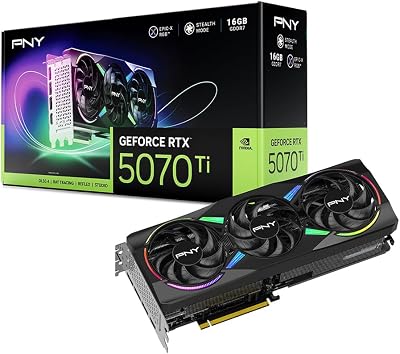
- Best Value: ZOTAC MEK Gaming PC Desktop, Ryzen 7 9700X, NVIDIA GeForce RTX 5070 Ti 16GB
- Premium Choice: Skytech Gaming Blaze 5 Gaming PC, Intel i7 14700F 2.1GHz, NVIDIA RTX 5070 12GB VRAM, 1TB Gen4 NVMe SSD, 16GB DDR4 RAM 3200, 850W Gold ATX 3 PSU, 360 ARGB AIO, Wi-Fi 5, Windows 11, Desktop
Top Rtx 3080 Rtx 5070 Time Picks for 2026
Here are our current top rtx 3080 rtx 5070 time picks, compared on real Amazon owner reviews, price, and features. Live prices update below.
- Top Rtx 3080 Rtx 5070 Time Picks for 2026
- The Quick Verdict: Should RTX 3080 Owners Upgrade?
- Deep Dive: What the Upgrade Feels Like Day to Day
- 2026 Timing: Resale Math, H200 Exports, and Rising Prices
- Final Verdict: Pros, Cons, and Who Should Hold
- Conclusion
- Related Guides
- Frequently Asked Questions
- Related Articles


Lowest in 30 days

RTX 3080 vs RTX 5070 is, for millions of PC gamers, not an abstract benchmark debate but a personal upgrade question: the RTX 3080 was the defining high-end card of 2020, it still sits in an enormous installed base of gaming rigs, and its owners are exactly the audience Nvidia built the $549 RTX 5070 to convert. Two generations separate these cards, and the differences go far beyond average frame rates — VRAM capacity, frame generation technology, power consumption, and resale timing all enter the math. This comparison is written from the upgrader’s seat: what you actually gain, what it actually costs after selling the old card, and whether 2026 is the year to make the jump or hold one more cycle.
As an Amazon Associate we earn from qualifying purchases at no extra cost to you. Product prices and availability are accurate as of the date shown and are subject to change.


The Quick Verdict: Should RTX 3080 Owners Upgrade?
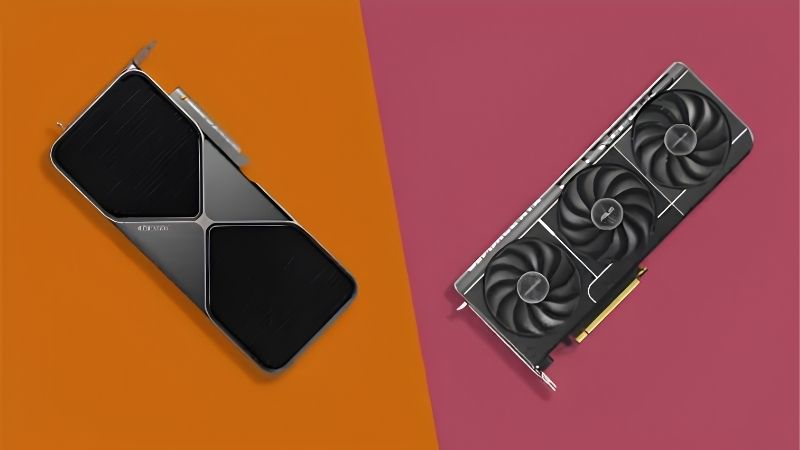
The condensed answer: yes for most owners, with a clear-eyed view of why. The RTX 5070 is roughly 20–30% faster in native rasterization, but the headline gains live elsewhere — 12GB of GDDR7 versus the 3080’s increasingly painful 10GB, DLSS 4 Multi Frame Generation that multiplies on-screen frame rates in supported titles, and a 250W power budget that cuts 70W of heat and noise from your case. Net upgrade cost after reselling a healthy 3080 typically lands at $250–$350, among the cheapest generational jumps available. Owners at 1080p or happy at 60 fps can hold; owners hitting VRAM walls or chasing high-refresh 1440p should move. Check the 5070’s live Amazon price first — the resale math below assumes you buy near MSRP.
What Five Years of Progress Actually Bought
The raw numbers: 6,144 Blackwell CUDA cores versus 8,704 Ampere cores — and the newer card wins anyway, a clean illustration of why core counts do not compare across architectures. Clock speeds, cache hierarchy, and GDDR7 at 672GB/s let the 5070 outrun the 3080’s 760GB/s of older GDDR6X in real workloads by 20–30% at 1440p.
Efficiency tells the sharper story: the 3080 needs 320W to lose this race; the 5070 wins it at 250W. Performance-per-watt nearly doubled across the two generations, which is the metric that quietly transforms a PC’s thermals, acoustics, and PSU requirements.
The 10GB Problem: Why 3080 Owners Feel Old Early
The 3080’s Achilles’ heel was visible at launch and is unavoidable now: 10GB of VRAM against 2025–2026 titles that allocate 9–11GB at 1440p high textures. Owners report the symptoms in identical language across forums and reviews — texture pop-in, stutter in open-world streaming, settings that must drop a notch the GPU’s compute could otherwise handle.
The 5070’s 12GB is not luxurious, but it clears current demand with margin, and its faster memory subsystem handles overflow more gracefully. For many upgraders, escaping the 10GB ceiling — not the average-fps gain — is the purchase’s real motive, and the data says that instinct is correct.
Specs Comparison Table
The generational gap, line by line.
| Specification | RTX 3080 | RTX 5070 |
|---|---|---|
| Architecture | Ampere (GA102, 2020) | Blackwell (GB205, 2025) |
| CUDA Cores | 8,704 | 6,144 |
| VRAM | 10GB GDDR6X | 12GB GDDR7 |
| Memory Bandwidth | 760 GB/s | 672 GB/s |
| TGP (Power) | 320W | 250W |
| Frame Generation | None (DLSS 2 upscaling only) | DLSS 4 MFG (up to 4x) |
| AV1 Encoding | No (decode only) | Yes, dual encoders |
| Launch MSRP | $699 | $549 |
| 2026 Status | Used market, ~$250–$350 | New, in retail |
Deep Dive: What the Upgrade Feels Like Day to Day
Generational upgrades succeed or disappoint on lived experience, not spec deltas. This section walks the jump across the three dimensions an upgrader notices in the first week: benchmark gains by resolution, the frame-generation revolution Ampere never received, and the system-level dividends — heat, noise, power — that surprise people most.
Performance Gains at 1440p and 4K
At 1440p, the 5070’s 20–30% native uplift moves typical AAA results from the 3080’s 75–100 fps band to 100–130 — the difference between approaching a 144Hz panel and actually feeding it. In VRAM-pressured titles the gap stretches further as the 3080’s 10GB buffer spills, taking its 1% lows with it; frame-time graphs, not averages, show the upgrade’s biggest win.
At 4K, both cards lean on upscaling, but the 5070 leans from a higher floor: 55–75 fps native versus 45–60, and DLSS 4’s transformer upscaler — which the 3080 also receives in supported titles — looks visibly cleaner than the DLSS 2-era processing many Ampere owners last calibrated against.
Ray tracing is a generation-defining gap: fourth-generation RT cores roughly double Ampere’s throughput per tier, converting RT from a screenshot toggle into a playable default at 1440p.
DLSS 4 Multi Frame Generation: The Feature Gap
Ampere predates frame generation entirely — the 3080 upscales but cannot generate, while the 5070 presents up to three AI frames per rendered frame. In supported titles, that turns a 90 fps base into 180–220 on screen, saturating high-refresh panels in a way no amount of Ampere silicon can replicate. For single-player gaming on a 144Hz+ monitor, it is the single largest experiential change in the entire upgrade.
The honest caveats carry over: MFG inherits base-frame latency, competitive players will leave it off, and support — broad and growing — is not universal. The 5070 also adds dual AV1 encoders, a quiet but material gain for anyone who streams or records; Ampere’s encoder generation is two steps behind.
Driver trajectory adds a final layer: Blackwell is Nvidia’s active optimization target and the 5070 has gained measurable performance through 2025–2026 driver branches, while Ampere — though still receiving Game Ready support — sits two architectures back in the priority queue. The 3080 you benchmark today is its final form; the 5070 keeps improving for years.
The System Dividend: 70 Watts of Quiet
Dropping from 320W to 250W changes the machine around the card. Case temperatures fall, fan curves relax across CPU and case fans alike, and many owners report their PC simply sounds different — the upgrade reviews mention noise almost as often as frame rates. A quality 650W PSU suffices where the 3080 wanted 750W, and the early-Ampere transient-spike trips that plagued some power supplies disappear.
Physical fit improves too: mainstream 5070 partner cards are smaller than the typical 3080 cooler, simplifying compact builds. Daily gamers also bank roughly $20–$35 per year in electricity at typical rates — small, real, and compounding across an ownership cycle.
2026 Timing: Resale Math, H200 Exports, and Rising Prices
For an upgrader, timing is half the transaction — you are simultaneously selling old hardware and buying new, and two current market stories move both sides: the United States approving Nvidia’s H200 AI chip sales to China, and the sustained rise in laptop and component prices. The combined effect on this specific upgrade is unusually favorable, and worth quantifying.
The Resale Window: Your 3080 Is Worth More Than It Should Be
Healthy 3080s currently trade at $250–$350 — firm pricing for five-year-old silicon, propped up by the same forces inflating new cards. Component inflation anchors used prices to expensive new alternatives, and budget buyers squeezed out of the new market flow backward into used listings.
That firmness is the upgrader’s gift: selling into a strong used market while buying a new card near MSRP compresses the net upgrade cost to $250–$350. Used prices for aging VRAM-limited cards have one long-term direction, and it is down — every quarter held is resale value spent.
H200 Exports and the New-Card Squeeze
The H200 approval channels enormous demand toward Nvidia’s advanced silicon and GDDR7 supply — the 5070’s exact production pipeline. The historical pattern after AI demand surges: consumer street prices drift 5–15% above MSRP within a quarter or two, and 2026 listings already show MSRP stock behaving like flash events.
On a $549 card, that drift is $27–$82 — roughly the price of the PSU headroom or the case fan upgrade the wattage savings just made unnecessary.
Seasonality adds a tactical note: used GPU supply swells briefly after each new-card launch wave as upgraders list their old hardware simultaneously, temporarily softening resale prices. Selling ahead of announced launches, rather than after them, captures the firmer side of that cycle.
The Upgrade Math, Assembled
Put the pieces together: sell at $300 (midpoint), buy at $549–$580, and the net cost of two generations of progress — 20–30% more native performance, escape from the 10GB ceiling, MFG, AV1, and 70W of quiet — lands around $250–$280. Amortized over a four-year hold, that is roughly $65 per year, among the cheapest meaningful upgrades in PC gaming.
Both market forces point toward that math degrading, not improving: used 3080 values decay while new 5070 prices drift up. Check the RTX 5070’s current Amazon price, price your 3080 against live used listings, and run today’s numbers — they are likely the best this upgrade will offer.
Final Verdict: Pros, Cons, and Who Should Hold
The verdict favors upgrading for most 3080 owners, but not all — and the honest ledger below, plus one alternative path, defines the boundary precisely.
Pros and Cons of Making the Jump
Upgrading to the RTX 5070 — Pros: 20–30% native uplift with dramatically better 1% lows in VRAM-heavy titles; 12GB GDDR7 escapes the 10GB ceiling; DLSS 4 MFG and AV1 encoding; 70W less heat and noise; net cost $250–$350 after resale; new warranty replaces five-year-old silicon. Cons: native gain alone is evolutionary, not revolutionary; 12GB is adequate rather than future-proof; street prices drift above the $549 MSRP; selling and reinstalling hardware is friction some owners reasonably skip.
Holding the RTX 3080 — Pros: still delivers solid 1080p and playable 1440p; zero cost; DLSS upscaling support continues. Cons: the 10GB wall tightens with every major release; no frame generation, ever; 320W of heat in a 2026 case; resale value erodes each quarter held.
The Alternative: RTX 5070 Ti for the Bigger Jump
Owners upgrading once per console generation should weigh the $749 RTX 5070 Ti: 16GB of GDDR7 ends the VRAM conversation entirely, and its 45–55% uplift over the 3080 feels generational in a way the 5070’s 20–30% sometimes does not. Net cost after resale runs $450–$500 — more money, more years of relevance.
The decision rule: upgrading every two generations, take the 5070 and bank the difference; upgrading every three or more, the Ti’s 16GB is the better amortized buy.
Who Should Upgrade and Who Should Wait
Upgrade now if you game at 1440p or above, stream or record, feel the 10GB ceiling in current titles, or simply want the heat and noise gone — the resale math makes 2026 the favorable window. Hold if you play at 1080p, target 60 fps, mostly run esports titles, or genuinely do not feel the card’s age; a working 3080 owes you nothing on those terms.
Either way, decide deliberately — the one losing strategy is drifting until the resale value that funds the jump has quietly evaporated.
See More:
Conclusion
The rtx 3080 vs rtx 5070 question resolves into upgrade math, and in 2026 the math is friendly: 20–30% more native performance, freedom from the 10GB VRAM ceiling, DLSS 4 Multi Frame Generation, AV1 encoding, and 70 fewer watts of heat — for a net $250–$350 after selling into a still-firm used market. With H200 exports pressuring new-card supply upward and used Ampere values facing only one long-term direction, the window favors acting over drifting. Tap through to check the latest RTX 5070 price on Amazon, price your 3080 against live used listings, and if the numbers match this review’s math, make the jump while the market is still paying you to.
Frequently Asked Questions
What is the best rtx 3080 rtx 5070 in 2026?
The best rtx 3080 rtx 5070 depends on your budget and how you plan to use it. The options compared above are our top-rated picks based on real customer ratings, build quality, and overall value — start with the highest-rated model that fits your budget.
How much should I expect to spend on a rtx 3080 rtx 5070?
Prices vary by brand and features. Budget options cover the essentials, while mid-range and premium models add durability, performance, and extra features. Compare the prices in the list above to find the best value for your needs.
What should I look for when buying a rtx 3080 rtx 5070?
Focus on what matters most for your use case — build quality, compatibility, performance, warranty, and verified customer reviews. Every pick above is selected to balance these factors.
Are budget rtx 3080 rtx 5070 options worth it?
Yes. For most people a well-reviewed budget or mid-range rtx 3080 rtx 5070 delivers excellent value. You only need to spend more if you specifically require premium materials or top-tier performance.
How did we choose these rtx 3080 rtx 5070 picks?
We compare current Amazon ratings, review counts, key features, and price to surface the options with the best real-world value. The list is refreshed as ratings and availability change.










Write Your Review
No reviews yet. Be the first to share your experience!