
- Top Pick: NVIDIA GeForce RTX 3090 Founders Edition Graphics Card (Renewed)
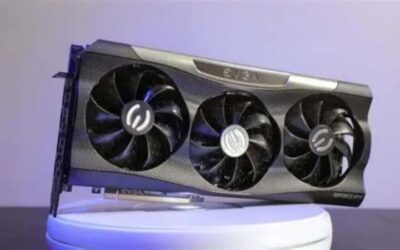
- Best Value: EVGA GeForce RTX 3090 FTW3 Ultra Gaming, 24GB GDDR6X, 10496 CUDA Cores, 1800MHz Boost Clock, 3x Fans, ARGB LED, Metal Backplate, PCIe 4, HDMI, DisplayPort, Desktop Compatible
- Premium Choice: nVidia GeForce RTX 3090 Founders Edition Graphics Card


Nvidia RTX 3090 is one of the most talked-about used graphics cards of 2026, and for good reason: 24GB of VRAM at a used price that keeps tempting gamers, creators and AI hobbyists. But a card first launched in 2020 raises fair questions about performance, power and longevity. This review pulls together the strongest four- and five-star owner feedback alongside the honest two- and three-star complaints, so you get a balanced, expert view before deciding whether a used RTX 3090 belongs in your next build.
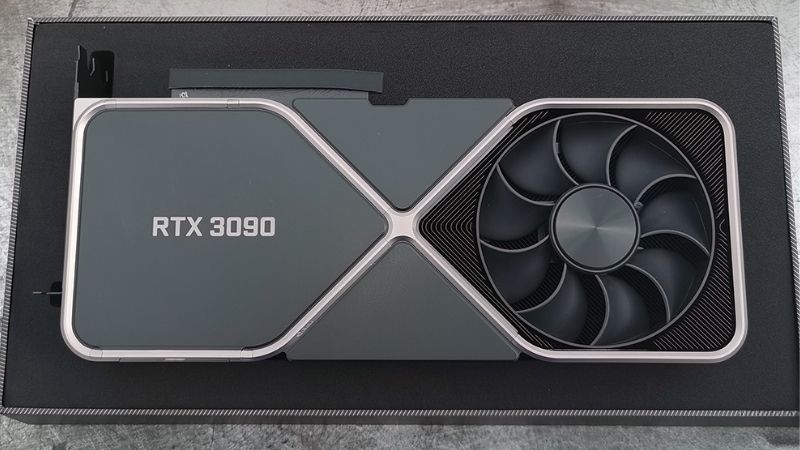
Nvidia RTX 3090 Specs and Who It’s For
Start with what the card actually is and who benefits most. The RTX 3090 was Nvidia’s Ampere flagship, and its standout feature, 24GB of memory, still shapes exactly which buyers should consider it in 2026 and which should look elsewhere.
As an Amazon Associate we earn from qualifying purchases at no extra cost to you.




Key Specs That Still Matter in 2026
The RTX 3090 uses the GA102 die with 10,496 CUDA cores, 24GB of GDDR6X on a wide 384-bit bus, and a 350W board power. That memory bandwidth and capacity are the numbers that keep it relevant six years after launch.
Against newer mid-range cards, its raw core count and 384-bit bus width remain strong, even if newer architectures are more efficient per watt and add upscaling features it lacks. The result is a card that can trade blows with far more recent hardware in memory-heavy and rendering tasks, while trailing in efficiency and the very latest software features. For value hunters, that combination is exactly the point.
The headline never changes: that 24GB buffer is more memory than many current-generation cards that cost the same or more on the used market. In an era where 8GB and 12GB cards are increasingly squeezed by modern games and AI tools, raw memory capacity is exactly the spec that ages well, and it is the main reason the 3090 refuses to be forgotten. For memory-bound work, more VRAM often matters more than a newer architecture.
Gaming vs Creator and AI Workloads
For gamers, the 3090 is a capable 4K card and a very strong 1440p high-refresh option in the large majority of titles.
For creators, the large VRAM accelerates high-resolution video editing, 3D rendering and heavy Blender or Photoshop projects that choke smaller cards long before performance becomes the bottleneck. Timelines with 4K and 6K footage, complex node setups and large texture bakes all lean on memory capacity, and running out of it forces slow disk swapping that no amount of core speed can hide. This is where the 3090 quietly saves creators hours.
For AI hobbyists, 24GB is the real draw: it can load local large language models and Stable Diffusion workloads that simply will not fit on 8GB to 12GB cards, which is a major reason used 3090 demand has stayed high in 2026. If any of these creator or AI scenarios describe you, the 3090 stops looking like an old gaming card and starts looking like an affordable workstation-class tool. If you only play lighter games at 1080p, though, its strengths are overkill and a smaller modern card will serve you better.
What Buyers Say: Ratings Round-Up
Across owner reviews, the four- and five-star pattern is consistent: praise for the 24GB buffer, strong 4K gaming, excellent rendering and AI performance, and a feeling of genuine value on the used market.
The two- and three-star complaints are just as consistent: high power draw and heat, large triple-slot sizes that do not fit every case, coil whine on some units, and nervousness about buying a used, possibly ex-mining card.
The balanced read is that satisfied buyers knew exactly what they were getting, a powerful, power-hungry, memory-rich card, while disappointed buyers were usually caught out by size, heat or an unverified used unit rather than by the GPU itself. In other words, most of the negative reviews describe fixable buying mistakes, not fundamental flaws in the hardware. Go in with the right PSU, case clearance and a trustworthy seller, and you land firmly in the satisfied camp.
Real-World Performance of the Nvidia RTX 3090
Specs set expectations; real workloads confirm them. Here is how the RTX 3090 behaves across gaming, memory-heavy creative tasks and AI, plus the thermal and power realities you must plan for before it lands in your case.
4K Gaming and 1440p High-Refresh
In 4K gaming, the 3090 still delivers playable-to-smooth frame rates in most modern titles, especially with DLSS enabled, though the newest ray-tracing-heavy games push it harder than they did at launch.
At 1440p, it is comfortably a high-refresh card, frequently pushing well past 100 fps in popular competitive and AAA games with settings turned up.
It supports DLSS, though not the newest frame-generation features that are locked to later generations, so it benefits from upscaling but not from every latest software trick Nvidia ships. In practice this means you can still turn on quality upscaling to reclaim frames in demanding titles, but you should not expect the extra AI-generated frames that newer cards advertise. For most buyers chasing 4K value on the used market, that trade is entirely acceptable.
24GB VRAM for AI, Rendering and Local LLMs
This is where the 3090 quietly outlives its age. The 24GB buffer, paired with Nvidia’s CUDA ecosystem and the NVENC encoder, makes it a favorite for local AI experimentation and content creation on a budget.
Enthusiasts run Stable Diffusion, fine-tune small models, and load quantized language models that need large memory pools, tasks where VRAM capacity beats the raw speed of a newer but smaller card.
For anyone exploring AI at home, a used 3090 often provides more usable memory per dollar than newer cards, which is a genuinely future-facing reason to consider it rather than a nostalgic one. As local AI models keep growing, that 24GB headroom is what lets the card keep pace with tools that would immediately overflow a smaller buffer. It is a rare case where a six-year-old GPU is still recommended for a cutting-edge workload precisely because of one specification.
Thermals, Power and PSU Requirements
Plan your entire system around 350W of board power. A quality 750W to 850W PSU is the sensible target, especially when paired with a strong modern CPU.
The card runs hot and most models are large, triple-slot designs, so case airflow and clearance are non-negotiable. Measure your case in millimeters before you buy anything.
Many owners undervolt the 3090 to cut heat and power with little performance loss, a practical tweak that directly addresses the single most common complaint in reviews. A modest undervolt can drop temperatures and noise noticeably while keeping the vast majority of performance, and it takes only a few minutes with free tuning software. If you plan to run the card hard for gaming or AI, budgeting for good case fans and doing this one adjustment transforms the ownership experience.
Buying a Used Nvidia RTX 3090 in 2026
Since almost all RTX 3090 sales are now used, buying smart matters more than the card itself. This section weighs the pros and cons, explains how 2026 pricing props up used values, and shows exactly how to check a card before you pay for it.
Pros and Cons of the Nvidia RTX 3090
The honest balance sheet, drawn from specifications and the recurring themes in owner feedback rather than from marketing.
| Pros | Cons |
|---|---|
| 24GB VRAM, excellent for AI and rendering | High 350W power draw and heat |
| Strong 4K and 1440p high-refresh gaming | Large triple-slot size, tight case fit |
| Great value on the used market | No latest DLSS frame-generation features |
| Mature CUDA and NVENC support | Used-market risk: mining wear, no warranty |
If the “cons” column describes deal-breakers for your build, a smaller, newer, cooler card may suit you better and will spare you the power and clearance headaches. If not, the pros are genuinely hard to beat at used-market prices, especially the 24GB buffer that no similarly priced newer card matches. Weigh the list honestly against your case, PSU and workload, and the right answer for you becomes obvious rather than a gamble.
How Rising Component Prices Affect Used GPU Value
The 3090’s used value is tied to the wider market, and in 2026 that market is expensive. Component and laptop prices have kept trending upward, which keeps demand, and therefore prices, for capable used cards firm rather than falling.
There is mild good news: the steep climbs of late 2025 have eased, and some makers report a period of relative stability, though they still warn the situation can shift again.
Real relief, however, is far off. New memory supply from sources like CXMT, and Micron’s upcoming Idaho fabs, will not come online until roughly 2027 to 2028, so a used 24GB card remains a rational value play today rather than something worth waiting out. For a buyer who needs lots of VRAM now and does not want to gamble on when new-generation prices might soften, the math continues to favor a well-chosen used 3090 over paying a premium for fewer gigabytes on a newer badge.
How to Check a Used Card Before You Buy
Reduce your risk with a few quick checks. Ask the seller for the purchase date, whether it was used for mining, and for a photo of the card running a stress test with temperatures visible on screen.
On arrival, run a benchmark loop and watch temperatures and clocks for stability over at least twenty minutes, inspect for repaired or replaced thermal pads and dust in the fins, and confirm every display output and fan works as expected. Any sudden clock drops, artifacts or alarming temperatures are your signal to use that return window immediately rather than hoping the issue settles.
Buying from sellers that offer returns and buyer protection is the single best safeguard, which is why many buyers prefer marketplaces that back the purchase if the card fails within a return window. A slightly higher price from a protected listing is cheap insurance against a dead or heavily worn card, and it turns a nervous used purchase into a low-risk one. When you are ready, compare protected listings and current prices before you commit.
See More:
Conclusion
The Nvidia RTX 3090 in 2026 is a specific tool for a specific buyer: if you want 24GB of VRAM for gaming plus AI or creative work on a used-market budget, few cards make more sense, provided you can handle its size, heat and 350W appetite. The owner reviews tell a consistent story, buyers who understood the trade-offs love it, while those who overlooked power and clearance did not. With component prices still elevated and real relief not expected until 2027 to 2028, a well-checked used Nvidia RTX 3090 remains a smart, high-VRAM value pick. Compare current listings and prices through the links on this page, and always buy from a seller that protects your purchase.
Frequently Asked Questions
Is 24GB of VRAM still worth it on an RTX 3090?
For local AI work, yes. 24GB of GDDR6X on a 384-bit bus lets you load quantised large language models, run diffusion pipelines at high resolution, and handle heavy 3D scenes that smaller cards cannot fit at all. For pure gaming the memory is far beyond what any title needs, so value depends entirely on your workload.
What power supply does the RTX 3090 need?
It is rated at 350 watts and NVIDIA recommends 750 watts, but 850 watts from a quality unit is the safer real-world choice because Ampere transients spike hard. Use three separate 8-pin cables where the card requires them, or a proper native adapter on Founders Edition, and avoid pigtail splitters entirely.
Why do the memory temperatures get so high?
The 3090 places GDDR6X modules on both sides of the board, and the backside modules are cooled only through the backplate. Memory junction temperatures above 100 degrees are common on stock thermal pads that have aged. Replacing the pads with better quality ones and improving case airflow usually drops junction temperature substantially.
Will it fit and does it need NVLink?
Most models are triple slot and over 310 millimetres long, so measure carefully and check clearance for the power cables above the card. NVLink exists on the 3090 but is largely irrelevant now, since modern frameworks handle multi-GPU over PCIe and consumer game support for multi-GPU rendering has effectively ended.
Should I buy a 3090 or a newer card for AI?
The 3090 remains one of the cheapest routes to 24GB, which is often the deciding factor for model size. Newer cards offer far better efficiency, faster memory, and support for lower precision formats that speed up inference. If your models fit in 16GB, a modern card is usually the better long-term purchase.


Write Your Review
No reviews yet. Be the first to share your experience!