
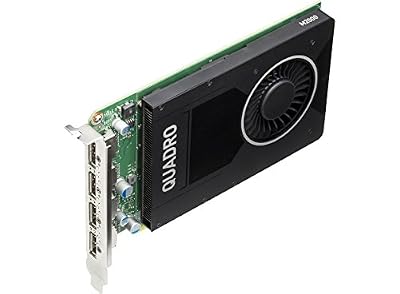

The nvidia quadro m2000 was a respected professional workstation card in its day, but the fair question in 2026 is whether it still has a place in a modern setup or whether its era has passed. Aimed at professionals rather than gamers, the Quadro M2000 was built for reliability in creative and technical applications. This review explains exactly what the card offers, its real-world capabilities today, its strengths and limits on the used market, and whether it is worth buying now or whether your money is better spent elsewhere.
As an Amazon Associate we earn from qualifying purchases at no extra cost to you.


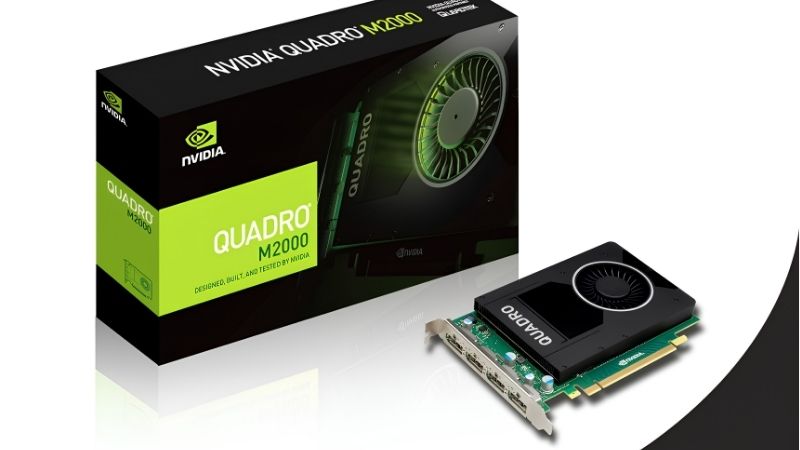
What the Nvidia Quadro M2000 Offers
Before deciding whether it suits you, it helps to understand what kind of card the Quadro M2000 actually is, because it was designed for a very different audience than consumer graphics cards. Its priorities were stability and professional application support rather than raw gaming speed. Here is what it brings to the table.
A Professional Workstation Card Explained
The Quadro M2000 belongs to Nvidia’s professional Quadro line, designed for workstations running creative and technical software rather than for gaming. These cards prioritize stability, certified drivers, and reliability in professional applications over the raw frame rates that matter to gamers.
Based on Nvidia’s Maxwell architecture, the M2000 was a mid-range professional option when it launched, offering solid performance for CAD, 3D modeling, and multi-display work at a professional price point. It was never meant to compete with gaming cards on gaming benchmarks.
Understanding this distinction is essential before buying. The M2000’s value lies in professional workflows and reliability, not in the kind of performance a consumer GeForce card of the same era would deliver in games.
This is also why comparing the M2000 directly to gaming cards on price or raw speed misses the point. Professional cards command a premium for certification, validation, and support rather than frames per second. Judging it against that professional purpose, rather than against consumer benchmarks, is the only fair way to assess whether it suits your needs.
Specs and Performance
The Quadro M2000 features a Maxwell GPU with 4GB of GDDR5 memory and a modest power draw that let it run without a demanding power supply. Its multiple display outputs made it well suited to multi-monitor professional setups.
In professional applications, it delivered dependable performance for its class, handling CAD models, moderate 3D work, and content creation smoothly in its prime. Its certified drivers ensured stability in the professional software it was designed for.
By modern standards, though, its specifications are modest. The 4GB memory and Maxwell architecture are now well behind current cards, which is the key context for judging what it can and cannot do today.
The 4GB memory in particular is the specification most likely to limit it now. Modern professional and creative applications increasingly expect far more, so larger models, complex scenes, and high-resolution work can exceed what the card comfortably holds. For light workloads it is fine, but demanding projects will quickly run into that ceiling.
Certified Drivers and Pro Applications
A defining feature of Quadro cards like the M2000 is their certified drivers, tested and validated for professional applications such as CAD and design software. This certification is a major reason professionals chose Quadro over consumer cards.
These drivers prioritize stability and correctness in professional workflows, reducing crashes and rendering errors in certified applications. For businesses where reliability matters more than peak speed, that assurance was worth paying for.
This professional focus is central to the card’s identity. If your work relies on certified support in specific applications, that heritage is the M2000’s strongest remaining appeal, even as its raw performance shows its age.
Outside of those certified niches, however, that advantage fades, which is why matching the card to a genuinely supported workflow matters so much.
Using the Nvidia Quadro M2000 Today
The real question for most readers is what the Quadro M2000 can practically do in 2026. Its best uses have narrowed as software and hardware have advanced, so setting realistic expectations is essential. Here is where it still fits and where it falls short today.
Best Use Cases in 2026
Today the Quadro M2000 is best suited to light professional tasks and multi-display setups. For basic CAD work, office and productivity use, or driving several monitors reliably, it can still serve a purpose in a budget professional or secondary system.
It also appeals as an inexpensive way to add professional outputs and certified driver support to an older workstation without spending much. For undemanding, specific workflows, it remains a functional, low-cost option.
Where it struggles is anything demanding. Heavy 3D rendering, modern GPU-accelerated creative work, and large datasets will overwhelm its modest specifications, so it is best reserved for lighter tasks that match its era.
A realistic way to think about it is as a capable card for yesterday’s professional workloads rather than today’s. If your software and projects are the kind that were common when the card launched, it can still handle them; if they reflect modern demands, the M2000 will feel the strain quickly and consistently.
Gaming and General Use
The Quadro M2000 is not a gaming card, and it was never intended to be. While it can technically run older or less demanding games, its professional focus and modest specifications mean it will disappoint anyone hoping for a gaming experience.
For general desktop use, web browsing, video playback, and office work, it is perfectly capable and stable. In that role it functions much like any competent graphics solution, handling everyday tasks without trouble.
The clear takeaway is to buy it for professional or light-use scenarios, not for gaming. Anyone wanting to play modern games should look at a consumer card instead, where the same money goes far further for that purpose.
Pros and Cons on the Used Market
The pros are specific. On the used market, the Quadro M2000 can be a cheap way to gain certified professional drivers, reliable multi-display support, and low power draw for light professional or secondary systems.
The cons are significant for general buyers. Its 4GB memory and Maxwell architecture are dated, it is weak for modern demanding work and gaming, and buying used means no warranty and unknown history unless you choose carefully.
Weighed together, the M2000 is a niche buy that makes sense for specific light professional needs at a low price, and a poor choice for anyone wanting general performance or gaming, where modern cards win easily.
The used-market context matters here too. Because the M2000 is an old professional card, its secondhand price should be genuinely low to justify buying it, and it is worth comparing against inexpensive modern cards that may offer far more for similar money. Only when its price clearly reflects its age does it become a sensible pick.
Is the Nvidia Quadro M2000 Worth It Now?
With the card well past its prime, the honest question is whether it still earns a place in a build or whether newer hardware is the better call. Weighing owner experiences and comparing it to modern options gives a clear answer. Here is the verdict.
What Owners Say
Owner feedback reflects the card’s professional roots. Users who deployed it for certified applications and multi-display setups praise its stability and reliability, noting it did exactly what a professional card should in its intended role.
The criticism, unsurprisingly, comes from those expecting more. Owners who hoped for strong general or gaming performance found it lacking, and many now note that modern cards vastly outperform it for most tasks at similar used prices.
Read together, the sentiment is that the M2000 was a solid professional card for its time whose usefulness today is limited to specific, light workloads rather than general or demanding use.
When to Choose It vs a Modern Card
The M2000 makes sense only in narrow situations: a very tight budget, a specific need for certified professional drivers, or adding reliable multi-display output to an older workstation for undemanding tasks. In those cases, its low used price can justify it.
For almost everything else, a modern card is the better choice. Current consumer and professional GPUs offer far more performance, more memory, and ongoing support, often at reasonable prices that make the aged M2000 hard to recommend broadly.
The deciding factor is your workload. If your needs are light and specific, the M2000 can still serve; if they are demanding or general, a newer card delivers dramatically better value and capability.
Who Should Buy It and Alternatives
The Quadro M2000 is the right pick only for buyers with light, specific professional needs, a very tight budget, and a use case that values certified drivers or multi-display support over raw performance. For that narrow audience, it remains functional.
For nearly everyone else, a modern graphics card is the smarter investment. Whether for demanding professional work or gaming, a current GPU offers far more capability, memory, and longevity than this aging card can provide.
If your needs have outgrown what the M2000 offers, comparing modern cards is the practical next step. Use the links on this page to explore current graphics cards that fit your work and budget, and get performance the M2000 simply cannot match.
See More:
- nvidia meaning
- rx 9070 vs rx 9070 xt
- 9060 xt 16gb vs 5070 ti
- radeon rx 9070 xt vs 5080
- windows graphics driver update
Conclusion
The nvidia quadro m2000 was a dependable professional workstation card in its prime, built for stability and certified application support rather than raw speed, and that heritage still gives it narrow value today for light professional tasks and multi-display setups on a tight budget. For demanding work or gaming, however, its dated specifications make a modern card the far better choice. If your needs have moved beyond what this aging card offers, compare the latest graphics cards through the links on this page and choose one that delivers the performance and support your work actually requires.
Frequently Asked Questions
What was the Quadro M2000 designed for?
It is a Maxwell-generation professional workstation card with 4GB of GDDR5 on a 128-bit bus and four DisplayPort outputs, aimed at CAD, DCC and visualization users who needed certified drivers for applications like SolidWorks, AutoCAD and Siemens NX rather than raw gaming performance.
Is it still useful in 2026?
Only in narrow cases. Its value now is as a cheap, low-power multi-display output card for office machines, digital signage, trading desks or as a display adapter in a server. For any modern CAD, GPU rendering or AI workload it is far too slow and lacks current API support.
Does it need extra power connectors?
No. The M2000 is a single-slot card rated around 75W, drawing everything from the PCIe slot. That makes it an easy drop-in for small form factor and OEM workstations with weak power supplies and no spare PCIe cables, which is the main reason it still appears in used builds.
Which drivers should I install?
Maxwell-generation Quadro parts have moved into legacy driver branches, so you install the last supported production branch rather than the newest release. Check the Nvidia driver page filtered by Quadro and Maxwell to confirm the final version, and expect no new feature support going forward.
Can it run games?
Poorly. Performance sits roughly around entry-level consumer cards from the same era, and Quadro drivers prioritize application certification over game optimization. Older or lightweight titles at 1080p low settings are feasible, but modern games with ray tracing or high VRAM requirements are entirely out of reach.




Write Your Review
No reviews yet. Be the first to share your experience!