


RTX Pro GPU is Nvidia’s professional-grade answer for creators, engineers and AI developers who need far more than a gaming card can offer. Built on the same Blackwell architecture as GeForce but tuned for reliability, huge memory and certified software, these cards sit in a different world of both capability and price. This review explains what an RTX Pro GPU actually is, how it differs from a GeForce card, what the current lineup delivers, and whether the substantial cost is justified for your kind of work. The honest headline is that these are superb tools for a specific professional audience and an expensive mistake for anyone outside it.
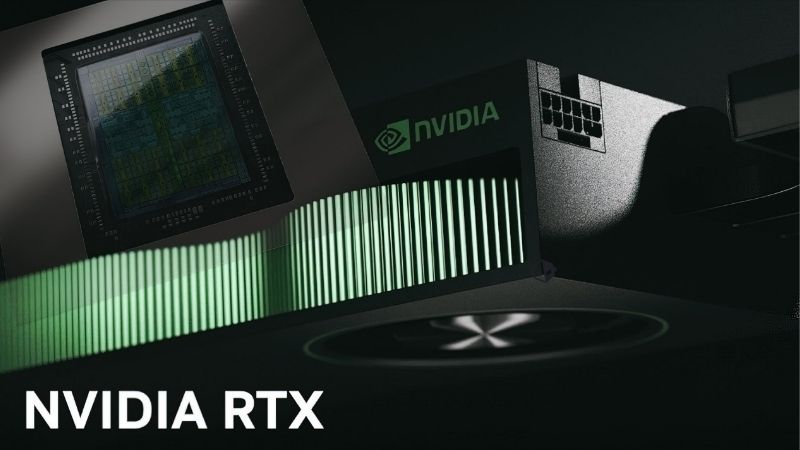
What RTX Pro GPUs Are and Who They’re For
Before weighing the price, it helps to understand what separates a professional card from a gaming one. The differences are real and go well beyond a badge, shaping who should genuinely consider one of these GPUs.
As an Amazon Associate we earn from qualifying purchases at no extra cost to you.



What Defines an RTX Pro GPU
An RTX Pro GPU is a workstation card designed for professional workloads rather than gaming, prioritising stability, large memory and certified performance. It shares Nvidia’s core architecture with GeForce cards but is engineered for demanding, sustained professional use where reliability matters more than raw frames per second. In a professional pipeline, a card that never falters during a twelve-hour render is worth far more than one that posts a slightly higher benchmark score.
These cards typically feature far more video memory than gaming GPUs, often with error-correcting code, or ECC, that guards against data errors during long, critical tasks. That focus on accuracy and endurance is exactly what separates a professional tool from a consumer product.
In short, an RTX Pro GPU is built to be a dependable engine for work, not a value play for entertainment. Its entire design philosophy centres on trust, capacity and certified compatibility with professional software. Understanding that philosophy is the key to judging whether one belongs in your setup or not.
RTX Pro vs GeForce Explained
The clearest difference is purpose: GeForce targets gamers chasing frame rates, while RTX Pro targets professionals who need certified drivers and large memory. Both may share an architecture, but their firmware, memory configurations and support tiers are worlds apart in practice. Treating them as the same card with a different sticker is the most common misunderstanding buyers bring to this decision.
RTX Pro cards come with drivers certified by independent software vendors for applications like CAD, 3D rendering and scientific tools, which reduces crashes and guarantees stability. GeForce drivers, by contrast, are optimised for the newest games rather than professional application certification.
For pure gaming, a GeForce card offers far better value and often similar or better frame rates. The RTX Pro premium only makes sense when your work depends on the features gaming cards simply do not provide. If you would only ever play games on the card, an RTX Pro model is almost certainly the wrong purchase.
Who Actually Needs One
The ideal buyer is a professional whose income depends on demanding creative or technical work, such as 3D artists, engineers, video editors and AI developers. For these users, the extra memory, stability and certification translate directly into productivity and fewer costly interruptions. When your billable time is on the line, a card that keeps working reliably quickly pays back its higher price.
People running large AI models, complex simulations or huge 3D scenes benefit most, because these tasks can exceed the memory of any gaming card. In those workflows, the massive VRAM of an RTX Pro GPU is not a luxury but a requirement.
For everyone else, including gamers and casual creators, an RTX Pro GPU is overkill. If your work fits comfortably on a high-end GeForce card, that is almost always the smarter, cheaper choice. The trick is to be honest about your real workload rather than buying professional hardware for the reassurance of a professional label.
Key Features and the Current Lineup
The value of an RTX Pro GPU lives in its feature set, which is built around capacity, reliability and professional support. Here is what those features mean and how the current Blackwell range is structured.
Massive VRAM and ECC Memory
The standout feature of RTX Pro cards is memory capacity, with top models offering far more VRAM than any gaming GPU, in some cases reaching many tens of gigabytes. This lets professionals load enormous datasets, detailed 3D scenes and large AI models that would overwhelm a consumer card. For memory-bound work, this capacity is the difference between a task running at all and simply failing to load.
Many RTX Pro GPUs also use ECC memory, which detects and corrects data errors on the fly during long, sensitive computations. For scientific work and rendering that runs for hours, that protection against silent errors is genuinely valuable. A single corrupted value in a long computation can invalidate the entire result, which is precisely what ECC exists to prevent.
This combination of huge, error-corrected memory is the single biggest reason professionals choose these cards. It directly enables workloads that are simply impossible on a standard gaming GPU. No amount of raw speed on a consumer card can substitute for memory it does not have.
Certified Drivers and Reliability
Beyond hardware, RTX Pro GPUs are backed by drivers certified for professional applications, tested to run reliably with major CAD, rendering and simulation software. This certification is a core part of what you are paying for and a major reason studios and firms standardise on these cards.
Reliability extends to the hardware too, with these cards built and validated for continuous, heavy use rather than occasional gaming sessions. In a professional setting, an unexpected crash can cost far more than the price difference between a gaming and a professional card. Certified stability, in that context, is less a luxury and more a form of insurance against expensive downtime.
Nvidia also provides professional-tier support and longer product availability, which matters for businesses planning multi-year deployments. That ecosystem of certification, stability and support is difficult to replicate with consumer hardware. For a business, that combined package is often the deciding factor, well ahead of any single performance figure.
The Blackwell RTX Pro Range
The current RTX Pro lineup is built on the Blackwell architecture, spanning models from more accessible workstation cards up to flagship options with enormous memory pools. This range lets buyers match the card to the scale of their workload rather than overspending on capacity they will not use. Picking the right tier is as important as choosing the family, since an oversized card is simply money left on the table.
Entry and mid-tier RTX Pro cards suit designers and editors who need certified stability and solid memory without the flagship price. The top models, with their vast VRAM, target AI research, heavy simulation and the most demanding rendering pipelines.
Choosing within the range is about honestly assessing your memory and performance needs. Buying more than you require wastes money, while buying too little forces the exact compromises the card is meant to eliminate. A short, honest audit of your typical project sizes is the best way to land on the right model.
Value, Pricing and Considerations
An RTX Pro GPU is a serious investment, so the decision hinges on whether its strengths match your work and budget. Here is an honest look at the trade-offs, the current market and the alternatives.
Pros and Cons of RTX Pro GPUs
Here is the honest ledger for an RTX Pro GPU, based on what it delivers and what it costs in real professional use.
Pros: huge VRAM for large workloads, ECC memory for accuracy, certified drivers for professional software, excellent reliability, and long-term support. Cons: very high price, poor value for gaming, and unnecessary for users whose work fits on a high-end GeForce card.
The pattern is clear: these cards are outstanding tools for the right professional and a poor purchase for everyone else. Their worth depends entirely on whether your work truly needs what they uniquely provide. There is no middle verdict here; the card is either essential to your workflow or an unnecessary expense.
Pricing and the Market Today
RTX Pro GPUs command premium prices, and the 2026 market has made that steeper, as component costs have trended upward rather than falling. Memory is a major driver, and since these cards carry so much of it, they are especially exposed to rising DRAM prices.
That pressure means a professional card can cost noticeably more than it might have a year ago, which raises the stakes of buying only what you need. Comparing current prices carefully, and sizing your purchase to your actual workload, matters more than ever.
There is faint relief on the horizon, but new memory supply is not expected to ease prices meaningfully until around 2027 to 2028. For most professionals, waiting is not practical, so buying at a fair current price is the sensible path. Since these cards are working tools, the cost of delaying a project usually outweighs any hoped-for saving from waiting.
When GeForce Is Enough
For many creators and even some AI hobbyists, a high-end GeForce card delivers most of the performance at a fraction of the cost. If your projects fit within a gaming card’s memory and you do not rely on certified drivers, GeForce is the smarter buy.
The key question is whether your software demands certification and whether your datasets exceed consumer memory limits. If the answer to both is no, the RTX Pro premium is hard to justify for your situation.
Choosing honestly here saves substantial money. Many buyers assume they need professional hardware when a top GeForce card would serve them just as well for far less. Running your typical workload on a borrowed or existing GeForce card first is a cheap way to test that assumption before spending.
See more:
- Nvidia gear store
- Nvidia number of employees
- Nvidia Jetson Xavier Developer Kit
- GeForce graphics driver
Final Verdict: Is an RTX Pro GPU Worth It?
An RTX Pro GPU is a genuinely powerful professional tool, offering the huge VRAM, ECC memory, certified drivers and reliability that demanding creative, engineering and AI work depends on. That value is real but narrow, since for gaming and lighter creative tasks a high-end GeForce card delivers far better value. If your income relies on large datasets, certified software or workloads that overwhelm consumer cards, an RTX Pro GPU is well worth the premium; if not, it is more capability than you need. Weigh your actual workload honestly against the cost, and check current pricing on the various RTX Pro GPU models through the link below before you make the investment.
Frequently Asked Questions
What separates an RTX PRO card from a GeForce card?
Professional cards use ECC memory, carry far larger frame buffers, ship with ISV certified drivers validated against CAD, simulation, and content creation software, and offer longer product availability and warranty terms. The underlying architecture is shared, so the premium buys reliability, memory capacity, and support rather than gaming frame rates.
How much memory do current RTX PRO cards have?
The Blackwell generation flagship carries 96GB of GDDR7 with ECC, which is triple the 32GB in an RTX 5090. That capacity is the whole point for anyone running large 3D scenes, high resolution video timelines, simulation datasets, or local AI models that simply do not fit on a consumer card.
What power supply and case do I need?
The top workstation card can draw up to 600 watts, requiring a 12V-2×6 connector and a 1000 watt or larger supply in a well ventilated chassis. Max-Q variants cut the ceiling to around 300 watts, which makes multi GPU workstation configurations practical within realistic thermal and power budgets.
Is an RTX PRO card worth it for gaming?
No. It will play games, but you pay a very large premium for ECC memory and certified drivers that deliver nothing in a game engine, and gaming driver optimisation is not the priority for these releases. A GeForce card at a fraction of the price will perform as well or better.
When does the professional card actually pay for itself?
When your workload is memory limited rather than compute limited, when ISV certification is required for support contracts, or when a driver related crash costs real money in lost work. If none of those apply, a high end GeForce card is the rational choice for a creative workstation.






Write Your Review
No reviews yet. Be the first to share your experience!