
- Top Pick: Capture Card, 4K HDMI Video Capture Card, Game Capture Card, 1080P 60FPS Video Capture Device, HDMI to USB 3.0 Capture Card for Streaming, Work with Camera/Xbox/PS4/PS5/PC/OBS
- Best Value: Elgato 4K X Capture Card, HDMI 2.1, 4K144 Ultra-Low Latency | VRR passthrough, HDR10, Up to 1080p240 capture, USB 3.2 Gen 2, Works with OBS and more, For PS5, Xbox, Switch, PC, Mac
- Premium Choice: AVerMedia 4K HDMI Capture Card, USB Game Capture Card for Streaming and Recording with True Low Latency on PS5/Pro, Xbox, Switch 2, PC on Twitch, OBS, for Win11, Mac-GC553Pro Live Gamer Ultra S Black
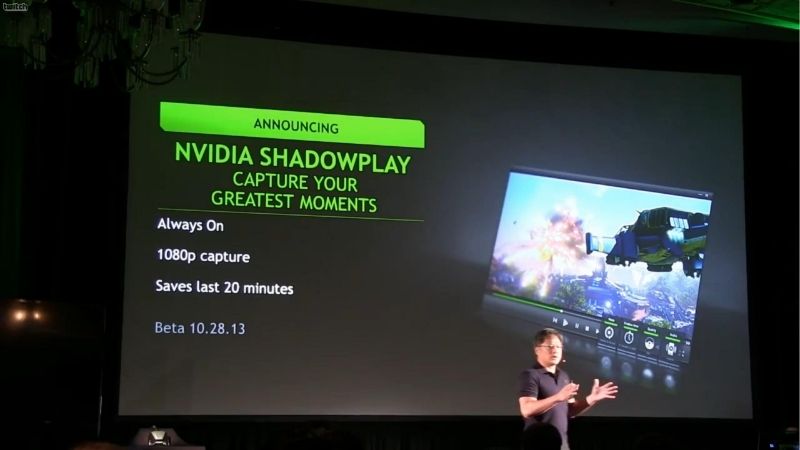
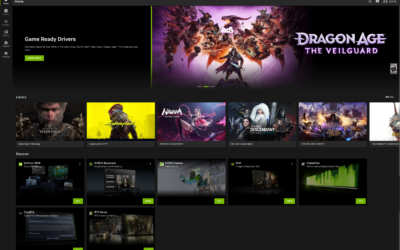
NVIDIA capture is the built-in way to record and stream gameplay on a GeForce card, and used well it rivals paid software while barely touching your frame rate. If you have wrestled with laggy recorders or wondered whether you still need a capture card, this review clears it up. We will break down what the feature offers out of the box, how its quality holds up, which GeForce GPUs get the best results, and how to build a capture-ready setup without overspending in 2026.
What NVIDIA Capture Offers Out of the Box
Before reaching for third-party tools, it helps to know how much capability already lives inside your GeForce driver stack. The built-in feature set covers most creators’ needs, and understanding those tools first tells you exactly where, if anywhere, you actually need to spend money on extras.
Built-In NVENC Recording
The foundation of the whole feature is NVENC, a dedicated hardware encoder that sits on the GPU separate from the graphics cores. Because encoding runs on its own silicon, recording barely competes with the game for resources.
This is the core reason built-in capture feels so smooth compared with CPU-based recorders. Your game keeps almost its full frame budget while footage is written in the background.
The encoder has also improved across generations, so newer cards produce cleaner video at the same file size. That efficiency is a quiet but real advantage of capturing on a modern GeForce GPU.
One consequence worth highlighting is longevity. Because the encoder keeps improving, footage you capture on a current card holds up better over time, and the same setup will still produce shareable video two GPU generations from now, which is a quiet argument for choosing a modern NVENC block.
Instant Replay and Manual Capture
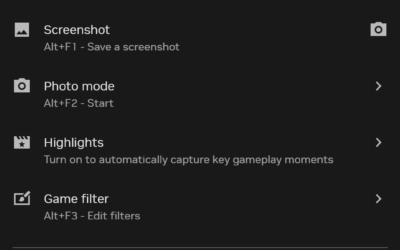
The feature offers two capture styles. Instant Replay keeps a rolling buffer of recent gameplay so you can save the last several minutes after something great happens, without recording the whole session.
Manual capture records continuously until you stop, which suits full playthroughs, tutorials, and long-form content. Between the two, you have the flexibility to grab a single clutch moment or an entire match.
Most creators use both depending on the task, and switching between them is a simple hotkey away. This combination covers the vast majority of recording needs without any extra software.
The Instant Replay buffer length is adjustable, which matters for memory use. A short buffer sips resources, while a long 4K buffer can hold several gigabytes, so tuning it to your needs keeps performance smooth without wasting VRAM on footage you will never save.
Streaming and Broadcasting
Beyond recording, the same technology powers live streaming to popular platforms directly from the GeForce software. It handles the encode for your broadcast using NVENC, freeing your CPU for the game.
For streamers who want a simple, integrated setup, this removes the need to configure separate broadcasting software at first. It is an easy on-ramp to going live.
As streamers grow, many graduate to dedicated broadcasting software for finer control over scenes and overlays. The good news is that this software still uses NVENC under the hood, so the performance advantage of encoding on the GPU carries over regardless of which tool you eventually adopt.
Capture Quality and Performance
A recorder is only worth using if the footage looks good and the process does not wreck your gameplay, so quality and performance are where the feature earns its place. The good news is that with the right settings, built-in capture holds up remarkably well against dedicated solutions.
The key is understanding that quality is mostly a settings problem, not a hardware limitation. Get the resolution, bitrate, and encoder preset right, and the footage looks professional; get them wrong, and even a strong card produces bloated or stuttery clips.
Software Capture vs a Capture Card
Many people assume serious recording requires a capture card, but for a single PC that is often not the case. Built-in NVENC capture records your own gameplay at high quality with minimal performance cost, no extra hardware required.
Capture cards earn their keep in specific scenarios: recording a console, running a dedicated two-PC streaming setup, or capturing another machine’s output. For those, external hardware is the right tool.
For the typical solo creator recording their own PC, though, the software route saves money and complexity while delivering excellent results. Knowing which camp you fall into prevents an unnecessary purchase.
It is also worth noting that a single powerful GPU can often replace a two-PC setup entirely. With a modern encoder handling both the game and the stream, many creators who once needed separate machines now run everything comfortably on one, saving both money and desk space.
Best Settings for Smooth Footage
Settings make or break the experience. For most creators, recording at 1080p60 with a bitrate around 30,000 to 50,000 Kbps produces sharp footage that uploads quickly and stays a manageable file size.
Push to 4K only when your GPU and storage can sustain it, since high-resolution capture demands both encoder headroom and fast write speeds. Matching the resolution to your hardware avoids dropped frames in the recording itself.
A useful habit is recording your microphone on a separate audio track. Keeping voice and game audio apart lets you balance them later, and it costs nothing in performance.
If your uploads target a specific platform, check its recommended bitrate and resolution before recording. Matching your capture settings to the destination avoids wasted file size and re-encoding, and it ensures the quality you record is the quality viewers actually see.
Pros and Cons of NVIDIA Capture
On the plus side, built-in capture offers near-zero performance cost thanks to NVENC, no extra software or hardware to buy, simple hotkey recording, integrated streaming, and quality that rivals paid tools. For GeForce owners, it is the easiest path to great footage.
The trade-offs are honest. The built-in editing tools are basic, so polished videos still need a proper editor; 4K capture leans hard on VRAM and storage; and a small share of users hit overlay conflicts with certain games. None are dealbreakers, but they shape the hardware you should pair with the feature, which the next section covers.
The Hardware Behind Great Capture
The feature is free, but the quality ceiling is set entirely by the GPU, memory, and storage beneath it. Getting that pairing right is the difference between flawless footage and stutter-riddled clips, so it is worth understanding what each component contributes before you buy.
The three levers that matter are the encoder, the memory, and the storage, and they contribute in that rough order for most recording. Balancing all three, rather than overspending on one, is how you build a setup that captures cleanly without waste.
Which GeForce GPUs Capture Best
Almost every RTX card and most recent GTX cards include NVENC, but newer generations encode more efficiently and, on higher tiers, add dual encoders for heavy 4K work. That means a current card captures cleaner video with more headroom.
For 1080p60 recording, an RTX 3060 or newer handles the job with a barely noticeable hit. For 4K60 capture, stepping up to an RTX 4070-class card or higher is the safer choice, and the recommended capture-ready GPUs linked in this review are grouped by exactly this use case.
The jump between generations is larger than raw specs suggest for capture specifically. A newer mid-range card with an improved encoder can produce cleaner footage than an older high-end card, so if recording quality is a priority, favor a current architecture over an older card with a bigger number on the box.
For pure clipping and 1080p recording, though, you do not need to chase the top tier. A solid mid-range current card captures beautifully, leaving budget for the SSD and memory that matter just as much to a smooth result.
VRAM, Storage, and Bitrate
Capture is not free on memory. A rolling high-resolution buffer consumes VRAM shared with your game, so 8 GB cards can feel the squeeze at 4K, showing texture hitches that vanish when you drop the recording resolution.
Storage is the quiet bottleneck. High-bitrate 4K footage can write over 1 GB per minute, so a slow drive causes pacing hitches in the recording even when the game runs fine. A roomy NVMe SSD is the most overlooked upgrade for serious capture.
Balancing bitrate against your storage and upload targets keeps files sharp yet practical. There is no single right number, only the setting that matches your hardware and where the video is going.
Buying a Capture-Ready GPU in 2026
If capture is pushing you toward an upgrade, the market has a specific shape this year. The steep price climb of late 2025 has cooled into a relatively stable stretch, so buying now is less risky than it recently felt, though stable is not the same as cheap.
Prices have plateaued rather than fallen, and memory-heavy cards, exactly what high-resolution capture wants, remain pricey. New supply is coming through additional DDR5 sourcing and Micron’s two new Idaho fabs, but those plants are not expected to run until roughly 2027 to 2028, so real relief is years out. In short, prices have paused, not dropped, so a fast SSD often improves your capture experience more per dollar than chasing a pricier GPU right now, and the recommended cards and drives linked here are a smart place to start.
For most creators, the priority order is clear: a fast SSD first, then enough VRAM for your target resolution, then encoder generation. Spending in that sequence gives the smoothest capture experience for the money, even while high-end GPU prices stay firm.
See More:
Final Verdict: Is NVIDIA Capture Worth Using?
For anyone on a GeForce GPU, NVIDIA capture is close to essential: it records and streams with almost no performance penalty, needs no extra software, and produces footage clean enough to publish straight away. Its only real limits, basic editing, VRAM pressure at 4K, and disk speed, are solved with the right hardware rather than by avoiding the feature.
The smart move in 2026 is to match the tool to your goals: capture at 1080p if your card is modest, add a fast SSD to smooth long sessions, and step up to a higher-VRAM RTX only when 4K is the target. Since prices are stable rather than falling, there is little reason to wait. When you are ready to build a capture-ready setup, compare the recommended GeForce GPUs and drives linked throughout this review and start recording flawlessly.
Frequently Asked Questions
How does recording avoid costing frames?
ShadowPlay uses NVENC, a dedicated hardware encoder block on the GPU that is separate from the shader cores. Because encoding does not compete with rendering for CUDA resources or hammer the CPU the way software x264 does, the typical performance cost is only a few percent.
Which GPUs have the best encoder?
Turing brought a major NVENC quality improvement, and Ada and Blackwell cards added AV1 encoding with dual encoder blocks on higher tiers. That means an RTX 40 or 50 series card produces noticeably cleaner footage at the same bitrate and can handle 4K high frame rate capture more comfortably.
What settings should I record at?
For 1080p60 gameplay, 30 to 50Mbps in H.264 or 20 to 30Mbps in AV1 looks clean. For 1440p or 4K, raise the bitrate proportionally and prefer HEVC or AV1. Record to a fast SSD, not the same drive the game streams assets from, to avoid stutter.
Does instant replay slow the game down?
Instant replay keeps a rolling buffer encoded continuously, which uses a little more GPU encoder time and disk throughput than manual recording. The frame rate impact is still small on modern cards, but on older GPUs or slow mechanical drives it is the setting most likely to cause hitching.
Is ShadowPlay better than OBS?
ShadowPlay is simpler and lighter for straightforward gameplay capture. OBS gives you scenes, multiple audio tracks, overlays and streaming control, and it can also use NVENC so the performance cost is comparable. Use ShadowPlay for clips, OBS when you need production control.
As an Amazon Associate we earn from qualifying purchases at no extra cost to you.



Write Your Review
No reviews yet. Be the first to share your experience!