
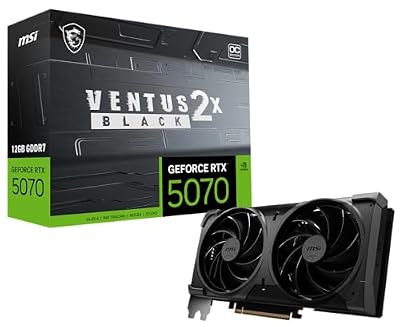


NVIDIA 5070 vs 5080 is the upgrade question on a lot of minds in 2026: is the pricier 5080 worth the jump, or does the 5070 deliver enough for the money? These two Blackwell cards target different gamers, one built for value-focused 1440p and the other for high-end 4K, so the right pick depends on your monitor and budget. This comparison breaks down the specs, the real performance gap, VRAM, power, price-per-frame, and gives a clear verdict on which GeForce card you should actually buy.
As an Amazon Associate we earn from qualifying purchases at no extra cost to you.


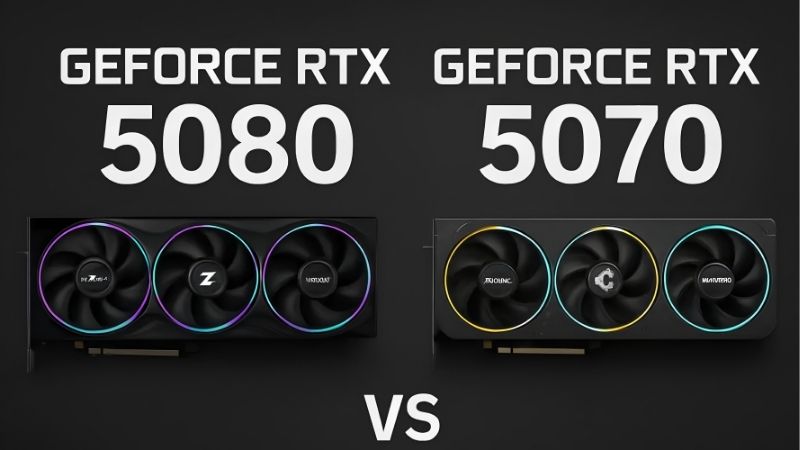
The Quick Verdict: RTX 5070 vs RTX 5080
For the impatient reader, the RTX 5080 is clearly the faster card with more VRAM, while the RTX 5070 delivers the best value for 1440p gaming. The 5080 is the pick for 4K and future-proofing; the 5070 is the smart choice if you want strong performance without the premium.
If You Want Maximum Performance
The RTX 5080 is the outright performance leader of the two. Its wider memory bus, larger VRAM pool, and greater shader power make it the natural choice for 4K high-refresh gaming.
If you run a 4K monitor, chase the highest settings, or want a card that stays comfortable for years, the 5080’s extra headroom justifies its higher price over the 5070.
It is also the safer pick if you plan to keep the card for many years, since its extra VRAM and bandwidth give it more room to handle increasingly demanding games before you feel the need to upgrade again.
If You Want the Best Value
The RTX 5070 makes the value argument. It delivers excellent 1440p performance and reaches into 4K with the help of DLSS, all at a noticeably lower price than the 5080.
For high-refresh 1440p gaming, which is where most players actually sit, the 5070 provides the frames that matter without paying for 4K headroom you may never use, which is exactly the sweet spot value buyers look for.
The lower power draw is a quiet bonus too, letting the 5070 slot into a modest build with a smaller supply and simpler cooling, which keeps the total system cost down beyond just the price of the card.
The Short Answer
Let your monitor decide. If you game at 4K or want maximum longevity and can afford it, the 5080 is your card. If you game at 1440p and want the best performance per dollar, the 5070 is the smarter buy.
The sections below explain the size of the gap so you can decide whether the 5080’s premium is worth it for how you actually play.
Neither card is a wrong choice; they simply serve different resolutions. Knowing whether you are a 1440p or a 4K gamer settles most of the decision before you even look at the price.
RTX 5070 vs RTX 5080 Spec Comparison
Specs frame the whole debate, so here are the core numbers side by side. Both are Blackwell cards with DLSS 4, but they differ significantly in memory, bus width, and power, which is what creates the performance gap. Treat these as representative planning figures, since exact clocks vary by model.
| Specification | RTX 5070 | RTX 5080 |
|---|---|---|
| Architecture | Blackwell | Blackwell |
| VRAM | 12 GB GDDR7 | 16 GB GDDR7 |
| Memory bus | 192-bit | 256-bit |
| Typical board power | ~250 W | ~360 W |
| Upscaling | DLSS 4 (multi-frame gen) | DLSS 4 (multi-frame gen) |
| Recommended PSU | ~650 W | ~850 W |
| Best target | 1440p high-refresh | 4K high-refresh |
| Positioning | Value | High-end |
Reading the Spec Table
The two biggest differences are VRAM and memory bus. The 5080’s 16 GB on a 256-bit bus gives it far more memory bandwidth than the 5070’s 12 GB on a 192-bit bus, which is a major reason it pulls ahead at 4K.
Both cards share DLSS 4 with multi-frame generation, so the headline AI feature is the same. The gap is about raw power and memory, not features, which keeps the 5070 attractive where its 12 GB is sufficient.
In short, the two cards share the same modern feature set but differ meaningfully in raw resources. That framing makes the choice cleaner: you are deciding how much memory and bandwidth your target resolution actually needs.
VRAM and Memory Bandwidth
The 5070’s 12 GB is comfortable for 1440p today, but it is the tighter figure of the two and worth considering if you push high-resolution textures. The 5080’s 16 GB offers more breathing room for 4K and future games.
Bandwidth is where the 5080 truly separates itself. Its wider bus and larger pool feed the GPU faster, and that advantage grows with resolution, which is why the two cards feel closer at 1440p than at 4K.
For buyers who expect to keep a card several years, the 5080’s larger memory pool is worth weighing seriously, since VRAM pressure is one of the first things to force lowered settings as games grow heavier over time.
Power and Cooling
The RTX 5070 is the far more modest card on power, drawing roughly 250 W and recommending a 650 W supply. That makes it easy to fit into a mainstream build with modest cooling.
The RTX 5080’s roughly 360 W appetite demands an 850 W-class PSU and stronger cooling. Confirm your case clearance and connectors before choosing it, since it is a larger, hungrier card than the 5070.
The efficiency gap also translates into a cooler, quieter system for the 5070 in the same case, a practical comfort over long sessions that never shows up on a raw performance chart but is easy to appreciate day to day.
Deep Dive Face-Off: Performance and Features
Specs only matter once they become frames on your screen, so here we compare the two on the experience that decides value: real performance at your resolution, ray tracing and DLSS, and the honest pros and cons of each. This is where the upgrade question gets answered.
1440p and 4K Performance
At 1440p, the two cards are closer than their price gap suggests. The 5070 delivers high, smooth frame rates that satisfy most players, and the 5080’s lead, while real, is less dramatic at this resolution.
At 4K, the picture changes. The 5080’s extra bandwidth and VRAM let it stretch ahead meaningfully, holding higher frame rates in demanding titles where the 5070 has to lean harder on upscaling or trimmed settings.
The takeaway is that the value case for the 5070 is strongest at 1440p, while the 5080 earns its premium mainly when you push to 4K and want maximum settings.
For a buyer on the fence, this resolution split is the whole decision in miniature. At 1440p the money you save with the 5070 buys little downside; at 4K the 5080’s lead becomes something you notice in nearly every demanding game.
Ray Tracing and DLSS 4
Both cards share DLSS 4 with multi-frame generation, the standout Blackwell feature that uses AI to insert frames and lift smoothness in supported games. This is a genuine experimental highlight available on both.
Because they share this technology, the 5070 can punch above its raw horsepower in supported titles, narrowing the gap with the 5080 where DLSS 4 is available. It is a big part of why the cheaper card feels so capable.
The 5080 still leads in raw ray tracing performance thanks to its stronger hardware, so at the heaviest ray-traced settings and 4K, the gap reappears. For most 1440p players, though, shared DLSS 4 levels the field considerably.
This shared feature is a large part of why the 5070 represents such strong value. In the many games that support DLSS 4, the cheaper card closes much of the gap, delivering an experience that feels premium well beyond its price tier.
Pros and Cons of Each Card
The RTX 5070’s strengths are excellent 1440p value, lower power and heat, easy fit in mainstream builds, and shared DLSS 4. Its trade-offs are 12 GB of VRAM and a narrower bus that limit it at 4K compared with the 5080.
The RTX 5080’s pros are stronger 4K performance, more VRAM, wider bandwidth, and better longevity. Its cons are the higher price and the roughly 360 W power draw that demands a beefier PSU and cooling. Value and efficiency go to the 5070; raw performance and future-proofing go to the 5080.
The cleanest way to choose is to look at your monitor. If it is a 1440p panel, the 5070 covers you superbly; if it is 4K, the 5080’s extra resources are exactly what that resolution demands, and the premium starts to make sense.
Price, Alternatives, and the 2026 Decision
An upgrade this size is a budget decision, and the 2026 market has a shape worth understanding before you commit. Pricing affects not just what you pay but whether the 5080’s premium makes sense for you.
Where Prices Stand
The steep climb of late 2025 has cooled into a relatively stable stretch, making a purchase now less risky than it recently felt. That stability is welcome after a long run of increases.
But stable is not cheap. Prices have plateaued rather than fallen, and the memory-heavy 5080 in particular stays premium. New supply is coming through additional DDR5 sourcing and Micron’s new Idaho fabs, yet those plants are not expected to run until roughly 2027 to 2028, so real relief is years out. In short, prices have paused, not dropped, and waiting for a near-term crash is a weak strategy.
The Alternative: RTX 5070 Ti
If the 5070 feels a touch light for your goals but the 5080 stretches your budget, the RTX 5070 Ti slots neatly between them. It brings more VRAM and performance than the 5070 for less than the 5080.
For buyers torn between value and power, the 5070 Ti is often the pragmatic middle ground. You can compare the RTX 5070, the RTX 5080, and the 5070 Ti through the links in this guide to see which fits your budget today.
Prices on all three shift with sales and stock, so it pays to check them together at the moment you buy. The right pick is whichever delivers the performance you need at the lowest price on the day rather than a fixed favorite.
Which Should You Buy?
Buy the RTX 5070 if you game at 1440p and want the best performance per dollar with lower power and heat. Buy the RTX 5080 if you game at 4K, want maximum settings and VRAM, and have the budget plus the PSU and case to support it.
With prices stable rather than falling, this is a reasonable window to buy rather than wait. Check current deals on both cards and the 5070 Ti alternative through the links here, and choose the one that matches your resolution and wallet.
Above all, buy for the display you actually own. A card matched to your resolution and refresh rate delivers a better experience than an overpowered one bottlenecked by the rest of your system or a monitor that cannot show the extra frames.
See More:
Final Verdict: NVIDIA 5070 vs 5080
The NVIDIA 5070 vs 5080 decision comes down to resolution and budget. The 5070 is the value champion for 1440p, delivering most of the experience for meaningfully less, while the 5080 pulls clearly ahead at 4K with more VRAM, bandwidth, and longevity that justify its premium for those who need it.
With supply relief years out and prices merely stable, buying now is reasonable rather than a gamble. Compare the RTX 5070, the RTX 5080, and the RTX 5070 Ti alternative through the links in this comparison, and pick the GeForce card that fits how you actually play and what you are willing to spend.
Frequently Asked Questions
How big is the performance gap?
Large. The RTX 5080 has roughly 10752 CUDA cores against about 6144 on the RTX 5070, plus a 256-bit memory bus versus 192-bit. In practice that translates to something in the region of 50 to 70 percent more performance at 4K, with the gap narrowing slightly at 1080p.
Is the VRAM difference important?
Yes. The 5070 has 12GB and the 5080 has 16GB, both GDDR7. Twelve gigabytes is fine at 1440p today but is the first thing to become limiting at 4K with ray tracing and ultra textures, which is exactly the resolution the 5080 is designed for.
What power supply does each need?
The RTX 5070 sits near 250W and pairs well with a quality 650W unit. The RTX 5080 draws around 360W and wants 850W or more, ideally an ATX 3.1 supply with a native 12V-2×6 cable so you avoid adapters and transient spikes tripping over-current protection.
Which resolution justifies the 5080?
If you game at 4K, drive a high refresh 4K panel, or run heavy ray tracing with path traced titles, the 5080 earns its price. At 1080p or 1440p on a 144Hz monitor, the 5070 already saturates most games with DLSS, and the extra money is better spent elsewhere.
Is the upgrade worth it for creators?
For GPU rendering in Blender, heavy 4K and 8K timelines in Resolve, or running larger local AI models, yes, since both the extra cores and the 16GB frame buffer directly shorten render times and allow bigger models. For photo work and 1080p editing, the 5070 is plenty.
Ready to decide? Our #1 pick for 2026 is the Architecture.
Live price & availability on Amazon.

Write Your Review
No reviews yet. Be the first to share your experience!