
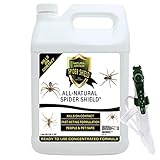
- Top Pick: Natural Armor Spider Killer & Repellent – 1 Gallon (128 oz) w/Sprayer | Kills & Repels Spiders Indoors and Outdoors with Peppermint Formula
- Best Value: Waspika Peppermint Oil Insect and Spider Repellent Spray, Repels and Kills Ants and Bugs, Extra Strength Natural Plant Based Pest Control for Home, Kitchen and Garden, Safe for Family and Pets, 16 oz
- Premium Choice: 16 Pack Spider Repellent for Indoor Outdoor Use, Effective Spider Deterrent with Peppermint and Lemongrass Oil, No Spiderweb Spider Free Solution for Garage RV Storage
The best spider control is usually a combination: a residual perimeter spray or dust for entry points, glue traps to catch what gets through, and sealing gaps and clearing clutter so spiders have nothing to hunt. A gamer’s room with cables, boxes, and dark corners behind the PC is an ideal hiding spot, so tidying counts as part of the product list. Repellents based on peppermint or other plant oils suit people who want a lighter-touch option, while labeled insecticide sprays are the stronger choice for a real infestation.
As an Amazon Associate we earn from qualifying purchases at no extra cost to you.


First, Know the Spider
Most house spiders are harmless and eat other insects. A few species in some regions, such as black widows and recluse spiders in parts of North America, can deliver medically significant bites. If you suspect one of those, or if someone has been bitten and shows swelling, spreading redness, severe pain, or feels unwell, seek medical care. For identification and local advice, a regional extension office or a licensed pest control professional can help.
Types of Spider Products
| Type | Example lines | Best for | Limits |
|---|---|---|---|
| Residual insecticide spray | Ortho Home Defense, Spectracide Bug Stop, Raid Ant and Roach lines where label lists spiders | Baseboards, window frames, entry points, garage | Read the label; indoor and outdoor use differ; keep away from pets and food |
| Dust or granule | Boric-acid or diatomaceous-earth products from established brands | Wall voids, crawl spaces, behind appliances | Must be kept dry and out of reach of kids and pets |
| Glue traps | Catchmaster and similar | Monitoring and catching in corners and behind furniture | Only catch what walks over them; some people dislike the look |
| Plant-oil repellents | Mighty Mint and other peppermint sprays | Light-duty deterrent for people avoiding stronger chemicals | Scent fades; efficacy claims vary by maker |
| Ultrasonic repellers | Various plug-in brands | Curiosity buyers | Independent reviewers and university extension sources have generally reported weak evidence for these |
Product lines change formulas and packaging often, so match the exact label to your purpose. Look for the words spider, indoor, or outdoor on the container and follow the stated use.
How the Pest-Control Industry Approaches It
Integrated pest management is the approach recommended by university extension programs and agencies like the EPA. The idea is to start with the least risky methods and add products as needed. For spiders, that means removing food sources (other insects), reducing clutter, sealing entry cracks, and then applying targeted treatments to areas where spiders travel.
- Seal gaps around windows, doors, and pipes with caulk or weatherstripping.
- Vacuum webs and egg sacs regularly.
- Switch outdoor lights near doors to warmer bulbs, which attract fewer insects.
- Store boxes in sealed plastic bins instead of cardboard.
Budget, Mid-Range, and Premium Options
At the budget tier, glue traps and a basic aerosol or pump spray cover most small problems. In the mid-range, a pump sprayer with a concentrate you dilute offers repeat treatments and covers more area. At the premium tier, a professional service gives you inspection, targeted treatment, and follow-up visits, which suits a persistent or dangerous-spider situation. Wirecutter and Consumer Reports have both published pest advice that favors prevention and targeted treatment over fogging or broad spraying, and that guidance is a useful filter for any product claim you read.
Safety Notes
- Follow the label exactly. The label is the legal instruction for use.
- Keep children and pets out of treated areas until the product dries, as the label directs.
- Cover or move food, dishes, and fish tanks before spraying; turn off tank air pumps only if the label tells you to.
- Do not spray liquids into PC cases, power strips, or outlets. If spiders nest in electronics, power down, unplug, and clean with a dry brush or vacuum.
- For a heavy infestation or dangerous species, call a licensed professional.
Pick X If You Need This
| Situation | Start with |
|---|---|
| A few spiders now and then | Vacuum, seal gaps, glue traps |
| Webs return weekly around windows | Residual perimeter spray on the outside of the building and window frames |
| Basement or garage heavy with spiders | Dust in voids plus perimeter spray and bins for storage |
| Pets or toddlers at home | Mechanical methods first, a pro for treatments, or products whose labels allow careful use |
| Want a natural-scented deterrent | Peppermint spray as a top-up, not a primary fix |
Common Mistakes
- Spraying only the spiders you see, not the pathways and entry points.
- Over-applying, which raises risk without increasing effect.
- Skipping the source: if other insects are plentiful, spiders will stay.
- Relying on ultrasonic devices alone.
- Ignoring outdoor sources like woodpiles, dense shrubs, and leaf litter against the wall.
Alternatives
Diatomaceous earth sold as a food-grade or pest-grade product can be applied in thin layers in dry voids. Sticky pheromone-free glue boards are useful as a monitor, so you can see where spiders walk. A dehumidifier in a damp basement reduces the insect population that spiders feed on.
Frequently Asked Questions
What is the best way to keep spiders out of a gaming room?
Reduce hiding spots by tidying cables and boxes, seal gaps, and vacuum corners. A barrier spray or glue traps near entry points add extra coverage.
Do peppermint sprays really repel spiders?
Makers of these products claim they deter spiders, and some people report fewer sightings. Independent evidence is limited, so treat them as a light supplement rather than a complete solution.
Are ultrasonic pest repellers effective?
University extension reviews and consumer outlets have generally found little reliable evidence that they work. A sealed home and targeted treatment are better uses of effort.
Is spider spray safe around pets?
It depends on the product, and the label’s instructions control. Keep pets away until the area dries, and ask your vet or a pest professional if you have concerns, particularly with birds, fish, or reptiles.
How do I know if a spider is dangerous?
Most are not, but identification matters in regions with venomous species. If you cannot identify it, photograph it for a local extension office, and seek medical care after any bite with worsening symptoms.
Should I use a bug bomb?
Many pest-control authorities discourage foggers because they spread product widely without reaching the hiding places spiders actually use. Targeted treatment is generally preferred, and foggers must be used strictly per label.





Write Your Review
No reviews yet. Be the first to share your experience!