
- Top Pick: Fluke-301D/ESP, 600A AC/DC Clamp Meter with Slim Body and Thin Jaw Arm | 600A
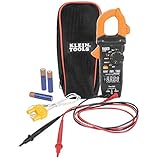
- Best Value: Klein Tools CL390 AC/DC Digital Clamp Meter, Auto-Ranging, 400 Amp | NCVT Tester, Hi-Viz LCD Display, TRMS, Continuity Resistance, Temperature and More
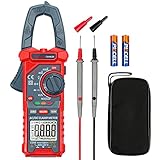
- Premium Choice: KAIWEETS Digital Clamp Meter Multimeter 4000 Counts with D-Shaped Jaw, NCV | High Accuracy, TRMS, Auto-Ranging, AC/DC Current & Voltage, Temperature, Resistance, Continuity, Diode Test, Capacitance
For a gamer or PC builder who also tinkers with wall outlets, power strips, UPS units and car or battery circuits, a compact true-RMS clamp that reads both AC and DC current, such as the Fluke 325 class of meter, is the safest all-round choice, while a budget AC/DC clamp from Klein or Uni-T suits occasional household checks. Below is how the main contenders compare and how to choose without overspending.
As an Amazon Associate we earn from qualifying purchases at no extra cost to you.


Why AC and DC both matter
An AC-only clamp reads the alternating current in a household cable, which covers outlets, space heaters and PC power cords. A DC-capable clamp uses a Hall-effect sensor and can also read direct current, which is what you meet in battery banks, solar setups, car accessories, LED strips and some power supply rails. If your work never leaves the wall socket, an AC-only model may be enough, but the queries behind this guide specifically want both, so every pick below lists DC current support according to the maker.
A clamp meter measures current without cutting into a wire, so you clamp around a single conductor. Clamping around a whole cord that carries both live and neutral will read close to zero because the fields cancel, which is the most common beginner mistake.
At a glance
| Model | Best for | Key stated specs (per maker) | Limits |
|---|---|---|---|
| Fluke 325 | Dependable general-purpose AC/DC use | True-RMS; AC and DC current in the 400 A class; AC/DC voltage; temperature and capacitance functions; CAT III 600 V rating | Premium tier; no wireless logging on this model |
| Fluke 376 FC | Technicians who want logging and a flexible probe | True-RMS; AC/DC current to the 1000 A class; iFlex flexible probe option; wireless connection to the maker app | Premium tier; more than a home user needs |
| Klein Tools CL800 | Electricians who want rugged value | True-RMS; AC/DC current in the several-hundred-amp class; auto-ranging; CAT IV rating listed by the maker | Fewer extra functions than Fluke |
| Klein Tools CL390 | Mid-range alternative | Auto-ranging AC/DC clamp with true-RMS reading on the listing | Check the manual for the exact current ceiling |
| Uni-T UT210E | Budget and tight spaces | Pocket-sized clamp with AC/DC current, small jaw, low-current readings | Smaller jaw and a lower current ceiling; lower safety category |
These specs come from the makers’ general product descriptions; the exact amp ranges differ by model revision, so read the official datasheet for the unit you buy.
How to choose
Safety category first
Clamp meters carry CAT ratings such as CAT II, CAT III and CAT IV. The higher the number, the more transient energy the meter is designed to withstand near the mains source. For a home workshop, CAT III 600 V is a sensible minimum. Cheap meters with unclear or unmarked ratings are a poor trade for a tool that sits near live conductors.
True-RMS
Modern power supplies, dimmers and switching loads draw non-sinusoidal current. A true-RMS clamp reads these more accurately than an average-responding meter. All the premium and mid-range picks above list true-RMS.
Jaw size and current range
Larger jaws fit thicker cables and busbars but are harder to use in a crowded electrical panel. If you mostly work on PC cabling, UPS leads and small DC wiring, a smaller jaw helps. If you work on panels or solar leads, look for a bigger current range.
Resolution for low currents
Measuring a standby draw of a few milliamps needs a meter designed for low-current work. Many large clamps have limited resolution at the bottom of the range. The Uni-T style mini clamps are often sold for exactly that job.
Extra functions
Backlight, hold and min/max are handy. Non-contact voltage detection, inrush current, a built-in temperature probe and wireless apps add convenience but also cost.
Pick X if…
| If you… | Pick | Why |
|---|---|---|
| Want one meter to cover household, car and battery checks | Fluke 325 | AC/DC plus voltage and temperature in one body |
| Log readings and share them with a team | Fluke 376 FC | Wireless app link and flexible probe option |
| Work as an electrician on a tighter budget | Klein Tools CL800 | Rugged, auto-ranging, high safety rating |
| Need a mid-priced everyday clamp | Klein Tools CL390 | Familiar controls and AC/DC support |
| Hunt for small drains in a rig or a car | Uni-T UT210E | Small jaw and low-current focus |
Budget tiers
Budget clamps cover basic AC/DC readings and are fine for checking whether a circuit draws current at all. Mid-range clamps add true-RMS, auto-ranging and stronger safety ratings. Premium clamps add accuracy, ruggedness, flexible probes and logging. Spending more makes sense if you work around panels or high-energy circuits; spending less is acceptable for a one-off check of a 12 V accessory.
Alternatives to consider
- A plain digital multimeter measures voltage and low DC current by breaking the circuit, which suits electronics benches more than wall wiring.
- A plug-in power meter shows how many watts a PC or monitor pulls from an outlet without opening anything, and is safer for beginners.
- A leakage clamp is for specialist fault finding, not general use.
Common mistakes
- Clamping around both live and neutral and reading zero.
- Forgetting to zero the DC range before measuring, since Hall sensors drift.
- Using a meter beyond its rated category or maximum voltage.
- Leaving test leads attached to the wrong jacks and then switching functions.
- Ignoring the battery warning, which can cause bad readings.
Safety notes
Work on mains wiring and inside panels belongs to a qualified electrician. Never open a PC power supply, because capacitors can hold a charge after unplugging. Follow the meter’s manual, inspect the jaws and housing for cracks, and stop using any meter that looks damaged.
Frequently Asked Questions
Do I need a DC clamp meter for a gaming PC?
Usually not. PC current can be estimated from the wall power draw with a plug-in meter. A DC clamp helps if you are checking 12 V accessories, battery systems or fan and LED lines in a custom build.
What does true-RMS mean?
It means the meter calculates the effective value of distorted waveforms rather than assuming a clean sine wave. This matters for switching power supplies and electronic loads.
Why does my clamp read zero on a power cord?
The two conductors carry equal and opposite current, so the magnetic fields cancel. Use a line splitter or clamp around only one conductor.
Can a clamp meter measure small standby currents?
Only models designed for low-current resolution do it well. Most large clamps lose accuracy at the bottom of their range, so read the maker’s specification for the lowest range.
Is a Fluke worth the extra cost over a budget meter?
For frequent use near panels or higher-energy circuits, many electricians pay for the stronger safety ratings and accuracy. For occasional low-voltage checks, a mid-range clamp with a clear CAT rating can be enough.
How often should a clamp meter be calibrated?
Makers of professional meters often suggest periodic calibration through a service lab, commonly yearly for heavy professional use. Home users can rely on the manual’s guidance and replace a meter that behaves oddly.







Write Your Review
No reviews yet. Be the first to share your experience!