
- Top Pick: Taglory Rope Dog Leash for Medium Large Dogs, 6 FT Padded Handle, Black | Climbing Rope for Strong Pullers, Reflective for Night Walks and Training, Comfortable Grip, Anti-tangle Swivel Clip 1/2 inch
- Best Value: Heavy Duty Dog Leash – 2 Handles by Padded Traffic Handle for Extra Control, 6foot Long – Perfect for Medium to Large Dogs (6 ft, Black)
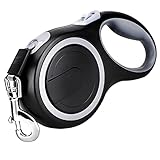
- Premium Choice: 26Ft Retractable Dog Leash, Heavy Duty Great Leash for Dog up to 110 lbs, Anti-Slip Rubberized Handle, One-Handed Brake, Strong Nylon Tape, Tangle Free(Large Size).
For most owners of large dogs, a thick rope leash such as the Ruffwear Knot-a-Leash in its Large size or a Mendota rope snap leash is the safest everyday choice, while the Kurgo Quantum suits people who want one adjustable leash for walks, hiking and car stops. Gamers with a big dog on the sofa still need to get that dog outside, and a leash that fits your grip, your dog’s strength and your walking routine matters far more than any fashion detail. This guide explains how to choose, what reviewers say about the popular options, and where each one falls short.
As an Amazon Associate we earn from qualifying purchases at no extra cost to you.



At a Glance: Leashes Reviewers Keep Naming
| Leash | Best for | Key stated details | Limits |
|---|---|---|---|
| Ruffwear Knot-a-Leash (Large) | Hiking, strong pullers, outdoor walks | The maker uses climbing-style kernmantle rope in a thicker size for big dogs, with a locking carabiner and a fixed length around 5 feet | Reviewers report rope fraying under abuse; not for dogs that chew |
| Mendota Pet Snap Leash | Everyday walking and training | Braided rope with a snap hook; the maker sells sizes for dogs well above 50 pounds | Size up for large and extra-large dogs, as reviewers advise |
| Mendota Confetti rope leash | Heavy dogs, budget-to-mid shoppers wanting rope | Polypropylene rope; Dogster lists it for dogs from 50 up to 250 pounds | Fewer length and hardware options than adjustable models |
| Kurgo Quantum Leash | Owners wanting one convertible leash | Adjustable, roughly 1.5 to 6 feet, padded handles and rugged hardware, per Honest Hound | More parts than a fixed rope; adjustable points are extra things to inspect |
| Kurgo elastic running leash | Jogging with a dog | Stretch section to soften pulls; named for running by AllGoodsReviewed | Not suited to training or traffic-heavy streets |
How to Choose a Leash for a Large Dog
Big dogs generate real force when they lunge after a squirrel or another dog. The leash is only one link in a chain that includes the collar or harness, the clip and your hand, so each part needs to be rated for the dog’s weight and temperament.
Material
Rope leashes are popular for large breeds because the thickness spreads pressure across your palm. Nylon webbing is flat, light and cheap, but thin webbing can burn the hand if a dog bolts. Leather is soft once broken in and kind to hands, but it needs conditioning and can be uncomfortable when wet. Chain leashes suit dogs that chew, although they are heavy and noisy. Reviewers mentioned by Dogster and WebVet generally favor thick rope or well-stitched webbing for large dogs.
Width and Grip
A narrow leash that suits a terrier feels like a wire in the hand of someone holding a 90-pound dog. Look for a wider or thicker leash, and a padded or looped handle if you walk a puller. A second handle near the clip, which several makers include, gives you a short grip near the dog when you need control at a crossing.
Length
Four to six feet is the usual range for control. Shorter leashes are better in crowded places and for dogs still learning manners. Longer lines belong on open trails or training fields. Retractable leashes are widely criticized by trainers and vets for giving little control and for injuries when the cord snaps or burns skin, so most buyer guides leave them out for large, strong dogs.
Hardware
The clip is often the first thing to fail. A locking carabiner, like the one on the Knot-a-Leash, will not open from a dog twisting at the end of the line. Standard snap hooks are quick and light, but check that the gate closes firmly and does not wobble. Metal hardware should be sized to the dog: a tiny clip on a heavy leash is a weak spot, and a heavy clip on a small leash adds bounce against the dog’s collar.
Visibility and Comfort
If you walk early or late, reflective stitching or bright colors help drivers and cyclists see the leash. Gamers who play late and walk the dog after dark should treat this as a safety item, not a style point.
Pick-by-Pick Notes
Ruffwear Knot-a-Leash
Several 2026 roundups, including AllGoodsReviewed and PetProdVerdict, call this a top choice for strong dogs and active owners. The maker builds it from rope of the kind used in climbing, with a knotted handle for a secure grip and a locking carabiner. Reviewers advise buying the Large size for big dogs, because TechGearLab found the smaller diameter flimsy on large breeds. The same outlet reports the rope frayed in its abrasion check, and WebVet lists that as a trade-off. The practical takeaway is that this is a leash for walkers, not for dogs that chew the line when bored. If your dog is a chewer, a chain or chain-lead hybrid is a safer buy.
Mendota Pet Snap Leash
CNN Underscored named a Mendota snap leash its best overall dog leash and noted that its reviewers used it with large dogs such as Alaskan Malamutes, advising owners to size up for large and extra-large dogs. Honest Hound also lists the Mendota Pet Snap as a best overall leash. It is a straightforward braided rope with a snap hook and a sewn handle, made in the United States according to the maker. It lacks the multiple handles and locking hardware found on some competitors, but it is simple, and simple tends to last.
Mendota Confetti Rope Leash
Dogster points to this leash as a premium pick for big dogs, made of polypropylene rope and rated by the listing for dogs from 50 to 250 pounds. It is a good match for very large breeds such as Mastiffs, Great Danes and Saint Bernards, where the leash rating matters. Polypropylene is not as soft as cotton rope, so some owners prefer to wear gloves for dogs that pull hard in cold weather.
Kurgo Quantum Leash
Honest Hound picked this as a best choice for big dogs. The maker describes a convertible design that can be adjusted to different lengths and clipped around the waist or to a post, with padded handles and strong hardware. It is a good fit for people who hike, camp or travel with the dog and want one leash to handle several jobs. The extra buckles and adjustment points are the main trade-off, since each one is a place to inspect for wear.
Kurgo Elastic Running Leash
For jogging, AllGoodsReviewed names this one for running. A stretch section absorbs the jolt if the dog surges, which is easier on your back and on the dog’s neck. It is not the right tool for heel training or busy sidewalks, where a fixed, predictable length is preferable.
Pick X If… Decision Table
| If you… | Pick | Why |
|---|---|---|
| Walk trails with a strong, athletic dog | Ruffwear Knot-a-Leash Large | Thick rope, locking carabiner, knotted grip |
| Want a simple everyday leash | Mendota Pet Snap | Reviewers keep naming it; few moving parts |
| Have a giant breed over 100 pounds | Mendota Confetti or the largest Mendota size | Listed for dogs up to 250 pounds |
| Need one leash for walks, hikes and car stops | Kurgo Quantum | Adjustable length and padded handles |
| Jog with your dog | Kurgo elastic running leash | Stretch absorbs sudden pulls |
| Have a dog that chews its leash | A chain or chain-and-webbing leash | Rope and webbing are easy to chew through |
Budget Tiers
Budget: A plain thick nylon or polypropylene leash with a sturdy snap works for calm dogs. Inspect the stitching on the handle and where the clip attaches, because those seams carry the load.
Mid-range: This is where the Mendota rope leashes and the Kurgo models sit in most reviews. You get better rope, better hardware and a handle designed for a strong grip.
Premium: The Ruffwear Knot-a-Leash and handmade leather or climbing-grade leashes belong here. You are paying for stronger rope and locking hardware, which matters if the dog is both big and impulsive.
Alternatives Worth Considering
- Double-handle traffic leash: A short leash with two handles offers close control near roads and in vet waiting rooms.
- Hands-free waist leash: Useful for calm dogs on easy trails, but a very large dog that lunges can pull you off balance, so it is a poor choice for reactive dogs.
- Front-clip harness paired with a regular leash: Many trainers suggest a front-clip harness for pullers. It reduces pulling pressure on the neck, but it does not replace training.
- Long line for training: A 15 to 30 foot lightweight line is used for recall practice in open fields, never in traffic.
Common Mistakes
- Buying a leash sized for the dog’s age rather than its adult weight. Puppies of large breeds outgrow small hardware quickly.
- Ignoring the collar or harness. A strong leash attached to a worn collar is still a weak system.
- Using a retractable leash on a large, strong dog. The cord can snap or cause burns, and control is poor.
- Skipping inspection. Check rope for fraying, clips for rust and stitching for loose threads every few weeks.
- Wrapping the leash around your hand. If the dog bolts, you can be injured. Use a loop handle or hold it in an open grip with the strap lying across the palm.
Frequently Asked Questions
What size leash do I need for a large dog?
Match the leash to the dog’s adult weight, not its age. Most makers list a weight range for each size, so pick the size whose range covers your dog with room to spare. For dogs close to the upper limit of a size, move up one size.
How long should a leash for a large dog be?
Four to six feet is the common range for everyday control. Choose the shorter end for busy streets and training, and a longer length for quiet paths. A convertible leash like the Kurgo Quantum lets you change length as needed.
Is rope or nylon better for a strong dog?
Thick rope is popular because it is easier on the hands, and reviewers often name rope leashes for large breeds. Quality nylon webbing can also do the job if it is wide and well stitched. Neither material is chew-proof, so a dog that chews may need a chain section.
Are retractable leashes safe for large dogs?
Many trainers and veterinary sources advise against them for large, strong dogs. The cord can snap, burn skin or tangle, and the brake gives little control in a sudden lunge. A fixed leash gives more predictable control.
How often should I replace a dog leash?
There is no fixed schedule, so replace it when you see fraying, stretched or cut strands, rust on the clip or loose handle stitching. Heavy pullers and daily trail walkers will wear leashes out faster. If a clip no longer closes firmly, replace the leash.
Should I use a harness or a collar with a large dog leash?
Either can work, but a well-fitted harness spreads force across the chest for dogs that pull. If your dog has neck, breathing or behavior concerns, ask your veterinarian or a qualified trainer which setup is appropriate.





Write Your Review
No reviews yet. Be the first to share your experience!