
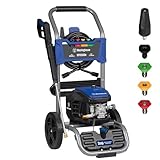
- Top Pick: Pressure Washer, Power Washer with 4 Quick Connect Nozzles 1 Foam Cannon, High Pressure Cleaning Machine for Cars/Fences/Driveways/Patios/Farms/Home Cleaning(Bright Green)
- Best Value: Westinghouse ePX3100 Electric Pressure Washer, 2300 Max PSI 1.76 Max GPM with Anti-Tipping Technology, Onboard Soap Tank, Pro-Style Steel Wand, 5-Nozzle Set, for Cars/Fences/Driveways/Home/Patios
- Premium Choice: Greenworks Brushless Electric Pressure Washer, 3000 PSI Max, 2.0 GPM Max | Includes 15°, 25° and 40° tips, soap and turbo nozzles, 25-F kink-resistant hose, 35-FT power cord with GFCI, detergent tank
For most homeowners and PC builders who also look after a patio, car and fence, a mid-range electric power washer rated around 2,000 to 2,300 PSI with roughly 1.2 to 1.8 GPM is the sensible choice, while a compact 1,500 PSI unit suits light chores and a 2,700 to 3,000 PSI brushless model suits bigger driveways and decks. The right pick depends on the surfaces you clean, how often you clean them, and how much storage space you have, so this guide walks through the specs makers publish, how reviewers describe the popular lines, and the mistakes that cause damage.
Specifications for these machines are inconsistent across the web. Several outlets list different flow figures for the same model, and “max PSI” marketing numbers often exceed the working pressure a maker rates. Treat the figures below as what makers and reviewers report, and confirm the exact model number on the maker’s own specification sheet before you commit.
As an Amazon Associate we earn from qualifying purchases at no extra cost to you.


Electric Power Washers at a Glance
| Model or line | Best for | Stated specs (as reported) | Main limit |
|---|---|---|---|
| Sun Joe SPX3000 | All-round home use, cars, patios | Marketed as 2,500 max PSI; the maker lists about 2,030 PSI working pressure; flow figures vary by outlet | Marketing PSI is higher than working PSI |
| Greenworks GPW3001 | Larger decks and driveways | Reported at 3,000 PSI, up to 2 GPM, onboard detergent tank, several nozzles | Heavier and bulkier to store |
| Greenworks GPW2700 | Heavy-duty home use | Reported at 2,700 PSI, about 2.3 GPM, brushless motor | Higher cost tier |
| Greenworks GPW1501 | Small jobs, apartments | Reported at 1,500 PSI, about 1.2 GPM | Slow on caked-on grime |
| Ryobi RY142300 | Ryobi tool owners, mid-range power | Reported at 2,300 PSI, about 1.2 GPM, brushless | Flow is modest for the pressure |
| Kärcher K4 and K5 lines | Buyers who value build quality and accessories | K5 Premium reported near 2,000 PSI and 1.4 to 1.5 GPM | Mid to premium cost tier |
| Ryobi 40V cordless (RY40HPPW12B) | Quick jobs with no outlet nearby | Reported near 1,200 PSI and 1.0 GPM | Battery runtime and lower power |
How to Choose: The Specs That Matter
PSI: how hard the water hits
PSI measures pressure at the nozzle. Higher pressure removes stubborn grime faster but also raises the risk of etching wood, stripping paint and damaging soft surfaces. Entry-level electric washers sit around 1,300 to 1,800 PSI, mid-range units around 1,900 to 2,300, and the strongest consumer electric models reach 2,700 to 3,000. Because many boxes show a “max” figure, look for the working or PWMA-style rating in the maker’s specification table.
GPM: how much water moves
Gallons per minute describes flow. Flow is what carries dirt away, so a washer with decent GPM cleans larger areas faster even at modest pressure. A common rule of thumb in reviewer guides is to multiply PSI by GPM to get cleaning units, which makes a 2,700 PSI, 2.3 GPM brushless unit noticeably quicker on a driveway than a 2,300 PSI, 1.2 GPM model.
Motor type
Brushless motors are generally described by makers as quieter, cooler-running and longer-lived than brushed designs. Greenworks and Ryobi both promote brushless motors on their higher-end electric models. Induction and brushless designs usually cost more, which is why they appear in the mid-range and premium tiers.
Hose, cord and nozzles
- Hose length: A longer high-pressure hose means less dragging the machine around. Many makers pair 20 to 35 feet of hose with a power cord of similar length.
- Nozzle set: Quick-connect tips in several spray angles are standard. A narrow tip for concrete and a wide tip for cars and siding cover most jobs.
- Detergent system: An onboard tank or dual tanks simplify soap application. Some units use a siphon tube instead.
- Wheels and storage: Look for on-board hose and nozzle storage if your garage is crowded.
Corded versus cordless
Corded electric models deliver steady pressure with no battery limits. Cordless battery models, such as the Ryobi 40V washer, trade power and runtime for freedom of movement. Bob Vila reports the cordless Ryobi at about 1,200 PSI, which suits cars, bikes and grills rather than a large driveway.
Budget Tiers Compared
| Tier | Typical specs | Suits | Trade-off |
|---|---|---|---|
| Budget | About 1,300 to 1,800 PSI, 1.2 GPM | Cars, furniture, small patios, balconies | Slower, struggles with oil and old stains |
| Mid-range | About 1,900 to 2,300 PSI, 1.2 to 1.8 GPM | Driveways, fences, siding, decks | Good balance; check flow figures carefully |
| Premium | About 2,500 to 3,000 PSI, up to 2.3 GPM, brushless | Large concrete areas, frequent use | Heavier, higher power draw on the circuit |
| Cordless | About 1,000 to 1,200 PSI | Quick tidy-ups away from outlets | Battery runtime is limited |
The Main Picks Explained
Sun Joe SPX3000: the common all-rounder
Most 2026 roundups name the SPX3000 as a top pick for typical homeowners. Bob Vila singles it out for washing cars. The maker markets it with a 2,500 max PSI headline, and other reviewers point to the lower working pressure of about 2,030 PSI. Flow figures differ by outlet, from 1.2 to 1.76 GPM, so read the maker’s current specification table. It includes dual detergent tanks, which makes switching between soap and rinse quick.
Greenworks GPW3001 and GPW2700: power-focused
Bob Vila’s favorite overall was the Greenworks GPW3001, listed at 3,000 PSI, up to 2 GPM, five nozzles and an onboard detergent tank. The GPW2700 steps down to 2,700 PSI but is reported at 2.3 GPM with a brushless motor, which suits buyers who value flow. Both suit larger decks, driveways and fences. The compact GPW1501 serves apartment dwellers who only need to rinse a balcony or bike.
Ryobi RY142300: for existing Ryobi owners
The corded RY142300 is reported at 2,300 PSI and 1.2 GPM with a brushless motor. It is a reasonable mid-range option, though its flow is modest next to the Greenworks units. The separate cordless Ryobi 40V washer fits users who already own batteries for that platform.
Kärcher K4 and K5: build quality
Reviewed.com names the Kärcher K4 its overall best pressure washer, and the K5 Premium is reported at about 2,000 PSI. Kärcher units are often chosen for their accessories, hose reels and reliability reputation. They generally sit in the mid-range to premium tiers.
Pick X If… Decision Table
| If you need… | Pick | Why |
|---|---|---|
| A well-known general-purpose washer | Sun Joe SPX3000 | Frequently named best for most homeowners |
| Maximum power from a plug-in unit | Greenworks GPW3001 or GPW2700 | Highest reported PSI and GPM among these picks |
| A small unit for light jobs | Greenworks GPW1501 | Compact and lower power |
| To share batteries with other tools | Ryobi 40V cordless | No cord, easy to carry |
| Premium build and accessories | Kärcher K4 or K5 | Reviewer-praised overall quality |
| Quiet operation and longer motor life | Brushless models such as Ryobi RY142300 | Makers promote brushless efficiency |
Electrical and Safety Notes
Electric power washers draw significant current. Plug them into a grounded outdoor outlet protected by a ground fault circuit interrupter, which many models include in the plug. If you need an extension cord, use one rated for outdoor use and for the machine’s amperage, and keep connections off wet ground. If you are unsure whether your outlet or circuit can handle the load, ask a licensed electrician. Never aim the jet at people, pets, outlets or light fixtures, and always follow the instruction manual. Wear closed shoes and eye protection, because debris can fly off surfaces at speed.
Surface Guide: Which Nozzle and Pressure
| Surface | Suggested approach | Caution |
|---|---|---|
| Concrete driveway | Narrow or surface-cleaner tip, steady passes | Uneven strokes leave stripes |
| Wood deck or fence | Wide tip, lower pressure, move with the grain | Close-range jets can gouge soft wood |
| Car | Wide tip and detergent, keep distance | Avoid trim edges and damaged paint |
| Siding | Wide tip, spray downward at an angle | Water driven upward can enter gaps |
| Patio furniture and grills | Low-pressure setting or cordless unit | Plastic can crack at close range |
Alternatives Worth Considering
- Garden hose with a pressure nozzle: Adequate for dust and light mud if you wash rarely.
- Gas-powered washers: Offer more power for large properties but are louder, heavier and need fuel and maintenance.
- Rental or professional service: Sensible for one-off jobs such as a full deck restoration.
Common Mistakes to Avoid
- Trusting the “max PSI” headline instead of the working pressure.
- Ignoring GPM, which strongly affects cleaning speed.
- Using a narrow tip too close to wood, paint or siding.
- Running the pump without water flowing, which can damage seals.
- Leaving water in the pump over winter in freezing climates. Follow the maker’s storage instructions.
- Using a thin or indoor extension cord.
Frequently Asked Questions
Is 2,000 PSI enough for a driveway?
For most routine driveway cleaning, a washer around 2,000 PSI with decent flow is enough to lift dirt and light stains. Older oil marks and ground-in grime may need a detergent and a slower pass or a more powerful unit. Surface cleaner attachments can speed up large flat areas.
Which matters more, PSI or GPM?
Both matter. Pressure breaks dirt loose, and flow washes it away, so reviewers often compare the product of the two. A balanced machine usually cleans better than one with a high PSI figure and weak flow.
Are cordless pressure washers powerful enough?
Cordless models are typically rated well below corded ones, with the Ryobi 40V reported around 1,200 PSI. They suit cars, bikes, grills and furniture. For driveways and decks a corded mid-range or premium unit is usually the better match.
Can I use an extension cord with an electric power washer?
Many makers allow it only if the cord is outdoor rated and heavy enough for the machine’s current draw. A cord that is too thin can overheat and reduce performance. Read the manual, and consult an electrician if you are unsure about your outlet or cord.
Will a power washer damage my car paint?
It can if used too close or with a narrow tip. Use a wide tip, keep a safe distance, and avoid peeling paint, trim edges and seals. Many owners choose a lower-pressure unit for vehicles, as Bob Vila does when naming the SPX3000 for car washing.
How should I store a power washer for winter?
Disconnect hoses, drain remaining water from the pump and hoses, and store the unit indoors away from freezing temperatures. Freezing water can crack pump components. The maker’s manual explains the correct draining and storage steps for each model.





Write Your Review
No reviews yet. Be the first to share your experience!