
- Top Pick: 4/6/8/10 Person Instant Tent,Pop Up Tents for Camping with Rainfly | 60 Seconds Easy Setup,Cabin Tent for Family Camping with Expandable Carry Bag & Upgraded Ventilation
- Best Value: CORE Instant Cabin Tent | Multi Room Portable Pop Up Tent for 2 Minute Camp Setup, Sleeps 9 People, 14' x 9', 3-Room
- Premium Choice: 4/6/8/10 Person Instant Tent,Pop Up Tents for Camping with Rainfly | 60 Seconds Easy Setup,Cabin Tent for Family Camping with Expandable Carry Bag & Upgraded Ventilation
A 10 person instant tent suits a group of roughly five to six campers who want comfort, because the “10 person” rating assumes sleeping bags laid shoulder to shoulder with no gear inside. The main contenders come from Coleman, Core and Ozark Trail, with cabin-style walls and pre-attached poles that cut setup to a few minutes. This guide explains how to read the specs, what each brand line is known for, and who should choose which kind of tent.
As an Amazon Associate we earn from qualifying purchases at no extra cost to you.
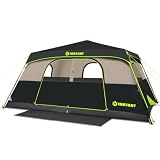


Understanding the “10 person” rating
Capacity ratings are set by makers and usually reflect how many standard sleeping pads can be laid side by side. Most campers need space for bags, duffels and a walkway, so reviewers who cover family camping commonly suggest treating a 10 person tent as a comfortable choice for fewer people. If you carry cots, air mattresses or a play area for kids, size up in your thinking again.
Check the floor dimensions the maker lists rather than relying on the capacity number alone. Compare length by width, then think about how you will lay out beds.
Quick comparison
| Line | Style | Best for | Notes |
|---|---|---|---|
| Coleman Skydome and Instant Cabin ranges | Dome and cabin-style instant tents | Families wanting a familiar brand with wide availability | The maker states setup times and weather features per model; read the individual page |
| Core Equipment instant cabin tents | Cabin-style with near-vertical walls | Campers who want standing room and a spacious interior | Larger packed size; some models include a room divider or wall organiser |
| Ozark Trail instant cabin tents | Cabin-style with pre-attached poles | Shoppers wanting a straightforward, budget-friendly option | Features vary by model, so compare vents, rainfly coverage and floor size |
| Other large cabin tents (for example from Wenzel or Eureka) | Traditional cabin or tunnel styles | Campers who prefer a conventional pole setup with more modular options | Setup takes longer than an instant model |
Model names, floor dimensions and weather ratings differ between versions and seasons. Use the maker’s own product page for the exact version you plan to buy.
What instant actually means
An instant tent has poles pre-attached to the tent body, so you unfold it, extend the frame and stake it down. Makers often quote a setup time of a minute or a few minutes with two people. A larger tent, a windy day or uneven ground makes setup slower in practice. Pack-down can be less simple than setup, so practise at home once before your first trip.
How to choose
Weather protection
Look for a full-coverage rainfly, taped seams and a bathtub-style floor that curves up the walls. Cabin-style tents have large flat walls that catch wind, so staking and guy lines matter. Makers often state a rating for wind or rain in their literature; treat it as a guide and avoid pitching in storms.
Ventilation
Mesh windows and roof vents reduce condensation and heat. In hot climates, look for large mesh panels with closable covers. For cooler climates, make sure vents can be shut to keep warmth in.
Height and walls
Cabin designs with steep walls give more usable space and let adults stand at the edges. Dome shapes shed wind better but reduce usable floor area near the walls.
Rooms and dividers
Some large tents include removable dividers that split the interior into two or three rooms. That works well for families with children or two couples, but check whether the divider fully blocks light and sound.
Doors and floor
Two doors help with traffic in large groups. A floor with an extra liner or a sewn-in bathtub design resists puddling. Think about a footprint or ground sheet to protect the floor.
Weight and packed size
Many 10 person instant tents are heavy and bulky, built for car camping, not carrying. Measure your trunk before buying and check the packed dimensions on the maker’s page.
Budget tiers
| Tier | What you usually get | Trade-offs |
|---|---|---|
| Budget | Basic polyester fabric, fibreglass poles, simple rainfly | Less robust in wind; seams and zips may need extra care |
| Mid-range | Better fabric coatings, more vents, room dividers, improved poles | Good balance for family camping |
| Premium | Heavier-duty materials, stronger frames, more ventilation options | Greater weight and packed size |
Pick X if you …
| If you … | Choose |
|---|---|
| want a familiar brand with many accessory options | Coleman instant cabin or dome tents |
| want a roomy, tall-walled interior | Core Equipment cabin tents |
| want a straightforward, low-cost tent for occasional trips | Ozark Trail instant cabin tents |
| camp in cooler or windier places and want a sturdier frame | A traditional pole cabin tent from a maker like Eureka |
Setup and care tips
- Pitch on flat ground clear of sharp stones and roots, and use a footprint to protect the floor.
- Stake all corners and use guy lines in wind. Instant frames can bend if a gust catches a poorly staked tent.
- Do not store the tent wet. Dry it fully at home to avoid mould and fabric damage.
- Reapply seam sealer or waterproofing only following the maker’s guidance.
- Never use a fuel-burning stove or heater inside the tent. Carbon monoxide and fire risks are real; follow the maker’s safety notes.
Common mistakes
- Believing the capacity number. Plan for fewer people than the rating.
- Forgetting to check the vertical height and wall angle when comparing cabin and dome shapes.
- Skipping a ground sheet.
- Pitching without testing at home, which turns a “two-minute” setup into a frustrating hour at the campsite.
Alternatives
- A smaller 6 or 8 person instant tent if you value weight savings and a simpler pitch.
- A screen house or canopy attached to a smaller tent for extra daytime space.
- A multi-room tunnel tent if you camp in a variety of weather conditions and want better wind performance.
Frequently Asked Questions
How many people can really sleep in a 10 person instant tent?
Comfortably, around five to six people once you include bags and gear. The rating assumes sleeping pads packed tightly together. If you use cots or air beds, expect the capacity to fall further.
Are instant tents waterproof?
Many include a rainfly, taped seams and a bathtub floor, but waterproofing depends on the model and how well it is staked. Large flat walls can leak if they flap in wind. Read the maker’s stated waterproof features and avoid storms.
How long does setup take?
Makers commonly claim a few minutes with two people, but the real time varies with size, wind and ground. Practise at home first, then allow extra time on the first outing.
Can I use an instant tent in windy conditions?
Use all stakes and guy lines, and pitch with the narrow end facing the wind if possible. Tall cabin shapes catch wind and can be damaged. If severe weather is forecast, choose a different campsite or postpone.
What is the difference between a cabin tent and a dome tent?
Cabin tents have near-vertical walls and more usable standing space. Dome tents have curved frames that shed wind better and are often lighter. Choose based on where you camp and how many people you carry.
Do I need a footprint?
A footprint or ground sheet is not always required, but it protects the floor from abrasion and moisture. Cut or fold it so it does not extend beyond the tent edge, which would collect rain.







Write Your Review
No reviews yet. Be the first to share your experience!