
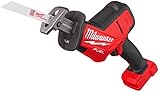
- Top Pick: Milwaukee 2719-20 M18 FUEL Hackzall (Bare Tool), Red, Black, | Saw (Tool Only) Model 2719-20
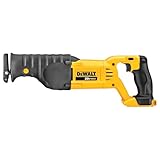
- Best Value: DEWALT 20V MAX Reciprocating Saw, 3,000 Strokes Per Minute, Variable Speed Trigger Cordless Saw, Tool Only (DCS380B)
- Premium Choice: DEWALT ATOMIC 20V MAX* Reciprocating Saw, One-Handed, Cordless, Tool Only (DCS369B)
For most demolition, plumbing and remodel work, a brushless 18V or 20V reciprocating saw from Milwaukee, DeWalt or Makita is the best buy, with Milwaukee’s M18 Fuel Sawzall the benchmark pick, a compact 12V saw ideal for tight spaces, and a corded saw reserved for all-day heavy cutting. Sawzall is Milwaukee’s brand name for a reciprocating saw, but the term is now used for the whole category.
As an Amazon Associate we earn from qualifying purchases at no extra cost to you.


What to Look For in a Reciprocating Saw
- Stroke length: Longer strokes remove material faster. The Milwaukee M18 Fuel Sawzall 2821-20 is listed by the maker with a 1-1/4 inch stroke.
- Strokes per minute: The same Milwaukee saw is listed at up to 3,000 strokes per minute. Variable-speed triggers help with metal and delicate cuts.
- Brushless motor: Brushless motors run cooler and use battery power more efficiently, which is why nearly all current premium cordless models use them.
- Blade clamp: A tool-free, lever-style clamp makes blade changes faster and safer.
- Adjustable shoe: Lets you spread wear across the blade and brace the cut.
- Weight and balance: Overhead and in-wall work punish heavy tools; compact saws win here.
- Orbital action: Some models offer an orbital setting for faster wood cuts, which should be turned off for metal.
At a Glance
| Model | Best for | Maker-stated points | Limits |
|---|---|---|---|
| Milwaukee M18 Fuel Sawzall 2821-20 | Demolition, framing, metal | Maker lists a brushless motor, 1-1/4 inch stroke, up to 3,000 SPM, LED light, lever-action blade clamp | Battery and charger sold separately in bare-tool kits; premium tier |
| DeWalt 20V Max XR reciprocating saw | All-round remodel use | Maker offers brushless saws with a four-position lever and variable speed | Specifics differ by model number; read the listing |
| Makita 18V LXT brushless recip saw | Cutting with balance and low vibration | Maker positions it with a brushless motor and anti-vibration design | Check which battery size gives best runtime |
| Milwaukee M12 Fuel Hackzall | Tight spaces, plumbing, electrical | Maker lists a compact one-handed design | Less power than full-size saws |
| Ryobi One+ HP brushless recip saw | Homeowners, budget tier | Maker lists a brushless motor within the Ryobi battery platform | Not built for daily jobsite abuse |
| Corded reciprocating saw (various makers) | Heavy continuous cutting | Unlimited runtime | Needs a power outlet and cord management |
Cordless vs Corded
Cordless reciprocating saws now handle most tasks. They are convenient on roofs, in crawlspaces and in rooms without power. The trade-off is runtime and battery cost. If you already own batteries from one platform, buying that platform’s saw is usually the most economical way to start. Corded saws still make sense for long continuous cutting, such as scrapping steel pipe all day, because you never swap batteries.
Battery Platform Matters
Pick the platform before the saw. Milwaukee’s M18 batteries, DeWalt’s 20V Max, Makita’s 18V LXT and Ryobi’s One+ each cover large tool ranges. A bare tool is cheaper if you already have batteries. If you are starting fresh, look at which platform offers the other tools you will want, such as drills, impact drivers and a circular saw.
Blades Are Half the Performance
A good saw with the wrong blade will disappoint. Wood demolition blades use coarse teeth, metal cutting blades use fine teeth and bi-metal construction for toughness, and pruning blades have aggressive teeth for green wood. Nail-embedded wood jobs need bi-metal or carbide blades, which makers list as more durable. Buy a mixed pack at first, then restock with what you use.
Decision Table
| Pick this if… | Choose | Why |
|---|---|---|
| You demolish or remodel regularly | Milwaukee M18 Fuel Sawzall or similar full-size brushless | Fast cutting and durable build |
| You already own DeWalt or Makita batteries | That platform’s brushless saw | Saves on batteries and chargers |
| You work in cabinets or tight spots | 12V compact saw | Light and one-handed |
| You need occasional home use | Entry-level brushless saw such as Ryobi One+ | Lowest tier for the job |
| You cut all day with no downtime | Corded saw | No battery swaps |
Safety and Technique
- Brace the shoe against the work for control and to reduce vibration and kickback.
- Check walls for wiring and pipes before cutting. Shut off power at the breaker and follow local rules; consult a licensed electrician when unsure.
- Wear eye protection, hearing protection and gloves.
- Let the blade reach speed before touching the material, and keep your free hand clear of the cut line.
- Remove the battery before changing blades.
Common Mistakes
- Choosing a saw without checking the battery platform.
- Using a wood blade on metal and burning it out.
- Buying a heavy saw for overhead work.
- Forcing the cut instead of letting the stroke do the work.
- Ignoring dust, which can clog a blade clamp over time.
Alternatives
An oscillating multi-tool handles flush cuts and detail work. An angle grinder with a cutoff wheel cuts rebar and bolts quickly. A cordless portable band saw is a cleaner choice for pipe and conduit. A jigsaw suits curves in sheet material, but a reciprocating saw is the tool for rough, fast cutting.
Battery Size and Runtime
Reciprocating saws pull heavy current, so battery capacity changes the experience more than with a drill. Larger packs, often listed in amp-hours by the maker, run longer and tend to feel better balanced on a full-size saw, though they add weight. Compact packs suit a 12V saw because the whole tool stays light. If you plan long cutting sessions, owning two batteries and a charger lets you swap and keep working. Cold weather also reduces battery output, so keep packs indoors until needed.
Vibration and Comfort
Vibration tires the hands during long cuts. Makers such as Makita and Milwaukee advertise vibration-reducing designs on some models, but the experience varies by blade and material. Gloves with padding and a firmly braced shoe help. If you cut overhead often, favor lighter tools, because fatigue leads to sloppy cuts and slips.
Frequently Asked Questions
What is the difference between a Sawzall and a reciprocating saw?
Sawzall is Milwaukee’s trademarked name for its reciprocating saws. Over time the word has become a general term, but other makers sell the same type of tool under different names.
Is a longer stroke better?
Generally a longer stroke cuts faster because each pass removes more material. It can also feel more aggressive, so a shorter stroke may offer more control in fine work.
Do I need a brushless model?
Brushless saws are described by makers as more efficient, which means longer runtime and less heat. If you use the tool heavily or run it on a small battery, the difference is worth having.
What blade should I use for pipe?
Use a fine-tooth metal-cutting bi-metal blade rated for the pipe material. Check the blade packaging for the material it is rated to cut and use lower speeds on thick metal.
Can a compact 12V saw replace a full-size one?
For plumbing, small demolition and trim work, often yes. For wall removal or thick framing, a full-size 18V or 20V saw is faster and more capable.







Write Your Review
No reviews yet. Be the first to share your experience!