
- Top Pick: Ganiza 4-in-1 Food Processor, Two 4-Cup Bowls, Slice, Shred, Mince, Whisk | 600W Peak Food Chopper & Meat Grinder for Chicken, Vegetables, Sauces, Cheese, Nuts | 2Speeds + Pulse | BPA-Free, Clean Brush
- Best Value: Food Processor and Vegetable Chopper 600W BPA Free 12-Cup Bowl, 2+P Speeds | French-Fry-Cutter, 6.8oz Grinder for Cheese Grating, Ice Creshing, Chopping, Shredding, Slicing, Mixing and Doughing
- Premium Choice: Zulay Rotary Cheese Grater Hand Crank, Vegetable Food Shredder – Black | 5 Blades, 304 Stainless Steel, 15 x Faster Prep, Upgraded Suction Base, BPA Free, Dishwasher Safe, Cheese Shredder
The Cuisinart 14-Cup Custom suits most people who grate cheese regularly, the Breville Sous Chef line suits cooks who want a premium build with a wide feed chute, and the Ninja Professional series suits budget buyers who want a strong motor and reversible discs. Grating cheese is a harder job than it looks: a processor has to cut clean shreds without smearing, gumming or stalling on hard blocks. This guide explains how the leading models compare based on maker specifications and published reviews, and how to choose.
As an Amazon Associate we earn from qualifying purchases at no extra cost to you.
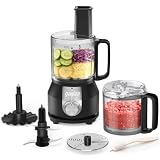


At a Glance: Food Processors for Cheese
| Model | Best for | Key stated specs | Limits |
|---|---|---|---|
| Cuisinart 14-Cup Custom (DFP-14 series) | All-round family use, frequent shredding | 14-cup bowl, 720-watt motor per Consumer Reports coverage, reversible shredding disc | One lab-style review scored its cheese shredding lower than rivals |
| Breville Sous Chef 9, 12 and 16 cup | Premium build, large batches | Wide feed chute, multiple disc options; sizes from 9 to 16 cups | Premium tier; big storage footprint |
| Ninja Professional XL | Budget buyers wanting power | 1200 peak watts per a reviewer, reversible disc for fine and coarse shreds | Plastic build; peak watt figures are not continuous output |
| Ninja Professional Plus (BN601 class) | Soft cheeses, small kitchens | Compact, strong motor for its class | Smaller bowl; hard blocks need cutting down |
| Breville Paradice 9 | Chopping and slicing, shredding | 9-cup class | Consumer Reports describes grating as a weak point |
Specifications come from maker listings and reviewer summaries; models are revised regularly, so check the box or manual for your exact version.
How a Food Processor Handles Cheese
Shredding relies on a flat disc with raised cutting holes spinning against the cheese as you push it through the feed tube. Three things determine results: disc sharpness and hole size, motor torque, and the temperature and moisture of the cheese. Cold, firm cheese cuts cleanly; warm, soft cheese smears and clumps. Reviewers consistently note that soft cheeses like fresh mozzarella are best chilled first, and very hard cheeses such as Parmesan are better handled with a fine grating disc or the S-blade.
What to Look For
Disc options
A reversible disc with a coarse shred on one side and a fine shred on the other covers most kitchens. A separate fine grating disc is useful for hard cheese. Check what is in the box: some models ship with only slicing and shredding sides.
Motor power and torque
Makers publish watts, but peak and continuous watts differ. The Cuisinart Custom is cited at 720 watts, while a reviewer cites 1200 peak watts for the Ninja Professional XL. Treat wattage as a rough guide only; build quality and disc design matter as much.
Feed chute size
A wide chute accepts a larger block with less pre-cutting, which saves time. Breville Sous Chef models are known for their wide feed chute according to reviewer descriptions, and Cuisinart machines use a large and small pusher combination.
Bowl size
Fourteen to sixteen cups suits families and batch cooking. Nine to eleven cups suits couples and small kitchens. Larger bowls need more cabinet space.
Cleaning and safety
Discs are sharp; handle them by the hub, and unplug before assembly or cleaning. Many bowls and lids are marked top-rack dishwasher safe by the maker, but wash blades by hand if the manual advises it.
Model Notes
Cuisinart 14-Cup Custom
Forbes Vetted names it as a pick for most people, and Consumer Reports gives the 720-watt version a strong shredding rating. One review notes it handles onion chopping and cheese shredding as well as pricier machines. A counterpoint comes from TechGearLab, whose published scores rated it lower than Breville and Ninja on cheese, so it is not a clear winner in every test.
Breville Sous Chef
Yahoo’s review reports that the 9-cup model outperformed other processors, including on shredded cheese. The 16-cup BFP810 is the larger, premium option. It suits those who want maximum capacity and are willing to dedicate counter or shelf space.
Ninja Professional XL and Professional Plus
Guidespot reports the Professional XL’s reversible disc produced clean, even shreds of cheddar without gumming, and Nerdalicious ranks it its top cheese shredder. Another guide says the BN601 does well with soft cheeses. The tradeoff is a lighter construction than the premium machines.
Breville Paradice 9
Consumer Reports says it excels at chopping, slicing and shredding, but is weak at grating. That makes it a fit for those whose cheese jobs are mostly coarse shredding.
Tips for Cleaner Shreds
- Chill cheese for about 15 to 30 minutes before shredding.
- Cut blocks to fit the chute and use steady, light pressure.
- Shred small batches to avoid compacting at the bottom.
- Toss shredded cheese with a small spoon of starch if you plan to store it, as clumping is common.
- Do not process very soft cheeses on a fine disc.
Pick X If… Decision Table
| Pick this | If you want | Skip it if |
|---|---|---|
| Cuisinart 14-Cup Custom | A proven all-rounder with broad accessory support | You want a compact machine |
| Breville Sous Chef | A wide chute and premium build | Budget is a priority |
| Ninja Professional XL | Strong motor at a budget tier | You want an all-metal build |
| Ninja Professional Plus | A small bowl and soft cheese | You shred large batches of hard cheese |
| Box grater or rotary grater | Occasional use, easy cleanup | You shred in bulk |
Alternatives
- Electric cheese grater or rotary grater: small and quick for a single serving.
- Stand mixer shredder attachment: a useful option if you already own the mixer, though capacity is smaller.
- Manual box grater: the cheapest solution for light use.
Common Mistakes
- Shredding room-temperature cheese, which clumps.
- Using the S-blade for shredding instead of the disc.
- Judging power only by watts.
- Forcing cheese through the chute; let the disc do the work.
- Ignoring storage space for the disc case.
Frequently Asked Questions
Can a food processor grate hard cheese like Parmesan?
Yes, but use a fine grating disc if one is included or pulse chunks with the S-blade. Cut the cheese into small cubes and keep it cold, because hard cheese strains weaker motors.
Why does my cheese clump or smear?
It is usually too warm or too soft. Chill it first, shred in small batches and avoid pressing hard against the disc.
Is a bigger bowl better for cheese?
Not necessarily. A larger bowl helps with big batches, but shredding output depends more on disc quality and motor than bowl size.
Which brand has the strongest motor?
Makers list different wattage types, so comparisons are tricky. A reviewer lists 1200 peak watts for the Ninja Professional XL, while Cuisinart’s Custom is cited at 720 watts; real performance depends on design as well.
How do I clean shredding discs safely?
Unplug the unit, handle discs by the center hub and rinse right away so cheese does not dry. Follow the maker’s manual on dishwasher use.
Is pre-shredded cheese better than shredding yourself?
Pre-shredded cheese often includes anti-caking agents that can affect melting, while freshly shredded cheese tends to melt more smoothly. A food processor makes freshly shredded cheese quick.


Write Your Review
No reviews yet. Be the first to share your experience!