
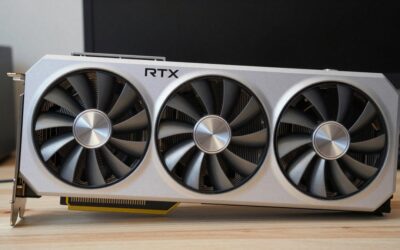
- Top Pick: ASUS Dual GeForce RTX 3050 6GB GDDR6 OC Edition Gaming Graphics Card
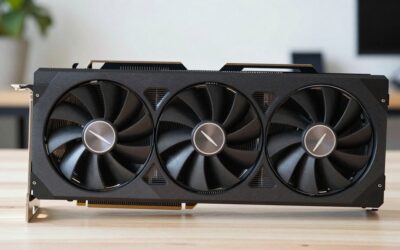
- Best Value: msi Gaming RTX 3050 Ventus 2X 6G OC Graphics Card (NVIDIA RTX 3050, 96-Bit, Boost Clock: 1492 MHz, 6GB GDDR6 14 Gbps, HDMI/DP, Ampere Architecture)
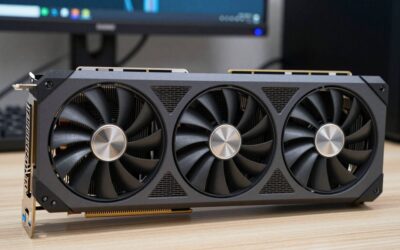
- Premium Choice: ZER-LON GeForce GTX 1660 Super 6GB Graphics Cards, GDRR6 192Bit PCIE 3.0X16 Computer Gaming Gpu, Dual Freeze Fans Video Card with HDMI/DP/DVI Ports Support 4K and 8K HD
GTX 1660 vs RTX 3050 is the classic entry-level standoff for anyone building a first budget gaming PC without overspending. These two cards sit close in raw speed, but one adds modern features and more VRAM while the other keeps the price as low as possible. This side-by-side breaks down the specs, the real 1080p frame rates, and a clear verdict on exactly where they differ and which one is the smarter buy in 2026.
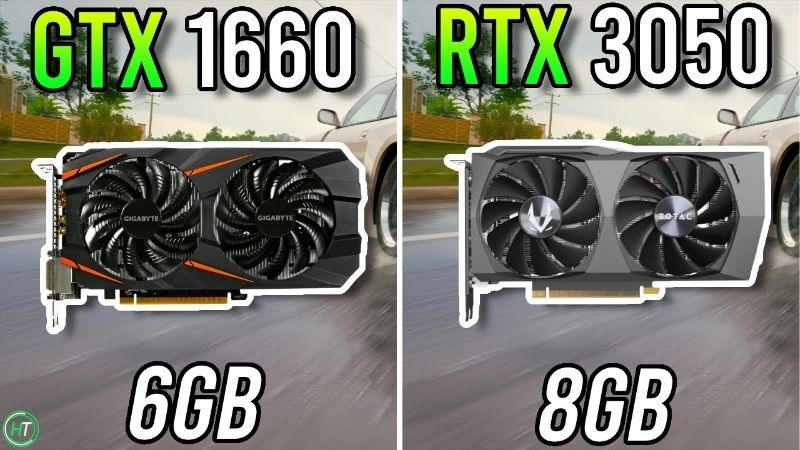
The Quick Verdict and Full Spec Comparison
Here is the short answer before the details. These cards are closer than their names suggest, and the winner depends on whether you value modern features or the absolute lowest price. The table below shows every spec that matters, so you can see precisely what separates a pure raster card from one with DLSS and ray tracing built in.
As an Amazon Associate we earn from qualifying purchases at no extra cost to you.



Quick Verdict: Who Wins at a Glance
For most buyers today, the RTX 3050 is the better all-round card. It matches or slightly trails the GTX 1660 in raw raster but adds 8GB of VRAM, DLSS, ray tracing, and a newer encoder, which makes it noticeably more future-ready for a small price premium.
The GTX 1660 wins purely on cost. If you can find it meaningfully cheaper and you only care about traditional 1080p gaming with no interest in ray tracing or upscaling, it still delivers a solid experience for less money.
Short version: buy the RTX 3050 for DLSS, extra VRAM, and modern features, and choose the GTX 1660 only when its lower price is the deciding factor.
Full Spec Comparison Table
Numbers first. These reference specs explain both the close raw performance and the feature gap between them.
| Spec | GTX 1660 | RTX 3050 |
|---|---|---|
| Architecture | Turing (GTX) | Ampere (RTX) |
| VRAM | 6GB GDDR5 | 8GB GDDR6 |
| Memory bus | 192-bit | 128-bit |
| CUDA cores | 1,408 | 2,560 |
| Ray tracing | No | Yes (RT cores) |
| DLSS | No | Yes (Tensor cores) |
| Board power | ~120W | ~130W |
| Typical used price | ~$110–$140 | ~$150–$180 |
The GTX 1660 has a wider memory bus and slightly faster raw memory setup, while the RTX 3050 counters with more cores, 8GB of GDDR6, and the RT and Tensor hardware that unlock features the 1660 cannot run at all.
What the Raw Numbers Actually Mean
The core-count difference is larger than it looks. The RTX 3050’s Ampere cores are organized differently from Turing, so raw counts do not translate one-to-one, which is why these cards end up so close in traditional rasterized games despite the gap on paper.
VRAM is a quiet win for the RTX 3050. Its 8GB buffer versus the GTX 1660’s 6GB gives it more headroom in modern titles that load heavier textures, helping it avoid the stutter and pop-in the 1660 can hit sooner as games grow more demanding.
Power draw is nearly identical, so efficiency is not a real differentiator here. Both cards are easy to power and cool, which keeps the decision focused squarely on features and price rather than system demands.
Deep Dive Face-Off: Performance, Features, and Real-World Fit
Spec sheets set expectations; real use confirms them. To choose well you need to see how these cards compare in actual frame rates, what the RTX features genuinely deliver, and how each fits a real budget build. This is where the GTX 1660 vs RTX 3050 decision comes down to how and where you play.
Rasterization Performance at 1080p
In traditional 1080p gaming, these cards are remarkably close, often finishing within a handful of frames of each other across a wide range of titles. Neither holds a decisive raw-performance lead, so you will not feel a dramatic difference in pure raster from one to the other.
In esports games, both comfortably push high frame rates suitable for a 144Hz monitor in lighter titles. In demanding AAA games at 1080p high settings, both hover around the 60 fps mark, occasionally needing a setting or two lowered to stay perfectly smooth.
The RTX 3050’s extra VRAM gives it a slight edge in the newest, most texture-heavy titles, where its 8GB buffer holds settings the 6GB GTX 1660 sometimes has to reduce. That difference is small today but grows as games keep raising their memory demands.
In concrete terms, both cards land in a similar bracket in games like Fortnite, Apex Legends, and mainstream AAA titles at 1080p, comfortably delivering a smooth experience at high settings. The gap only becomes meaningful in the most demanding recent releases, where the RTX 3050’s larger VRAM buffer and DLSS support let it hold settings and frame rates the GTX 1660 has to compromise on. For a card you plan to keep as games evolve, that trajectory matters.
Ray Tracing, DLSS, and the Feature Advantage
This is the RTX 3050’s real reason to exist. Its Tensor cores run DLSS, which reconstructs a sharp image from a lower internal resolution to boost frame rates, effectively giving the card a performance lever the GTX 1660 does not have in any game that supports it.
Ray tracing is also on the menu for the RTX 3050, if only at an entry level. It is not a high-end ray tracing experience, but paired with DLSS it lets you sample ray-traced effects in a way the traditionally-rendered GTX 1660 cannot attempt at all.
Because Nvidia continues to expand DLSS and AI-driven rendering, the RTX 3050 taps into a feature set that keeps evolving, giving it more staying power than the feature-locked GTX 1660. For a card you plan to keep for a few years, that ongoing development is a meaningful advantage.
The value of that upscaling grows precisely because these are entry-level cards. On a budget GPU, the extra frames DLSS provides can be the difference between a game feeling choppy and feeling smooth, so having that lever available on the RTX 3050 stretches its useful life in demanding titles. The GTX 1660, lacking any equivalent, has only its raw performance to fall back on as games get heavier.
Encoding, Outputs, and System Fit
Both cards include capable hardware encoders suitable for lightweight streaming and recording, though the RTX 3050’s newer engine is the more modern of the two. For a budget streamer, that gives the 3050 a small practical edge.
On compatibility, the two are similarly easy to accommodate. Both draw around 120–130W, need a single power connector, and fit standard mid-tower cases without fuss, so neither imposes special demands on your build.
That shared ease of installation means your choice rarely hinges on your system’s limits. Instead, it comes back to whether the RTX 3050’s features and VRAM justify its higher price for how you intend to use the card.
Value, Alternatives, and Final Verdict
Performance is close, so value comes down to price and priorities. Here are the honest trade-offs, a strong alternative if neither is quite right, and a final recommendation based on how you play.
Pros and Cons of Each Entry-Level GPU
Both cards are compromises by design. Here is the direct breakdown so you can line them up against your needs.
GTX 1660
- Pros: Lower price, solid pure 1080p raster, wider memory bus, easy to power and cool.
- Cons: Only 6GB VRAM, no ray tracing or DLSS, less future-ready, older architecture.
RTX 3050
- Pros: 8GB VRAM, DLSS and ray tracing, newer encoder, better long-term relevance.
- Cons: Higher used price, narrower memory bus, only a modest raw-performance step over the 1660.
The Alternative Pick
If you can stretch your budget a little, a used RX 6600 is the standout alternative to both cards. It typically delivers noticeably higher raw performance than either the GTX 1660 or RTX 3050 for a similar or slightly higher price, making it the value benchmark in this class.
On the other side, if your budget is truly fixed, watch for a well-priced GTX 1660 Super, which sits between these two on performance and often represents strong value on the used market.
Which alternative fits depends on whether you want maximum performance per dollar or the lowest possible entry price with modern features.
It is worth being realistic about the value picture, too. Because the RX 6600 often sits close in price to the RTX 3050 while offering more raw performance, it frequently makes the stronger case for anyone whose budget can reach it. The GTX 1660 and RTX 3050 remain relevant mainly when they turn up at a clear discount or when a specific feature—rock-bottom price for the 1660, or DLSS and 8GB VRAM for the 3050—matches your exact needs.
See More:
Final Verdict: Who Should Buy Which
Choose the RTX 3050 if you want 8GB of VRAM, DLSS, and ray tracing in a card that will stay relevant longer, and you are comfortable paying a modest premium for those features. For most buyers today, it is the smarter long-term pick.
Choose the GTX 1660 only when its lower price is the deciding factor and you are certain you will never use ray tracing or DLSS. In that narrow case, it remains a capable, cost-effective 1080p card.
Prices move constantly on the used market, so compare live listings before you buy. You can check current deals on both cards through the links on this page and grab the one that fits your budget.
Ultimately, the GTX 1660 vs RTX 3050 decision favors the RTX 3050 for most gamers, since it pairs similar raw performance with 8GB of VRAM, DLSS, and ray tracing for only a little more money. The GTX 1660 remains a fine choice when price is the single most important factor and modern features do not matter to you. Match the card to your budget and how long you plan to keep it, and either one can anchor a capable, wallet-friendly 1080p build in 2026.
Top-Rated Picks


| Product | Brand | Rating | Reviews | Price |
|---|---|---|---|---|
| ARCTIC MX-4 (4 g) – Premium Performance Thermal Paste… | ARCTIC | ★ 4.8 | 104k | $4.99 |
| ARCTIC MX-4 (incl. Spatula, 4 g) – Premium Performanc… | ARCTIC | ★ 4.8 | 71.9k | under $10 |
| Crucial 8GB DDR4 RAM 3200MHz (PC4-25600), Downclockab… | Crucial | ★ 4.8 | 62.8k | under $80 |
| AMD Ryzen 5 5600X 6-core, 12-thread unlocked desktop … | — | ★ 4.8 | 30.2k | under $200 |
| NVIDIA Shield Remote; Voice Search, Motion-Activated,… | — | ★ 4.7 | 10.6k | under $30 |
Frequently Asked Questions
Does the RTX 3050 beat the GTX 1660 in raw raster performance?
In pure rasterization the two trade blows, with the RTX 3050 typically landing about 5 to 12 percent ahead of the GTX 1660 at 1080p depending on the title. The gap widens sharply once you enable DLSS, because the GTX 1660 has no tensor cores and can only use FSR upscaling instead.
Is 6GB of VRAM on the GTX 1660 still enough for 1080p gaming?
For older and esports titles 6GB is fine, but several 2023 and newer releases push past 6GB at high textures even at 1080p, causing stutter or forced texture downgrades. The RTX 3050 ships with 8GB of GDDR6, which gives it noticeably more headroom in modern open-world games and mod-heavy setups.
What power supply and connector do these cards need?
The GTX 1660 draws about 120W and uses a single 8-pin PCIe connector, while the RTX 3050 draws roughly 130W and also uses one 8-pin. A quality 450W to 500W unit handles either card comfortably in a typical build. Cheap unbranded 400W supplies are the usual cause of shutdowns under load.
Is ray tracing actually usable on the RTX 3050?
Only in a limited way. The RTX 3050 has second-generation RT cores, so lightweight ray-traced shadows or reflections in older titles are playable at 1080p with DLSS Performance. Heavy path-traced games are not realistic. Treat ray tracing as a bonus feature rather than a reason to buy this tier of card.
Which one is the better buy on the used market?
If the GTX 1660 is significantly cheaper, it remains decent value for 1080p medium to high settings. But if prices are within about 20 percent, the RTX 3050 wins on VRAM capacity, DLSS support, NVENC encoding quality for streaming, and longer driver support on the Ampere architecture.
Ready to decide? Our #1 pick for 2026 is the Architecture.
Live price & availability on Amazon.

Write Your Review
No reviews yet. Be the first to share your experience!