
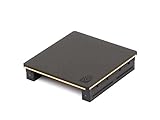
- Top Pick: NVIDIA NVLink Bridge 2-Slot for 3090 A5000 A5500 A6000 900-53651-2500-000
- Best Value: PNY Inc. RTXA6000NVLINK3S-KIT, 3-Slot Bridge for RTX A6000, A Series NVLINK 3S SCB
- Premium Choice: HPE NVIDIA Tesla V100 32GB HBM2 PCIe 3.0 x16 Passive GPU Computational Accelerator for AI Machine Learning HPC Deep Learning 699-2G500-0216-400 (Renewed)
Nvidia NVLink is the high-speed interconnect that turns a rack of separate GPUs into something that behaves like one enormous accelerator, and it is often the difference between a cluster that scales and one that stalls. For anyone speccing multi-GPU infrastructure for training or large-scale inference, understanding NVLink is essential, because the interconnect can matter as much as the GPUs themselves. This review explains what NVLink is, how it compares to PCIe, when you genuinely need it, and how it should shape your hardware decisions in 2026.
As an Amazon Associate we earn from qualifying purchases at no extra cost to you.


What Nvidia NVLink Is
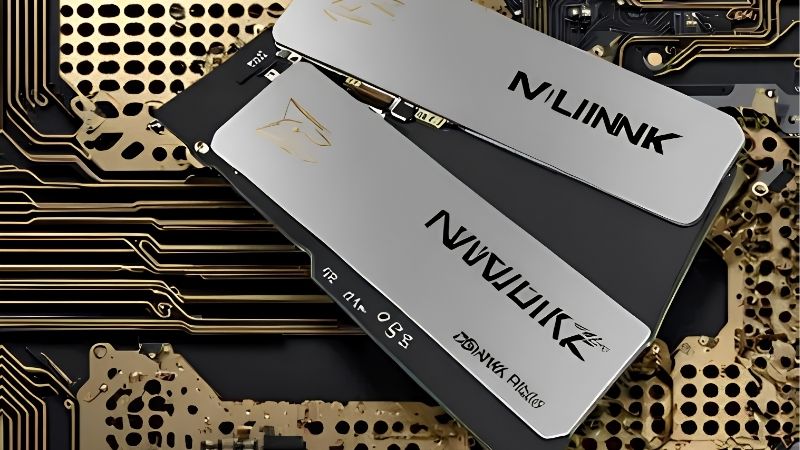
NVLink is Nvidia’s dedicated GPU-to-GPU interconnect, built to move data between accelerators far faster than the standard PCIe bus allows. Understanding that it exists specifically to solve the communication bottleneck in multi-GPU systems is the key to knowing when it will transform your performance and when it is simply unused capability.
A High-Speed GPU Interconnect
NVLink provides direct, high-bandwidth links between GPUs, letting them exchange data and share memory at speeds a conventional bus cannot approach. Rather than routing traffic through the CPU and PCIe, GPUs talk to each other directly over dedicated lanes.
The purpose is simple but crucial: in multi-GPU work, the GPUs must constantly exchange data, and if that exchange is slow, the accelerators sit idle waiting. NVLink keeps them fed, so the collective compute is actually usable rather than bottlenecked.
For an architect, that is the core value. NVLink does not make an individual GPU faster; it makes many GPUs work together efficiently, which is a different and often more important kind of performance for large workloads.
That distinction trips up many first-time buyers, who focus on per-GPU benchmarks and overlook the interconnect. For multi-GPU work, a system with strong NVLink can outperform one with faster individual cards but a weaker link between them.
That is a counterintuitive but important point for procurement. The temptation is to compare systems on GPU model alone, yet for cooperative workloads the quality of the fabric connecting them can be the more decisive specification.
NVLink vs PCIe Bandwidth
The headline comparison is bandwidth. NVLink delivers many times the bandwidth of a PCIe connection between GPUs, with recent generations reaching hundreds of gigabytes per second per link, far beyond what PCIe provides.
That gap matters because PCIe was designed for general connectivity, not the intense GPU-to-GPU traffic of modern AI. When large models are split across cards, PCIe quickly becomes the bottleneck, while NVLink has the headroom to keep the data flowing.
The analytical takeaway is that for tightly coupled multi-GPU workloads, the interconnect can determine whether adding more GPUs actually speeds you up. NVLink is what lets scaling be efficient rather than hitting a communication wall.
The practical consequence is measurable: on communication-heavy training, PCIe-only systems often see diminishing returns as GPUs are added, while NVLink-connected systems keep scaling more linearly. The interconnect decides where that ceiling sits.
NVSwitch and Scaling Beyond Two GPUs
NVLink connects GPUs directly, but to link many of them at full bandwidth, Nvidia uses NVSwitch, a switching fabric that lets every GPU in a system communicate with every other at high speed. This is what powers eight-GPU servers and larger.
With NVSwitch, a full system of GPUs behaves far more like one large accelerator than a collection of separate cards. That all-to-all connectivity is essential for the largest models, where data must move freely among all the GPUs at once.
For buyers, the practical point is that serious multi-GPU systems rely on NVLink and NVSwitch together. The presence and generation of these interconnects is a key differentiator between systems, not an afterthought to the GPU count.
When comparing systems, then, it is worth asking not just how many GPUs are present but how they are connected. Two eight-GPU servers can behave very differently depending on whether they use full NVSwitch fabric or fall back to slower links.
Why NVLink Matters in Real Workloads
NVLink’s value is entirely about how well multiple GPUs cooperate. Across training and large-scale inference, the pattern is that NVLink transforms performance where GPUs must work together closely, and adds little where they do not.
Large-Model Training and Memory Pooling
For training large models, NVLink is transformative. Models too big for one GPU are split across several, and the constant exchange of gradients and activations depends on fast interconnect; NVLink keeps that communication from throttling the whole run.
It also enables effective memory pooling, letting linked GPUs work with a combined memory space for models that no single card could hold. That capability is central to training at the frontier of model size.
The result is that NVLink-connected systems scale far more efficiently than PCIe-only ones as you add GPUs. For serious training, the interconnect is not optional; it is what makes multi-GPU training practical at all.
This is why the largest training runs are built almost exclusively on NVLink-and-NVSwitch systems. At frontier scale, the interconnect is not a performance tweak but a prerequisite, without which the GPUs could not cooperate closely enough to train the model.
Inference and Multi-GPU Serving
For inference on very large models, NVLink matters when a model must be served across multiple GPUs. The fast interconnect keeps latency low and throughput high by letting the GPUs coordinate quickly on each request.
As models grow, more inference deployments cross the threshold where a single GPU is not enough, and at that point NVLink becomes as relevant to serving as it long has been to training. The interconnect increasingly shapes inference economics too.
For teams planning around ever-larger models, that trend is worth anticipating. A serving stack that fits on one GPU today may need multiple tomorrow, and buying interconnect-capable hardware early can save a disruptive platform change later.
For smaller models that fit comfortably on one GPU, though, this benefit does not apply, which is an honest limit worth keeping in mind when deciding how much interconnect you actually need.
When You Do and Do Not Need NVLink
The clearest signal you need NVLink is workloads that span multiple GPUs working tightly together, such as large-model training or serving models too big for one card. In those cases, the interconnect is essential to performance.
Conversely, if your workloads fit on a single GPU or run as independent jobs that do not communicate, NVLink adds cost without benefit. Many independent inference tasks, for example, gain nothing from a fast GPU-to-GPU link.
The practical rule is to match interconnect to communication patterns. Buy NVLink when your GPUs must cooperate; skip it when they work alone, and put the savings toward more compute or memory instead.
Being honest about this saves real money. Over-specifying interconnect for independent workloads is a common and avoidable expense, and the discipline of matching the link to the communication pattern keeps budgets focused on what actually moves your results.
NVLink, Hardware, and Market Timing
Because NVLink lives on data-center GPUs and systems, building around it ties into the hardware market. Two developments in 2026 shape the cost and availability of NVLink-capable hardware, and both reward aligning purchases with a real need.
Choosing NVLink-Capable Hardware in 2026
NVLink and NVSwitch are features of Nvidia’s data-center GPUs and systems, which sit in the most contested part of the market. The United States has moved to permit Nvidia to sell the H200 into China, adding a large new source of demand to the same generation of hardware.
For a planner, the lesson is practical: when the systems that provide NVLink scaling are also what a global market is competing for, assuming supply will loosen and prices will fall is a shaky basis for a roadmap. If your plan needs multi-GPU scaling, securing that hardware early protects your schedule.
The analytical read is that interconnect-rich systems are in high demand precisely because the largest models depend on them, so treating availability as a planning constraint rather than an afterthought is the wiser stance.
It also means interconnect capability should be locked in as part of the same order as the GPUs, since retrofitting a cluster for better scaling later is far harder than specifying it correctly at the time of purchase.
In practice, that makes interconnect a design-time decision rather than a later upgrade. Getting it right when the cluster is first specified saves both money and the disruption of rebuilding for scale you could have planned for from the start. For clusters expected to grow, that foresight is often the difference between a smooth expansion and an expensive rebuild, which is why experienced architects treat the interconnect as a first-class part of the specification rather than a detail settled after the GPUs are chosen.
Memory Prices and Buying Timing
The broader memory market also shapes the cost of NVLink-capable systems. Component and memory prices climbed steeply through late 2025 before merely leveling off, which is relief but not a cut, and multi-GPU systems packed with high-bandwidth memory are fully exposed to those costs.
New supply is coming, with OEMs able to source DDR5 from vendors such as CXMT and Micron building two Idaho plants, but those fabs will not reach volume until 2027 to 2028. The measured read is that these systems are unlikely to get dramatically cheaper soon.
For a buyer, that argues against waiting on a price collapse. If your workloads need NVLink scaling, securing capable hardware now protects your schedule better than betting on savings the timeline does not promise.
Nvidia NVLink Pros and Cons
The picture distilled for a fast decision.
Pros: far higher GPU-to-GPU bandwidth than PCIe; enables efficient multi-GPU scaling and memory pooling; essential for large-model training and serving; NVSwitch extends it to full all-to-all systems.
Cons: only benefits tightly coupled multi-GPU workloads; adds cost that single-GPU or independent jobs do not repay; lives on premium data-center hardware; that hardware is in high demand and firmly priced.
See More:
Final Verdict: Is Nvidia NVLink Worth It?
For anyone training large models or serving models too big for a single GPU, Nvidia NVLink is essential rather than optional, because it is what lets multiple GPUs work together efficiently instead of stalling on communication. If your workloads fit on one GPU or run as independent jobs, NVLink is capability you will pay for but not use, and the money is better spent elsewhere.
If your workloads need multi-GPU scaling, remember that NVLink lives on data-center hardware whose price and supply favor acting on a real need rather than waiting. Check the latest Nvidia NVLink-capable GPUs and systems, configurations, and availability through the link below and plan your infrastructure before demand tightens further.
Top-Rated Picks


| Product | Brand | Rating | Reviews | Price |
|---|---|---|---|---|
| ARCTIC MX-4 (4 g) – Premium Performance Thermal Paste… | ARCTIC | ★ 4.8 | 104k | $4.99 |
| ARCTIC MX-4 (incl. Spatula, 4 g) – Premium Performanc… | ARCTIC | ★ 4.8 | 71.9k | $5.49 |
| Crucial 8GB DDR4 RAM 3200MHz (PC4-25600), Downclockab… | Crucial | ★ 4.8 | 62.8k | $74.99 |
| AMD Ryzen 5 5600X 6-core, 12-thread unlocked desktop … | — | ★ 4.8 | 30.2k | $177.60 |
| NVIDIA Shield Remote; Voice Search, Motion-Activated,… | — | ★ 4.7 | 10.6k | $25.99 |
Frequently Asked Questions
What does NVLink actually do?
NVLink is a high-bandwidth GPU-to-GPU interconnect that lets multiple GPUs share data far faster than PCIe allows, and in some configurations address each other memory directly. In Hopper-class systems it delivers hundreds of gigabytes per second per GPU, which is critical for splitting large models across devices.
Do consumer RTX cards still support NVLink?
No. Nvidia removed NVLink from consumer cards after the RTX 30 series, where only the RTX 3090 supported a bridge. Ada Lovelace and later GeForce cards have no NVLink connector, so multi-GPU work on consumer hardware must communicate over PCIe instead.
Does NVLink help with gaming?
Effectively no. SLI is dead and modern game engines do not implement multi-GPU rendering, so a second card provides no frame rate benefit in almost every title. NVLink today is a compute and professional feature, not a gaming one, regardless of what older marketing suggested.
Is NVLink required for multi-GPU AI training?
Not required, but very helpful for large models. Without it, GPUs communicate over PCIe, which becomes the bottleneck during gradient synchronization and model-parallel transfers. If your model fits on a single GPU and you are running data parallel jobs, PCIe is usually adequate.
What is the difference between NVLink and NVSwitch?
NVLink is the point-to-point link between GPUs, while NVSwitch is a switch chip that connects many NVLink endpoints so every GPU in a node can talk to every other at full bandwidth. HGX baseboards with eight GPUs rely on NVSwitch to avoid uneven peer-to-peer topologies.




Write Your Review
No reviews yet. Be the first to share your experience!