
- Top Pick: Nvidia RTX 5000 Ada Quadro RTX 5000 32 GB GDDR6
- Best Value: PNY NVIDIA Quadro RTX 5000 Graphic Card – 32 GB GDDR6
- Premium Choice: NVIDIA RTX PRO 4000 Blackwell Graphics Card – 24GB GDDR7 ECC Memory, PCIe 5.0 x16, 4X DisplayPort 2.1b, Single Slot Full Height AI Workstation GPU, Retail Packaging
Nvidia RTX 5000 Ada is the card professionals reach for when the mid-range no longer keeps up but the top-tier RTX 6000 Ada is more than the budget or the workload demands. With 32 GB of memory, near-flagship compute, and a workstation-friendly power profile, it targets serious studios, labs, and engineering teams that need heavy lifting without paying the absolute premium. This review synthesizes deployment reports and buyer feedback to show exactly what the RTX 5000 Ada does well, where its limits sit, and whether it is the right high-end professional GPU for your workflow in 2026.
As an Amazon Associate we earn from qualifying purchases at no extra cost to you.


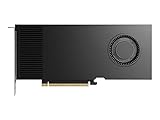



What the Nvidia RTX 5000 Ada Offers
The RTX 5000 Ada sits just below the flagship in Nvidia’s Ada professional lineup, delivering most of the top card’s capability at a more approachable position. Understanding what its specifications translate into for demanding real work, and how it compares to the cards on either side of it, is the key to knowing whether it is the right high-end rung for you.
Ada Architecture and 32 GB of Memory
The RTX 5000 Ada packs 12,800 CUDA cores, 400 fourth-generation Tensor cores, and 100 third-generation RT cores, paired with 32 GB of GDDR6 memory with error correction. That combination delivers genuinely powerful professional performance, sitting close to the flagship while remaining meaningfully more affordable.
The 32 GB buffer is the card’s headline strength for demanding professionals. It comfortably holds very large CAD assemblies, complex ray-traced scenes, high-resolution video projects, and sizeable AI models that would overwhelm the 20 GB and 24 GB cards below it, giving real headroom for heavy work.
Analytically, the fourth-generation Tensor cores bring FP8 support, so the RTX 5000 Ada accelerates modern AI inference efficiently alongside its creative and engineering roles. For professionals blending demanding design with substantial local AI work, that dual strength makes the card a powerful single-machine solution.
That convergence of graphics and AI on one card matters more each year. A studio that renders demanding scenes by day and runs sizeable local models by night gets two workstations’ worth of capability from one, which is a real part of the RTX 5000 Ada’s value at its price.
A High-End 250-Watt Workstation Card
The RTX 5000 Ada draws 250 watts in a dual-slot design, a strong-yet-manageable profile that delivers near-flagship performance while still fitting standard high-end workstation power and cooling. It brings serious horsepower without the most extreme provisioning demands.
For professionals, that balance is practical. The card fits mainstream high-end towers, runs reliably under sustained heavy loads, and can be deployed in pairs where a build allows, which suits demanding render nodes and multi-card compute setups without exotic infrastructure.
The trade-off is modest and honest: the flagship RTX 6000 Ada pulls ahead on the very heaviest workloads with its 48 GB and higher core count. The RTX 5000 Ada trades that final slice of capability for a lower price, which is exactly the deal its target buyer wants.
Where It Fits vs RTX 4500 Ada and RTX 6000 Ada
Against the RTX 4500 Ada, the 5000 model adds significant compute and 8 GB more memory, making it the choice when 24 GB and upper-mid performance begin to constrain your heaviest projects. It is the step up for professionals whose work is genuinely demanding.
Against the flagship RTX 6000 Ada, the 5000 is the more affordable option that captures most of the capability for less, sensible when you do not need the full 48 GB buffer. For many studios, it delivers the bulk of the flagship’s value at a noticeably lower cost.
Choosing correctly is about matching memory and compute to your actual heaviest projects. Buyers who size the RTX 5000 Ada to genuinely demanding work consistently report strong value, and the card is engineered precisely for that high-end but not absolute-top tier.
A practical way to decide is to look at where your current card runs out of memory or time. If you routinely hit a 24 GB ceiling or wait on heavy renders, the RTX 5000 Ada clears those walls; if you only occasionally brush them, the flagship’s extra headroom is money you need not spend.
Nvidia RTX 5000 Ada Performance in Real Work
Specifications set expectations, but the card’s value shows in how it handles heavy daily work. Across demanding engineering, 3D, and AI tasks, buyer feedback describes a powerful, dependable card that rewards professionals who chose it for genuinely intensive workloads.
Demanding CAD, Engineering, and Simulation
For heavy CAD and engineering simulation, the RTX 5000 Ada excels thanks to certified drivers and strong performance in demanding software like CATIA, Ansys, and Siemens NX. Professionals working with massive assemblies and complex simulations value both the reliability and the substantial compute headroom.
The 32 GB buffer lets engineers handle very large models and heavy datasets without the memory-related slowdowns that constrain smaller cards, keeping intensive projects responsive through long working sessions. That headroom is what distinguishes a high-end card from an upper-mid one.
Feedback from engineering users is consistently strong on both reliability and capability, with praise centering on the card’s ability to chew through substantial workloads smoothly. For certified professional software, that dependable power is worth far more than raw benchmark scores alone.
3D Rendering and High-End Content Creation
For 3D rendering and high-end content creation, the RTX 5000 Ada is a serious workhorse, handling very complex scenes, high-resolution video, and heavy GPU-accelerated rendering with comfortable headroom. Artists and editors get fast iteration and smooth playback on demanding professional projects.
Its rendering performance suits established studios and serious professionals whose projects are heavy but do not require the absolute flagship, and the manageable power profile means it fits high-end workstations cleanly. That combination of near-top capability and practicality is central to its appeal.
The common caveat is that the most extreme production rendering and the very largest scenes still benefit from the flagship’s extra memory and cores. The RTX 5000 Ada is a powerful high-end tool, and buyers who understand where it sits are consistently pleased with the value.
For established studios, that near-flagship strength brings confidence. Taking on ambitious projects without constantly managing the card’s limits is exactly what a high-end purchase should buy, and the RTX 5000 Ada delivers that assurance a tier below the top price, which is the reassurance most serious studios are ultimately paying for.
AI Development, Inference, and Compatibility
With FP8-capable Tensor cores and 32 GB, the RTX 5000 Ada handles large local AI models, fine-tuning, and development work well, letting professionals run substantial inference on the same machine they design and render on. That capability is increasingly valuable as AI features spread through professional tools.
Practically, the 250-watt draw fits high-end workstation power and cooling, and the dual-slot design slots into standard towers without exotic provisioning. Confirm your power supply and case have room, though the card’s high-end but mainstream profile rarely causes real compatibility trouble.
The pattern in feedback is that buyers who use the card for its intended blend of powerful professional graphics and serious local AI are very satisfied, while the few disappointed users expected the absolute flagship’s capacity from a deliberately second-tier card.
Buying the RTX 5000 Ada in 2026: Value, Market, and Pros and Cons
The RTX 5000 Ada makes the most sense as a powerful, near-flagship professional card that captures most of the top-tier value for less. Two market realities in 2026 also shape whether now is a good time to buy, and both favor buying to a real need over waiting for a discount that may never come.
Why the RTX 5000 Ada Is a Smart High-End Choice
The core argument is capturing most of the flagship’s value at a lower cost. For professionals whose work is genuinely demanding, the RTX 5000 Ada delivers 32 GB, powerful compute, and certified reliability well below the top card’s price, which is exactly what a serious value-minded buyer wants.
It also fits high-end but standard infrastructure, opening up workstations and dual-card setups without the most extreme provisioning. That practicality extends the range of systems the card serves and keeps deployment straightforward for demanding professional environments.
Where it stops being the right choice is the very heaviest rendering, the largest scenes, or the biggest AI models that need 48 GB, and buyers should be honest about that line. Chosen for the demanding high-end work it targets, the RTX 5000 Ada is one of the best value serious professional cards available.
Memory Prices and Buying Timing
The main external factor is the memory market. Component and memory prices climbed steeply through late 2025 before leveling off, and that plateau is a pause rather than a price cut, so a professional card carrying 32 GB of ECC memory stays exposed to elevated costs that keep its price firm.
New supply is coming, with OEMs able to source DDR5 from vendors such as CXMT and Micron building two plants in Idaho, but those fabs will not reach volume production until 2027 to 2028. The measured conclusion is that RTX 5000 Ada pricing is unlikely to fall meaningfully in the near term.
With broad component prices still drifting upward, the practical takeaway is that today’s price is likely close to the best you will see for a while, so if the card fits your workflow, buying now to capture the productivity beats waiting on relief that remains years away.
Nvidia RTX 5000 Ada Pros and Cons
The ownership picture distilled for a fast decision.
Pros: 32 GB ECC memory for very demanding professional work; near-flagship compute; certified drivers and reliability; FP8 support for substantial local AI; manageable 250-watt fit for high-end workstations.
Cons: the flagship RTX 6000 Ada leads on the heaviest workloads and offers 48 GB; costs well above the mid-range cards; still overkill for lighter professional tasks; pricing held up by an elevated memory market into 2027.
See More:
Final Verdict: Is the Nvidia RTX 5000 Ada Worth It?
For serious studios, labs, and engineering teams whose work has outgrown the mid-range but does not require the absolute flagship, the Nvidia RTX 5000 Ada is an excellent high-end value, delivering the memory, power, and certified reliability that demanding workflows require at a friendlier price than the top card. If your work needs 48 GB or the very heaviest performance, the RTX 6000 Ada is the better fit.
If the RTX 5000 Ada matches your workflow, a firm memory market means waiting is unlikely to reward you. Check the latest Nvidia RTX 5000 Ada pricing, availability, and workstation compatibility through the link below and secure the value while supply lasts.
Top-Rated Picks


| Product | Brand | Rating | Reviews | Price |
|---|---|---|---|---|
| ARCTIC MX-4 (4 g) – Premium Performance Thermal Paste… | ARCTIC | ★ 4.8 | 104k | $4.99 |
| ARCTIC MX-4 (incl. Spatula, 4 g) – Premium Performanc… | ARCTIC | ★ 4.8 | 71.9k | under $10 |
| Crucial 8GB DDR4 RAM 3200MHz (PC4-25600), Downclockab… | Crucial | ★ 4.8 | 62.8k | under $80 |
| AMD Ryzen 5 5600X 6-core, 12-thread unlocked desktop … | — | ★ 4.8 | 30.2k | under $200 |
| NVIDIA Shield Remote; Voice Search, Motion-Activated,… | — | ★ 4.7 | 10.6k | under $30 |
Frequently Asked Questions
How much memory does the RTX 5000 Ada have?
It carries 32GB of GDDR6 with ECC support, which comfortably handles large CAD assemblies, high-resolution simulation data, complex 3D scenes with heavy textures, and local AI models that exceed consumer card capacity. ECC guards against silent corruption during long unattended renders and compute jobs.
What are the power requirements?
Board power is around 250W using a single connector, so a quality 750W or larger system supply is sensible once CPU and storage are accounted for. It is a dual-slot full-height card, so verify slot clearance and airflow in dense multi-GPU workstation configurations.
How does it compare to a consumer RTX 4080 or 4090?
They share the Ada architecture, and a consumer flagship often wins on raw rendering speed per dollar. The RTX 5000 Ada counters with more usable VRAM than an RTX 4080, ECC memory, certified ISV drivers, lower power draw, and a cooler suited to multi-card workstation builds.
Is it a good choice for Blender or DaVinci Resolve?
It performs well in both, with OptiX acceleration in Blender and strong Resolve timeline and noise reduction performance. Whether it is the best value depends on your workload size. If scenes fit within consumer VRAM, a GeForce card gives more speed per dollar without ECC or certification.
Can I install two RTX 5000 Ada cards?
Yes, and the blower-style cooler and dual-slot design make multi-card configurations viable in a workstation chassis. Note that Ada professional cards do not support NVLink, so the two GPUs communicate over PCIe and their memory pools are not combined into a single address space.
Ready to decide? Our #1 pick for 2026 is the ARCTIC MX-4 (4 g) – Premium Performance Thermal Paste….
Live price & availability on Amazon.

Write Your Review
No reviews yet. Be the first to share your experience!