
- Top Pick: ASRock Intel Arc A580 Challenger 8GB OC Graphics Card, Intel Xe HPG Architecture, 8GB GDDR6, PCIe 4.0, Dual Fans, 0dB Silent Cooling, DisplayPort 2.0
- Best Value: ASRock Intel Arc A380 Challenger ITX 6GB OC, 2250MHz GPU, 6GB GDDR6 96-bit, PCIe 4.0, Single Fan, 0dB Silent, DP 2.0, HDMI 2.0b
- Premium Choice: ASRock Intel Arc B580 Challenger 12GB OC Graphics Card, 2740 MHz GPU Clock, 12GB GDDR6, DisplayPort 2.1, HDMI 2.1a, Dual Fan Cooling, 0dB Silent Operation
intel arc a580 is one of the most affordable ways into modern 1080p gaming, sitting near the bottom of Intel’s first-generation Alchemist lineup while still offering a surprisingly capable feature set. With steep price cuts and years of driver improvements behind it, this budget card delivers solid Full HD performance and modern extras like XeSS and AV1 encoding for very little money. This review examines what the A580 offers today, how it performs, and what owners genuinely praise and criticize, so you can decide whether it is the budget 1080p bargain it appears to be in 2026.
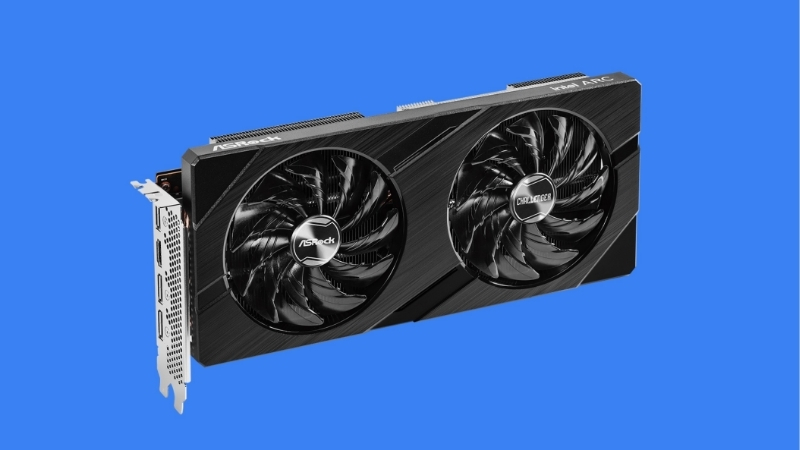
What the Intel Arc A580 Is
The Intel Arc A580 is a budget-focused card from Intel’s first-generation Alchemist lineup, positioned below the A750 as an affordable entry point into modern gaming. Despite its low price, it shares the wide memory interface of its siblings and their modern feature set, aiming to deliver strong 1080p value. Understanding its core specifications, its features, and who it is really for is the foundation for judging its worth now that it sells at a very accessible price.
As an Amazon Associate we earn from qualifying purchases at no extra cost to you.



A Budget Alchemist Card
The A580 pairs 8GB of GDDR6 memory with the same wide 256-bit bus as its pricier siblings, giving it strong memory bandwidth that helps it perform well above what its low price would suggest.
Positioned as an entry point, it trims resources and price compared with the A750 while retaining the core Alchemist architecture and features, making it one of the cheapest current ways into capable 1080p gaming.
After years of driver refinement, the A580 performs noticeably better than at launch, which strengthens its case as a genuine budget bargain at its current discounted price.
What makes the A580 stand out among the cheapest cards is that it does not feel stripped down. Sharing the wide memory bus of its pricier siblings gives it bandwidth that many rock-bottom rivals lack, so it avoids the sense of being a bare-minimum option. For a buyer with very little to spend, getting that bandwidth plus a genuinely modern feature set, rather than a hobbled entry card, is the A580’s core promise.
Key Specs and Features
Beyond its bandwidth, the A580 supports Intel’s XeSS upscaler on Arc’s dedicated hardware for a useful frame-rate boost, and it handles light ray tracing better than many cards at its rock-bottom price.
It also includes Intel’s hardware AV1 encoder, a genuinely valuable feature for budget streamers and video creators that is rare at this price point, adding versatility beyond gaming.
The combination of strong bandwidth, XeSS, and AV1 encoding makes the A580 a well-equipped budget card rather than a stripped-back bargain-bin option.
The AV1 encoder is an especially notable inclusion at this rock-bottom price, giving budget streamers access to efficient, high-quality encoding that used to require far pricier hardware. For a first-time streamer or a creator working within a tight budget, finding that capability in one of the cheapest current cards is a genuine bonus that meaningfully widens the A580’s usefulness beyond gaming alone.
Who the A580 Is For
The A580 targets budget-conscious gamers who play at 1080p and want current-generation features for as little money as possible, as well as first-time builders on a tight budget.
It also suits budget streamers who will use its AV1 encoder, and anyone assembling an affordable system who wants capable Full HD performance without stretching to a pricier card.
Like all Arc cards, it requires Resizable BAR enabled to reach full performance, so it is best paired with a reasonably modern platform to realize its potential.
Its low power draw relative to the pricier Arc cards also makes it an easy fit for modest budget builds, running on smaller power supplies without trouble. For a compact or entry-level system where the buyer wants to keep every cost down, that combination of a low purchase price and undemanding power needs makes the A580 an especially practical foundation.
Real-World Performance and User Impressions
Specifications only tell part of the story, so a fair review blends the card’s current, driver-improved performance with what owners report. Combining the enthusiastic 4-5 star feedback with the more critical 2-3 star reviews gives a balanced picture of where the A580 delivers value and where its budget positioning shows. Here is the consistent pattern from both the data and the community.
1080p Performance and XeSS
At its target resolution of 1080p, the A580 runs modern games smoothly on sensible settings and comfortably powers high-refresh esports titles, which is exactly what its budget audience needs.
XeSS support lets it stretch further in demanding games, boosting frame rates while maintaining good image quality on Arc’s dedicated hardware, a meaningful advantage over budget cards lacking a strong upscaler.
The analytical takeaway is that the A580 delivers dependable 1080p gaming at a very low price, and like other Arc cards it benefits from recent benchmarks that reflect its driver-improved performance.
Setting expectations correctly is important with a card this affordable. The A580 is built for solid Full HD gaming on sensible settings, not for maxing out demanding titles or pushing higher resolutions, and judged on those terms it delivers exactly what its price promises. Buyers who match their expectations to its budget positioning, and lean on XeSS in heavier games, come away satisfied, while those expecting mid-range muscle from an entry-level card will inevitably be disappointed.
What 4-5 Star Users Praise
Positive owners praise the value above all, appreciating capable 1080p performance and modern features at a rock-bottom price. For budget builders, it is frequently described as an ideal entry point.
They also value the AV1 encoder and XeSS support, features rarely found at this price, and note the performance gains Intel has delivered through ongoing driver work.
Many highlight that the A580 offers a genuinely modern gaming experience for very little money, which is the core of its appeal to the most cost-conscious buyers.
First-time builders in particular express relief at getting a capable, current-generation card without blowing their limited budget, noting that the A580 leaves room for a better processor, more storage, or a nicer monitor. That balance, spending just enough on graphics to play current games well while directing savings elsewhere in the build, is exactly what many entry-level builders are after, and it runs through the card’s most positive feedback.
Common Complaints from 2-3 Star Reviews
The most common criticism is that the A580 draws more power than some budget rivals, requiring a bit more PSU headroom that buyers on the tightest budgets should plan for.
The Resizable BAR requirement also frustrates users on older platforms, where the card underperforms until it is enabled or if the system does not support it well.
A minority cite the familiar first-generation driver caution and occasional issues in older games, though the experience has improved substantially and continues to get better with updates.
These concerns are best understood in proportion to the A580’s very low price, since the Resizable BAR requirement is a simple BIOS toggle on modern boards and the driver worries have faded considerably from Arc’s launch. For the budget-focused buyer this card targets, on a reasonably current platform, the practical downsides are small next to the modern capability the A580 delivers for so little money.
Value, Comparison, and Buying Advice
A budget card is judged on value, so it must be weighed against its siblings, rivals, and the current market. This section compares the A580 with the A750 and budget competitors, lays out the pros and cons, and frames the decision within 2026’s GPU pricing so your timing is sound.
A580 vs A750 and Budget Rivals
Against the A750, the A580 trades some performance for a lower price, making it the pick for the most budget-constrained buyers who want the cheapest capable Arc option.
Against budget rivals from AMD and Nvidia, the A580 competes on price and features, often offering XeSS and AV1 support that similarly priced competitors lack, while those rivals counter with more mature drivers.
The practical verdict is to choose the A580 for the cheapest capable 1080p Arc experience, and step up to the A750 if a small extra spend buys worthwhile additional performance at the time you buy.
That decision comes down to watching the real-world price gap between the two. When the A580 and A750 are separated by only a small amount, the A750’s extra performance usually justifies the modest premium, making it the better buy. But when the A580 is significantly cheaper, its value becomes hard to argue with for a strict 1080p gamer, so let the current pricing of both cards guide the final call rather than their launch positioning.
Pros and Cons of the Arc A580
Here is the balanced summary drawn from the evidence and owner feedback.
Pros: very affordable, a wide memory bus, XeSS and AV1 support, capable 1080p performance, and modern features at a budget price. Cons: higher power draw than some rivals, only 8GB of VRAM, requires Resizable BAR, and first-generation drivers that remain younger than the competition’s.
Because the A580’s whole appeal is value, if it fits your needs, checking live pricing through the link on this page is the logical next step before a good deal disappears.
Is the A580 Worth Buying in 2026?
The A580’s budget appeal intersects with 2026’s market. After the sharp increases at the end of 2025, new graphics-card pricing has settled into a calmer phase, but calm means flat rather than falling, so current cards remain relatively expensive.
With fresh memory supply from sources like CXMT and Micron’s two Idaho plants not arriving until 2027–2028, meaningful relief on new cards is years away, which keeps affordable older cards like the A580 attractive by comparison.
For a budget buyer, a well-priced A580 is a reasonable move now rather than a gamble on future drops. If one fits your budget, check its current price through the link on this page and secure it while the deal lasts.
See More:
Conclusion
The verdict on the intel arc a580 is that it is a genuine budget 1080p bargain, delivering capable Full HD performance and modern features like XeSS and AV1 encoding for very little money thanks to steep price cuts and years of driver gains. Its caveats are higher power draw, an 8GB buffer, and the Resizable BAR requirement, but for the most cost-conscious 1080p gamers and first-time builders, its value is hard to beat. As an affordable entry point into modern gaming, it remains a smart pick — and with new-card prices only holding steady rather than dropping, there is little reason to wait. Use the link above to compare live pricing on the Arc A580 and secure yours today.
Top-Rated Picks


| Product | Brand | Rating | Reviews | Price |
|---|---|---|---|---|
| ARCTIC MX-4 (4 g) – Premium Performance Thermal Paste… | ARCTIC | ★ 4.8 | 104k | $4.99 |
| ARCTIC MX-4 (incl. Spatula, 4 g) – Premium Performanc… | ARCTIC | ★ 4.8 | 71.9k | $5.49 |
| Crucial 8GB DDR4 RAM 3200MHz (PC4-25600), Downclockab… | Crucial | ★ 4.8 | 62.8k | $74.99 |
| AMD Ryzen 5 5600X 6-core, 12-thread unlocked desktop … | — | ★ 4.8 | 30.2k | $177.60 |
| NVIDIA Shield Remote; Voice Search, Motion-Activated,… | — | ★ 4.7 | 10.6k | $25.99 |
Frequently Asked Questions
Where does the A580 sit in the Arc lineup?
It slots between the entry A380 and the A750, using the same large ACM-G10 die as the A750 and A770 with fewer active Xe cores. It keeps the full 256-bit memory bus and 8GB of GDDR6, giving it far more bandwidth than its price suggests and a real advantage over narrow-bus rivals.
Is it fast enough for 1080p gaming?
Yes, for high settings at 1080p in most modern titles, typically landing near an RTX 3050 or slightly above depending on the API. DirectX 12 and Vulkan games perform best; older DirectX 11 titles are where you may see it fall behind competing cards at similar prices.
What power supply does it need?
Board power is around 175W and cards typically use two eight-pin connectors or an eight plus six-pin arrangement, so a good 550-600W unit is a sensible minimum. Idle power draw on Arc can be higher than rivals unless ASPM and PCIe power management are enabled in the UEFI.
Does ray tracing work well?
Arc’s ray tracing hardware is genuinely competitive for the price tier, often beating equivalent AMD cards, but 8GB of memory and the overall performance class mean you should pair it with XeSS upscaling and expect 1080p rather than 1440p ray-traced gameplay.
Should I buy this or spend a little more on an A750?
The A750 usually costs only slightly more and offers meaningfully more shader throughput, making it the better value whenever the price gap is small. Choose the A580 only when it is genuinely cheaper, when power limits matter, or when your workload leans on encoding rather than raw gaming performance.



Write Your Review
No reviews yet. Be the first to share your experience!