
- Top Pick: EVGA GeForce RTX 3080 Ti XC3 Ultra Gaming, 12G-P5-3955-KR, 12GB GDDR6X, iCX3 Cooling, ARGB LED, Metal Backplate (Renewed)
- Best Value: Geforce RTX 3080 Ti 12GB GDDR6X PCI Express 4.0 Graphics Card Titanium and Black (Renewed)
- Premium Choice: EVGA GeForce RTX 3080 Ti FTW3 Ultra Gaming, 12G-P5-3967-KR, 12GB GDDR6X, iCX3 Technology, ARGB LED, Metal Backplate (Renewed)
Top Rtx 3080 Price Fair Value Picks for 2026
Here are our current top rtx 3080 price fair value picks, compared on real Amazon owner reviews, price, and features. Live prices update below.
- Top Rtx 3080 Price Fair Value Picks for 2026
- The RTX 3080 Ti Price Arc: From $1,199 to Today
- What Today’s Price Buys: Performance and Risk Honestly Stated
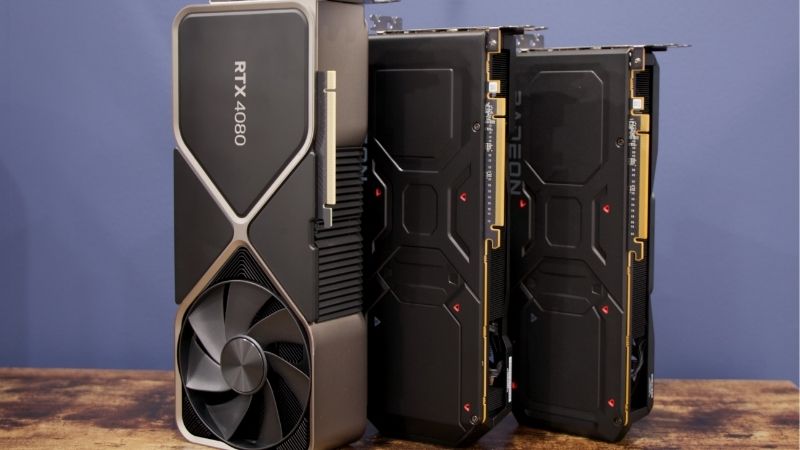
- The Alternatives That Police This Price
- Why the Price Stopped Falling: The 2026 Market Forces
- Conclusion
- Related Guides
- Frequently Asked Questions
- Related Articles


Limited Time
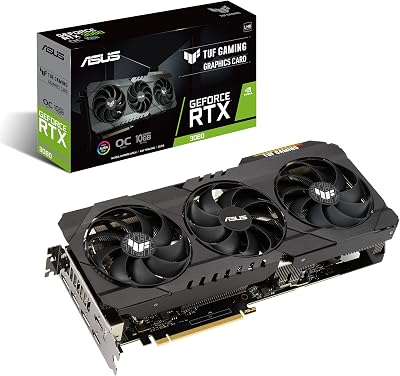
Dell Gaming OEM Nvidia GeForce RTX 3080 10GB GDDR6X 320-bit 19Gbps PCIe 4.0 x16 Graphics Video Card 0Y5K9F (Renewed)

RTX 3080 Ti price history reads like a chart of the GPU market’s wildest era: launched at $1,199 in June 2021 into a crypto-mining frenzy that immediately priced it near $2,000, crashed alongside that frenzy, and settled by 2026 into a used band around $380 to $420 — roughly a third of its sticker and a fifth of its scalped peak. For today’s buyer, the history matters less than the question it produces: at current numbers, is this five-year-old near-flagship a fair purchase or a depreciating trap? This analysis tracks the full price arc, defines the bands worth acting on, measures the card against what the same money buys new, and ends with a verdict precise enough to shop with.
As an Amazon Associate we earn from qualifying purchases at no extra cost to you. Product prices and availability are accurate as of the date shown and are subject to change.


The RTX 3080 Ti Price Arc: From $1,199 to Today
No card’s value chart tells the 2021-2026 market story more completely. Walking the arc explains both why used prices landed where they did and why they have recently stopped moving — the two facts a buyer needs before any listing makes sense.
Launch Into the Storm: 2021’s Pricing Reality
The card arrived in June 2021 at $1,199 — a near-flagship positioned just below the 3090 — into the most distorted GPU market in history. Mining demand and supply shortages pushed real street prices to $1,700-2,000 within weeks, and the MSRP existed mostly as a number in reviews. A meaningful share of the cards sold that year went straight into mining racks, a fact that haunts the used market to this day.
Reviewers flagged the value problem even at list: $1,199 bought 12GB where the $1,499 RTX 3090 carried 24GB, making the Ti the performance pick and the capacity compromise simultaneously. That 12GB line would go on to define the card’s entire depreciation story.
The Crash and the Long Slide
The mining collapse of 2022 and Ada Lovelace’s launch did to the 3080 Ti what they did to all of Ampere, only harder: a flood of ex-mining cards met a new generation that beat it at lower power, and used prices fell through $800, then $600, in successive waves. Blackwell’s arrival completed the work — when the $549 RTX 5070 matched and passed its performance new, the old near-flagship’s fair value compressed into the $400s.
By early 2026 the slide had carried it to roughly $380 to $420 for clean examples — and then, against every precedent of the previous three years, it stopped. That stop is the most analytically interesting point on the whole chart, and the market section below explains it.
Today’s Fair Price Bands
Current listings sort into actionable bands. Below $370 with a return window: a genuine deal worth moving on, assuming the unit tests clean. The $370 to $420 range: fair market value for a tested card from a seller with recourse — the band where most legitimate transactions happen. Above $420: walk away without negotiation, because at that money the alternatives section ends the conversation.
Condition moves listings within the bands, not outside them: original packaging, verifiable non-mining history, and recent thermal-pad service earn the top; anonymous listings with stock photos and no returns belong at the bottom or in someone else’s cart.
What Today’s Price Buys: Performance and Risk Honestly Stated
A price analysis owes its reader the denominator. Here is what $400 of 3080 Ti delivers in 2026 — and the risk ledger that comes bolted to any card with this particular history.
Gaming Performance at the Current Price
The silicon remains genuinely strong: 10,240 Ampere cores and a 912 GB/s firehose of bandwidth deliver 90 to 115 fps at 1440p high settings in demanding titles — performance that embarrasses several newer cards at nearby used prices. At 4K it manages 55 to 70 fps with upscaling assistance, constrained more by its 12GB buffer than its compute in the heaviest releases.
The modern DLSS transformer upscaler arrives free by driver and keeps image quality current; what never arrives is frame generation in any form — the feature gap that separates this card’s experience from every 40 and 50 series alternative, and the main reason its price sits where it does rather than $100 higher.
The Risk Ledger: What the Discount Is Paying For
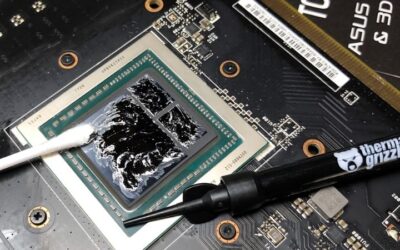
Every dollar below new-card pricing purchases known risks, and this model carries the era’s full set. Mining exposure is the headline: 2021’s deployment patterns mean a meaningful fraction of listings ran continuous duty for years, with wear no photograph reveals. GDDR6X thermals are the maintenance item — five-year-old pads routinely let memory junctions past 100C, and a $20 pad refresh should be budgeted into any purchase as a probability, not a possibility.
The 350W board power adds a system cost: Ampere’s transient spikes demand a quality 750W supply, and buyers upgrading from older builds should price that line before celebrating the card’s discount. None of these risks disqualifies the purchase; all of them belong in its true cost.
Pros and Cons at Today’s Price
Pros: near-flagship 1440p performance around $400; 912 GB/s of bandwidth that still leads most of the used market; flagship-grade boards and coolers built for the long haul; 12GB matches the new mid-range; deep listing supply keeps sellers honest.
Cons: no frame generation, ever; mining-era exposure and five-year wear; thermal-pad service likely; 350W with demanding transients; no warranty anywhere on this market; the fair band sits close enough to new alternatives that overpaying by $50 flips the verdict.
The summary: a strong card whose price is fair precisely because its risks are real — the used market functioning as intended.
The Alternatives That Police This Price
A used price is only ever fair relative to what else the money buys, and three comparisons keep every 3080 Ti listing honest. Run them on the day you shop, not from memory.
Against the New RTX 5070
The defining comparison: the new card matches or beats the 3080 Ti’s raster by 10 to 20 percent, adds DLSS 4 Multi Frame Generation, draws 100W less, and carries a warranty. The used card’s entire case is therefore the $130 to $170 gap between the bands — real money, honestly weighable against the risk ledger above.
The arithmetic that follows: at $380 the old flagship saves enough to argue; at $440 it saves too little to bother. The 5070’s live Amazon price is the single number that disciplines this entire market.
Against Its Own Siblings: 3080 and 3090
Within the family, the standard RTX 3080 at $330 to $380 delivers roughly 90 percent of the Ti’s performance for less money — the value pick for buyers indifferent to the bandwidth edge. The RTX 3090 at $650 to $720 trades the other direction: same generation, double the memory at 24GB, and an AI-driven price floor the Ti will never enjoy.
The pattern worth internalizing: the Ti occupies the family’s awkward middle, outvalued below and outlasted above — which is exactly why its price compressed hardest of the three.
The Stretch Play: RTX 5070 Ti
For buyers circling $400 used cards while planning multi-year ownership, the honest reframe is the new RTX 5070 Ti: 16GB of GDDR7, a 25-plus percent performance step over the old Ti, DLSS 4, and a warranty at $749.
It nearly doubles the spend and more than doubles the ownership horizon — the math that turns many used-market hunts into one-tier-up purchases once written down. Price it alongside every listing you consider.
Why the Price Stopped Falling: The 2026 Market Forces
The flat $380-420 band breaks three years of precedent, and it answers the buyer’s favorite question — “should I wait for it to drop more?” — with current-market specifics rather than old instincts.
The H200 China Approval and the Used-Market Floor
The United States has approved Nvidia selling the H200 — one of its most powerful AI accelerators — to China, releasing data-center demand that tightens GeForce supply from the top of the stack downward. New cards holding MSRP or drifting above it pushes overflow demand into used listings, where it lands as a bid under exactly the cards that were still depreciating — this one included.
The mechanism is visible in the data: the Ti’s band has traded flat for consecutive quarters, the slide’s momentum fully absorbed by spillover demand.
Rising Component Prices and the Repricing Effect
Simultaneously, laptop and PC component prices are climbing industry-wide, led by memory costs that feed every new card’s bill of materials. Used prices reprice against new ones continuously, so the same pressure firming the 5070’s shelf price holds the old flagship’s floor — a linked system in which waiting taxes both options at once.
The practical read: a $400 listing today is likelier to be $420 in six months than $360, and the patient-buyer discount this card offered for three straight years has expired. If the fair band fits, act inside it; set Amazon alerts at your target and let the trigger decide the timing.
The Timing Verdict
Buy when your number appears, with recourse attached — or conclude after three weeks of empty alerts that the market has answered, and redirect the budget one tier up.
Either outcome beats the third option this market punishes: watching listings drift upward while waiting for a curve that flattened a year ago.
See More:
Conclusion
The RTX 3080 Ti price analysis lands on a precise verdict: a card that launched at $1,199 into mining madness is a fair and genuinely strong purchase at $370 to $420 used — provided the buyer demands a return window, budgets the thermal service, and respects the 350W system requirements — and an automatic skip above $440, where the new RTX 5070’s warranty and DLSS 4 close the case. Its bandwidth still impresses; its missing frame generation and mining-era history are honestly priced in. With the H200 export approval and rising component costs holding the floor firm, waiting no longer pays. Set your band from the RTX 3080 Ti price targets above, check today’s Amazon listings against the alternatives, and let the numbers — not the nostalgia — make the purchase.
Frequently Asked Questions
What is the best rtx 3080 ti price in 2026?
The best rtx 3080 ti price depends on your budget and how you plan to use it. The options compared above are our top-rated picks based on real customer ratings, build quality, and overall value — start with the highest-rated model that fits your budget.
How much should I expect to spend on a rtx 3080 ti price?
Prices vary by brand and features. Budget options cover the essentials, while mid-range and premium models add durability, performance, and extra features. Compare the prices in the list above to find the best value for your needs.
What should I look for when buying a rtx 3080 ti price?
Focus on what matters most for your use case — build quality, compatibility, performance, warranty, and verified customer reviews. Every pick above is selected to balance these factors.
Are budget rtx 3080 ti price options worth it?
Yes. For most people a well-reviewed budget or mid-range rtx 3080 ti price delivers excellent value. You only need to spend more if you specifically require premium materials or top-tier performance.
How did we choose these rtx 3080 ti price picks?
We compare current Amazon ratings, review counts, key features, and price to surface the options with the best real-world value. The list is refreshed as ratings and availability change.




Write Your Review
No reviews yet. Be the first to share your experience!