
Choosing a gigabyte graphics card in 2026 means navigating one of the broadest GPU lineups on Amazon: the same RTX chip can arrive as a budget Windforce, a mainstream Eagle, a Gaming OC, or a premium Aorus Master, with price gaps of $40–$150 between tiers built around identical silicon. Gigabyte is one of Nvidia’s three largest board partners, shipping millions of cards yearly, and the brand question — is a Gigabyte card a smart buy, and which tier deserves your money — has a genuinely data-driven answer. This review synthesizes thousands of verified Amazon owner reports across the lineup, the five-star praise and the two-star warnings alike, breaks down what each tier actually buys you, and delivers a clear verdict on where Gigabyte’s value peaks.


The Gigabyte GPU Lineup Explained: What Each Tier Buys
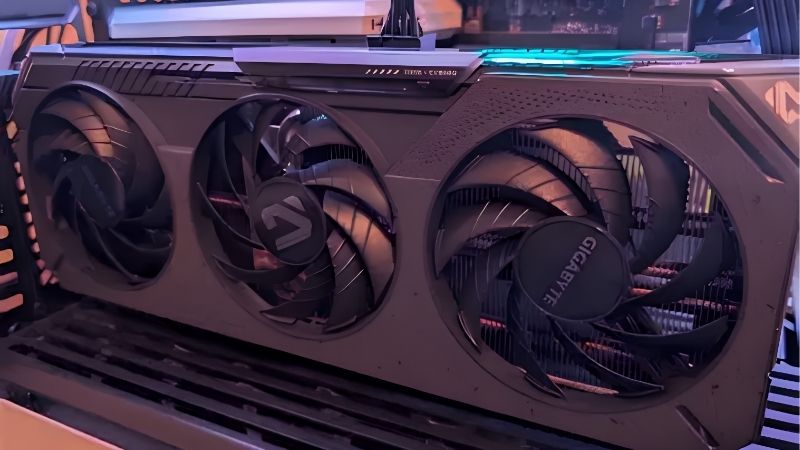
Gigabyte’s naming system encodes real hardware differences — cooler mass, fan count, power delivery, factory clocks, and warranty positioning — and understanding it converts a confusing product wall into a rational price ladder. From bottom to top: Windforce and Eagle cover the value tiers, Gaming OC is the volume sweet spot, and the Aorus family (Elite, Master, Xtreme) is the premium arm with the biggest coolers and highest factory overclocks.
Windforce and Eagle: The Value Tiers
Windforce models are Gigabyte’s price leaders: competent dual- or triple-fan coolers, reference-or-slightly-above clocks, and minimal extras. On mid-power chips — RTX 5060 and 5070 class at 250W or less — the cooler is fully adequate, and the $40–$80 saved versus premium tiers buys literally nothing in frame rates, since factory overclocks across all tiers translate to 1–3% performance at most.
Eagle sits a small step up with slightly larger heatsinks and more conservative aesthetics. The analytical takeaway from thermal testing: on cards up to roughly 250W, value-tier Gigabyte coolers run a few degrees warmer and marginally louder than premium tiers — measurable, rarely meaningful. On 300W+ chips, that gap widens into territory worth paying to escape.
Gaming OC: The Volume Sweet Spot
Gaming OC is where Gigabyte sells the most cards, and the configuration explains why: the triple-fan Windforce cooling system in a larger, heavier implementation, a modest factory overclock, and a price typically $30–$60 over base models. Thermal data shows it taming even 300W-class chips with comfortable margin, keeping fan curves quiet under sustained load.
For most buyers pairing it with mid-range and upper-mid-range silicon — 5070, 5070 Ti, 9070 XT class — this tier is the rational default: the cooling headroom that matters, none of the premium-tier cost that does not.
Size is the practical filter buyers skip at their peril: Gaming OC and Aorus models routinely run 320–340mm long and 2.5–3 slots thick, while Windforce variants of the same chip can be 40mm shorter. Measuring case clearance before choosing a trim prevents the most common Gigabyte return scenario reported in reviews — a card that performs perfectly and physically does not fit.
Aorus: The Premium Arm
Aorus Elite, Master, and Xtreme add maximum-mass coolers, stronger power delivery, RGB displays, metal backplates, and the lineup’s highest factory clocks. On flagship-class 360W+ chips, the cooling investment is genuinely functional — Aorus Masters post some of the lowest temperatures and noise figures in third-party testing of any partner brand.
The honest math: the $100–$150 Aorus premium buys 2–4% more performance and meaningfully better acoustics on the hottest chips, plus aesthetics. On mid-power chips it is mostly paying for the badge — a luxury purchase, not a performance one.
What Thousands of Owners Report: The Verified Verdict
Brand reputation is built one review at a time, and Gigabyte’s Amazon footprint — among the largest of any GPU vendor — offers an unusually deep dataset. The synthesis below separates the consistent five-star themes from the recurring complaints, addresses the warranty question head-on, and distills it all into the pros-and-cons ledger a buyer actually needs.
Context for the dataset: Gigabyte ships cards across every price tier from $200 budget models to $2,000 flagships, so its review base spans the widest buyer spectrum of almost any GPU brand. That breadth makes the recurring themes below statistically meaningful rather than anecdotal — when the same praise and the same complaints surface across dozens of distinct products, they describe the company, not a model.
The Five-Star Pattern: Cooling, Silence, Stability
Across product generations, positive Gigabyte reviews converge on three themes. First, thermal performance: Gaming OC and Aorus owners consistently report temperatures in the 60s under gaming load, with the triple-fan Windforce system earning specific praise on high-wattage cards. Second, acoustics: “quieter than expected” and “silent at idle” (fan-stop below load thresholds is standard across the lineup) recur constantly.
Third, out-of-box stability: the overwhelming majority of reviews describe uneventful installs and immediate reliable operation — the unglamorous baseline that matters most. Value-tier Windforce buyers add a fourth theme: satisfaction at getting the same chip as premium cards for visibly less money.
Software draws its own mixed verdict: the Gigabyte Control Center handles fan curves, RGB, and modest overclocks competently, but reviewers describe it as heavier and less polished than rivals’ utilities, and many owners simply uninstall it after initial setup in favor of third-party tools. The card runs identically without it — a fact worth knowing before judging the brand by its app store rating.
The Two-Star Pattern: Where Gigabyte Stumbles
The critical reviews cluster predictably. The most substantive thread concerns support friction: RMA turnaround times and registration requirements draw sharper complaints than the hardware itself, a pattern consistent across years — buyers describe the process as slower and more paperwork-heavy than rivals like EVGA’s legendary (and now departed) standard. Second: coil whine reports, concentrated in value-tier models on high-power chips, affecting a small but vocal minority.
Third, a quality-control tail: isolated reports of fan rattle or thermal-pad issues, at rates that appear comparable to other volume manufacturers rather than elevated. Notably rare: outright failure complaints — the silicon and boards themselves prove dependable, making support friction the brand’s genuine weak point rather than the hardware.
Pros and Cons of Buying Gigabyte
Pros: excellent Windforce cooling that scales honestly with tier; among the best price-per-tier value of major board partners, with Windforce models frequently the cheapest listing for a given chip; quiet fan curves and standard fan-stop; broad availability across every Nvidia and AMD chip; solid build quality at Gaming OC tier and above; 3–4 year warranty with registration.
Cons: customer support and RMA experience draws consistent criticism — slower and more friction than the best rivals; coil whine lottery on value-tier models with high-power chips; Aorus premiums buy little measurable performance on mid-power silicon; warranty registration requirement catches buyers who skip paperwork.
2026 Buying Climate: Prices, Supply, and Timing a Gigabyte Purchase
Two market stories frame any GPU purchase this year, Gigabyte or otherwise: the United States approving Nvidia’s H200 AI chip exports to China, and the sustained rise in laptop and PC component prices. For a brand whose value proposition lives in the gaps between trim levels, these forces have a specific, practical meaning.
H200 Exports and the Board Partner Squeeze
The H200 approval channels enormous additional demand toward Nvidia’s advanced silicon and memory supply — the same pool that feeds the GPU dies Gigabyte builds its cards around. When chip allocation tightens, board partners receive fewer dies, prioritize higher-margin trims, and street prices drift above MSRP; the historical pattern runs 5–15% within a quarter or two of demand surges.
The buyer-visible symptom: value-tier Windforce models — the thinnest-margin cards — become the first listings to vanish in a squeeze, leaving shelves of pricier trims. If the value tier is your target, scarcity windows punish hesitation.
Component Inflation Compresses the Tier Gaps
Memory and component costs have climbed for consecutive quarters, and laptop retail prices built from the same supply chain have already risen. Board partners absorb cost increases unevenly: base-model prices creep up faster in percentage terms, which compresses the gap to Gaming OC tiers — and when that gap narrows to $30 or less, the better cooler becomes nearly free.
Watching the spread between trims, not just the headline price, is the Gigabyte-specific buying skill in this market.
The Practical Buying Play
The strategy: pick your tier by chip wattage — Windforce/Eagle for 250W and below, Gaming OC for 250–320W, Aorus only for flagship heat or aesthetics — then set a price target and execute when a listing hits it. Register the warranty the day the card arrives; it is the five minutes that defuses the brand’s one genuine weakness.
With both market forces pointing prices upward and no visible catalyst pointing down, a fair listing today beats a hoped-for discount tomorrow. Check current Gigabyte listings on Amazon for your target chip, compare the trim spread, and buy the tier the wattage math recommends.
See More:
Conclusion
A gigabyte graphics card is a safe, frequently excellent buy in 2026 — the verdict the data supports is brand-positive with one asterisk. The Windforce cooling system delivers honest performance at every tier, the Gaming OC trim is the value sweet spot for most chips, owner reviews skew strongly positive on thermals, noise, and stability, and the lineup’s pricing is routinely among the most competitive on Amazon. The asterisk is post-sale support, where friction is real and warranty registration is non-negotiable. Match the trim to your chip’s wattage, register on day one, and Gigabyte rewards you — and with H200-driven supply pressure and component inflation pushing prices up, sooner beats later. Tap through to check today’s Gigabyte graphics card prices on Amazon and grab the right tier while the spread favors you.
Top picks from this guide
GIGABYTE GeForce RTX 3060 Gaming OC 12G (REV2.0) Graphics Card,…$470 \xc2\xb7 98/100 MSI Gaming GeForce GTX 1660 Super 192-bit HDMI/DP 6GB GDRR6…$233 \xc2\xb7 98/100
 MSI GeForce RTX 3060 Ventus 2X 12G OC, Gaming Graphics…$635 \xc2\xb7 98/100
 upHereupHere 5V 3PIN Addressable RGB Graphics Card GPU Brace Support…$16 \xc2\xb7 98/100








Write Your Review
No reviews yet. Be the first to share your experience!