
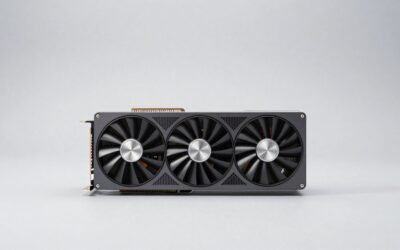
- Top Pick: GIGABYTE GeForce RTX 4070 Ti Super Eagle OC 16G Graphics Card, 3X WINDFORCE Fans, 16GB 256-bit GDDR6X, GV-N407TSEAGLE OC-16GD Video Card
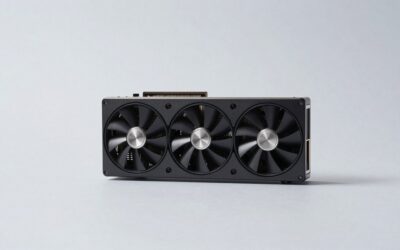
- Best Value: ZOTAC Gaming GeForce RTX 4070 Ti Super Solid OC DLSS 3 16GB GDDR6X 256-bit 21 Gbps PCIE 4.0 Gaming Graphics Card, IceStorm 2.0 Advanced Cooling, ZT-D40730RC-10P
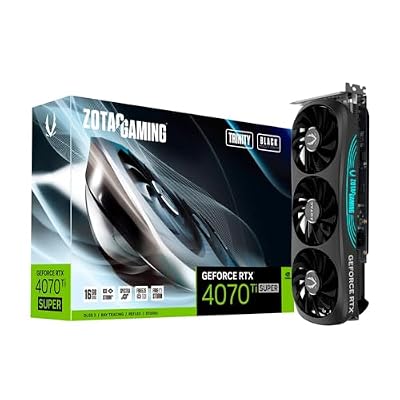
- Premium Choice: ZOTAC GAMING GeForce RTX 4070 Ti SUPER Trinity Black Edition 16GB GDDR6X
Top Rtx 5070 4070 Super Which Picks for 2026
Here are our current top rtx 5070 4070 super which picks, compared on real Amazon owner reviews, price, and features. Live prices update below.
- Top Rtx 5070 4070 Super Which Picks for 2026
- RTX 5070 vs 4070 Ti Super: The Quick Verdict
- Deep Dive Face-Off: Performance, Features, and Efficiency
- Strengths, Weaknesses, and the Smart Third Option
- Market Conditions in 2026: Why Timing Shapes This Choice
- Recommended Products
- Final Verdict on the 5070 vs 4070 Ti Super Question
- Related Guides
- Frequently Asked Questions
- Related Articles


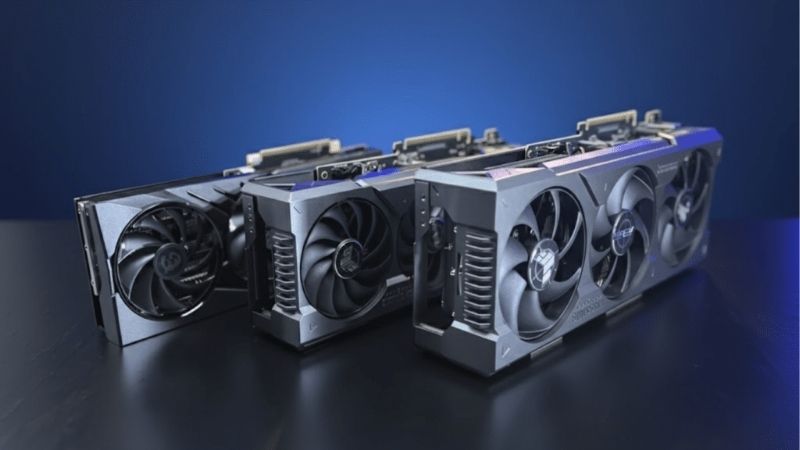
5070 vs 4070 Ti Super is one of the trickiest GPU decisions of 2026, because for once the newer card is not automatically the better one. Nvidia’s RTX 5070 brings Blackwell architecture, GDDR7 memory, and exclusive DLSS 4 Multi Frame Generation at a $549 MSRP, while the RTX 4070 Ti Super counters with more raw silicon, 16GB of VRAM, and proven 4K credentials. This comparison lines up the measured numbers, real owner feedback, and current market forces so you can pick the right card for your monitor and budget rather than the one with the bigger model number.
As an Amazon Associate we earn from qualifying purchases at no extra cost to you.


RTX 5070 vs 4070 Ti Super: The Quick Verdict
For readers who want the answer up front: the RTX 4070 Ti Super wins on raw performance and memory, holding a 10-15% raster advantage and a 16GB buffer against the 5070’s 12GB. The RTX 5070 wins on price, efficiency, and features, costing roughly $250 less at MSRP while offering DLSS 4 Multi Frame Generation that the Ada card can never run. At 1440p, the 5070 is the smarter buy for most people; at 4K or for long-term VRAM security, the 4070 Ti Super justifies its premium. Whichever side fits your setup, comparing live prices on Amazon is the deciding step, because street pricing frequently flips this verdict week to week.
Specs Comparison Table at a Glance
The specification sheet frames everything that follows, so here are the numbers that actually shape in-game results.
| Specification | RTX 5070 | RTX 4070 Ti Super |
|---|---|---|
| Architecture | Blackwell (2025) | Ada Lovelace (2024) |
| CUDA cores | 6,144 | 8,448 |
| Boost clock | 2.51 GHz | 2.61 GHz |
| VRAM | 12GB GDDR7 | 16GB GDDR6X |
| Memory bandwidth | 672 GB/s | 672 GB/s |
| TDP | 250W | 285W |
| Frame generation | DLSS 4 Multi Frame Gen (up to 4x) | DLSS 3 Frame Gen (2x) |
| Launch MSRP | $549 | $799 |
Notice the identical 672 GB/s bandwidth achieved two different ways: the 5070 pairs fast GDDR7 with a narrow 192-bit bus, while the Ti Super uses slower GDDR6X on a wider 256-bit bus. The core count gap — 37% in the Ti Super’s favor — is the comparison’s center of gravity.
Who Should Pick the RTX 5070
The 5070 is built for 1440p gamers who want high refresh rates without flagship spending. At that resolution it trades within 8-12% of the Ti Super while drawing 35W less and costing significantly less, and Multi Frame Generation pushes supported titles past 200 FPS on high-refresh monitors.
It also suits compact builds and modest power supplies: 250W means a quality 650W PSU is genuinely enough, and most partner cards stay near 2 slots.
Who Should Pick the RTX 4070 Ti Super
Choose the Ti Super if you game at 4K, work with video editing or AI tools, or simply plan to keep your card past 2029. The extra 4GB of VRAM is not theoretical — several 2025-2026 releases already exceed 12GB at 4K ultra textures, forcing the 5070 to dial settings down while the Ti Super does not.
Its 37% core advantage also matters in raster-heavy titles without DLSS support, where AI frame generation cannot rescue the smaller chip.
Creators tip the same direction for a quantifiable reason: 4K video timelines in DaVinci Resolve and Premiere Pro routinely consume 13-15GB of VRAM with effects stacked, and local AI image models load larger checkpoints on a 16GB card without offloading to system memory. For a machine that games at night and renders by day, the Ti Super’s buffer is the difference between smooth scrubbing and constant compromise.
Deep Dive Face-Off: Performance, Features, and Efficiency
A criterion-by-criterion breakdown reflects how this decision actually gets made. All figures below aggregate results from test systems using a modern X3D-class CPU to keep the comparison GPU-limited.
Raster and 4K Benchmark Results
At 1440p ultra, the 4070 Ti Super averages roughly 10% higher frame rates: Cyberpunk 2077 runs at 96 FPS versus 87 FPS, Horizon Forbidden West at 118 FPS versus 108 FPS, and Black Ops 6 at 165 FPS versus 152 FPS. Both deliver an excellent experience; the difference is measurable but rarely perceptible.
At 4K the gap widens to 12-18% and the VRAM story compounds it. The Ti Super averages 62 FPS in Cyberpunk 2077 ultra against the 5070’s 53 FPS, and in texture-heavy titles like Indiana Jones and the Great Circle, the 12GB card must reduce texture pool settings to avoid stutter. For native 4K, the Ti Super is simply the more honest fit.
Frame-time consistency tells the same story with finer resolution: 1% low figures sit roughly 10-14% apart at 1440p but spread past 20% at 4K once the 5070’s 12GB buffer fills, because texture swapping produces the brief hitches that averages smooth over. Reviewers who log frame-time graphs consistently flag this as the most perceptible difference between the two cards in long play sessions, even when the average FPS numbers look close on paper.
DLSS 4 Multi Frame Generation: The 5070’s Equalizer
The experimental wildcard belongs to the newer card. The 5070 runs DLSS 4 with Multi Frame Generation, producing up to three AI frames per rendered frame through a transformer model with visibly less ghosting than earlier approaches. The Ti Super tops out at DLSS 3’s single generated frame.
The measured result is dramatic in supported titles: path-traced Cyberpunk 2077 at 1440p reaches roughly 165 FPS on the 5070 with MFG 4x, versus about 105 FPS on the Ti Super with DLSS 3. Nvidia’s transformer upscaling model does benefit both cards, but the frame multiplication is Blackwell-exclusive, and with 175+ games supporting DLSS 4 and the list growing monthly, the 5070’s effective performance improves over time in a way the Ada card’s cannot.
Latency with Reflex 2 stays within a few milliseconds of native in testing, fine for single-player; competitive players will disable frame generation on either card, which hands the advantage back to the Ti Super’s raw silicon.
Power Draw, Thermals, and System Fit
The 5070’s 250W TDP versus 285W translates to real-world gaming draws of roughly 230W against 270W. Performance per watt clearly favors Blackwell — about 15-20% more frames per joule — which matters for small-form-factor builds, warm rooms, and electricity bills over a multi-year ownership window.
Both use the 12V-2×6/12VHPWR connector with included adapters. Practical sizing differs more by partner model than by chip: 5070 cards commonly fit 2-2.5 slots around 240-300mm, while many Ti Super designs occupy 3+ slots and stretch past 320mm. Measure your case before choosing a specific model, not after.
Strengths, Weaknesses, and the Smart Third Option
Owner feedback across thousands of marketplace ratings sorts the praise and complaints for each card into consistent patterns, and an honest comparison lists both sides.
RTX 5070 Pros and Cons
Pros: standout value at $549 MSRP, exclusive Multi Frame Generation, excellent 250W efficiency, compact designs, cool and quiet operation, and a new-generation warranty with years of driver priority ahead. Ratings cluster around 4.5-4.6 stars, with 1440p buyers the most enthusiastic group.
Cons: the 12GB buffer draws the most 2-3 star criticism, with reviewers calling it “enough today, tight tomorrow” for 4K ambitions. Others note the raster uplift over the previous 4070 Super is modest without DLSS 4, and that street prices above MSRP erode its headline value advantage.
RTX 4070 Ti Super Pros and Cons
Pros: genuine 4K capability, the 16GB buffer that creators and long-term keepers prize, strong raster performance in every engine regardless of DLSS support, and mature, stable drivers. Owners doing video editing and Stable Diffusion work rate it especially highly.
Cons: as a discontinued model, new stock is shrinking and prices are volatile, frequently sitting above the $799 MSRP. It lacks Multi Frame Generation permanently, draws more power for its performance, and buying used introduces warranty and wear uncertainty that several lower-star reviews describe in detail.
The Alternative: RTX 5070 Ti Splits the Difference
If you find yourself wanting the Ti Super’s 16GB and the 5070’s DLSS 4, that card exists: the RTX 5070 Ti carries 8,960 CUDA cores, 16GB of GDDR7 at 896 GB/s, full Multi Frame Generation, and a $749 MSRP that often undercuts real-world Ti Super pricing.
It outperforms both cards in this comparison and erases the VRAM objection simultaneously. If your budget can stretch to it, compare the 5070 Ti’s current price on Amazon against both cards here — on many days it makes this entire debate obsolete.
Market Conditions in 2026: Why Timing Shapes This Choice
Two industry developments currently push GPU prices in the same direction, and they affect these two cards unevenly — which makes them part of the decision rather than background noise.
H200 Exports to China Tighten the Silicon Pipeline
The United States has approved Nvidia selling the H200, one of its most powerful AI accelerators, to China. That reopens a massive data center market, and every H200 competes for the same advanced TSMC capacity and memory supply chains that feed GeForce production.
Previous AI demand surges followed a consistent pattern: consumer GPU allocations thinned within a quarter or two and street prices firmed. Current-generation cards like the 5070 feel that squeeze first, while discontinued cards like the Ti Super simply stop being restocked at all — a different risk, but a real one.
Component Price Inflation Hits Memory Hardest
Simultaneously, laptop and PC component prices are trending upward, led by memory as AI infrastructure absorbs DRAM and advanced-node production. GDDR7 sits at the premium end of that squeeze, and GDDR6X production is winding down rather than getting cheaper.
The practical consequence shows in tracking data: neither card is drifting below MSRP the way mid-generation GPUs historically did. The traditional strategy of waiting six months for discounts has quietly stopped working this cycle.
The mechanism is worth one sentence of explanation because it predicts the next year: graphics memory contracts are negotiated quarters in advance, so the cost increases suppliers are absorbing today flow into card prices through 2026 regardless of short-term retail promotions. That is why isolated flash sales still appear while the underlying price floor keeps inching upward.
Buy Now or Wait: The Honest Read
If you are actively shopping, the data favors buying at the first fair price rather than gambling on declines the supply situation does not support. The Ti Super carries the extra urgency of vanishing inventory; once remaining stock clears, its price becomes a used-market lottery.
Waiting only makes sense if your current GPU already satisfies you — in which case nothing in this market punishes patience, and you can revisit the question when your needs change.
Recommended Products

ASUS TUF Gaming NVIDIA GeForce RTX 5070 12GB GDDR7 OC Edition Graphics Card, (PCIe 5.0, HDMI/DP 2.1, 3.125-Slot, Military-Grade Components, Protective PCB Coating, Axial-tech Fans), 3 Year Warranty

ZOTAC
ZOTAC Gaming GeForce RTX 4060 Ti 8GB Twin Edge OC White Edition DLSS 3 8GB GDDR6 128-bit 18 Gbps PCIE 4.0 Compact Graphics Card, IceStorm 2.0 Advanced Cooling, Spectra RGB Lighting, ZT-D40610Q-10M

msi
MSI GeForce RTX 4060 Ti Gaming X Slim 16G Graphics Card – NVIDIA RTX 4060 Ti, 16GB GDDR6 Memory, 18Gbps, PCIe 4.0, Twin Frozr 9, RGB, DLSS3
As an Amazon Associate we earn from qualifying purchases. Product prices and availability are accurate as of the date/time indicated.
See more:
- ASUS TUF Gaming GeForce RTX 5090 3080 vs 5080
- Nvidia RTX 4070 Super graphics card
- Sapphire graphics card
- Is HDR good for gaming
- RTX 4080 vs 5070
Final Verdict on the 5070 vs 4070 Ti Super Question
The 5070 vs 4070 Ti Super comparison ends in a split decision with clear reasoning behind each side: the RTX 4070 Ti Super takes the performance crown with 10-15% more raster muscle and a 16GB buffer that makes it the better 4K and creator card, while the RTX 5070 takes the value crown with a $250 lower MSRP, superior efficiency, and DLSS 4 Multi Frame Generation that keeps widening its effective lead in supported games. For most 1440p gamers, the 5070 delivers more experience per dollar; for 4K players and long-term keepers, the Ti Super’s silicon and memory earn the premium — and the 5070 Ti looms as the answer for anyone who refuses to compromise. With supply tightening and component costs climbing, check the live prices for all three cards on Amazon today and lock in the one that fits your build while the numbers still favor buyers.
Frequently Asked Questions
What is the best 5070 4070 ti super in 2026?
The best 5070 4070 ti super depends on your budget and how you plan to use it. The options compared above are our top-rated picks based on real customer ratings, build quality, and overall value — start with the highest-rated model that fits your budget.
How much should I expect to spend on a 5070 4070 ti super?
Prices vary by brand and features. Budget options cover the essentials, while mid-range and premium models add durability, performance, and extra features. Compare the prices in the list above to find the best value for your needs.
What should I look for when buying a 5070 4070 ti super?
Focus on what matters most for your use case — build quality, compatibility, performance, warranty, and verified customer reviews. Every pick above is selected to balance these factors.
Are budget 5070 4070 ti super options worth it?
Yes. For most people a well-reviewed budget or mid-range 5070 4070 ti super delivers excellent value. You only need to spend more if you specifically require premium materials or top-tier performance.
How did we choose these 5070 4070 ti super picks?
We compare current Amazon ratings, review counts, key features, and price to surface the options with the best real-world value. The list is refreshed as ratings and availability change.

Write Your Review
No reviews yet. Be the first to share your experience!