
- Top Pick: ASUS ROG Astral GeForce RTX 5090 32GB GDDR7 OC Edition Gaming Graphics Card
- Best Value: GIGABYTE GeForce RTX 5090 WINDFORCE OC 32G Graphics Card, WINDFORCE Cooling System, 32GB 512-bit GDDR7, GV-N5090WF3OC-32GD Video Card
- Premium Choice: ASUS ROG Astral GeForce RTX 5090 32GB GDDR7 White OC Edition Graphics Card
Top Graphics Card 5090 Rtx Flagship Picks for 2026
Here are our current top graphics card 5090 rtx flagship picks, compared on real Amazon owner reviews, price, and features. Live prices update below.

Dropped $349.01


Graphics card 5090 sits at the very top of Nvidia’s lineup, and it is the most powerful consumer GPU you can buy in 2026, as well as one of the hardest to buy at a sane price. The RTX 5090 launched at $1,999 but vanished from shelves almost instantly, and a brutal memory shortage has pushed real-world prices far higher ever since. This review cuts through the hype to cover what the 5090 actually delivers, what owners experience, and whether this flagship is worth chasing at today’s inflated prices or better left to those with bottomless budgets.
As an Amazon Associate we earn from qualifying purchases at no extra cost to you. Product prices and availability are accurate as of the date shown and are subject to change.


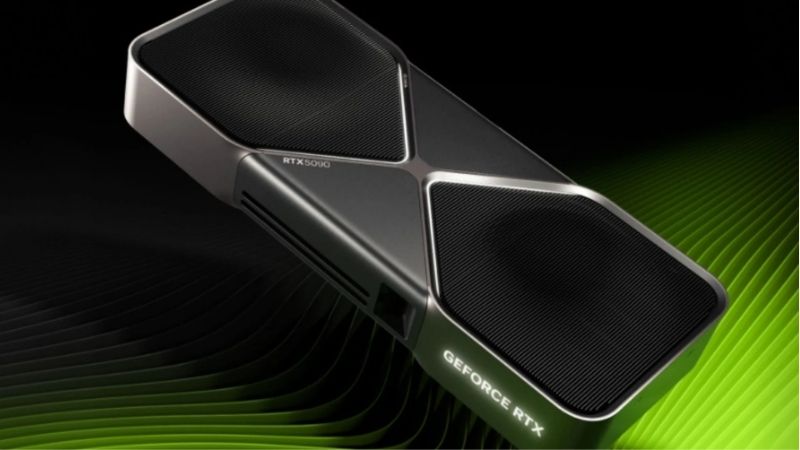
RTX 5090 Specifications and Architecture
The 5090 is a genuine generational leap, and its specifications explain why it commands both attention and a staggering price. Built on Nvidia’s newest Blackwell architecture, it pushes core counts, memory, and bandwidth to levels no consumer card has reached before. Understanding those numbers is the first step to judging whether the flagship earns its cost.
Core Specs and Memory
The RTX 5090 uses the massive GB202 die with 21,760 CUDA cores, paired with 32GB of next-generation GDDR7 memory on a wide 512-bit bus delivering roughly 1.8 TB/s of bandwidth. Its rated power draw is a hefty 575W.
These are flagship numbers by every measure. The jump to 32GB of VRAM is especially significant, giving the card enormous headroom for 4K gaming, heavy creative work, and demanding AI tasks that smaller cards cannot handle.
That 512-bit bus and GDDR7 combination produce bandwidth far beyond anything in the previous generation, which is part of why the 5090 scales so well at 4K and in memory-intensive professional workloads.
For context, that bandwidth and capacity are not just bragging rights. At 4K with ray tracing and high textures, GPUs become memory-bound, and the 5090’s generous resources are exactly what let it sustain high frame rates where lesser cards stumble. The same headroom benefits AI workloads, where model size is often limited by available VRAM rather than raw compute.
Blackwell Features and DLSS 4
The 5090 introduces Nvidia’s full Blackwell feature set, headlined by DLSS 4 with Multi Frame Generation. This technology can generate multiple additional frames, dramatically lifting on-screen smoothness in supported games.
The architecture also brings improved RT cores for faster ray tracing, 5th-generation Tensor cores with FP4 support for AI acceleration, and the latest media encoder for streaming and video work. These are forward-looking features designed for the techniques games and creative apps are adopting now.
For buyers who value the cutting edge, DLSS 4 is the headline reason to choose Blackwell. It is the feature that most clearly separates the 5090 from even the still-capable RTX 4090.
It is fair to note that frame generation has trade-offs. It boosts perceived smoothness without reducing input latency the way native frames do, and it works best when the base frame rate is already healthy. On a card as powerful as the 5090, that base is almost always strong, so the technology tends to shine rather than expose its limits, which is part of why owners react so positively to it.
How Much Faster It Really Is
In raw performance the 5090 is the fastest consumer GPU available, extending a clear lead over the RTX 4090 in both rasterization and ray tracing. At 4K it delivers frame rates that no other single card matches.
With DLSS 4 Multi Frame Generation enabled, the perceived smoothness gap grows even wider, since the 5090 can synthesize frames the previous generation cannot. For native 4K and beyond, it is in a class of its own.
That said, the performance jump does not scale linearly with the price you actually pay, a tension that defines the entire ownership question for this card.
Put concretely, the 5090 might offer a meaningful performance uplift over a 5080, but it can cost two or three times as much at street prices. That disconnect between performance gained and money spent is the single most important thing a prospective buyer must reckon with, and it is why the card is so much easier to recommend to professionals than to gamers.
Real-World Experience and Owner Feedback
Specs promise greatness, but the lived experience of owning a 5090 is more nuanced, shaped by its power demands and its price. Synthesizing the pattern across enthusiast reviews and buyer feedback, the card earns awe for performance alongside real complaints about heat, cost, and availability. Here is the honest picture.
What Owners Praise
The loudest praise is for sheer performance. Owners describe maxed-out 4K gaming with frame rates they never thought possible, and creators report dramatic time savings in rendering and AI workloads thanks to the 32GB buffer.
DLSS 4 draws consistent admiration, with owners noting how Multi Frame Generation transforms demanding titles into buttery-smooth experiences. For people pushing high-refresh 4K displays, the card delivers an experience nothing else can.
The 32GB of VRAM is a recurring highlight for professionals, who praise the headroom it provides for large AI models and complex creative projects that would choke smaller cards.
Common Complaints from Lower Ratings
The most frequent criticism is price and availability. Owners and would-be buyers express deep frustration that the card sells far above its $1,999 MSRP and remains hard to find in stock at all.
Power and heat are the next concern. At 575W the 5090 demands a strong power supply and excellent case cooling, and owners note the heat it adds to a room during long sessions. Building around it requires planning.
Some buyers also question the value proposition, observing that the performance gain over cheaper cards does not match the enormous price gap unless you specifically need flagship power or 32GB of VRAM.
Pros and Cons of the 5090 Graphics Card
Bringing the specs and feedback together gives a clear verdict on who this flagship serves. Here is the balance sheet for the 5090 graphics card.
- Pros: unmatched 4K performance, 32GB GDDR7 VRAM, DLSS 4 Multi Frame Generation, elite for AI and creative work, latest Blackwell features.
- Cons: sells far above MSRP, very high 575W power draw, demands strong cooling and PSU, poor availability, overkill and overpriced for mainstream gaming.
The pattern is clear: for those who need the absolute best, the 5090 delivers, but its price and power make it a poor fit for anyone whose needs a cheaper card can meet.
That trade-off makes the 5090 the clearest “needs, not wants” purchase in the lineup. When its strengths align with your work, nothing else competes; when they do not, the premium buys very little you will actually use day to day.
Pricing, the 2026 Market, and Who Should Buy
The 5090’s value is inseparable from its price, and in 2026 that price is being driven to extremes by forces beyond Nvidia’s control. Understanding those forces is essential to deciding whether to buy now or wait.
Why the 5090 Costs So Much
The 5090 launched at $1,999 but real-world prices have climbed far higher, with many units selling well above $3,000 and premium models reaching even more. A severe GDDR7 and DRAM memory shortage is the primary driver, raising costs across the entire RTX 50 lineup and hitting the memory-heavy 5090 hardest.
Compounding this, the US approved sales of Nvidia’s H200 AI accelerator to China in early 2026, prompting orders for millions of chips. Nvidia prioritizes that hugely profitable AI demand, diverting wafers and high-bandwidth memory away from consumer cards like the 5090. With laptop and component prices rising broadly, analysts expect tight memory supply to persist into late 2027, meaning a meaningful price drop is unlikely in the near term.
Alternatives That Cost Far Less
An honest review weighs cheaper options. For most 4K gamers, an RTX 5080 delivers excellent performance with DLSS 4 at a fraction of the 5090’s street price, and a 5070 Ti handles 1440p and entry 4K beautifully for far less.
The 5090 only justifies its premium when you specifically need its 32GB of VRAM or absolute peak performance for professional work. For pure gaming, the value-conscious choice is almost always a step down the stack.
The gap is stark when you do the math. A 5080 can cost less than half of a street-price 5090 while delivering the large majority of its real-world gaming experience. Unless you are pushing a high-refresh 4K display to its limits or running professional workloads that consume 32GB of VRAM, that money is far better spent on the rest of your system or simply saved.
Final Verdict: Is It Worth Chasing
The 5090 graphics card is worth buying for one type of person: the buyer who needs the fastest possible GPU or 32GB of VRAM for serious creative and AI work, and who can absorb the inflated price and power requirements.
For everyone else, a 5080 or 5070 Ti offers most of the experience for far less money and stress. The 5090 is a no-compromise halo product, and chasing it only makes sense when you genuinely need what only it can provide.
See more:
- What graphics card do I have?
- How to tell what graphics card I have
- 5070 Ti vs 4080
- 5060 vs 3080
- RTX 2060 graphics card
Recommended Products

GIGABYTE
GIGABYTE GeForce RTX 4070 Super WINDFORCE OC 12G Graphics Card, 3X WINDFORCE Fans, 12GB 192-bit GDDR6X, GV-N407SWF3OC-12GD Video Card
View on Amazon
1 day ago
ZOTAC
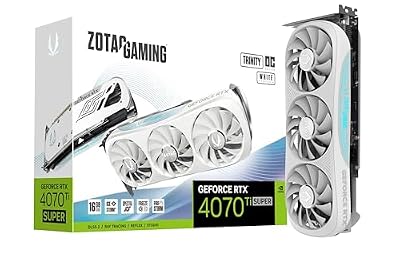
ZOTAC Gaming GeForce RTX 4070 Ti Super Trinity OC White Edition DLSS 3 16GB GDDR6X 256-bit 21 Gbps PCIE 4.0 Gaming Graphics Card, IceStorm 2.0 Advanced Cooling, Spectra RGB Lighting, ZT-D40730Q-10P
View on Amazon
1 day ago

PNY
PNY GeForce RTX™ 4070 12GB XLR8 Gaming Verto Epic-X RGB™ Triple Fan Graphics Card DLSS 3
View on Amazon
1 day ago
As an Amazon Associate we earn from qualifying purchases. Product prices and availability are accurate as of the date/time indicated.
Conclusion
The graphics card 5090 is the undisputed performance king of 2026, pairing 21,760 CUDA cores and 32GB of GDDR7 with DLSS 4 to deliver 4K gaming and professional AI muscle nothing else matches. Its 575W power draw, demanding cooling needs, and prices far above the $1,999 MSRP make it a specialist purchase rather than a mainstream one. With the memory shortage and AI-chip demand keeping supply tight well into 2027, a price drop is not on the horizon, so buy only if you truly need flagship power. Compare current RTX 5090 listings and more sensible alternatives like the 5080 on Amazon, and choose the card that genuinely fits your needs and budget.
Frequently Asked Questions
What is the best graphics card 5090 in 2026?
The best graphics card 5090 depends on your budget and how you plan to use it. The options compared above are our top-rated picks based on real customer ratings, build quality, and overall value — start with the highest-rated model that fits your budget.
How much should I expect to spend on a graphics card 5090?
Prices vary by brand and features. Budget options cover the essentials, while mid-range and premium models add durability, performance, and extra features. Compare the prices in the list above to find the best value for your needs.
What should I look for when buying a graphics card 5090?
Focus on what matters most for your use case — build quality, compatibility, performance, warranty, and verified customer reviews. Every pick above is selected to balance these factors.
Are budget graphics card 5090 options worth it?
Yes. For most people a well-reviewed budget or mid-range graphics card 5090 delivers excellent value. You only need to spend more if you specifically require premium materials or top-tier performance.
How did we choose these graphics card 5090 picks?
We compare current Amazon ratings, review counts, key features, and price to surface the options with the best real-world value. The list is refreshed as ratings and availability change.

Write Your Review
No reviews yet. Be the first to share your experience!