
- Top Pick: ASRock Radeon RX 9060 XT Challenger 16GB OC, RDNA 4, 3290MHz Boost, 16GB GDDR6 128-bit, PCIe 5.0, Dual Fans, 0dB Silent, LED Indicator, DisplayPort 2.1a, HDMI 2.1b
- Best Value: ASRock Radeon RX 9060 XT Steel Legend 16GB GDDR6 OC Graphics Card | 3275 MHz Boost | Triple Fan | 0dB Cooling | Metal Backplate | PCIe 5.0 | DisplayPort 2.1a, HDMI 2.1b
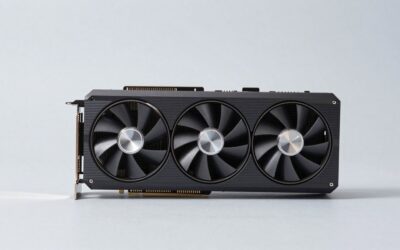
- Premium Choice: XFX Swift AMD Radeon RX 9060 XT OC White Triple Fan Gaming Edition 16GB RX 9060XT RX-96TS316W7


Prime
Limited Time
XFX Swift AMD Radeon RX 9060 XT OC Triple Fan Gaming Edition with 16GB GDDR6 HDMI 2xDP, RDNA 4 RX-96TS316BA, Graphics Card, Compatible with Desktop PCs
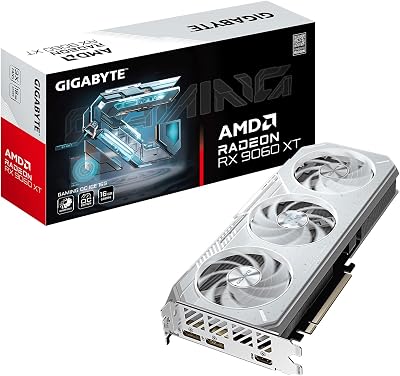

radeon rx 9060 xt vs rtx 5060 ti is the most confusing matchup in the mainstream tier, and the confusion is manufactured rather than accidental. There are not two cards here — there are four. Both the 9060 XT and the 5060 Ti ship in 8 GB and 16 GB versions that share a model name, share a box design, and differ by roughly $50 and by whether the card will still be usable in three years. Two of these four are traps. This comparison lays out every variant in one table, gives you the real frame rates, and tells you plainly which one to buy.
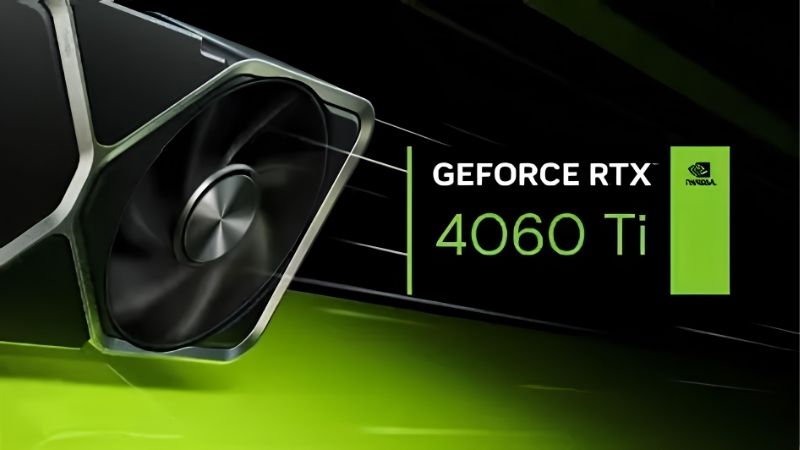
The Quick Verdict on Radeon RX 9060 XT vs RTX 5060 Ti
Buy a 16 GB card. Which brand matters less than which capacity, and that is the single most important sentence in this article. Between the two 16 GB models, the RTX 5060 Ti is roughly 10% to 20% faster and has the stronger feature set; the RX 9060 XT is cheaper and delivers better frames per dollar. Both 8 GB models should be avoided at 1440p regardless of price.
As an Amazon Associate we earn from qualifying purchases at no extra cost to you.


Buy the RTX 5060 Ti 16GB If
Choose the 5060 Ti 16GB if you stream, if you use any CUDA software, or if you want DLSS 4 with Multi Frame Generation. Its GDDR7 memory delivers roughly 448 GB/s against the 9060 XT’s 322 GB/s — a 39% bandwidth advantage that shows up at 1440p.
It is also the pick if you want ray tracing to be more than a checkbox. At this performance tier neither card is a path tracing machine, but in moderate RT titles the 5060 Ti holds a consistent lead.
Buy the Radeon RX 9060 XT 16GB If
Choose the 9060 XT 16GB if raster frames per dollar is your priority and you game at 1080p or 1440p without RT. It typically costs roughly $60 to $80 less than the 5060 Ti 16GB for roughly 10% to 20% less performance — a trade that favours AMD on pure value.
It is also the more forgiving card physically. Lower board power, and partner designs tend to be compact enough for small cases where a 5060 Ti may not fit.
What you give up is the Nvidia feature stack: no Multi Frame Generation, a weaker encoder, and no CUDA. If none of those are part of your life, they cost you nothing.
All Four Variants: The Complete Spec Table
This is the table the videos cannot give you, because reading four SKUs aloud takes ten minutes and you can scan this in twenty seconds. The bandwidth and VRAM columns are what you are here for.
| Specification | RX 9060 XT 8GB | RX 9060 XT 16GB | RTX 5060 Ti 8GB | RTX 5060 Ti 16GB |
|---|---|---|---|---|
| Architecture | RDNA 4 | RDNA 4 | Blackwell | Blackwell |
| Shader Units | 2,048 SPs (32 CUs) | 2,048 SPs (32 CUs) | 4,608 CUDA | 4,608 CUDA |
| VRAM | 8 GB GDDR6 | 16 GB GDDR6 | 8 GB GDDR7 | 16 GB GDDR7 |
| Memory Bus | 128-bit | 128-bit | 128-bit | 128-bit |
| Bandwidth | ~322 GB/s | ~322 GB/s | ~448 GB/s | ~448 GB/s |
| Board Power | ~150W | ~160W | ~180W | ~180W |
| Power Connector | 1x 8-pin | 1x 8-pin | 1x 8-pin / 16-pin | 1x 8-pin / 16-pin |
| Recommended PSU | 500W | 550W | 550W | 600W |
| Upscaling | FSR 4 | FSR 4 | DLSS 4 + MFG | DLSS 4 + MFG |
| Encoder | AMD VCN, AV1 | AMD VCN, AV1 | NVENC 9th gen | NVENC 9th gen |
| Launch MSRP | $299 | $349 | $379 | $429 |
| Verdict | Avoid | Value pick | Avoid | Best overall |
Every one of these four runs a 128-bit bus. The 8 GB and 16 GB versions of each card are otherwise identical silicon — same shaders, same clocks, same bus. You are paying roughly $50 for memory capacity alone, and it is the best $50 in this entire tier.
Deep Dive Face-Off: Where the Four Cards Land
Aggregated across published benchmark suites, the pattern splits along two axes: brand determines speed, and capacity determines whether you get to use that speed.
Frame Rates at 1080p and 1440p
At 1080p high settings the 5060 Ti 16GB leads the 9060 XT 16GB by roughly 10% to 18%. Both clear 90 to 130 fps in most modern titles at high settings, which means either is a comfortable 1080p card and the gap is largely academic at 60 Hz.
At 1440p the 5060 Ti’s lead extends to roughly 15% to 22%, driven by that 39% GDDR7 bandwidth advantage. The 9060 XT 16GB lands at 55 to 85 fps in demanding titles; the 5060 Ti 16GB at 65 to 100. With FSR 4 or DLSS 4 Quality enabled, both become solidly playable 1440p cards.
Run the value maths. At roughly $360 for the 9060 XT 16GB and roughly $440 for the 5060 Ti 16GB, you pay about 22% more for about 18% more performance plus the Nvidia feature stack. That is close to a wash on frames alone — which makes the decision about features and price on the day, not about which card is better.
Why Both 8GB Variants Are a Trap
The 8 GB models are not slightly worse. They fail differently, and that distinction matters. When a game needs more VRAM than exists, the card does not render slower — it stutters. Textures swap over a 128-bit PCIe path, frame times spike from 12 ms to 60 ms and back, and the average fps figure conceals it entirely.
Multiple modern titles already exceed 8 GB at 1440p with high textures, and several do at 1080p with ray tracing enabled. Benchmark charts that report only average fps will show the 8 GB card looking nearly identical to its 16 GB sibling — and the experience will be visibly worse.
The honest counter-argument: at 1080p medium with textures dialled back, an 8 GB card is fine and saves you $50. That is true, and if that is genuinely your ceiling, take the saving. But you are buying a card that has already run out of headroom on the day you install it, and the $50 gap is the cheapest insurance in PC hardware.
Practical Fit: PSU, Connectors and Case Size
These are approachable cards, which is part of their appeal. All four run on a single power connector and modest supplies — but check three things anyway.
Connector type varies by partner. Most 9060 XT and 5060 Ti models use a standard 8-pin, but some 5060 Ti designs ship with a 16-pin 12V-2×6 and an adapter. If yours does, seat it fully — partial seating is the documented cause of the melting reports, and it applies at every tier.
Wattage: 550W is comfortable for the 9060 XT 16GB, 600W for the 5060 Ti 16GB with a mid-range CPU. Both are within reach of most existing builds, which makes this tier a genuinely single-component upgrade for many people.
Size: 9060 XT partner cards commonly run 200 to 250 mm and dual slot; 5060 Ti designs run 200 to 270 mm and two to three slots. Both are compact by modern standards and ITX-friendly versions exist on either side. Measure anyway — the twenty seconds costs nothing and a return costs a week.
Pros, Cons and the Cards Worth Comparing
Here is the plain ledger for the two variants actually worth buying, plus the alternatives if neither price works.
RTX 5060 Ti 16GB: Pros and Cons
Pros: Roughly 10% to 20% faster than the 9060 XT 16GB. GDDR7 delivers ~448 GB/s, a 39% bandwidth advantage. Full DLSS 4 with Multi Frame Generation. Ninth-generation NVENC with dual AV1 — the pick if you stream. CUDA access for Blender, Resolve, and local AI work. 16 GB makes light creative workloads genuinely viable. Stronger ray tracing at this tier.
Cons: Roughly $60 to $80 more than the AMD equivalent. 128-bit bus is a real constraint despite the GDDR7. 180W and a 600W PSU recommendation. Some designs use the 16-pin connector with an adapter. The 8 GB variant sharing the same name creates genuine buying confusion — check the box.
Radeon RX 9060 XT 16GB: Pros and Cons
Pros: Best frames per dollar in this tier. 16 GB of VRAM at a price where 8 GB is still common. Standard 8-pin connector on nearly every design. ~160W and a 550W PSU — fits most existing builds without any other purchase. FSR 4’s ML model is close to DLSS at Quality preset. Compact designs suit small cases. AV1 encode present.
Cons: 10% to 20% slower than the 5060 Ti 16GB. ~322 GB/s of bandwidth against 448. No Multi Frame Generation. Encoder is competent but trails NVENC. No CUDA. Ray tracing is weaker at a tier where neither card has much to spare.
The Alternative: RTX 5070 or Intel Arc B580
If you can stretch roughly $100 beyond the 5060 Ti 16GB, the RTX 5070 gives you 12 GB of GDDR7 on a 192-bit bus — a genuinely wider memory path, which is the thing actually holding this whole tier back. It is a materially better 1440p card and the step up is worth pricing.
If your budget is below all four, the Intel Arc B580 carries 12 GB on a 192-bit bus, offers strong AV1 encode and decode, and typically costs less than a 9060 XT 16GB. Driver maturity has improved substantially, though older DirectX 11 titles remain the weak spot.
All of these reprice weekly. Worth checking today’s listing for each before committing — at this tier a single discount reorders the whole ranking.
Why the 8GB Versions Exist At All
You are not imagining the pattern. Two capacities of the same card at a $50 gap is a deliberate response to market conditions, and understanding it tells you which way to buy.
Memory Cost Is the Whole Explanation
The broad direction for laptops and PC components remains upward, and memory is the driver. AI infrastructure is consuming DRAM and GDDR at a scale consumer graphics cannot outbid, and that cost lands directly in every board partner’s bill of materials.
Mainstream cards absorb this worst. On a $999 card an increase in memory cost disappears into margin. On a $349 card it is a large percentage of the price — so instead of raising the price and losing the shelf position, manufacturers ship an 8 GB variant at the attractive number and a 16 GB variant for those who read the spec sheet. The 8 GB model is not a product decision. It is a price-tag decision.
Read that in reverse and it becomes buying advice. The 16 GB versions of both cards are the ones that would be more expensive to build today. That kind of value leaves the market rather than improving.
The Good News Is Real, But Weak and Distant
Prices have at least stopped climbing at the pace they set through late 2025. Framework, which publishes unusually candid supply commentary, has reported a stretch of relative stability while still warning that volatility has not ended. The steep climb flattened. Nothing reversed.
For a mainstream buyer that is useful: you are not being penalised for buying this month rather than last. It also means waiting a quarter is unlikely to reward you with anything but thinner stock of the 16 GB models people are already prioritising.
New Memory Supply Arrives in 2027 at the Earliest
Fresh capacity is genuinely opening up. OEMs can increasingly source DDR5 from Chinese suppliers such as CXMT, and Micron is building two fabs in Idaho. Both are real and both are large. Neither runs before 2027 or 2028.
So relief exists, but it is weak and years away. Waiting for 16 GB to become the default at this price point means waiting through two more product generations, and the 8 GB variants will keep appearing until then.
Which makes the timing question easy. Buy the memory while it is attached to a card you can afford, because the trend at this tier is toward less of it, not more.
See More:
Final Verdict and Recommendation
The radeon rx 9060 xt vs rtx 5060 ti decision is really two decisions, and only one of them is close. The first is capacity, and it is not close at all: buy 16 GB. Both 8 GB variants share identical silicon with their 16 GB siblings and differ only in the memory that determines whether the card stutters in 2028. That $50 is the best-value spend in this entire tier, and no benchmark chart built on average fps will show you why.
The second decision is brand, and it genuinely depends on you. Take the RTX 5060 Ti 16GB if you stream, use CUDA software, or want DLSS 4 with Multi Frame Generation — it is roughly 10% to 20% faster and has 39% more bandwidth. Take the Radeon RX 9060 XT 16GB if you want raster frames per dollar and none of those features are part of your workflow — you save roughly $60 to $80 and give up roughly 18%. Whichever you pick, check the box before you pay: the 8 GB and 16 GB models share a name and a design, and that ambiguity is the point. With prices flat but high and no memory relief before 2027, check today’s listing for the 16 GB variant of whichever card fits your needs, confirm your PSU and clearance against the table above, and buy it.
Frequently Asked Questions
Which 16GB card is faster overall?
The RTX 5060 Ti holds a modest lead in most games, helped by GDDR7 delivering around 448 GB/s against roughly 320 GB/s of GDDR6 on the RX 9060 XT. The gap widens in ray-traced titles and narrows or disappears in pure rasterisation, where the Radeon frequently trades blows at a lower price.
Do both really need 16GB, or is 8GB fine?
Both exist in 8GB versions and both are compromised by them. At 1440p with high textures, ray tracing or frame generation, 8GB overflows and produces stutter and blurred textures. The 16GB variants remove that ceiling for a small premium, which is why they are the only versions worth recommending.
What are the power and PSU requirements?
The RTX 5060 Ti is rated around 180W and the RX 9060 XT between 150 and 182W depending on the model. Both use a single 8-pin PCIe connector on most cards, so a good 550 to 600W supply is sufficient. Neither requires a 12V-2×6 cable or an ATX 3.1 supply.
Which has the better upscaling ecosystem?
NVIDIA still leads on breadth. DLSS 4 appears in more games, the app can override older DLSS versions globally, and multi frame generation is exclusive to Blackwell. FSR 4 is genuinely competitive on image quality now, but it is available in fewer titles and depends on driver overrides for older FSR 3.1 games.
Do they work well on PCIe 3.0 boards?
Both use a PCIe 5.0 x8 interface, so an older PCIe 3.0 slot cuts effective bandwidth noticeably. The 16GB versions tolerate this because they rarely need to stream from system memory, but if you are on an older platform, avoid the 8GB versions of either card entirely.
Ready to decide? Our #1 pick for 2026 is the Architecture.
Live price & availability on Amazon.




Write Your Review
No reviews yet. Be the first to share your experience!