
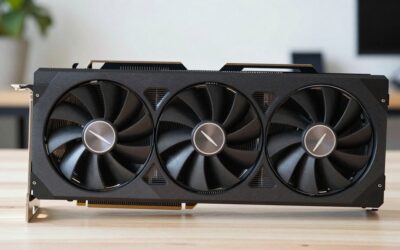
- Top Pick: GIGABYTE GeForce RTX 5070 Ti Gaming OC 16G Graphics Card, 16GB 256-bit GDDR7, PCIe 5.0, WINDFORCE Cooling System, GV-N507TGAMING OC-16GD Video Card
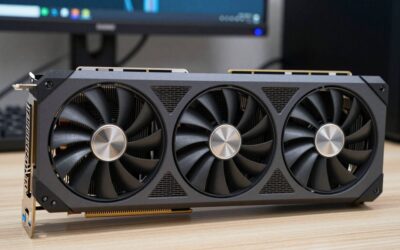
- Best Value: ASUS Dual NVIDIA GeForce RTX 5060 Ti 16GB GDDR7 OC Edition Graphics Card, (PCIe 5.0, DLSS 4, HDMI 2.1b, DisplayPort 2.1b, 2.5-Slot, Axial-tech Fan, 0dB Technology), 3 Year Warranty
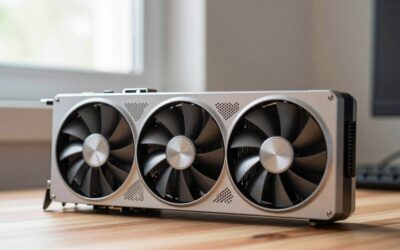
- Premium Choice: msi Gaming RTX 5070 Ti 16G Ventus 3X OC Black Graphics Card (16GB GDDR7, 256-bit, Extreme Performance: 2482 MHz, DisplayPort x 3 2.1a, HDMI 2.1b, NVIDIA Blackwell Architecture)
3060 vs 3060 Ti is an unusual comparison because the cheaper card has more memory. The RTX 3060 carries 12GB; the RTX 3060 Ti carries 8GB and costs more. That inversion has been confusing buyers since 2021 and it matters more now than it did then, because both cards live on the used market where the prices have compressed and the decision is genuinely close. This breaks down which one wins, when the VRAM advantage flips the answer, and the variant trap that catches people who shop by model name alone.
The Quick Verdict
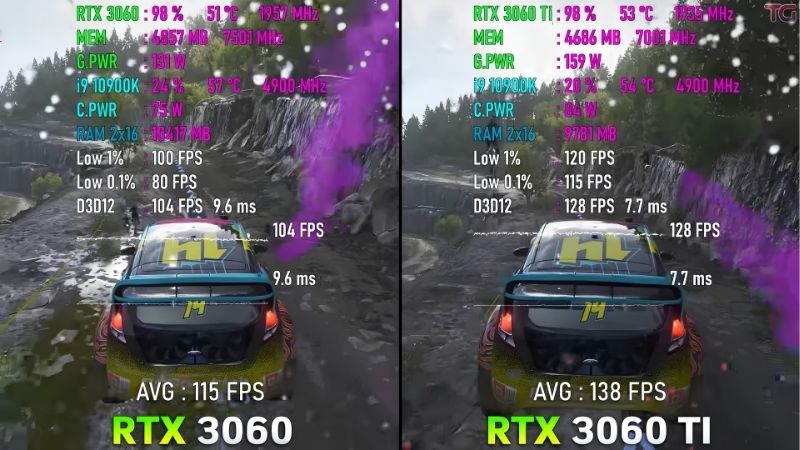
The RTX 3060 Ti wins for gaming, by roughly 25–30% in most titles. It has 36% more CUDA cores, a bus two-thirds wider, and 24% more bandwidth. The 12GB on the 3060 does not close that gap at the resolutions either card can actually run.
When the 3060 Wins Instead
When the workload needs capacity rather than speed. Local AI inference, Stable Diffusion, video editing with large timelines, and 3D work all care about how much fits in VRAM, and 12GB fits more than 8GB. For those tasks the 3060 is the better card despite being slower.
The Trap to Avoid
There is an RTX 3060 8GB. It is not a 12GB 3060 with less memory — it runs a 128-bit bus at 240 GB/s against the 12GB model’s 192-bit and 360 GB/s. It is a meaningfully worse card wearing the same name. If a 3060 listing looks unusually cheap, this is why.
Comparison Table
Both cards are Ampere and both launched within months of each other, which makes this one of the few comparisons where the spec sheet is directly meaningful.
| Spec | RTX 3060 12GB | RTX 3060 Ti | Advantage |
|---|---|---|---|
| Die | GA106 | GA104 | Ti — larger chip |
| CUDA cores | 3,584 | 4,864 | Ti, +36% |
| VRAM | 12GB GDDR6 | 8GB GDDR6 | 3060, +50% |
| Bus width | 192-bit | 256-bit | Ti, +33% |
| Bandwidth | 360 GB/s | 448 GB/s | Ti, +24% |
| TDP | 170W | 200W | 3060, −30W |
| PSU recommended | 550W | 600W | 3060 |
| Upscaling | DLSS 4.5 | DLSS 4.5 | Identical |
| Frame generation | No | No | Neither |
| Driver status 2026 | Full support | Full support | Identical |
| Launch MSRP | $329 | $399 | 3060 |
Different Chips, Not Different Bins
The row that explains everything is the first one. These are not the same silicon at different clock speeds — the 3060 uses GA106 and the 3060 Ti uses GA104, a physically larger chip from a tier above.
That is why the gap is wider than the naming implies. The 3060 Ti is a cut-down RTX 3070, not a beefed-up 3060. Nvidia named it in a way that suggests otherwise.
It also explains why the 3060 got 12GB. GA106’s 192-bit bus produces 6GB or 12GB with standard modules. Six would have been embarrassing, so Nvidia doubled it. The 12GB is a consequence of the bus width, not a decision to be generous.
Deep Dive Face-Off
Four criteria, ordered from where these cards are furthest apart to where the answer flips.
Gaming Performance: Not Close
The RTX 3060 Ti leads by roughly 25–30% across most modern titles. That follows directly from 36% more cores fed by 24% more bandwidth — the resources scale together, which is why the gain translates more cleanly than in comparisons where only one moves.
Both are 1080p cards in 2026 and both can reach 1440p with DLSS. The Ti does it at higher settings.
The 12GB does not rescue the 3060 here. At 1080p and 1440p, neither card is capacity-limited in the overwhelming majority of titles — they are limited by shader throughput, and the Ti has more of it.
Where the 12GB Actually Wins
Two scenarios, and they are more common than they used to be.
The first is texture-heavy titles at 1440p with Ultra texture packs, where 8GB starts filling. The symptom is not a lower average frame rate — it is stutter as assets swap over PCIe. In those specific titles the 3060 can produce better 1% lows despite losing on averages, which is a genuinely strange result and a real one.
The second is anything that is not a game. Local LLM inference, Stable Diffusion at higher resolutions, video timelines, and Blender scenes care about what fits. A model that fits in 12GB and not 8GB does not run 30% slower on the smaller card — it does not run at all.
If your machine does any of that work, the comparison inverts and the 3060 is the card to buy.
Features and Drivers: Identical
Both are Ampere, which means both sit on Nvidia’s supported driver branch. When Nvidia ended Game Ready support for Maxwell, Pascal, and Volta in October 2025 — moving those to quarterly security updates through October 2028 — Ampere was untouched.
Both run DLSS 4.5, which Nvidia says draws 23 of every 24 pixels on screen. On cards this size that is not a bonus feature; it is what makes recent titles playable.
Neither gets Frame Generation, which requires RTX 40 or newer, or Multi Frame Generation, which is RTX 50 only. And DLSS 5, arriving this autumn with real-time neural rendering, is expected to need RTX 50 silicon. Both cards are equally outside that.
Power and Practical Fit
The 3060 draws 170W against the Ti’s 200W, and Nvidia recommended 550W against 600W. On the used market these cards go into older prebuilts, and 30W plus a 50W PSU recommendation genuinely decides some builds.
Both are five-year-old cards. Thermal paste degrades, fan bearings wear, and a repaste is worth budgeting on either. A card that throttles at 83°C because its paste has dried out will underperform every benchmark you have read.
The Variant Trap in Detail
This deserves its own section because it costs real money. Nvidia released an RTX 3060 8GB after the 12GB model, and it is not a memory-reduced version of the same card.
The 8GB variant runs a 128-bit bus at 240 GB/s against the 12GB model’s 192-bit and 360 GB/s — a third less bandwidth. It carries the same CUDA core count, which is exactly what makes it deceptive: the headline spec matches, and the card underneath does not.
The 3060 Ti has its own split. Most are GDDR6 at 448 GB/s, but a later GDDR6X version runs 19 Gbps for 608 GB/s — substantially faster memory on the same silicon. If you find a 3060 Ti listing at a premium, this may be why, and it is one of the rare cases where the premium is justified.
| Card | Bus | Bandwidth | Verdict |
|---|---|---|---|
| RTX 3060 12GB | 192-bit | 360 GB/s | The one people mean |
| RTX 3060 8GB | 128-bit | 240 GB/s | Avoid — same name, worse card |
| RTX 3060 Ti GDDR6 | 256-bit | 448 GB/s | The standard version |
| RTX 3060 Ti GDDR6X | 256-bit | 608 GB/s | Worth a small premium |
On the used market, listings are written by sellers rather than manufacturers. GPU-Z on arrival will tell you which card you actually received — check the bus width and memory type fields, not the model name.
The Alternative
Both of these are used cards with no warranty. Two alternatives deserve weighing first.
The RTX 5060: New, Supported, MFG Included
At $299 MSRP with 3,840 Blackwell CUDA cores, 8GB of GDDR7 at 448 GB/s and 145W, the RTX 5060 has stayed nearer to list than anything else in the current lineup — around $339 as of July 2026.
Against a used 3060 Ti at $200–$250, that is roughly $90–$140 for a new card with a warranty and Multi Frame Generation, which neither Ampere card can ever have.
Its 8GB is the same limitation the 3060 Ti has. If capacity is what you need, this does not solve it.
The RTX 5060 Ti 16GB: If Capacity Is the Point
If you were leaning toward the 3060 for its 12GB, this is the modern version of that argument: 16GB, DLSS 4.5, MFG, 180W. MSRP is $429 and it has traded roughly $470–$589.
Two caveats. It runs a 128-bit bus at 448 GB/s, so it is a 1080p gaming card with lots of VRAM rather than a 1440p one. And board partners reported it end of life at CES 2026 while Nvidia disputed the claim — if you want one, availability is the constraint rather than price.
Keeping What You Have
If you already own either card and play at 1080p, neither is a compelling reason to spend. Both run DLSS 4.5, both are on a supported driver branch, and dropping settings from Ultra to High is free.
The stronger argument for staying put is that these cards have a longer runway than their age suggests. Ampere was excluded from the October 2025 deprecation, and Nvidia has given no signal about when it follows Pascal onto the legacy branch. Historically that has come around a decade after launch, which puts these cards well past 2028.
There is a free upgrade worth trying first. Undervolting a five-year-old card typically drops 10–20°C, which on hardware whose thermal paste has aged is frequently the difference between throttling at 83°C and holding boost. Combined with a repaste, it costs an afternoon and a few dollars of compound, and it recovers performance you have quietly been losing rather than adding performance you never had.
That matters because the alternative is not cheap. In a market where prices have flattened rather than fallen and relief is three years out, an afternoon of maintenance competes surprisingly well against $300.
What the 2026 Market Does to This Decision
Used prices do not float free of new prices, and the new market has been strange enough to hold used cards up.
Why These Cards Have Not Depreciated Normally
Component pricing has continued trending upward, memory foremost. The positive news is real but weak: the steep late-2025 climb has flattened, and Framework has reported a stretch of relative stability while still warning of volatility. New supply is opening — OEMs can source DDR5 from Chinese suppliers such as CXMT, and Micron is building two Idaho fabs — but neither produces until 2027–2028.
Used prices track new ones. With new entry-level cards holding above list and Nvidia’s 16GB models reported end of life at CES 2026, the downward pressure that would normally push a 2021 card toward irrelevance is absent. That is why a 3060 Ti still commands real money.
The VRAM Question Got More Interesting
There is an irony worth naming. The 3060’s 12GB was widely mocked at launch as a marketing number on a card too slow to use it. In 2026, with 8GB cards under sustained criticism and Nvidia’s own 16GB models becoming scarce, that 12GB looks less silly than it did.
It still does not make the 3060 faster than the 3060 Ti at 1080p. It does mean the gap has narrowed in exactly the titles people complain about, and that the 3060 aged better than anyone predicted.
See More:
- Nvidia beta
- Nvidia CUDA 11.8
- Check CUDA version
- Nvidia GPU for gaming
- PNY GeForce RTX 5080 16GB OC review
Final Verdict and Recommendation
The 3060 vs 3060 Ti verdict comes down to what your machine does. Buy the RTX 3060 Ti if you game: 36% more cores and 24% more bandwidth deliver a 25–30% real gain, and 8GB is sufficient at the resolutions either card can drive. Buy the RTX 3060 12GB if you run local AI, Stable Diffusion, video, or 3D work — capacity is the binding constraint there, and a model that does not fit does not run slowly, it does not run. Buy neither if you can reach $339 for a new RTX 5060, which brings a warranty, a longer driver life, and Multi Frame Generation that no Ampere card will ever have.
And check the variant before you check out. The RTX 3060 8GB is a different card wearing the same name — 128-bit and 240 GB/s against the 12GB model’s 192-bit and 360 GB/s. On the used market, where listings are written by sellers rather than manufacturers, that distinction is frequently missing and it is the single most expensive mistake available in this comparison.
Frequently Asked Questions
Do I want the 12GB card or the faster one?
The RTX 3060 has 12GB on a 192-bit bus, while the 3060 Ti has 8GB on a wider 256-bit bus and a much larger GPU. For gaming, the Ti is roughly twenty five to thirty percent faster and is the better buy. The 12GB card only wins in memory hungry workloads such as local AI models and large scene rendering.
Is 8GB going to limit the 3060 Ti soon?
At 1440p ultra with ray tracing it already can, producing frame time spikes once the buffer fills. Dropping textures one step or enabling DLSS quality mode resolves it in nearly every title. At 1080p, which is where the card is most comfortable today, 8GB remains adequate for the vast majority of games.
Which is better for machine learning or Blender?
The 3060 with 12GB, in most cases. Model size and scene size are hard limits: if the workload does not fit in memory it either fails or falls back to system RAM at a crippling speed penalty. Where the workload fits comfortably in 8GB, the 3060 Ti finishes faster because it has far more compute.
What are the power requirements?
The 3060 is rated around 170W and the 3060 Ti around 200W, both typically on a single 8-pin connector, though some partner Ti models use two. Ampere draws sharp transient spikes, so a quality 600W to 650W unit is a sensible minimum for the Ti even though average draw is lower.
Are they worth buying used in 2026?
They are reasonable value if the price reflects their age. Check fan condition, test for memory errors, and prefer a card with an intact warranty where possible. Bear in mind neither supports frame generation, so a modern entry level card can display far higher frame rates in supported titles despite similar raw rendering power.
As an Amazon Associate we earn from qualifying purchases at no extra cost to you.


Ready to decide? Our #1 pick for 2026 is the Die.
Live price & availability on Amazon.

Write Your Review
No reviews yet. Be the first to share your experience!