
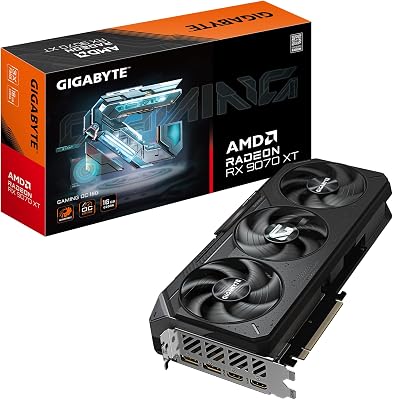
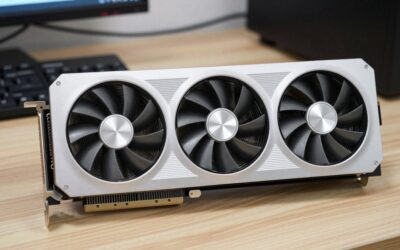
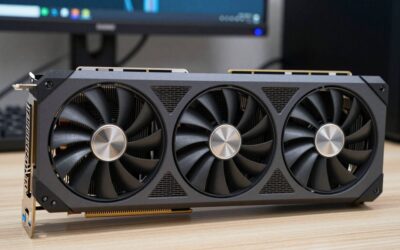
- Top Pick: GIGABYTE Radeon RX 9070 XT Gaming OC 16G Graphics Card, PCIe 5.0, 16GB GDDR6, GV-R9070XTGAMING OC-16GD Video Card
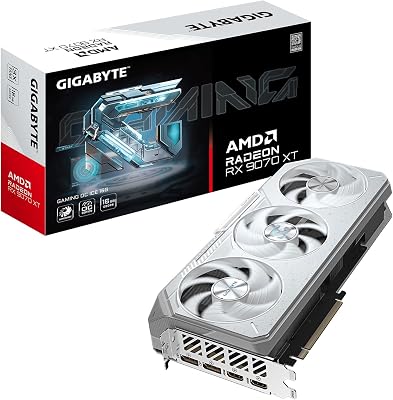
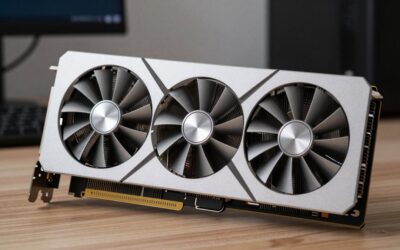
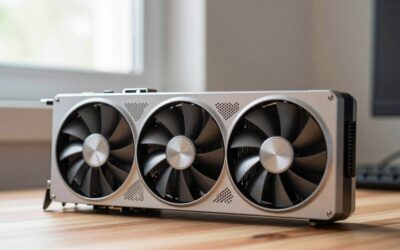
- Best Value: GIGABYTE Radeon™ RX 9070 XT Gaming OC ICE 16G Graphics Card (16GB GDDR6, 256-bit, PCIe 5.0, HDMI/DP 2.1, 2.7 Slot, Hawk Fan, Server-Grade Thermal Gel, Reinforced Structure)
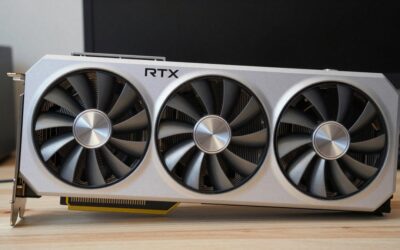
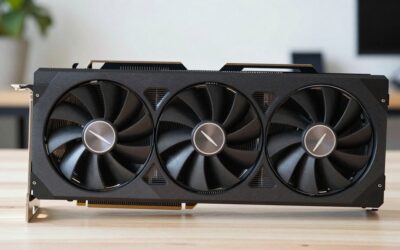
- Premium Choice: ASUS Prime Radeon RX 9070 XT 16GB GDDR6 OC Edition Gaming Graphics Card
The rtx 5090 vs rx 9070 xt matchup pits the undisputed flagship against the value champion, and the price gap between them is enormous. One is the no-compromise 4K and content-creation monster, the other is the card that delivers most of what mainstream gamers need for a fraction of the cost. Comparing them is really a question about your budget and ambitions, not just raw benchmarks. This comparison lays out a quick verdict, a full spec table, a criteria-by-criteria face-off, a sensible alternative, and a clear recommendation on which card, and which philosophy, is right for you. Treat the comparison less as picking a single winner and more as identifying which buyer you are, because the two cards are engineered for such different priorities that the right choice becomes obvious the moment you are honest about your budget, your resolution, and whether raw performance or value matters more to you.
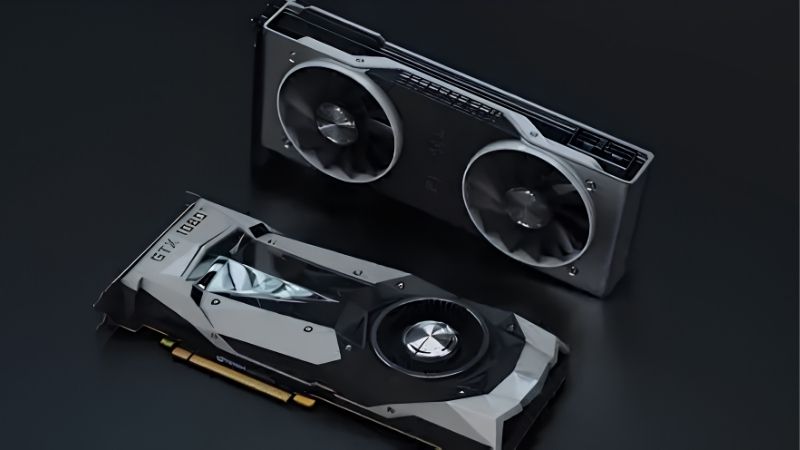
The Quick Verdict: RTX 5090 vs RX 9070 XT at a Glance
Here is the honest bottom line. The RTX 5090 wins outright on raw performance, memory, and features, and it is the only choice if you demand maximum 4K frame rates, heavy ray tracing, or serious creative horsepower. The RX 9070 XT wins decisively on value, delivering strong 1440p and capable 4K gaming for roughly a third of the price. The table below shows just how far apart these cards sit, and the sections after it explain whether the flagship’s massive premium is justified for you.
As an Amazon Associate we earn from qualifying purchases at no extra cost to you.




| Spec | RTX 5090 | RX 9070 XT |
|---|---|---|
| Architecture | Blackwell | RDNA 4 |
| Memory | 32GB GDDR7 | 16GB GDDR6 |
| Memory Bus | 512-bit | 256-bit |
| Typical Board Power | ~575W | ~304W |
| Upscaling | DLSS 4 + Frame Generation | FSR 4 |
| Ray Tracing | Class-leading | Much improved, second tier |
| Best Target | 4K ultra / creation | 1440p and 4K value |
| Approx. Street Price | ~$1,999+ | ~$599-649 |
Best for Uncompromised Performance
If you want the fastest gaming experience money can buy, the RTX 5090 stands alone, delivering high 4K frame rates at ultra settings with heavy ray tracing enabled. Nothing in this comparison, or in most others, matches it.
That performance extends beyond gaming. With 32GB of memory, the 5090 is a genuine tool for 3D rendering, video editing, and AI workloads, which is a large part of what its price actually buys and why professionals accept the cost. For a gamer, though, much of that capability sits idle, which is the crucial distinction: the 5090 is priced as a professional and enthusiast halo product, so evaluating it purely as a gaming card makes it look far more expensive than the frame-rate gains alone would justify against a strong value alternative.
Best for Value and Efficiency
The RX 9070 XT is the smart-money pick, offering excellent 1440p performance and very capable 4K gaming at roughly a third of the flagship’s price. For the vast majority of gamers, it delivers the experience they actually want.
Its far lower power draw is a real bonus. At around 304W it runs on a sensible power supply and produces less heat and noise than the 5090’s massive appetite, keeping the whole build simpler, cheaper, and cooler. Lower power draw also means a smaller, quieter power supply, less heat dumped into the room, and easier cooling overall, so the savings from choosing the 9070 XT extend beyond the sticker price into a simpler, more comfortable build that is genuinely easier to live with day to day.
Best for Creators and AI Work
For professional and semi-professional creators, the 5090’s enormous memory and compute make it a productivity investment rather than a luxury, slashing render and export times in a way that can pay for itself. This is where the flagship’s price makes rational sense.
The 9070 XT is capable for lighter creative tasks but is not built for the heaviest professional workloads. If your work depends on GPU horsepower and large memory, the gap here is not close, and the 5090 is the tool for the job. The distinction is really whether the GPU earns money or spends it: for a professional whose render and export times translate into billable hours, the 5090 can pay for itself, whereas for a pure gamer that same spending buys frames they may never fully use at their resolution.
Deep Dive Face-Off: Performance, Features, and Value
Averages hide the real story, so the fair way to settle rtx 5090 vs rx 9070 xt is to test each card against the criteria buyers actually care about. Raw performance, feature sets, and the all-important value equation each frame the decision differently, and your budget and goals determine which one matters most. The breakdown below weighs each dimension honestly rather than pretending two cards this far apart in price are direct rivals.
Rasterization and 4K Gaming
In raw rasterization the 5090 is far ahead, comfortably driving 4K at high frame rates where the 9070 XT delivers a good but more modest 4K experience that often benefits from upscaling. At 1440p, however, both cards are excellent, and the 9070 XT’s lower price makes it the obvious value at that resolution.
The practical read is about resolution and refresh targets. For 4K at maximum settings and very high frame rates, only the 5090 truly satisfies, while for 1440p or a more relaxed 4K, the 9070 XT provides the vast majority of the experience for far less money. The honest framing is that the 5090 wins every benchmark but the 9070 XT wins most real-world decisions, because the resolution and refresh rate the majority of gamers actually run are exactly the conditions where the cheaper card already delivers a smooth, high-quality experience without the flagship’s cost.
Ray Tracing and Upscaling Features
Ray tracing is a clear 5090 win, as its class-leading hardware handles the heaviest ray-traced games with room to spare. The 9070 XT has improved dramatically over previous generations and is now genuinely capable, but it remains a step behind in the most demanding scenarios.
On upscaling, both have strong modern solutions, and the latest generation on each side reconstructs images impressively. The 5090’s frame-generation and reconstruction suite is the more mature, but the gap has narrowed enough that the 9070 XT no longer feels disadvantaged in everyday gaming, which strengthens its value case further. The narrowing feature gap is one of the most important developments of this generation, because upscaling quality was long a decisive advantage for one side, and now that both reconstruct images convincingly, price and raw performance carry more of the decision than before, which favors the value contender.
The Value Equation
This is the heart of the matter. The 9070 XT offers a staggering amount of performance per dollar, giving most gamers the frame rates they want at a price that leaves budget for the rest of the build. Its value is genuinely hard to beat.
The 5090 is not trying to win on value and never will, because it targets buyers for whom maximum performance or professional capability outweighs cost entirely. Judged as a value product it looks expensive, but judged as a no-limits tool it is simply the best, and those are two different questions. Confusing the two is the most common mistake buyers make, spending flagship money chasing a value metric it was never meant to win, or dismissing the 5090 as overpriced when the buyer genuinely needs its professional capabilities, so being honest about which question you are actually asking leads to a purchase you will not regret.
Pricing, 2026 News, and a Middle-Ground Alternative
Specs decide which card is more capable, but the market and your budget decide which one belongs in your build. Two forces shape the rtx 5090 vs rx 9070 xt decision in 2026: the direction of component prices and the reality that these cards serve very different buyers. Factor both in, because the smarter purchase is the one matched to your needs and the current market, not just the bigger number.
How 2026 Component Prices Change This Decision
Component and laptop prices have been trending upward, driven largely by memory costs, and the effect is amplified on the 5090, whose 32GB of fast memory makes it especially sensitive to memory pricing. If you have been waiting for the flagship to get cheaper, the current market is not moving in that direction.
There is modest good news that is real but limited. Prices have stopped rising as steeply as they did at the end of 2025, and some manufacturers report a stretch of relative stability, though they still warn that volatility has not ended. Practically, today’s price is a sound basis for a decision rather than a peak you should expect to fall soon.
Genuine relief remains distant for both cards. New memory supply is opening up and additional fabrication plants are under construction, but those facilities are not expected to run until 2027 or 2028. The takeaway is that prices have plateaued, not dropped, so if you need a card now, buying at today’s rate is reasonable, and this is especially relevant for the value-focused 9070 XT buyer watching every dollar.
The Pros and Cons Buyers Weigh
The RTX 5090’s pros are unmatched performance, a huge 32GB memory pool, class-leading ray tracing, and real professional capability, while its cons are an extreme price and a very high 575W power draw that demands a serious PSU and cooling. It is the no-compromise flagship for those who can justify it.
The RX 9070 XT’s pros are outstanding value, strong 1440p and capable 4K performance, much-improved features, and sensible power use, with cons being second-tier ray tracing and less headroom for the heaviest 4K and professional workloads. It is the value champion that satisfies most gamers.
A Sensible Middle-Ground Alternative
If the 9070 XT feels slightly short of your 4K ambitions but the 5090’s price is out of reach, the logical alternative is a high-end Nvidia card one tier below the flagship, which pairs stronger 4K and ray-tracing performance with a far more reasonable price. That middle option resolves the huge gap this matchup exposes.
Stepping into that tier costs more than the 9070 XT but a fraction of the 5090, and for many 4K gamers it is the true sweet spot. If your goals sit between value and flagship, it is worth pricing that card alongside these two, and you can compare all three live through the link in this guide.
See More:
- Nvidia Corporation
- download latest Nvidia drivers
- Nvidia GeForce Experience
- rx 7700 xt vs rtx 5060
- rtx 5060 triple fan
Final Verdict and Recommendation
The rtx 5090 vs rx 9070 xt verdict is less a contest than a choice of philosophy. Buy the RTX 5090 if you demand the absolute fastest 4K gaming, heavy ray tracing, or professional-grade memory and compute, and the price and power draw are within reach. Buy the RX 9070 XT if you want superb 1440p and capable 4K gaming with excellent value and efficiency, which describes the large majority of gamers. With component prices plateaued rather than falling and real relief years away, waiting is unlikely to help, so decide by your budget and ambitions, confirm your power supply suits your pick, and use the link here to check current pricing before stock and prices shift again. Both cards are excellent at what they set out to do, so the decision is not about which is better in the abstract but about which is better for you, and answering that question honestly is what turns a large purchase into one you will be genuinely glad you made when the day comes to sit down and play.
Frequently Asked Questions
Is this a fair comparison?
They occupy opposite ends of the market. The RTX 5090 is the flagship at roughly three times the price of the RX 9070 XT. The useful question is not which is faster, since the answer is obvious, but whether the flagship premium buys proportionate benefit.
How large is the performance gap?
The 5090 is typically two to two and a half times faster in rasterization at 4K and further ahead in path-traced workloads. Since it also costs around three times as much, the 9070 XT retains a clear advantage in frames per dollar.
What are the power and cooling demands of the 5090?
It carries a 575W board power, needs a 1000W supply with a native 12V-2×6 cable, and most designs are three to four slots thick and over 330mm long. Case airflow and clearance planning matter as much as the power supply choice here.
Does the 32GB of VRAM on the 5090 matter for gaming?
Not for games today, where 16GB remains sufficient at 4K. That capacity matters enormously for local AI models, large 3D scenes, and high-resolution video work. If you only game, the memory advantage is largely wasted spending.
Which should I actually buy?
For gaming at 1440p or 4K on a budget, the 9070 XT is the sensible purchase and leaves money for a better monitor or CPU. Choose the 5090 only if you need maximum path-traced performance, high refresh 4K, or the VRAM for professional and AI workloads.
Ready to decide? Our #1 pick for 2026 is the Architecture.
Live price & availability on Amazon.

Write Your Review
No reviews yet. Be the first to share your experience!