
- Top Pick: GPVHOSO RTX 2060 8GB Super Graphics Card 256Bit GDDR6,
- Best Value: ASUS Dual GeForce RTX 3050 6GB GDDR6 OC Edition Gaming Graphics Card
- Premium Choice: msi Gaming RTX 3050 Ventus 2X 6G OC Graphics Card (NVIDIA RTX 3050, 96-Bit, Boost Clock: 1492 MHz, 6GB GDDR6 14 Gbps, HDMI/DP, Ampere Architecture)
Top 2060 Graphics Card Rtx 2060 Picks for 2026
Here are our current top 2060 graphics card rtx 2060 picks, compared on real Amazon owner reviews, price, and features. Live prices update below.

Prime
Editor's Pick
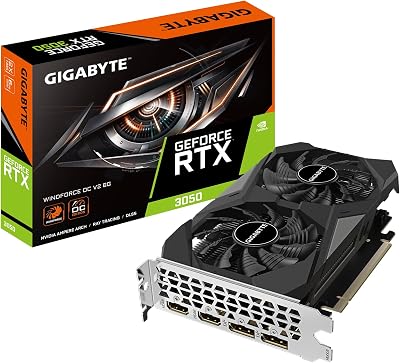
GIGABYTE GeForce RTX 3050 WINDFORCE OC V2 6G Graphics Card, 2X WINDFORCE Fans, 6GB GDDR6 96-bit GDDR6, GV-N3050WF2OCV2-6GD Graphics Card


As an Amazon Associate we earn from qualifying purchases at no extra cost to you.




2060 graphics card value is a question more budget gamers are asking in 2026, as expensive new GPUs push buyers back toward proven older hardware. Launched in early 2019 at $349, the RTX 2060 was the first affordable card to bring ray tracing and DLSS to the mainstream, and on today’s used market it has become a genuinely cheap entry into modern PC gaming. This review takes an objective, expert look at where the card stands now: the specifications behind it, how it performs in real 1080p games, the 6GB VRAM limit that shadows it, what you should pay used, and how 2026’s rising prices reshape the decision. If you are shopping at the budget end, here is exactly where the 2060 graphics card still earns a place.
What the 2060 Graphics Card Delivers
The RTX 2060’s staying power comes from a balanced Turing design that introduced modern features to a low price point. Understanding the hardware and the performance it produces sets fair expectations for a card that is now several years old. The specifications explain both its enduring appeal and its clear ceiling.
The Specs Behind It
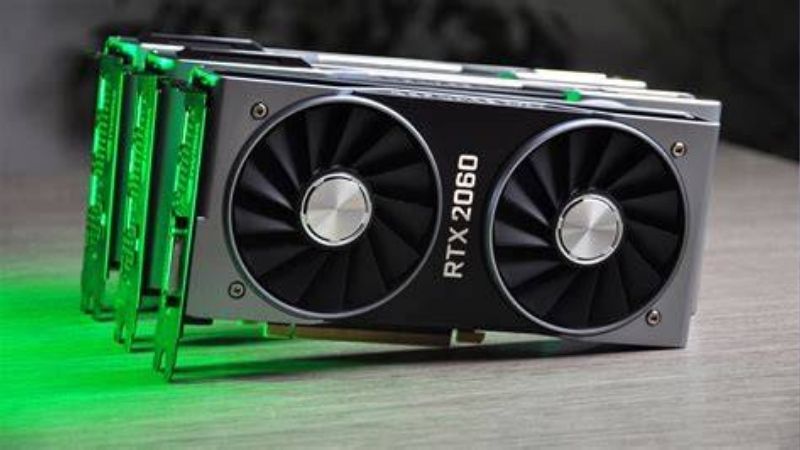
The RTX 2060 is built on NVIDIA’s Turing architecture using the TU106 die, with 1,920 CUDA cores and 6GB of GDDR6 memory on a 192-bit bus, delivering 336 GB/s of bandwidth. It launched on January 15, 2019 at a $349 MSRP.
Its historical significance was the feature set. This was the cheapest card of its day to include dedicated RT cores for ray tracing and Tensor cores for DLSS, bringing those technologies within reach of mainstream buyers.
The card draws around 160 watts through a single 8-pin connector and uses a PCIe 3.0 interface. By 2026 standards it is modest hardware, but it remains a complete, modern-feature graphics card rather than a bare-bones budget part.
Real 1080p Performance Today
At its target resolution the 2060 still performs well. It delivers strong 1080p gaming across most modern titles, and with sensible settings it holds comfortably playable frame rates in the majority of current games.
It can even stretch to 1440p in lighter titles or with reduced settings, though that is beyond its comfort zone. DLSS helps considerably here, reclaiming frames in supported games and making higher settings or resolutions more viable than the raw silicon alone allows.
The honest summary is that the 2060 is a capable 1080p card that rewards realistic expectations. It is not built for maxed-out modern AAA gaming, but for everyday play at sensible settings it remains perfectly usable.
Ray Tracing, DLSS, and Positioning
The modern feature set is the 2060’s quiet advantage over older budget cards. It supports DLSS upscaling and basic hardware ray tracing, which lets it use NVIDIA’s frame-reclaiming technology even though its raw power limits heavy ray-traced workloads.
Against newer hardware the value picture depends entirely on price. A current Radeon RX 7700 XT offers vastly more performance for similar new-card money, so the 2060 only makes sense as a cheap used purchase rather than a new one.
Positioned honestly, the 2060 is an entry-level card with a modern toolkit. It is a value pick for 1080p gamers on a tight budget, not a performance card for demanding or future-facing builds.
Buying a 2060 Graphics Card in 2026: Value and Verdict
The decision comes down to price, the memory limit, and the overall balance of strengths and weaknesses. The 2060 is cheap, but used hardware carries risk and its 6GB buffer is its defining constraint. This section sets the value case and the verdict.
Used Pricing and Condition
On the used market the RTX 2060 typically sells for between $130 and $170, with clean units often found near the lower end. That is well below half its original launch price and represents real value for a ray-tracing-capable card.
Condition is the key variable. These cards may have seen mining or heavy use, so favor listings with clear photos, ask about history, and treat suspiciously cheap units cautiously. New 2060 stock, where it exists, is inflated to roughly $386 and not worth considering.
As a target, paying around $130 to $150 for a tested, clean card is a fair deal, and the value weakens as prices approach $200 where stronger used options appear.
The 6GB VRAM Question
The 2060’s 6GB of memory is its clearest limitation in 2026. While adequate for 1080p in many games, newer titles can exceed that buffer at higher texture settings, forcing occasional stutters or a step down in quality.
In practice the impact is manageable at 1080p. Lowering texture detail a notch or enabling DLSS keeps memory pressure in check, so the limit rarely makes a game unplayable, but it does demand attention at higher settings.
For buyers planning to keep a card for several years, the 6GB buffer is the strongest argument for spending a little more on a card with more memory. For light 1080p gaming today, it remains workable.
Pros and Cons of the 2060 Graphics Card
On the positive side, the 2060 graphics card is very affordable used, includes RT cores and DLSS support, delivers solid 1080p performance, runs on a modest 160-watt budget with a single power connector, and offers a complete modern feature set rarely found this cheap.
On the negative side, the 6GB VRAM limits higher settings and longevity, ray tracing is only lightly viable, it sits on PCIe 3.0, and as a used card it carries wear and no warranty, so condition and price must both be right.
The verdict is conditional but positive. The 2060 graphics card is a smart cheap buy for 1080p gamers who find a clean unit at a fair price, and a weak choice for anyone wanting headroom for years of high-setting modern gaming.
Market Forces and Who Should Buy
Even a budget card is shaped by the wider 2026 market, which has pushed new prices sharply upward. Understanding that backdrop, and what it means for a value buyer, clarifies why older cards like the 2060 still attract demand. Compatibility then confirms whether it fits your system.
Why New GPU Prices Climbed in 2026
The 2026 market is gripped by a severe structural memory shortage. DRAM contract prices have risen more than 170 percent year over year, and because video memory can account for up to 80 percent of a graphics card’s bill of materials, new GPU prices have climbed sharply, with current-generation cards up an estimated 15 to 23 percent and some models jumping 16 to 17 percent almost overnight.
AI demand is the underlying cause. With the United States approving sales of NVIDIA’s powerful H200 accelerators to major Chinese firms, memory and fabrication capacity is being pulled toward data-center silicon, and reports indicate NVIDIA has trimmed mid-range consumer output by a significant margin. Memory suppliers have warned the shortage could persist into 2027, while AMD raised prices around ten percent early in the year and NVIDIA followed.
The effect reaches even the entry tier. When new budget cards cost more and stock is uneven, the cheapest path to playable, modern-feature gaming increasingly runs through older, used hardware rather than new silicon. Lead times of several months on some new models only add to the appeal of an in-stock used card that ships immediately.
What This Means for a 2060 Buyer
For someone shopping at the bottom of the market, the squeeze makes the 2060 more relevant, not less. While new budget cards carry 2026’s inflation, a $130 to $150 used 2060 sidesteps that premium and still plays the games most budget gamers care about, with DLSS and ray tracing both on the menu.
The honest caveat is that other used cards have become attractive for the same reason. The 2060 wins on absolute price, but a slightly higher budget can buy more VRAM and performance, so the choice depends on exactly how tight the budget is and how long you plan to keep the card.
The strategy is clear-eyed. In a year of expensive new hardware, the 2060 is a rational floor for buyers who want a modern feature set cheaply, provided you secure a clean unit near the bottom of its price range rather than overpaying because everything else is expensive too.
Compatibility and Who Should Buy
The 2060 is undemanding to install. A quality 500-watt power supply with a single 8-pin connector is sufficient, and the card fits comfortably in most standard cases without special cooling.
Pair it with a reasonable CPU and dual-channel RAM so the system is balanced, and confirm your PSU connector and headroom before buying. Its PCIe 3.0 interface works fine on modern boards.
The ideal buyer is a tight-budget 1080p gamer who wants DLSS and basic ray tracing without spending much. Anyone needing large VRAM headroom, heavy ray tracing, or a card to last several years should spend a little more on newer used hardware.
Frequently Asked Questions
A few questions recur from buyers weighing the 2060 graphics card in 2026. The concise answers below cover gaming ability, pricing, and memory.
Is the RTX 2060 graphics card still good in 2026?
Yes for 1080p gaming at sensible settings, with DLSS and basic ray tracing available. Its 6GB VRAM and modest power are the main limits, so it suits light gaming rather than maxed-out modern titles.
How much should I pay for a 2060 graphics card?
Around $130 to $150 for a clean, tested used card is fair. The used range runs roughly $130 to $170, and new stock at about $386 is inflated and not worth buying.
Is 6GB of VRAM enough on the RTX 2060?
For 1080p it is generally workable, though newer games can exceed it at high texture settings. Lowering textures slightly or using DLSS keeps memory pressure manageable.
See more:
Recommended Products

ASUS TUF Gaming NVIDIA GeForce RTX 5070 12GB GDDR7 OC Edition Graphics Card, (PCIe 5.0, HDMI/DP 2.1, 3.125-Slot, Military-Grade Components, Protective PCB Coating, Axial-tech Fans), 3 Year Warranty

ZOTAC
ZOTAC Gaming GeForce RTX 4060 Ti 8GB Twin Edge OC White Edition DLSS 3 8GB GDDR6 128-bit 18 Gbps PCIE 4.0 Compact Graphics Card, IceStorm 2.0 Advanced Cooling, Spectra RGB Lighting, ZT-D40610Q-10M

msi
MSI GeForce RTX 4060 Ti Gaming X Slim 16G Graphics Card – NVIDIA RTX 4060 Ti, 16GB GDDR6 Memory, 18Gbps, PCIe 4.0, Twin Frozr 9, RGB, DLSS3
As an Amazon Associate we earn from qualifying purchases. Product prices and availability are accurate as of the date/time indicated.
Conclusion
The 2060 graphics card in 2026 remains a sensible budget pick with a surprisingly modern toolkit. For solid 1080p gaming with DLSS and basic ray tracing at a used price near $130 to $150, it is one of the cheapest ways into modern PC gaming, especially as new cards grow more expensive. The compromises are real: a 6GB VRAM buffer that limits higher settings and longevity, lightweight ray tracing, and the usual risks of buying old hardware. With 2026’s memory shortage keeping new prices high, a clean, fairly priced 2060 is a rational floor for the market. Verify the card, confirm your power supply, and buy it cheaply, and the 2060 graphics card still delivers real value for budget-minded gamers.

Write Your Review
No reviews yet. Be the first to share your experience!