
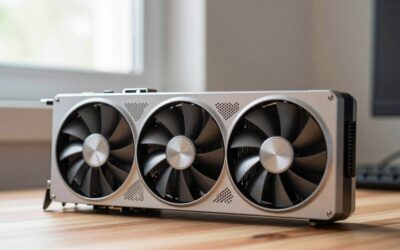
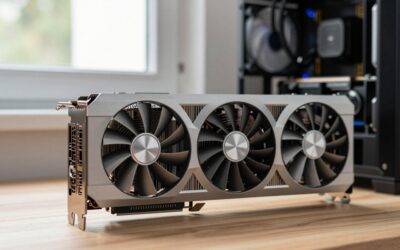
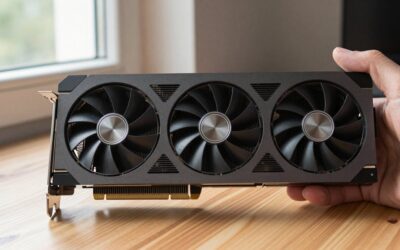
- Top Pick: ASRock Radeon RX 9060 XT Challenger 16GB OC, RDNA 4, 3290MHz Boost, 16GB GDDR6 128-bit, PCIe 5.0, Dual Fans, 0dB Silent, LED Indicator, DisplayPort 2.1a, HDMI 2.1b
- Best Value: ASRock Radeon RX 9060 XT Steel Legend 16GB GDDR6 OC Graphics Card | 3275 MHz Boost | Triple Fan | 0dB Cooling | Metal Backplate | PCIe 5.0 | DisplayPort 2.1a, HDMI 2.1b
- Premium Choice: ASUS Dual Radeon RX 9060 XT 16GB GDDR6 Gaming Graphics Card
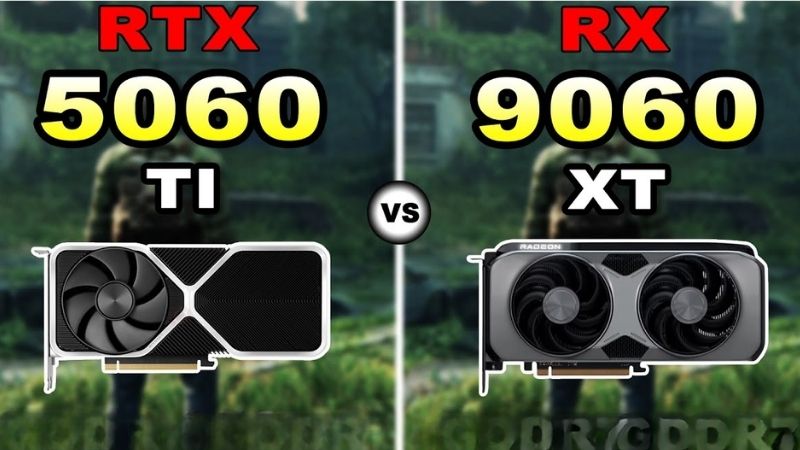
RTX 5060 Ti vs 9060 XT is one of the tightest value battles in the mid-range, pitting Nvidia’s feature-rich card against AMD’s aggressive challenger for the same 1440p buyers. The RTX 5060 Ti brings DLSS 4, stronger ray tracing, and a mature ecosystem, while the RX 9060 XT counters with lower pricing and strong rasterization value. Both are available with a generous 16GB of VRAM, so the decision hinges on whether Nvidia’s features justify its premium for the way you actually play. This comparison lays out the numbers and gives you a clear recommendation for 2026.


The Quick Verdict: RTX 5060 Ti vs 9060 XT
Because these cards are so evenly matched on raw hardware, the quick verdict comes down to price and to which software ecosystem matters more to you personally. Here is the compressed answer before the detailed comparison below. In short, the RTX 5060 Ti wins on features, ray tracing, and DLSS 4, while the RX 9060 XT wins on pure rasterization value, and the right pick depends on which of those columns you weigh more heavily at checkout. Read whichever verdict below sounds most like the way you actually game.
As an Amazon Associate we earn from qualifying purchases at no extra cost to you.







Quick Verdict For Feature-First Buyers
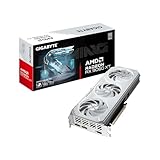
If DLSS 4, superior ray tracing, and the broadest software support matter most to you, the RTX 5060 Ti is the better fit. Nvidia’s ecosystem remains the more polished and widely supported of the two by a clear margin in 2026.
DLSS 4 Multi Frame Generation in particular can lift frame rates dramatically in supported titles, often erasing the AMD card’s raw-value advantage in the specific games where it is available. For buyers who play those titles regularly, that feature alone justifies the modest premium.
Pick the RTX 5060 Ti if you value ray tracing, streaming and creator tools, and the reassurance of the widest game support. You pay a little more up front, but you get the more feature-complete package in return.
This is also the card to lean toward if you stream or create alongside gaming. Nvidia’s encoder and its broad software support make the RTX 5060 Ti a smoother companion for capture, editing, and AI-assisted tools, which is a quiet advantage that never appears on a gaming benchmark chart but matters if your PC does double duty.
Quick Verdict For Value-First Buyers
If your priority is the most rasterization performance per dollar, the RX 9060 XT is usually the stronger buy. It typically undercuts the RTX 5060 Ti on price while trading blows with it in native, non-upscaled gaming across a wide range of titles.
For gamers who mostly play at 1440p without leaning heavily on ray tracing, that price advantage is genuinely compelling. You get the same generous 16GB of VRAM and broadly competitive frame rates for less money, which is exactly what value buyers are hunting for.
Choose the 9060 XT if you want raw frames per dollar and are comfortable with a software stack that is slightly less mature than Nvidia’s. For many mainstream players, that is a perfectly sensible, money-saving trade to make.
RTX 5060 Ti vs 9060 XT Specs Snapshot
The clearest way to see how tight this matchup really is comes from lining up the core specifications and prices together. Skim this table, then read the analysis underneath for what these deliberately close numbers actually mean once you start gaming rather than comparing rows in isolation.
| Specification | RTX 5060 Ti 16GB | RX 9060 XT 16GB |
|---|---|---|
| Architecture | Blackwell | RDNA 4 |
| VRAM | 16GB GDDR7 | 16GB GDDR6 |
| Upscaling | DLSS 4 Multi Frame Gen | FSR 4 |
| Ray tracing | Stronger, more mature | Improved, competitive |
| Approx. TDP | ~180W | ~150–180W |
| Typical MSRP | $429 | Around $349 |
The takeaway is that these cards are genuinely close on paper, both offering a full 16GB and similar power draw. The RTX 5060 Ti leads on features and ray tracing, the RX 9060 XT leads on price, and neither holds a decisive raw-performance advantage over the other, which is what makes this a real decision rather than an obvious one.
It helps to think about your own game library here. If your most-played titles support DLSS 4 and use ray tracing, the Nvidia card’s advantages show up nightly; if you mostly play native-resolution or competitive games, the AMD card’s raw-value lead is what you will actually feel, and the extra Nvidia features go largely unused.
Deep Dive Face-Off: RTX 5060 Ti vs 9060 XT By Criteria
With the quick answer covered, here is the detailed head-to-head across the three areas that actually decide this purchase: raw gaming performance and value, the competing upscaling and ray-tracing technologies, and the honest strengths and weaknesses each card brings for a real buyer weighing them carefully at checkout rather than in theory.
Raw Gaming Performance And Value
In native rasterization the two cards trade blows, with results swinging from game to game rather than one card consistently dominating the other. Neither holds a reliable, meaningful lead in pure non-upscaled performance across a broad and varied library of modern titles.
Where the RX 9060 XT pulls clearly ahead is on value. Because it typically costs less while matching the RTX 5060 Ti in raw frames, it delivers more rasterization performance for every dollar spent, which is the single strongest and most concrete argument in its favour.
That said, value is only decisive if you choose to ignore the features. Once DLSS 4 enters the picture in the games that support it, the Nvidia card can pull ahead in perceived smoothness, so the raw-value win for AMD comes with an important asterisk firmly attached.
The practical way to resolve that asterisk is to look at your own most-played games. If they largely support DLSS 4, the Nvidia card’s real-world lead is bigger than raw benchmarks suggest; if they are mostly native-resolution or competitive titles, the AMD card’s value advantage is exactly what you will feel night after night, and the missing features cost you nothing.
DLSS 4, FSR 4, And Ray Tracing
Upscaling is the beating heart of this matchup. Nvidia’s DLSS 4 retains a real edge in the breadth of game support and in Multi Frame Generation, which can multiply frame rates in ways FSR does not yet fully match across the board.
AMD’s FSR 4 has improved dramatically this generation and is now genuinely competitive on image quality, making the RX 9060 XT far more appealing than any of its predecessors. The gap that remains is mostly in the number of supported games rather than in raw upscaled quality.
Ray tracing follows a similar pattern, with the RTX 5060 Ti handling ray-traced workloads more comfortably thanks to Nvidia’s more mature hardware. If ray tracing is a genuine priority in the games you play, that capability is a clear point in the Nvidia card’s favour.
Pros And Cons Of Each Card
Laying the trade-offs out directly, side by side, makes this genuinely close decision far easier to resolve for your own specific needs and budget.
RTX 5060 Ti 16GB — pros: mature DLSS 4 with Multi Frame Generation, stronger ray tracing, broad game support, and excellent creator tools. Cons: a higher price for broadly similar raw performance, making it the less pure value pick of the two.
RX 9060 XT 16GB — pros: a lower price, excellent rasterization value, a full 16GB of VRAM, and much-improved FSR 4. Cons: ray tracing and upscaling breadth still trail Nvidia slightly, and the software ecosystem is a touch less mature.
Read together, these lists show why this matchup refuses to produce a single obvious winner. The Nvidia card is the rational choice for the buyer who leans on DLSS 4 and ray tracing often, while the AMD card is the rational choice for the buyer who counts every dollar and plays mostly in native resolution. The best card here is simply the one whose strengths match how you spend your gaming hours.
Pricing, Alternatives, And The Final Call
The last factor is real 2026 pricing, where the memory market and a couple of alternatives can shift this already-close decision either way. Treat this as the practical, wallet-focused counterweight to the feature comparison above, because a temporary price swing can easily settle a matchup this tight all on its own.
How 2026 Memory Prices Affect Both Cards
Both of these cards carry a full 16GB of VRAM, placing them squarely in the segment most affected by the current memory market. Through late 2025, AI datacenter demand pushed DDR5, SSD, and high-VRAM graphics-card prices up by roughly 20% right across the board.
There is cautiously positive news: prices have stopped rising as steeply as they did at the end of 2025, and some manufacturers report relative stability while still warning of volatility. New supply is coming from DDR5 sources such as CXMT and two new Micron plants being built in Idaho over the next few years.
The catch is timing, since those plants will not ramp until 2027–2028. In such a close matchup, this shared pricing pressure means the real, current street price of each card should be your ultimate tie-breaker, and whichever is discounted closer to MSRP on the day you buy is often the smarter purchase.
The Alternative If Neither Fits
If you can spend a little more, the Nvidia RTX 5070 offers a clear performance step up while retaining the full DLSS 4 suite for buyers who want more headroom at 1440p and beyond.
If you want to spend less, an 8GB version of either card cuts the price but sacrifices the future-proofing that makes these 16GB models worth buying. For most buyers, one of these two closely matched 16GB cards remains the value sweet spot, so weigh the small price differences closely.
Used cards are the other avenue worth a glance for bargain hunters. A previous-generation card in good condition can sometimes match this tier for less, though it means giving up the warranty and, in Nvidia’s case, the newest DLSS 4 features. For most buyers a new card at this price is the wiser call, but a strong deal on capable older hardware deserves a look.
See More:
- RTX 4060 vs RTX 5060
- M4 GPU benchmark
- RTX 5060 Ti benchmark
- 5060 Ti 16GB vs 9070 XT
- RTX 5050 vs RTX 5060
Final Verdict And Recommendation
Buy the RTX 5060 Ti 16GB if DLSS 4, ray tracing, and the widest software support matter more to you than saving a modest amount of money. It is the more complete and flexible package for feature-focused buyers happy to pay a small premium.
Buy the RX 9060 XT 16GB if you want the best rasterization value, care most about raw frames per dollar, and can happily live with a slightly less mature feature set. It is the smart, money-conscious pick for value-focused 1440p gamers.
If you are still torn, let your game library break the tie. A collection full of the latest DLSS-supported, ray-traced blockbusters points toward the RTX 5060 Ti, while a library of competitive and native-resolution favourites points toward the excellent value of the 9060 XT.
To settle the RTX 5060 Ti vs 9060 XT debate: the Nvidia card wins on features and ray tracing while the AMD card wins on raw value, making this a genuinely close call decided by your own priorities. With 16GB cards under continued price pressure through 2026, checking the real current price is the best possible tie-breaker. Compare today’s prices through the link below and grab whichever card fits your needs and budget, since neither one is a genuinely wrong choice for a solid, modern 1440p gaming build in 2026.
Frequently Asked Questions
Which 16GB card is faster in games?
They trade blows and the winner depends on the title. The RTX 5060 Ti 16GB tends to lead in ray traced and Nvidia-optimised games, while the RX 9060 XT 16GB is competitive or ahead in pure rasterisation, especially in AMD-favoured engines. Overall the two are within roughly five to ten percent of each other.
Do both cards use the same memory setup?
Both carry 16GB on a 128-bit bus, but the 5060 Ti uses faster GDDR7 while the 9060 XT uses GDDR6. That gives Nvidia a bandwidth advantage on paper. In practice AMD offsets some of it with Infinity Cache, so real-world differences are smaller than the raw specification gap suggests.
How do their PCIe interfaces differ?
The RTX 5060 Ti runs a PCIe 5.0 x8 link, which is fine on modern boards but loses meaningful bandwidth on older PCIe 3.0 systems. The RX 9060 XT uses a full x16 connection, so it is the safer choice if you are upgrading the GPU inside an ageing platform without changing the motherboard.
What are the power and PSU differences?
Both are around 180W with a single 8-pin connector and both are comfortable on a quality 550W supply. Neither needs a 12V-2×6 cable in most partner designs, and both are physically compact enough for mid-tower and many small form factor cases without clearance concerns.
Which has the better software and feature set?
Nvidia offers DLSS 4 with multi frame generation, wider game support, better NVENC encoding and stronger CUDA app performance. AMD counters with FSR 4 at close image quality, Fluid Motion Frames 2 that works in unsupported titles, and typically a lower price. For gaming only, the value edge usually goes to AMD.
Ready to decide? Our #1 pick for 2026 is the Architecture.
Live price & availability on Amazon.



Write Your Review
No reviews yet. Be the first to share your experience!