
- Top Pick: NVIDIA DGX Spark™ – Personal AI Desktop Supercomputer – Desktop GB10 Grace Blackwell Chip
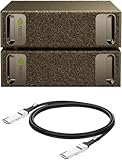
- Best Value: NVIDIA DGX Spark™ 2 Pack with Cable Bundle – Personal AI Desktop Supercomputer – Desktop GB10 Grace Blackwell Chip
- Premium Choice: NVIDIA DGX Spark GB10 Grace Blackwell Superchip, 128 GB LPDDR5x, ARM Processor, 4 TB NVME M.2 SSD Storage
Updated November 2026 – Quick answer: the Nvidia DGX price runs from roughly 600,000 US dollars for a full eight-GPU B300 system (third-party estimate, quote only) down to a few thousand dollars for the desktop DGX Spark, whose price has risen sharply since launch.


Best Seller
NVIDIA DGX Spark GB10 Grace Blackwell Superchip, 128 GB LPDDR5x, ARM Processor, 4 TB NVME M.2 SSD Storage
Nvidia DGX price is one of the biggest numbers in enterprise AI, and it is easy to see why: a single DGX system packs eight of Nvidia’s most powerful data-center GPUs into one appliance built for training and running large AI models. If you are trying to understand what a DGX actually costs in 2026, how it compares to renting cloud compute, and why prices stay so high, this overview breaks down the Nvidia DGX price picture clearly, so you can plan a budget with realistic expectations. The goal is to cut through vague quotes and give you concrete ranges, along with the context that explains why those numbers look the way they do.
What Is an Nvidia DGX and Who Buys It
Before the numbers, it helps to understand what you are actually paying for. A DGX is not a graphics card but a complete AI supercomputer in a box, and knowing its role explains why the price sits where it does.
As an Amazon Associate we earn from qualifying purchases at no extra cost to you.



What a DGX System Actually Is
An Nvidia DGX system is a fully integrated AI appliance that combines eight top-tier data-center GPUs with high-speed interconnects, CPUs, memory, storage and Nvidia’s software stack. Every part is chosen and tuned to work together, which is a large part of what you are paying for.
It is designed to train and run the largest AI models, delivering performance that would be difficult and costly to assemble from individual parts. Buying a DGX is really buying an engineered, validated system rather than a pile of components, and much of the price reflects that integration.
Because it bundles hardware and software into a tested, supported package, a DGX targets organizations that need reliable, large-scale AI compute rather than hobbyists. The value proposition is time saved and risk removed, which matters enormously at enterprise scale. Getting to a working AI cluster in weeks rather than months can be worth the premium alone. For a business racing competitors to ship AI features, that speed is a genuine asset.
The Nvidia DGX Lineup
The DGX family tracks Nvidia’s data-center GPUs. Older systems use H100 GPUs, followed by H200-based systems, and the newest use Blackwell B200 and B300 chips. Nvidia refreshes the line regularly, so the exact top model shifts as new data-center GPUs arrive.
Each generation increases memory, bandwidth and AI throughput, with the Blackwell systems targeting the most demanding modern AI reasoning and training workloads. Choosing between generations is largely a question of how cutting-edge your performance needs are versus how much you are willing to pay.
Which system a buyer chooses depends on their workload, budget and how cutting-edge their performance needs to be. Many buyers do not need the very latest generation, and an older system can offer strong value if it meets the workload. Matching the system to the job, rather than always buying the newest, is often the smarter spend.
Who Buys a DGX and Why
DGX buyers are typically enterprises, research labs, cloud providers and AI startups that need serious on-premises compute for training or inference. For these buyers, keeping the hardware in-house can offer control, security and predictable capacity that renting cannot always match. Sensitive data and steady demand often tip the balance toward ownership.
For these organizations, a DGX offers a turnkey path to large-scale AI without assembling and validating complex multi-GPU systems themselves.
The appeal is reliability and support at scale, which is exactly what justifies the substantial price for the right buyer. For an organisation whose core business depends on training or serving large models, that reliability is not a luxury but a requirement. The cost of downtime or a failed training run can dwarf the price of the hardware.
Nvidia DGX Price Breakdown in 2026
With the context set, here is what a DGX actually costs, how buying compares to renting, and the ongoing expenses that go well beyond the sticker price. Seeing all three together is the only way to judge whether a DGX is genuinely the right choice for a given team. Looking at the purchase price in isolation almost always understates the real commitment.
DGX System Prices at a Glance
DGX pricing is enterprise-level and quote-based, but the ranges below reflect the 2026 market. These are approximate figures for complete eight-GPU systems and vary by configuration and supplier. Treat them as planning anchors rather than fixed quotes, since real pricing depends on volume, support terms and the exact build. Any serious purchase should start with an official quote for your specific configuration.
| DGX System | GPUs | Approx. 2026 Price |
|---|---|---|
| DGX H100 | 8x H100 | ~215,000 to 300,000 |
| DGX H200 | 8x H200 | ~308,000 to 420,000 |
| DGX B300 | 8x B300 | ~500,000 to 600,000 (third-party estimate; quote only) |
| DGX B200 | 8x B200 | ~400,000 to 515,000 |
Individual data-center GPUs land roughly in the 30,000 to 75,000 range each depending on generation, which is why a full eight-GPU appliance reaches these totals once interconnects, CPUs and software are included. Much of the system cost sits in the fabric and integration that let eight GPUs work as one machine.
Buying a DGX vs Renting Cloud Compute
For many teams, renting is the practical alternative to a large upfront purchase. Cloud providers rent the same class of GPUs by the hour, with rates that vary widely by provider and commitment. Comparing several providers is essential, since the spread between the cheapest and most expensive can be surprisingly large. The same class of GPU can differ several times over in hourly price depending on where you rent it. Locking in a longer commitment usually lowers the rate but reduces flexibility. Weighing that trade-off against your expected usage is a key part of the decision.
Renting suits teams with variable or short-term workloads, avoiding the capital cost and letting you scale up or down as needed. For teams whose demand is unpredictable, that flexibility often outweighs the long-term savings of owning hardware outright. Paying only for what you use avoids sinking capital into hardware that may sit idle.
Buying a DGX makes sense for steady, heavy, long-term workloads where owning the hardware becomes cheaper than continuous rental over time. The crossover point depends heavily on utilisation, so honest forecasting of your workload is essential. Overestimating how busy the system will be is a common and costly mistake.
Total Cost of Ownership Beyond the Price
The purchase price is only part of the story. A DGX draws substantial power and generates significant heat, so data-center power and cooling are major ongoing costs. In some facilities these running costs can rival the price of the hardware over a few years of heavy use.
You also need rack space, networking and staff to run and maintain the system, all of which add to the true total cost of ownership. These operational demands are why a DGX is a commitment to an environment, not just a purchase. The right facility and support are as important as the hardware itself.
Factoring these in is essential, because the real cost of a DGX over its life can significantly exceed the headline purchase price. A realistic budget has to account for the data-center environment around the system, not just the appliance itself. Teams that overlook these costs are often surprised by their first year of operation.
Nvidia DGX Spark Price: The Desktop Entry Point
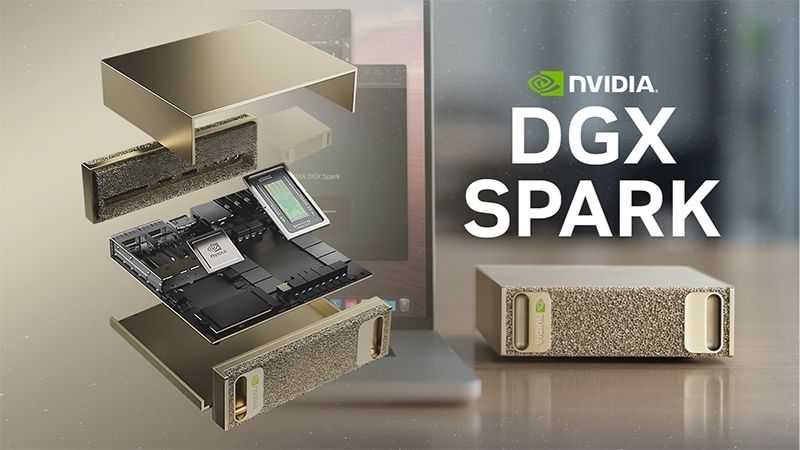
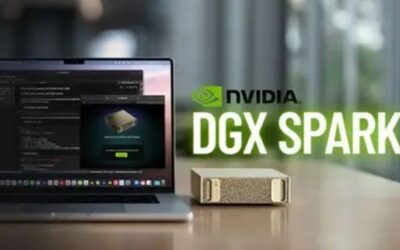
The Nvidia DGX Spark is the only DGX-branded system most individuals can realistically buy. It launched in 2025 at 3,999 US dollars, was raised to about 4,699 in February 2026, and recent reports put the 128GB Founders-style unit near 6,950 after an October 2026 increase, with partner versions often higher. Nvidia has cited memory supply for the increases, so always check the current listing before budgeting.
DGX Spark Specs at a Glance
| Spec | DGX Spark (GB10) |
|---|---|
| Chip | NVIDIA GB10 Grace Blackwell Superchip, 20-core Arm CPU |
| Memory | 128GB unified LPDDR5x (a 64GB variant was announced for late 2026) |
| AI performance | Up to 1 petaFLOP at FP4 with sparsity |
| Storage | Up to 4TB NVMe M.2, depending on configuration |
| Networking | 10GbE, Wi-Fi 7 and a ConnectX-7 port for linking two units |
| Typical use | Local prototyping, fine-tuning and inference of large models |
DGX Spark vs Partner GB10 Systems
Several vendors sell the same GB10 platform under their own names, including the ASUS Ascent GX10, the Acer Veriton GN100 and the HP ZGX Nano. They share the 128GB memory pool and chip, so the differences are mostly storage size, chassis, warranty and price. Compare the cheapest 128GB listing with the storage you need rather than paying extra for the brand name alone.
Is a DGX Spark Worth It Compared With a Full DGX?
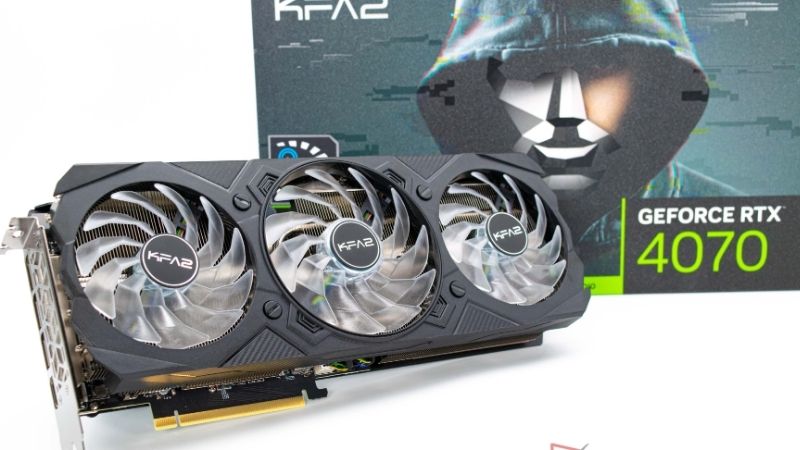
A Spark is not a scaled-down DGX H100. It has one chip and unified memory with far lower bandwidth than an eight-GPU HBM system, so it suits developers who need to run or tune large models locally rather than teams training at scale. If your work fits on one or two consumer GPUs, a regular workstation card may be cheaper and faster for smaller models.
DGX Price by Tier
- Desktop tier (several thousand dollars): DGX Spark and partner GB10 boxes for individual developers.
- Workstation tier (around 90,000 dollars and up): DGX Station-class systems, quoted through OEMs.
- Server tier (hundreds of thousands of dollars): eight-GPU DGX H100, H200, B200 and B300 systems, sold through enterprise quotes.
- Rack tier (millions of dollars): GB200 NVL72-class racks.
DGX Pricing, Policy and Alternatives
DGX prices do not exist in a vacuum. This section weighs the pros and cons of buying one, explains how policy and supply are shaping prices in 2026, and points to alternatives for smaller budgets. These external forces matter as much as the spec sheet when you are trying to forecast what a system will cost. Policy and supply can move prices more than any change in the hardware itself.
Pros and Cons of Buying a DGX
The honest balance sheet for investing in a DGX system.
| Pros | Cons |
|---|---|
| Turnkey, validated AI supercomputer | Very high upfront cost |
| Top-tier performance and interconnects | High power, cooling and space needs |
| Full Nvidia software and support | Ownership only pays off at scale |
| Reliable for steady, heavy workloads | Renting is cheaper for variable use |
For organizations with sustained large-scale AI needs, a DGX is compelling; for smaller or variable workloads, renting usually wins on cost. The right answer depends less on the sticker price and more on how consistently you would actually keep the hardware busy. A system that sits idle half the time is an expensive way to run AI. High, steady utilisation is what makes ownership pay off.
How Policy and Supply Affect DGX Prices
DGX prices in 2026 are shaped by both policy and a tight component market. In a notable policy shift, the U.S. Department of Commerce in early 2026 permitted conditional sales of H200 chips to approved Chinese buyers, subject to a levy and approvals, expanding demand for these already scarce chips.
At the same time, memory costs have surged: HBM and DRAM prices have climbed sharply, with major suppliers raising HBM prices for 2026 deliveries as AI demand outstrips supply.
New memory capacity from suppliers like Micron’s upcoming Idaho fabs will not arrive until roughly 2027 to 2028, so with Blackwell effectively sold out and a large backlog, DGX prices are likely to stay firm rather than fall in the near term.
Alternatives for Smaller Budgets
Not everyone needs a full DGX. For smaller teams, renting cloud GPU time or using individual data-center GPUs in a custom server offers far lower entry costs.
For research, prototyping or lighter AI work, high-end consumer or professional GPUs can handle meaningful workloads at a fraction of the price. Many teams start small and only move to dedicated systems once their needs clearly outgrow simpler hardware. Starting lean also lets you learn your real requirements before committing to a large purchase, which can save a great deal of money on a first build.
If you are exploring more accessible options, our GPU reviews and comparisons are a useful place to see what different cards can do before you commit.
See More:
Conclusion
The Nvidia DGX price in 2026 runs roughly from 300,000 to over 500,000 for a complete eight-GPU system, reflecting its role as a turnkey AI supercomputer rather than a simple graphics card. For organizations with steady, large-scale AI needs, that cost can be justified, while smaller or variable workloads are usually better served by renting. With policy changes expanding demand and memory prices elevated until new supply arrives around 2027 to 2028, DGX prices are set to stay high. To explore more accessible GPU options, browse our reviews and comparisons through the links on this page, where you can weigh accessible cards against the enterprise systems that define the top of the market.
Frequently Asked Questions
What does a DGX system actually cost?
Pricing is quoted per deal rather than listed, but rack scale DGX servers have historically landed in the region of 300,000 to 500,000 US dollars per system depending on generation and configuration, with GB200 NVL72 style rack deployments running into millions. These figures include the chassis, interconnect, networking and enterprise software stack, not just the GPUs.
Is there an affordable entry point?
Yes. DGX Spark, launched in 2025, is a desktop sized system built around the GB10 Grace Blackwell superchip with 128GB of unified memory, which launched at 3,999 US dollars in 2025 and has since been repriced upward several times because of memory costs, so check current listings (recent reports put the 128GB unit well above 6,000 US dollars). It is aimed at developers who want to prototype locally against the same CUDA and NIM software stack used on the large systems.
Why not just build a server with consumer GPUs?
You can, and for many workloads it is far cheaper. What DGX adds is NVLink and NVSwitch interconnect bandwidth between GPUs, validated thermals and power delivery, ECC memory throughout, enterprise support contracts, and the AI Enterprise software licence. If your model fits on one or two cards, none of that justifies the premium.
Is renting through DGX Cloud cheaper?
For bursty or short term training it usually is, since you avoid capital expenditure, datacenter power and cooling, and multi month lead times. Sustained round the clock utilization eventually favors owning. The practical break even often sits somewhere around continuous use over a one to two year horizon, depending on negotiated rates.
What infrastructure does a DGX need?
Serious provision. A single high end node can draw well over 10kW, requiring three phase power, high density rack cooling and increasingly liquid cooling, plus InfiniBand or high speed Ethernet fabric. Many buyers discover the facility upgrade costs rival a meaningful fraction of the hardware purchase itself.
How much does the Nvidia DGX Spark cost now?
Recent reports put the 128GB DGX Spark around 6,950 US dollars after repeated increases from its 3,999 launch price, with partner GB10 systems often costing more. Prices keep moving with memory supply, so verify the current listing.


Write Your Review
No reviews yet. Be the first to share your experience!