
- Top Pick: Nvidia RTX 4000 Ada Retail
- Best Value: Geforce Nvidia RTX 3060ti Founders Edition 8GB
- Premium Choice: Nvidia RTX A1000
nvidia dgx station price is a question with no simple sticker answer, because Nvidia sells this deskside artificial intelligence supercomputer through partners rather than at a fixed figure. The DGX Station packs data-center-class power into a desktop tower, built around Nvidia’s GB300 Grace Blackwell Ultra superchip and a huge pool of memory. This article explains why there is no single official price, the real figures that have surfaced, what that money actually buys, and who the machine is genuinely for, so you can gauge whether it belongs anywhere near your plans.


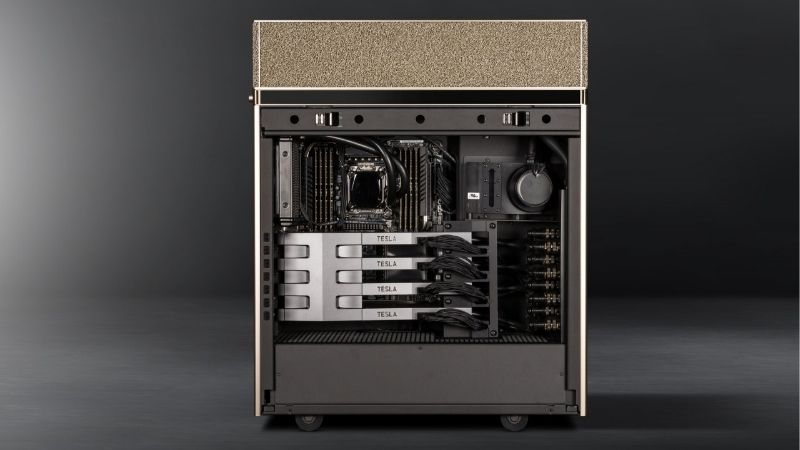
Nvidia DGX Station Price: What to Expect
Pinning down a price for the DGX Station takes some explanation, since Nvidia’s approach is unusual. Understanding the partner model, the figures that have appeared, and how discounts and quotes work sets realistic expectations. This section covers the money side.
As an Amazon Associate we earn from qualifying purchases at no extra cost to you.





No single official price
Nvidia has not published an official price for the DGX Station, instead supplying the core system to partners who build and sell complete machines. There is no Nvidia-branded edition with a fixed number attached, which is a deliberate shift from how some earlier systems were sold.
Partners including major PC makers each offer their own configurations, so the price varies by vendor and specification. This is why searching for one definitive figure comes up empty.
The practical result is that pricing is quoted per build rather than listed as a single number. Two machines with the same core superchip can carry noticeably different prices depending on how they are configured.
The known price signals
Despite the lack of an official figure, real numbers have surfaced. One partner’s configuration was reported at around 85,000 dollars, while a listing at another retailer appeared near 97,000 dollars, and a distributor has quoted a range from just under 100,000 dollars to about 125,000 dollars depending on setup.
For context, previous-generation DGX Station machines reportedly cost around 150,000 dollars for higher-end builds, so current pricing sits somewhat below that. These figures make clear this is enterprise-grade hardware, not a consumer purchase.
The takeaway is a rough band of roughly 85,000 to 125,000 dollars, varying by partner and configuration. Treat any single figure you see as one data point rather than a fixed market price.
Discounts and getting a quote
Because the machine is sold through partners, obtaining an accurate price means requesting a quote for a specific configuration from a vendor. Prices depend on memory, storage, support, and any added components, so two quotes for the same machine can differ meaningfully.
Nvidia’s program for startups has offered a discount of up to 10,000 dollars on a limited number of units for eligible companies, which can ease the cost for qualifying buyers. Such programs are worth investigating for organizations that qualify.
For anyone seriously considering the system, a direct vendor quote is the only way to get a firm, current figure tailored to the exact build you need.
What the Price Buys You
A six-figure machine naturally raises the question of what justifies the cost. Looking at the superchip, its memory, its local capabilities, and its expandability shows where the money goes. This section covers the hardware.
The GB300 superchip and memory
At the heart of the DGX Station is Nvidia’s GB300 Grace Blackwell Ultra desktop superchip, pairing a capable processor with a powerful graphics engine in one package. It is designed specifically for demanding artificial intelligence workloads.
The system offers a very large pool of coherent memory, reported at up to around 748 gigabytes in leading configurations, shared for processing and graphics. That capacity is what allows it to handle enormous models locally, keeping huge datasets close to the compute that processes them.
This combination of superchip and memory is the core of what the price delivers. It is what separates the machine from an ordinary high-end workstation with a discrete graphics card.
Trillion-parameter local AI
The DGX Station is built to develop and run very large artificial intelligence models on the desktop, with Nvidia describing support for models up to the trillion-parameter class. It delivers a large amount of AI compute performance in a single tower.
Running such models locally lets teams build and test without depending entirely on cloud services, keeping sensitive data in-house. For some organizations, that control is a major part of the appeal.
This local capability for huge models is the machine’s defining purpose. Doing that work on the desk, rather than renting it, is the whole reason the system exists.
Expandability and networking
The DGX Station supports adding a professional Blackwell-generation graphics card alongside the superchip for extra visualization and simulation power. It also includes high-speed networking able to link machines together.
Features like the ability to partition the GPU into isolated instances let multiple users or workloads share one machine. These capabilities suit team development and scaling within an organization.
Such expandability reflects that the system is designed as serious, flexible infrastructure rather than a fixed appliance.
Who the DGX Station Is For
Given its power and price, the DGX Station suits a specific audience. Weighing its ideal users, how it compares to alternatives, and who should look elsewhere clarifies its place. This section sets expectations.
Enterprise and research users
The DGX Station is aimed at enterprises, research institutions, and teams building serious artificial intelligence applications on-premises. Fields like healthcare research, scientific computing, and enterprise AI development are natural fits, since each involves large models and sensitive data best kept in-house.
For organizations that need to run large models locally, often for data-control or reliability reasons, the machine offers data-center capability at the desk. That is precisely the audience Nvidia designed it for.
These are professional buyers with budgets and workloads to match the hardware. For them, the machine is a tool that pays its way through the work it enables.
How it compares to alternatives
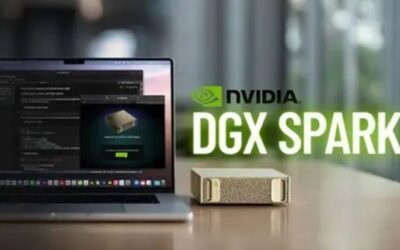
The DGX Station sits above Nvidia’s much smaller and far cheaper desktop AI machine, which targets lighter local development at a fraction of the price. It also stands as an alternative to renting cloud GPU time.
Choosing between buying a DGX Station and using the cloud comes down to workload size, data-control needs, and long-term cost. For heavy, continuous, sensitive workloads, owning hardware can make sense despite the outlay.
Understanding these alternatives helps a buyer judge whether the Station is the right tool. The best choice depends on the size, frequency, and sensitivity of the workloads involved.
Who should look elsewhere
For gamers, hobbyists, and individual developers, the DGX Station is far beyond what is needed or affordable, and a consumer graphics card or a small AI desktop is the sensible choice. Its price and purpose put it out of reach for personal use.
Even many businesses will find that cloud services or smaller hardware meet their needs at far lower cost. The Station only makes sense for specific, demanding, well-funded use cases.
Matching the tool to the workload is essential, and for most people this is simply the wrong tool.
Is the DGX Station Worth the Price?
For the organizations that can consider it, the real question is value rather than sticker shock. Weighing it against cloud costs, total ownership, and the honest verdict clarifies the decision. This section frames the trade-off.
Buying versus cloud costs
Nvidia positions the DGX Station against the recurring cost of renting comparable GPU power in the cloud, where bills for heavy, continuous workloads add up quickly. For sustained use, owning hardware can become cheaper over time than renting.
The comparison depends heavily on how intensively and continuously a team uses the machine. Occasional workloads often favor the cloud, while constant heavy use can favor ownership, so the right answer depends entirely on how the machine will be used.
Running the numbers for your specific usage is the only way to judge which is cheaper.
Total cost of ownership
The purchase price is only part of the picture, since power, cooling, space, and support all add to the true cost of owning such a machine. Factoring these in gives a realistic total.
Against that, owning the hardware offers data control and reliability that some organizations value highly, especially for sensitive work. Those benefits can justify the outlay for the right buyer.
A full total-cost view, not just the headline price, is essential before committing.
The honest verdict
For enterprises and research teams with heavy, continuous, and sensitive artificial intelligence workloads, the DGX Station can be a sound investment despite its high price. It delivers rare local capability for exactly those needs.
For everyone else, the cost far outweighs the benefit, and cheaper hardware or cloud services make more sense. The value verdict depends entirely on whether your workload truly demands this class of machine.
Matching the purchase to a genuine need is what makes or breaks its worth, since paying six figures for capability you will not use is simply waste.
See More:
The Bottom Line on the DGX Station Price
The nvidia dgx station price has no single official figure because Nvidia sells the system through partners, but real signals point to a rough band of about 85,000 to 125,000 dollars depending on vendor and configuration, below the roughly 150,000 dollars of previous generations. That money buys a GB300 Grace Blackwell Ultra superchip, a very large memory pool, and the ability to develop and run trillion-parameter artificial intelligence models locally with room to expand. It is built for enterprises, research teams, and serious on-premises AI work, so gamers, hobbyists, and most individual developers are far better served by a consumer card, a small AI desktop, or the cloud. For a firm figure, a direct vendor quote is the only reliable route.
Frequently Asked Questions
How much does an Nvidia DGX Station cost?
Pricing is quoted through Nvidia partners rather than published at retail, and historically the original Volta-based DGX Station launched around fifty thousand dollars while the A100 generation moved to roughly ninety-nine thousand dollars. Current Blackwell-based desk-side systems sit in a comparable enterprise bracket, with final pricing dependent on configuration and support terms.
What do you actually get for that price?
A complete turnkey workstation with multiple data centre class GPUs, high-bandwidth coherent memory, a server-grade CPU, fast NVMe storage, integrated liquid or high-static-pressure cooling, and crucially an enterprise software stack with Nvidia AI Enterprise licensing and support. Much of the cost is the validated system and support contract, not just silicon.
Can I build an equivalent machine cheaper myself?
You can assemble multiple consumer or professional GPUs for less money per teraflop, but you will not replicate the coherent high-bandwidth GPU interconnect, the validated thermal design, or the enterprise driver and support stack. For large model training the interconnect is the differentiator, and consumer cards cannot match it.
Who is a DGX Station actually for?
Research teams and enterprises that need data centre AI capability at a desk without racking hardware in a server room. Typical buyers are model development groups prototyping before scaling to a cluster, plus regulated organisations that must keep data on premises. Individual developers are far better served by cloud GPU rental.
What power and cooling does it need?
Desk-side DGX systems draw well beyond a normal workstation, historically requiring a dedicated high-amperage circuit and producing substantial heat and noise under load. Verify your office circuit capacity, plug type and room cooling before ordering, since standard fifteen-amp outlets shared with other equipment are frequently inadequate.



Write Your Review
No reviews yet. Be the first to share your experience!