
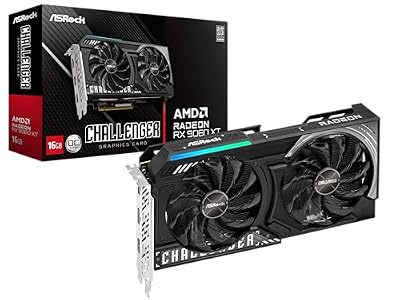
- Top Pick: ASRock Radeon RX 9060 XT Challenger 16GB OC, RDNA 4, 3290MHz Boost, 16GB GDDR6 128-bit, PCIe 5.0, Dual Fans, 0dB Silent, LED Indicator, DisplayPort 2.1a, HDMI 2.1b
- Best Value: ASUS Dual Radeon RX 9060 XT 16GB GDDR6 Gaming Graphics Card
- Premium Choice: GIGABYTE Radeon RX 9060 XT Gaming OC 8G Graphics Card, PCIe 5.0, 8GB GDDR6, GV-R9060XTGAMING OC-8GD Video Card

Editor's Pick
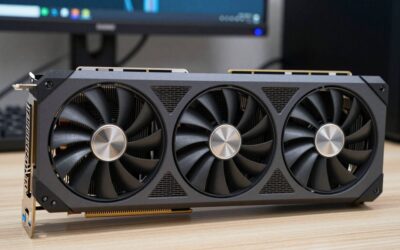
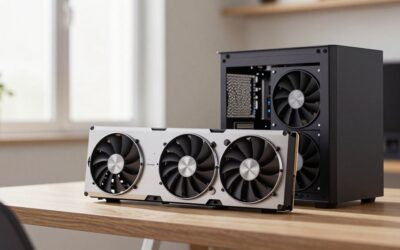
XFX Swift AMD Radeon RX 9060 XT OC White Gaming Edition with 8GB GDDR6 HDMI 2xDP, AMD RDNA 4 RX 9060XT RX-96TSW8GWQ

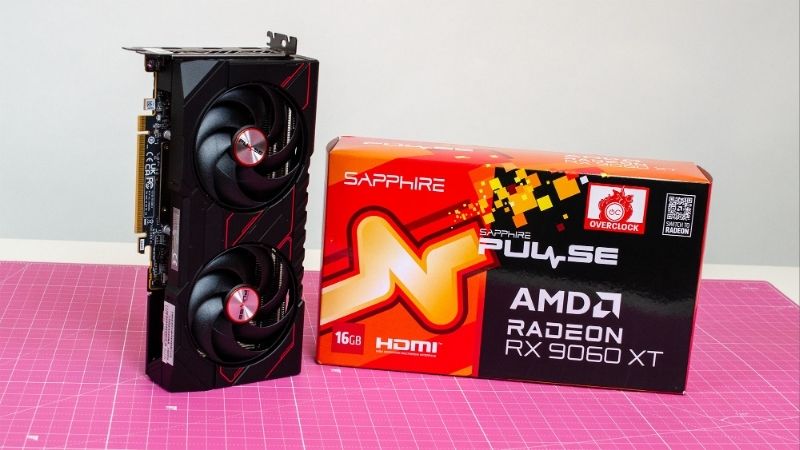
RX 9060 XT 8GB vs 16GB is an unusual comparison, because both cards share the same core and differ almost entirely in memory. You want to know whether the extra VRAM is worth the extra money, how large the real-world gap is at 1440p, and which version to actually put in your cart, without sitting through a long video. This page lays out the frame data, the memory story, and a firm recommendation so you can decide today with confidence.
The Quick Verdict: RX 9060 XT 8GB vs 16GB at a Glance
If you only read one part of this comparison, make it this one. The 16GB version is the smarter long-term buy for 1440p and future titles, while the 8GB version saves money and is fine for pure 1080p gaming today. Because the core is identical, this decision is purely about memory and price, and the three sub-sections below break that trade down before the detailed deep dive.
As an Amazon Associate we earn from qualifying purchases at no extra cost to you.






Who Wins on VRAM and Longevity
The two cards use the same GPU, so in games that fit inside 8GB their frame rates are nearly identical. The moment a title needs more memory, though, the 16GB card pulls clearly ahead and holds smoother frame pacing where the 8GB model starts to stutter. In practice that means the two cards feel identical right up until the exact moment memory becomes the bottleneck.
That difference grows over time rather than shrinking, because new games keep raising their texture and asset demands. The 16GB buffer is essentially insurance against the near future, and it is the single biggest reason to choose it. Think of the extra capacity as headroom you grow into rather than a number you need on day one.
Longevity verdict: the 16GB version wins clearly on future-proofing, and the gap only widens as games get heavier over the next few years. A card that feels fine today can start stuttering a year later simply because game requirements have crept upward.
Who Wins on Price
The RX 9060 XT 8GB targets roughly $299, while the 16GB version sits near $349. That works out to about $50 for double the memory, with no other meaningful difference between them. There is no faster core, no better cooler, and no extra feature hiding behind the price; you are buying memory and nothing else.
For a strict 1080p player on a tight budget who upgrades often, the 8GB card saves money that could go toward a better CPU or monitor. For almost everyone else, the $50 premium on the 16GB model is one of the easiest upgrades to justify in the whole build. Spread across the years you will own the card, that fifty dollars works out to pennies per month of extra smoothness.
Value verdict: the 8GB card for the lowest price today, the 16GB card for the best value across the life of the GPU.
Comparison Table: Specs Side by Side
Here is the condensed spec sheet so you can weigh both versions at a glance. The prices are approximate reference figures, so always confirm the live listing before you buy either card.
| Spec | RX 9060 XT 8GB | RX 9060 XT 16GB |
|---|---|---|
| VRAM | 8GB GDDR6 | 16GB GDDR6 |
| GPU core | Identical | Identical |
| Typical board power | ~150W to 180W | ~150W to 180W |
| Upscaling | FSR 4 | FSR 4 |
| Best resolution | 1080p | 1440p, 1080p high-refresh |
| Reference price | ~$299 | ~$349 |
The table makes the story obvious: everything is the same except the memory and the price, which is exactly why this decision comes down to how long you plan to keep the card. The longer that horizon, the more decisively the extra memory justifies its modest premium.
Deep Dive Face-Off: Same Core, Different Memory
Because the two cards share a GPU, the deep dive is really about one question asked three ways: when does 8GB run out, what does the extra memory buy you, and how do the shared traits like FSR 4 and power draw factor in. Each section below answers one piece of that puzzle so you can judge the rx 9060 xt 8gb vs 16gb choice on evidence rather than guesswork.
Where 8GB Holds Up and Where It Breaks
At 1080p with sensible settings, 8GB is still enough for a large share of today’s games, and the 8GB card delivers the same smooth experience as its 16GB sibling. For esports titles and older games, you would never notice the difference at all. For that kind of player, spending extra on memory you never touch would be money quietly wasted.
The cracks appear in newer AAA titles with high-resolution texture packs, ray tracing, or 1440p resolution, where 8GB fills up and forces the card to swap data. That swapping tanks the 1% lows and produces stutter even when the average FPS still looks healthy on a counter. Frame pacing, not the average number, is what your eyes actually feel during fast motion, and that is where 8GB slips.
Practical read: 8GB holds up for 1080p and lighter games today, but it is already the first thing to break in the most demanding modern titles. As those titles become the norm rather than the exception, the 8GB ceiling only gets easier to hit.
The 16GB Advantage at 1440p and Beyond
Step up to 1440p or turn on the heaviest settings, and the 16GB version simply keeps working where the 8GB card struggles. The extra buffer absorbs large textures and higher resolutions without the stutter, which is exactly the scenario most buyers care about. If you are reading this comparison at all, you are probably planning to push settings that reward the larger buffer.
This advantage is also the more forward-looking one, since memory demands only rise as games evolve. Buying the 16GB model today is a bet that your card will still feel smooth in two or three years, and it is a bet that usually pays off. Very few buyers regret having too much VRAM, while plenty regret having too little a year later.
Longevity read: the 16GB card is the one that ages gracefully, and that alone settles the rx 9060 xt 8gb vs 16gb debate for most players who plan to hold.
FSR 4, Power, and Build Fit
Both cards share FSR 4, AMD’s upscaling technology, which has narrowed the quality gap with the competition and lifts frame rates in supported titles. Because this feature is identical across the two, it is not a differentiator, but it does help both versions stretch their performance further. Because the feature set is shared, neither version has an upscaling edge, which keeps the focus squarely on memory.
Power and physical size are also effectively the same, landing in the 150W to 180W range with a single 8-pin connector, so a quality 550W to 650W supply handles either one. Check case clearance, since partner designs vary in length, but neither card demands a new PSU standard. That makes either version an easy drop-in for most existing builds without a power supply upgrade.
Compatibility read: the two versions install identically, so build fit is never the deciding factor here; memory and price are. You can install either card the same way, so let your resolution and how long you plan to keep it make the call.
Pricing, Timing, and the Smart Buy
A VRAM decision in 2026 is also a timing decision, because component prices have been volatile. This section explains why the memory gap costs what it does and whether waiting makes sense, a factor that shapes the rx 9060 xt 8gb vs 16gb value math as much as the raw specs do.
Why the VRAM Gap Costs What It Does
Laptop and PC component prices have trended upward, and memory in particular has stayed expensive. That is exactly why the roughly $50 gap between an 8GB and a 16GB card exists and why it deserves real thought rather than a reflexive grab for the cheaper option. The cheapest card is not automatically the most economical one once you factor in how soon you might replace it.
In a pricier market, paying once for enough memory can be cheaper than upgrading again sooner into an even more expensive market. That reality tilts the smart choice toward the 16GB model more often than a quick glance at the sticker price suggests. A small premium now can spare you a far larger outlay when it is time to upgrade in a costlier market.
Practical read: elevated memory costs are why the gap exists, and they reward buying the version that will not run out of VRAM early. In a market where memory is the expensive part, buying enough of it once is simply good economics.
The Supply Relief Coming in 2027-2028
There is genuine good news, but it is modest and it sits in the future. Prices have stopped climbing as steeply as they did at the end of 2025, and some hardware makers report a relatively stable stretch while still warning of continued swings. That mixed signal is exactly why locking in a fair price today beats gambling on a future that keeps shifting.
New supply is opening up too, with OEMs able to source DDR5 from Chinese suppliers such as CXMT and Micron building two plants in Idaho. The catch is that those fabs do not ramp until roughly 2027 to 2028, so meaningful relief for buyers is still a couple of years away.
Timing read: prices have leveled rather than fallen, and real relief is years out, so waiting indefinitely for a crash is a weak strategy. If you need the card now, the smarter move is to buy the right version rather than wait for a drop that may never land.
Pros, Cons, and an Alternative
Here is the honest pros and cons summary for the rx 9060 xt 8gb vs 16gb choice, based on the patterns in owner feedback for each version.
RX 9060 XT 8GB pros: lowest price, perfectly fine for 1080p, and identical core performance where memory is not the limit. Cons: the 8GB buffer breaks first in demanding titles and shortens the card’s comfortable lifespan. For a strict budget build that you know you will replace soon, though, that shorter runway may be perfectly acceptable.
RX 9060 XT 16GB pros: the same speed plus real 1440p and future-proofing headroom for only about $50 more. Cons: a slightly higher upfront price that pure 1080p players may not fully use. If your budget stretches further, a step-up card such as an RTX 5060 Ti 16GB adds DLSS 4, while a used prior-gen card is the cheapest fallback. Check the live price on all of them before deciding.
See More:
- RX 9060 XT vs RTX 4060
- NVIDIA Jetson price
- NVIDIA GeForce GTX 1650 driver
- Intel Iris Xe graphics driver
- 9060 XT 16GB vs 5060 8GB
Final Verdict: RX 9060 XT 8GB vs 16GB, Which to Buy
To settle the rx 9060 xt 8gb vs 16gb debate: buy the 16GB version if you game at 1440p, keep hardware for years, or simply want the smoothest experience in demanding new titles, because the extra memory is cheap insurance against the near future. Buy the 8GB version only if you are a strict 1080p player on a tight budget who upgrades often and knows the games you play stay within 8GB. Since the core is identical, this is one of the clearest decisions in the whole market, and for most buyers the small premium on the 16GB card is money well spent. Use the button below to check the latest live price on both versions before you order, so you lock in the best deal while pricing holds.
Frequently Asked Questions
Do the 8GB and 16GB versions use the same GPU?
Yes. Both variants use the same Navi 44 graphics processor with identical compute units and a 128-bit memory bus. The only meaningful difference is the amount of GDDR6 attached, so in workloads that fit inside 8GB the two cards perform the same within a couple of percentage points.
When does the 8GB version actually run short?
At 1440p with ultra textures, in ray traced titles, and in recent releases that ship high resolution texture packs. The symptom is not a lower average frame rate at first but sudden frame time spikes, texture pop in, and hitching as assets stream in and out over the PCIe bus.
Is the price gap between them justified?
Usually yes if you game above 1080p or plan to keep the card for several years. The premium is typically modest relative to the total build cost, and it is the only part of the specification you cannot improve later. At strict 1080p on a tight budget the 8GB card is defensible.
Does the extra memory help with anything besides gaming?
It does. Local AI image generation, video editing with high resolution timelines, 3D rendering scenes, and running quantised language models all benefit directly from a larger frame buffer. If any of that is part of your workload, the 16GB card is clearly the better tool for the money.
Do both models need the same power supply?
Effectively yes. Board power sits around 150 watts for the 8GB card and up to roughly 182 watts on higher clocked 16GB models, so a quality 550 watt unit covers both. Partner cards use standard 8-pin PCIe connectors, so no new cabling or power supply generation is required.

Write Your Review
No reviews yet. Be the first to share your experience!