
Nvidia automatic driver update promises the dream of a hands-off PC: new drivers install themselves, and your GPU always stays current without you lifting a finger. But is it actually a good idea? If you’ve ever had a game break right after an update, you already know the tension between convenience and control. This review settles it. Drawing on the patterns behind real user feedback — the grateful 4 and 5-star “set and forget” reviews and the annoyed 2 and 3-star ones — you’ll learn how the feature works, whether to trust it, how to set it up safely, and when manual control is the smarter call.


Prime
Limited Time
GeForce GT 610 2G DDR3 Low Profile Graphics Card, PCI Express 1.1 x16, HDMI/VGA, Entry Level GPU for PC, SFF and HTPC, Compatible with Win11
How the Nvidia Automatic Driver Update Actually Works
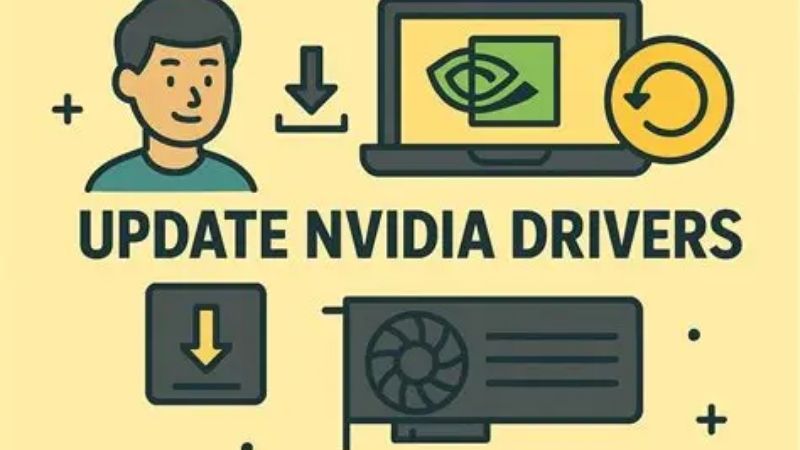
The Nvidia automatic driver update lives inside the Nvidia App (the successor to GeForce Experience), which can check for, download, and install new drivers with little or no input from you. Understanding exactly what it does — and doesn’t do — is the key to using it wisely rather than blindly.
As an Amazon Associate we earn from qualifying purchases at no extra cost to you.





Setting It Up in the Nvidia App
Enabling automatic updates takes seconds in the Nvidia App’s driver settings, where you can choose to be notified, to auto-download, or to auto-install new releases as they appear. Each level gives you a different balance of convenience and control.
The most hands-off option installs drivers on its own, while a middle setting downloads them but waits for your go-ahead. For most people, that middle ground is the sweet spot — you get prompt access without surrendering the final decision.
Whichever you pick, the app handles finding the correct driver for your exact GPU automatically, which removes the risk of installing the wrong package that trips up manual downloaders. That alone is a strong reason to keep the feature enabled at some level, even if you don’t let it install on its own — letting it identify and fetch the right driver while you retain the final click is a genuinely useful halfway house.
Game Ready vs Studio in Automatic Mode
The Nvidia App lets you set whether automatic updates pull from the Game Ready or Studio branch, and this choice quietly shapes your whole experience. Game Ready delivers frequent, game-focused updates; Studio delivers fewer, stability-focused ones.
If you enable automatic updates, your branch choice matters more than usual, because you’ll receive whatever that branch pushes. Gamers who want day-one support lean Game Ready, while creators who value calm stability often prefer automatic Studio updates.
Setting this correctly once means your automatic updates align with how you actually use the PC, rather than surprising you with the wrong kind of release. It’s a small configuration step that many owners overlook, then wonder why they’re getting frequent updates when they’d have preferred the calmer Studio cadence, or vice versa.
What Gets Updated and What Doesn’t
The automatic driver update focuses on the GPU driver itself, along with the app’s own components. It won’t touch unrelated system software, so it’s a targeted convenience rather than a whole-system updater.
It also surfaces release notes for each update, so even in automatic mode you can see what changed. This is genuinely useful, because it lets you understand a new driver’s contents without hunting them down manually.
Knowing this scope helps set expectations: the feature keeps your graphics driver fresh, but you remain responsible for the rest of your system’s maintenance. Treating it as one piece of a broader update routine — alongside Windows updates and game clients — gives you the clearest picture of what is and isn’t being handled for you.
Is the Nvidia Automatic Driver Update Reliable? User Reviews
To judge whether the Nvidia automatic driver update deserves your trust, it helps to weigh the enthusiastic reviews against the frustrated ones. The consensus is largely positive, with the complaints revealing exactly when automation can bite.
The 4-5 Star Reviews: Set and Forget Convenience
Fans of the feature love not having to think about drivers at all. They report their cards staying current effortlessly, picking up performance improvements and bug fixes the moment they’re released without any manual checking.
For casual users and busy gamers, this convenience is the whole point. Not everyone wants to monitor release notes, and for these owners automatic updates remove a chore they’d otherwise forget entirely.
The common thread among happy users is that their systems are fairly mainstream and stable, where new drivers tend to land smoothly. For them, automation delivers exactly the frictionless experience it promises. These are often people who game casually or use their PC for everyday tasks, and who would genuinely never remember to update manually — for that audience, automatic updates quietly prevent the far more common problem of running badly outdated drivers for months.
The 2-3 Star Complaints: Surprise Updates and Bugs
The critical reviews reveal the flip side. The most common complaint is a fully automatic update installing a driver that introduces stutter or breaks a specific game, with no warning and at an inconvenient time.
Others dislike losing control of timing, especially competitive players and creators who don’t want any change mid-tournament or mid-project. When an update lands uninvited, even a good driver can feel like an intrusion.
The pattern behind these gripes is instructive: trouble usually comes from the fully automatic install setting on systems that value stability. The fix is rarely to abandon the feature entirely, but to configure it more thoughtfully. Almost every horror story shares the same root cause — a hands-off install landing at the worst possible moment — which is precisely the scenario a notify-first setting is designed to prevent.
Pros and Cons of Automatic Driver Updates
Here’s a balanced look at whether the Nvidia automatic driver update is right for you, weighing its genuine convenience against its real risks.
| Pros | Cons |
|---|---|
| Effortless — your driver stays current automatically | Updates can arrive at inconvenient times |
| Always installs the correct driver for your GPU | A rare bad release can break a game unexpectedly |
| Prompt access to fixes and optimizations | Less control over timing for competitors and creators |
| Release notes still visible for transparency | Fully automatic mode can disrupt a stable setup |
The balance suggests a middle path: automation is excellent for convenience, but the notify-or-download setting usually beats full auto-install for anyone who cares about stability and timing.
Getting the Most From Automatic Updates Safely
The smartest way to use the Nvidia automatic driver update is to enjoy its convenience while keeping a safety net. A few small choices let you have both the hands-off ease and the control to avoid disasters.
When to Choose Manual Control Instead
Manual control makes sense for competitive gamers, streamers, and creators who can’t afford a surprise mid-session. If a stable driver is currently serving you perfectly, there’s little reason to let an automatic install change it unprompted.
In these cases, the notify-only setting is ideal: you learn about new drivers immediately but decide when — or whether — to install them. That preserves the awareness of automation without its unpredictability.
The rule of thumb is that the more your work or play depends on consistency, the more you should favor manual timing over full automation. A streamer mid-broadcast, an editor on a deadline, or an esports player before a match all have the same interest: nothing should change without their say-so, and a notify-only setting respects that completely.
Rolling Back an Automatic Update That Breaks a Game
If an automatic update does cause trouble, recovery is quick. Windows Device Manager offers a “Roll Back Driver” option that restores the previous version in a couple of clicks, undoing the problem almost instantly.
For a cleaner result, uninstall the current driver and reinstall a known-good version, which is easy if you noted your version number beforehand. Nvidia also keeps previous drivers available, so retrieving an older build is straightforward.
Knowing this routine takes the fear out of automation. A bad automatic update becomes a five-minute inconvenience rather than a reason to distrust the feature entirely. Once you’ve rolled back a driver even once, the whole prospect of automatic updates feels far less risky, because you know any problem it creates is quickly and fully reversible.
See More:
- AMD graphics driver download
- Is Nvidia American
- Nvidia 1080 Ti drivers
- Radeon graphics driver update
- Nvidia RTX 3060 drivers
Building a Balanced Update Strategy
The best strategy blends automation with judgment. Set the app to notify or auto-download rather than auto-install, choose the branch that matches your use, and glance at release notes before updating on important days.
Keep a mental note of your current version so rollback is painless, and do a clean install when jumping between very different driver versions. These habits give you the convenience of automation with the safety of control. Think of it as automation with a seatbelt: you let the feature do the tedious work of tracking and fetching updates, while you keep the small amount of oversight that prevents a rare bad release from ruining your day.
If instability keeps recurring no matter how carefully you manage updates, the culprit may be aging hardware rather than any driver — a sign it could be time to compare a more capable GPU through the links on this page.
In the end, the Nvidia automatic driver update is a genuinely useful feature that keeps your graphics card current with almost no effort, and for most mainstream users it works beautifully. The smart move is to enjoy that convenience while keeping control of timing through the notify or download settings, and to know how to roll back if a rare update misbehaves. And if you decide your current card can no longer keep up with the latest games, explore the recommended GPUs linked here to upgrade whenever you’re ready.
Frequently Asked Questions
Can Nvidia drivers update themselves automatically?
The Nvidia App can check for and download drivers automatically, but installation still requires your confirmation by design, since a driver install briefly takes down the display. You enable the behaviour in the app settings under Drivers, where you can also choose between Game Ready and Studio branches.
Is automatic updating a good idea?
For most users yes, since it keeps security fixes and game profiles current with no effort. For production workstations and competitive players, manual control is safer, because occasional releases introduce regressions and you want to choose when to take that risk rather than discovering it mid-tournament.
How do I turn automatic driver updates off?
Open the Nvidia App, go to Settings then Drivers, and disable the automatic download option. Separately, prevent Windows Update from supplying its own driver using Group Policy on Pro editions or by marking your connection as metered on Home, otherwise Windows may still overwrite your chosen version.
Will an automatic update reset my settings?
Standard updates preserve control panel settings and per-game profiles. Only a clean installation wipes them, and that option is never selected automatically. If you use custom colour, scaling or Digital Vibrance settings, it is still worth noting them down before major branch changes.
What if an automatic update breaks something?
Roll back through Device Manager, selecting the GPU, then Properties, Driver and Roll Back Driver. If that is unavailable, download the previous version from Nvidia’s driver archive and install it with the clean option, then disable automatic downloads until the problematic branch is superseded.



Write Your Review
No reviews yet. Be the first to share your experience!