
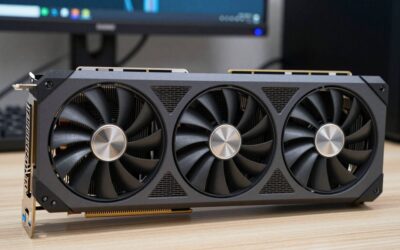
- Top Pick: ASUS Prime Radeon RX 9070 XT 16GB GDDR6 OC Edition Gaming Graphics Card
- Best Value: ASRock Radeon RX 9070 XT Taichi 16GB OC & Steel Legend 1000W 80+ Gold PSU | Ultimate Gaming & Creation Power Bundle
- Premium Choice: ASRock Radeon RX 9070 XT Taichi 16GB OC, RDNA 4, 3100MHz Boost, 16GB GDDR6 256-bit, PCIe 5.0, Taichi 3X Cooling, Dual BIOS, Polychrome SYNC
RX 9070 XT 16GB vs 5070 Ti is the matchup that decides the mid-to-high tier for most buyers in 2026. These two cards trade blows within a few frames of each other, yet one costs $150 less at MSRP. That single fact reframes the entire comparison from “which is faster” to “which is worth it” — and this head-to-head answers exactly that.
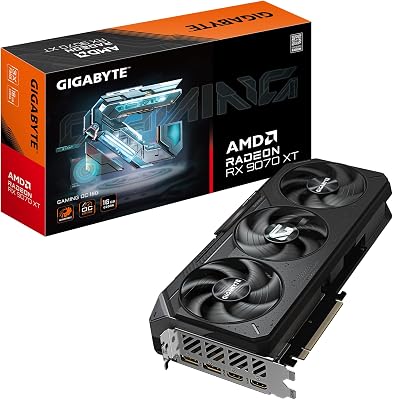


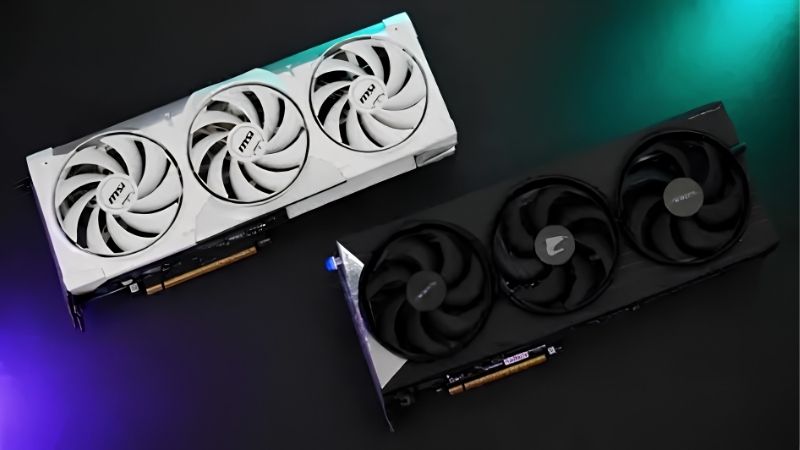
The Quick Verdict: RX 9070 XT 16GB vs 5070 Ti
Short answer: the RTX 5070 Ti is a little faster, especially at 4K and in ray tracing, but the RX 9070 XT 16GB is the better value, sitting within a handful of frames for $150 less. Buy the 5070 Ti if ray tracing and DLSS 4 are priorities; buy the 9070 XT if raw rasterization value is what you care about most.
As an Amazon Associate we earn from qualifying purchases at no extra cost to you.





Who Wins on Raw Performance
Because the lead is so resolution-dependent, the honest recommendation depends on your monitor more than on any single benchmark average. Pooling all resolutions into one number actually hides the story here, since a 1080p player and a 4K player are effectively looking at two different comparisons with two different winners.
It is close, and it depends on resolution. At 4K the 5070 Ti leads by roughly 12%, and at 1440p that shrinks to around 5%. At 1080p the two are effectively tied, with the 9070 XT occasionally edging ahead in individual titles.
In other words, the “winner” changes with your monitor. For a 1440p gamer, these cards are near-indistinguishable in raw speed; only at 4K does the 5070 Ti build a clear, if modest, lead.
That resolution dependence is the single most important thing to internalize here. The same benchmark suite genuinely produces a different recommendation depending on the panel you game on.
Who Wins on Value
It is worth stressing how small the performance gap is relative to the price gap. Paying a quarter more for a handful of extra frames is a poor trade in pure rasterized play, which is why the 9070 XT wins value decisively unless ray tracing shifts your priorities toward the Nvidia card.
The RX 9070 XT 16GB takes value comfortably. A $599 MSRP against the 5070 Ti’s $749 means you are paying about 25% more for the Nvidia card to gain a single-digit-to-low-double-digit frame advantage in most games.
For pure rasterized gaming, that is a hard premium to justify. The value equation only flips when you weigh in ray tracing and DLSS 4, which is where the extra spend starts to earn its keep.
There is also the street-price reality to consider: the 9070 XT has generally held nearer its MSRP, while the 5070 Ti has often sold well above list, which can stretch the real-world price gap far beyond that $150 on paper.
Specification Comparison Table
Here are the core specifications side by side, so the technical similarities and differences are visible before we dig into real-world gaming performance.
| Spec | RX 9070 XT 16GB | RTX 5070 Ti |
|---|---|---|
| Architecture | RDNA 4 | Blackwell (GB203) |
| Shaders / CUDA cores | 4,096 | 8,960 |
| Memory | 16GB GDDR6 | 16GB GDDR7 |
| Bandwidth | 640 GB/s | 896 GB/s |
| TDP | 304W | 300W |
| Upscaling / Frame Gen | FSR 4, AFMF | DLSS 4, Multi Frame Gen |
| Launch MSRP | $599 | $749 |
Deep Dive Face-Off: Raster, Ray Tracing, and Memory
Both cards carry 16GB of VRAM and land in the same performance neighborhood, so the meaningful differences are in memory technology, ray-tracing hardware, and software features. This is where you decide which one fits your priorities.
Rasterized Gaming and Memory Bandwidth
The bandwidth advantage is real but easy to overvalue. It shows up mainly in the most demanding 4K scenes, and for the 1440p gaming that this tier is built around, both cards keep frame times smooth and consistent, so bandwidth alone should not be the deciding factor for most buyers here.
The 5070 Ti pairs 16GB of GDDR7 with a 256-bit bus for 896 GB/s of bandwidth, against the 9070 XT’s 640 GB/s on GDDR6. That advantage helps the Nvidia card at 4K and in bandwidth-heavy scenes, which is exactly where its lead is largest.
At 1440p, however, both cards have bandwidth to spare, which is why they converge there. The shared 16GB capacity also means neither runs short of VRAM in modern titles, removing memory size as a tiebreaker.
With capacity off the table as a differentiator, the decision narrows cleanly to features and price. That is unusual in a GPU comparison and makes this one refreshingly straightforward to reason about.
Ray Tracing and DLSS 4 vs FSR 4
For a concrete rule of thumb, ask how many of the games you actually play lean on heavy ray tracing. If the answer is most of them, the 5070 Ti earns its premium; if it is a handful of showcase titles you dip into occasionally, the 9070 XT covers you for far less money.
This is the 5070 Ti’s clearest advantage. Its Blackwell RT cores and DLSS 4 with Multi Frame Generation give it a real edge in path-traced and ray-heavy games, where it can multiply frame output while Reflex keeps latency in check.
AMD’s FSR 4 and Fluid Motion Frames have narrowed the gap and are genuinely good, but Nvidia’s ray-tracing lead and broader game support remain the stronger package for anyone who prioritizes those effects.
If ray tracing is central to how you play — think heavy single-player showcases with path tracing — this is precisely where the extra $150 goes, and it is money well spent for that audience. For competitive raster gaming, it matters far less.
Efficiency and System Fit
The near-identical power profiles also make this an unusually easy upgrade to plan. If your current build already ran a previous-generation card in this class, either of these will almost certainly drop in without a power-supply change, which keeps the true cost of the upgrade limited to the card itself.
The two are nearly identical on power, with the 9070 XT at 304W and the 5070 Ti at 300W, so both slot into the same class of build and PSU. Nvidia recommends a 750W supply for the 5070 Ti, with an 850W unit giving comfortable headroom on a strong CPU.
Practically, neither card forces a system rethink for most mid-to-high builds. That makes this a rare comparison you can settle on performance, features, and price alone rather than worrying about your case or power delivery.
Both also spike briefly above their rated draw under load, so a quality supply with a little headroom is the smart choice for either card. That is standard advice for this tier and applies equally to both.
Price, Availability, and the Alternative
The MSRPs tell a clean story, but 2026 street prices complicate it. Both cards have frequently sold above list, so understanding the current market is essential before you buy either one.
MSRP vs Street Prices
The lesson is to shop the two side by side on the same day, at the same retailer where possible. Their prices move independently, and catching the 5070 Ti during a spike or the 9070 XT during a dip can swing the value verdict far more than the spec sheet ever will.
At $599 versus $749, the 9070 XT’s value case is strongest at MSRP. In reality, the 5070 Ti has often sold well above $749 — sometimes past $1,000 — while the 9070 XT has tracked nearer its list price, which widens the real-world value gap in AMD’s favor.
Rising memory costs and tight supply drove much of that inflation, so the discipline is the same as always: anchor to MSRP and treat anything far above it as a market premium rather than a fair price.
Because the two cards inflate by different amounts, always compare their actual current prices rather than their launch figures. The paper $150 gap can easily become $300 or more in a bad week for the 5070 Ti.
Is Price Relief Coming?
Availability has improved gradually through 2026, and the steep late-2025 price climb has eased into a stretch of relative stability. That is encouraging, but makers still caution that pricing can move.
Because significant new memory supply is not expected to arrive until 2027-2028, prices are more likely to hold than to crash in the near term. If a card hits a fair number, that is your window rather than a reason to keep waiting.
The realistic plan is to buy on a fair dip rather than hold out for a dramatic fall. The supply timeline simply does not support the idea that a much cheaper price is just around the corner.
The Alternative If Both Are Overpriced
If both cards sit far above MSRP, the standard RTX 5070 at a $549 MSRP is a step down that keeps DLSS 4, while a discounted RX 9070 (non-XT) can offer strong raster value. Either can be the smart pick when the market misprices the headliners.
Check the live price on all of them before deciding — in this market, the best value is often whichever card happens to be sitting closest to its MSRP that week.
Staying flexible on the exact model is the winning move when supply is erratic. Fixating on one card can mean overpaying when a close alternative is sitting right at its fair price.
Final Verdict: RX 9070 XT 16GB vs 5070 Ti
These cards are close enough that the decision is really about what you value: rasterization dollars or ray-tracing features. Both are excellent at 1440p, and both are capable at 4K, so you cannot go wrong — only pay too much.
Who Should Buy the RX 9070 XT 16GB
It is the pragmatic default for the resolution most gamers actually use. At 1440p the raw-speed gap is negligible, the 16GB buffer is generous, and the savings are real, which together make it the card most people will be perfectly happy with for years.
Value-focused 1440p and 4K gamers who mainly play rasterized titles and want to keep $150 or more for the rest of the build. If ray tracing is a nice-to-have rather than a must, this is the smarter spend.
Who Should Buy the RTX 5070 Ti
It is also the safer long-term pick if you expect ray tracing to become standard in the games you play. Buying the stronger feature set today is a hedge against a future where those effects are no longer optional, and for that buyer the extra outlay is easier to justify.
Gamers who prioritize ray tracing, want the strongest DLSS 4 experience, and target 4K ultra. If those features matter to you and you can find it near $749, the small performance and large feature edge are worth it.
See More:
- TechPowerUp GPU
- Nvidia H200 GPU price
- RTX 5050 Mobile
- Nvidia competitors
- Nvidia Reflex low latency on or off
Pros and Cons at a Glance
The summary below distills the comparison into the trade-offs that actually change the decision, so you can match a column to your own priorities.
| RX 9070 XT 16GB | RTX 5070 Ti | |
|---|---|---|
| Best for | Value raster gaming at 1440p/4K | Ray tracing, DLSS 4, 4K ultra |
| Strength | $150 cheaper, tracks MSRP better | ~5-12% faster, superior RT + DLSS 4 |
| Weakness | Weaker ray tracing, FSR less broad | Pricier and often well above MSRP |
To settle the RX 9070 XT 16GB vs 5070 Ti question: choose the 9070 XT for raster value, the 5070 Ti for ray tracing and DLSS 4, and let the current street price break any tie. Prices shift weekly, so tap the link on our site to check today’s live deal before you buy.
Frequently Asked Questions
Which card is faster in ordinary rasterised games?
They land close together at 1440p and 4K, with the RTX 5070 Ti generally holding a modest lead that varies by title and engine. The RX 9070 XT wins often enough in raster-heavy games that the two are best treated as the same performance tier. The gap widens noticeably only once heavy ray tracing or path tracing is enabled.
How different is ray tracing performance between them?
RDNA 4 closed much of the historic gap, so the RX 9070 XT is far more usable in ray-traced titles than its RDNA 3 predecessors. Even so, the RTX 5070 Ti retains a clear advantage in the heaviest workloads such as path-traced modes in Cyberpunk 2077 and Alan Wake 2, where the margin can reach twenty to thirty percent.
What power supply does each card need?
The RX 9070 XT has a 304W board power and typically uses two or three 8-pin PCIe connectors depending on the partner design, with a 750W supply recommended. The RTX 5070 Ti is rated at 300W and uses a single 16-pin 12V-2×6 connector, usually with an included adapter. Seat that 16-pin connector fully, since partial insertion is the known failure mode.
Is 16GB of VRAM enough on both cards?
Yes for 1440p and for the great majority of 4K gaming today. Both carry 16GB, so capacity is not a differentiator; the difference is memory type and bandwidth, with the 5070 Ti using faster GDDR7 against GDDR6 on the Radeon. Texture-heavy titles with ray tracing and frame generation can approach the limit at 4K, but neither card is short of capacity.
Which offers better value at current prices?
On launch pricing the RX 9070 XT undercut the RTX 5070 Ti substantially, which is its core argument. If street prices sit close together, the NVIDIA card is easier to recommend for its stronger ray tracing, DLSS 4 with multi frame generation, and better encoder and productivity application support. If the Radeon is meaningfully cheaper, it is the stronger buy for raster gaming.
Ready to decide? Our #1 pick for 2026 is the Architecture.
Live price & availability on Amazon.

Write Your Review
No reviews yet. Be the first to share your experience!