
- Top Pick: ASUS TUF Gaming NVIDIA GeForce RTX 4070 Ti OC Edition Gaming Graphics Card (PCIe 4.0, 12GB GDDR6X, HDMI 2.1a, DisplayPort 1.4a), 3 Year Warranty
- Best Value: ZOTAC Gaming GeForce RTX 4070 Ti Trinity OC DLSS 3 12GB GDDR6X 192-bit 21 Gbps PCIE 4.0 Gaming Graphics Card, IceStorm 2.0 Advanced Cooling, Spectra 2.0 RGB Lighting, ZT-D40710J-10P
- Premium Choice: Gigabyte GeForce RTX 4070 Ti WINDFORCE OC 12G Graphics Card, 3X WINDFORCE Fans, 12GB 192-bit GDDR6X, GV-N407TWF3OC-12GD Video Card
5070 Ti vs 4070 is the step-up question that defines mid-range GPU shopping in 2026: one card is the value workhorse of the outgoing Ada generation, still widely stocked and frequently discounted below its $549 list price; the other is Blackwell’s $749 sweet-spot card with 16GB of GDDR7 and the full DLSS 4 toolkit. The price gap between them on any given Amazon day runs $200–$280, and what that money buys is not a trim difference but a measurable class jump — roughly 40–50% more performance, a third more VRAM, and a feature set the older card can never receive. This comparison itemizes the step-up precisely: benchmarks by resolution, the longevity math of 12GB versus 16GB, total build-cost realities, and the 2026 pricing forces that decide whether to stretch or save.
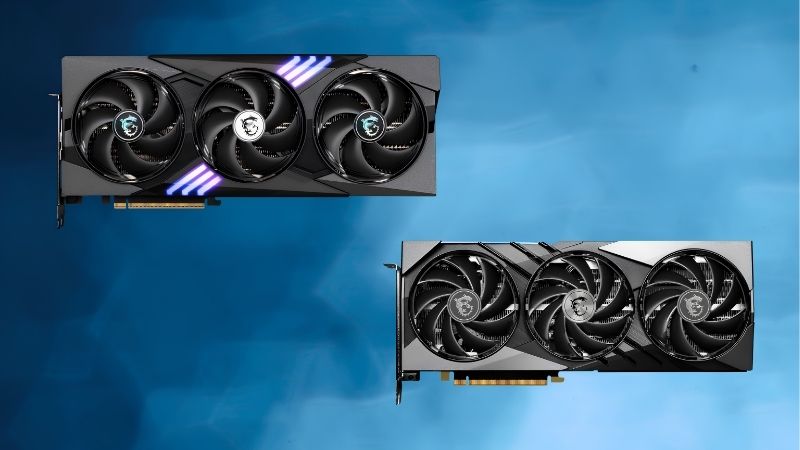
The Quick Verdict: 5070 Ti vs 4070 in 30 Seconds
The fast answer: the RTX 5070 Ti is 40–50% faster, carries 16GB of GDDR7 versus 12GB of GDDR6X with nearly 80% more bandwidth, and adds DLSS 4 Multi Frame Generation — it wins every performance and longevity column outright. The RTX 4070 wins exactly one column, but it matters: at a discounted $480–$520 it remains a genuinely good high-settings 1440p card for hundreds less. The dividing line is your ambitions: high-refresh QHD, any 4K intent, or a four-plus-year hold — pay for the Ti; standard 1440p/144Hz gaming on a budget — the 4070 still earns its keep. Check both cards’ live Amazon prices first, because the discount depth on the older card is the entire counterargument.
As an Amazon Associate we earn from qualifying purchases at no extra cost to you. Product prices and availability are accurate as of the date shown and are subject to change.



What the RTX 5070 Ti Step-Up Delivers
The hardware ledger: 8,960 Blackwell CUDA cores versus 5,888 Ada cores, 16GB of GDDR7 at 896GB/s versus 12GB of GDDR6X at 504GB/s, and fourth-generation RT cores roughly doubling ray-tracing throughput per tier. Aggregated testing converts those numbers into a 40–50% average frame-rate lead at 1440p that widens further at 4K and in heavy RT workloads.
The feature column compounds it: DLSS 4 Multi Frame Generation presenting up to four frames per rendered frame, dual AV1 encoders one generation newer, and an architecture sitting at the front of Nvidia’s optimization queue for years to come.
Why the RTX 4070 Still Holds the Value Line
The 4070’s argument is disciplined: 80–105 fps on high settings at 1440p across AAA aggregates, DLSS 3 Frame Generation in a vast supported library, and a 200W power budget — the lowest in this entire comparison space — that runs silent on a 650W PSU in any mid-tower. For the player on a 1440p/144Hz panel with selective ray tracing, it delivers the complete intended experience.
Its discontinued status cuts both ways: remaining stock pricing is erratic, but when listings dip to $480–$520, its frames-per-dollar briefly beats everything Nvidia sells new — the window this comparison teaches you to recognize.
Driver trajectory deepens the divide quietly: Blackwell sits at the front of Nvidia’s optimization queue, and the 5070 Ti has gained measurable performance through 2025–2026 driver branches in several engines, while Ada has settled into stable maintenance. The card you benchmark today is the slowest Ti you will ever own; the 4070 is already complete.
Specs Comparison Table
The step-up, quantified line by line.
| Specification | RTX 4070 | RTX 5070 Ti |
|---|---|---|
| Architecture | Ada Lovelace (AD104) | Blackwell (GB203) |
| CUDA Cores | 5,888 | 8,960 |
| VRAM | 12GB GDDR6X | 16GB GDDR7 |
| Memory Bandwidth | 504 GB/s | 896 GB/s |
| TGP (Power) | 200W | 300W |
| Recommended PSU | 650W | 750W |
| Frame Generation | DLSS 3 (2x) | DLSS 4 MFG (up to 4x) |
| Launch MSRP | $599 (street ~$480–$550) | $749 |
| Target Resolution | 1440p | 1440p high-refresh / 4K |
Deep Dive Face-Off: Where the Step-Up Shows
A 40–50% gap is large enough to be visible — the question is where, and to whom. This section maps the step-up across resolution-specific benchmarks, the VRAM and feature longevity divide, and the build-cost arithmetic that converts sticker prices into real upgrade budgets.
Benchmarks by Resolution: The Visibility Map
At 1440p ultra, the Ti’s 130–170 fps versus the 4070’s 80–105 is the difference between saturating a 165Hz panel natively and managing settings toward it. Both are good experiences; one requires no compromises and the other requires small, regular ones.
At 4K, the gap becomes categorical: the Ti’s 16GB and 896GB/s sustain 65–85 fps natively in AAA titles where the 4070’s narrower subsystem lands at 40–55 and depends on upscaling. One card visits 4K competently; the other lives there. Heavy ray tracing tells the same story amplified — fourth-generation RT cores stretch the lead past 60% in path-traced showcases.
At 1080p or in esports titles, both cards exceed 200 fps and the step-up buys nothing a monitor can display — the one scenario where saving the $200+ is simply correct.
Frame-time texture, not just averages, separates the tiers in daily play: the Ti’s 896GB/s subsystem holds flat 1% lows through dense open-world streaming and RT reflections where the 4070’s 504GB/s begins to ripple. On a variable-refresh panel the difference reads as composure — the bigger card simply never flinches in scenes where the smaller one occasionally does, and several owner reviews name exactly that composure as what the step-up actually bought.
VRAM and Features: The Longevity Divide
The 12GB-versus-16GB question is a calendar question. Current AAA releases allocate 9–11GB at 1440p high textures, putting the 4070 at adequate-with-shrinking-margin and the Ti comfortably clear through the decade’s end. Project to 2029: the Ti likely remains a max-settings card at QHD; the 4070 trends toward settings management — functional, but supervised.
Frame generation widens with time rather than narrowing: MFG’s supported library grows monthly while Ada’s 2x ceiling is permanent, and dual AV1 encoders one generation apart matter to anyone who streams. For buyers on five-year cycles, the step-up amortizes to roughly $40–$55 per year — the cleanest way to price the longevity argument.
Build Cost and the Efficiency Counterpoint
The 4070 owns one technical column outright: efficiency. At 200W it is the coolest, quietest, most PSU-friendly card in this matchup, fitting compact cases and 650W supplies that the 300W Ti — with its 750W recommendation and larger coolers — cannot promise. Upgraders whose PSU sits at the margin should add $80–$100 to the Ti’s real cost.
Electricity compounds the point modestly: a daily gamer pays roughly $20–$30 more per year running the bigger card at typical rates. None of this overturns the performance verdict; it prices it honestly for budget-constrained builds.
2026 Pricing Forces: H200 Exports and the Closing Window
Two market stories determine what this step-up actually costs on the day you shop: the United States approving Nvidia’s H200 AI chip sales to China, and the sustained rise in laptop and component prices. They squeeze the two cards from different directions — and the squeeze has a deadline built into it.
H200 Demand and the New Card’s Drift
The H200 approval channels enormous demand toward Nvidia’s leading-edge wafers and GDDR7 — the 5070 Ti’s exact production pipeline. The recurring post-surge pattern: consumer street prices drift 5–15% above MSRP within a quarter or two, which on a $749 card means $37–$112 of real money, and 2026 listings already show MSRP stock behaving like brief events.
Every dollar of drift narrows the step-up’s value — which is precisely why Ti buyers should treat near-MSRP listings as the signal to act rather than the baseline to expect.
The Discontinued Card’s Vanishing Act
The 4070’s side of the squeeze is supply, not price: production ended, remaining inventory drains, and component inflation — memory costs up for consecutive quarters, laptop prices already following — keeps clearance pricing firmer than history suggests. The deep discounts arrive sporadically, sell through in days, and each cycle leaves fewer units behind.
Tracking shows the pattern clearly: the $480–$520 window appears, closes, and reopens slightly less often each quarter. The 4070’s value case has an expiration date measured in months, not years.
Trim selection adds a final dollar note on the Ti side: the gap between budget dual-fan and premium triple-fan models runs $50–$80, and at 300W the better cooler is functional rather than cosmetic — quieter under sustained load and friendlier to warm cases. Budgeting for the mid-tier trim is the quiet best practice this wattage class rewards.
The Timing Play for Both Paths
The strategy is symmetric: define both targets — Ti at $749–$800, 4070 at $520 or less — watch listings for a week, and buy whichever hits first if both genuinely fit your build. The losing move is waiting for a discount era that two structural forces are actively preventing.
One crossover rule worth memorizing: when the live gap compresses below $180, the Ti’s per-dollar math takes over decisively and the older card’s case collapses. Check both cards’ current Amazon prices and measure today’s actual gap before deciding.
Final Verdict: Pros, Cons, and the Middle Path
The verdict is a clean class separation with one genuine budget counterargument — and a third card that resolves the cases caught between them. The honest ledger first.
Pros and Cons of Each Card
RTX 5070 Ti — Pros: 40–50% faster with true 4K capability; 16GB GDDR7 ends the VRAM conversation for years; DLSS 4 MFG and newer encoders; the long-hold card by every measure. Cons: $749+ with upward street drift; 300W wants a 750W PSU and roomier case; overkill for 1080p and esports-centric libraries.
RTX 4070 — Pros: complete high-settings 1440p experience at $480–$520 on discount; 200W efficiency is class-leading — silent, cool, compact; DLSS 3 across a mature library. Cons: 12GB margin shrinks yearly; no MFG ever; discontinued supply makes the discount window unreliable; two generations behind in RT throughput.
The Middle Path: RTX 5070
The standard RTX 5070 splits this matchup almost surgically: $549 buys Blackwell architecture, 12GB of GDDR7, full DLSS 4 MFG, and performance roughly 20–25% above the 4070 — modern features at the old card’s tier-adjacent price. It concedes only the 16GB buffer and the Ti’s raw headroom.
Its existence sharpens both endpoints: choose the 4070 only when its discount beats the 5070’s price by $60 or more, and choose the Ti only when 16GB or 4K genuinely appears in your plans. For everyone between, the middle card is the engineered answer.
Who Should Buy Which
Buy the RTX 5070 Ti if you drive a high-refresh QHD panel, plan any 4K future, stream, or hold cards four-plus years — the step-up buys a class and the calendar repays it. Buy the RTX 4070 if standard 1440p is your ceiling, your PSU and case are staying put, and a sub-$520 listing appears while you are watching.
And if neither condition is firm, the $549 RTX 5070 deserves your first price check of the day — the middle path wins more of these decisions than either endpoint expects.
See More:
Conclusion
The 5070 ti vs 4070 question itemizes cleanly: the step-up buys 40–50% more performance, 16GB of GDDR7 that outlasts the upgrade cycle, DLSS 4 Multi Frame Generation, and true 4K membership — while the discounted 4070 defends the budget line with a complete 1440p experience and class-leading efficiency. The deciding inputs are your monitor, your hold time, and the live gap on the day you shop. With H200 exports drifting new prices upward and the discontinued card’s discount windows narrowing each quarter, both paths punish indefinite waiting: tap through to check the latest RTX 5070 Ti and RTX 4070 prices on Amazon, measure today’s real gap, and buy the class your plans actually require.
Top-Rated Picks


Dropped $0.02


| Product | Brand | Rating | Reviews | Price |
|---|---|---|---|---|
| ARCTIC MX-4 (4 g) – Premium Performance Thermal Paste… | ARCTIC | ★ 4.8 | 104k | $4.99 |
| ARCTIC MX-4 (incl. Spatula, 4 g) – Premium Performanc… | ARCTIC | ★ 4.8 | 71.9k | $5.49 |
| Crucial 8GB DDR4 RAM 3200MHz (PC4-25600), Downclockab… | Crucial | ★ 4.8 | 62.8k | $74.99 |
| AMD Ryzen 5 5600X 6-core, 12-thread unlocked desktop … | — | ★ 4.8 | 30.2k | $177.60 |
| NVIDIA Shield Remote; Voice Search, Motion-Activated,… | — | ★ 4.7 | 10.6k | $25.99 |
Frequently Asked Questions
What does the step up actually buy me?
Around fifty to sixty percent more performance in most modern titles, plus four extra gigabytes of much faster memory and access to multi frame generation. In practice that is the difference between needing upscaling at 1440p and comfortably running native, or between struggling and succeeding at 4K with quality upscaling.
How do the memory configurations compare?
The older card has twelve gigabytes of GDDR6X on a 192-bit bus, while the newer one carries sixteen gigabytes of GDDR7 on a 256-bit bus. That is a large bandwidth increase alongside the capacity bump, and it is a significant part of why the gap grows at higher resolutions.
Is multi frame generation a real advantage?
It genuinely raises displayed frame rates substantially in supported titles, which feels excellent on high refresh monitors. Be aware that generated frames do not reduce input latency the way real rendered frames do, and image artefacts can appear in fast motion, so it works best when base frame rate is already reasonable.
Do I need a bigger power supply?
Likely yes. The older card draws around two hundred watts and runs happily on 650 watts, whereas the newer one sits near three hundred watts and warrants a good 750 watt unit with a native 12V-2×6 cable. Also check card length, since partner models of the newer card are considerably larger.
Is it worth upgrading if I already own the 4070?
If you game at 1440p and are satisfied with your frame rates, the money is better spent on a monitor or processor. If you have moved to a 4K display, want heavy ray tracing, or repeatedly hit the twelve gigabyte memory ceiling, the upgrade is a clear and worthwhile improvement.










Write Your Review
No reviews yet. Be the first to share your experience!