
- Top Pick: ZOTAC MEK Gaming PC Desktop, Ryzen 7 9700X, NVIDIA GeForce RTX 5070 Ti 16GB
- Best Value: KOTIN Gaming PC, Ryzen 7 9800X3D, RTX 5070 Ti 16GB, 32GB DDR5, 1T SSD
- Premium Choice: GIGABYTE GeForce RTX 5070 Ti Gaming OC 16G Graphics Card, 16GB 256-bit GDDR7, PCIe 5.0, WINDFORCE Cooling System, GV-N507TGAMING OC-16GD Video Card
RTX 5070 12GB vs RTX 5060 Ti 16GB is the classic same-family dilemma: pay more for the faster RTX 5070 with less VRAM, or save money on the RTX 5060 Ti with more memory? Both are Blackwell cards with DLSS 4, so the choice comes down to raw power versus VRAM headroom and price. You want that trade-off analyzed clearly, not stretched into a long video. This comparison lays out specs, 1440p frame rates, and the value math side by side, then names the winner for how you play.


Prime
Editor's Pick
ASUS SFF-Ready Prime NVIDIA GeForce RTX 5070 Graphics Card (PCIe 5.0, 12GB GDDR7, HDMI/DP 2.1, 2.5-Slot, Axial-tech Fans, Dual BIOS), 3 Year Warranty

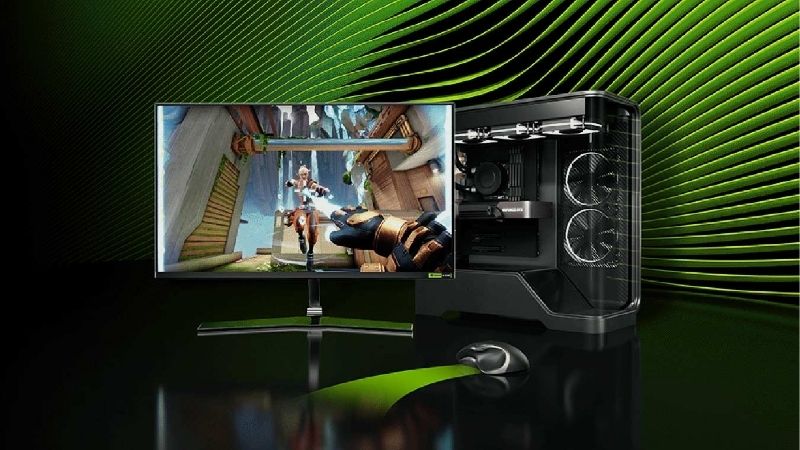
RTX 5070 12GB vs RTX 5060 Ti 16GB — Quick Verdict and Specs
Most buyers cross-shopping these Nvidia siblings want the answer first, so here it is: the RTX 5070 is the clearly faster card for higher-refresh 1440p and 4K, while the RTX 5060 Ti 16GB offers more VRAM at a lower price, making it the value pick for 1080p and 1440p gamers. This section backs that with the full spec table and the shared architecture context.
As an Amazon Associate we earn from qualifying purchases at no extra cost to you.


The Quick Verdict for Busy Buyers
Buy the RTX 5070 if you want higher frame rates, plan to game at high-refresh 1440p or 4K, and value raw performance and bandwidth. It is the faster, more capable card of the pair.
Buy the RTX 5060 Ti 16GB if you want more VRAM for future-proofing, game mainly at 1080p or 1440p, and prefer to save money while keeping strong performance. It is the value and memory pick.
Since both are Blackwell cards with DLSS 4, the RTX 5070 12GB vs RTX 5060 Ti 16GB decision is a clean trade-off: more raw power and bandwidth versus more VRAM and a lower price. Your resolution and budget decide.
Head-to-Head Specs Comparison Table
The table below lays out the specs that drive this power-versus-VRAM decision.
| Spec | RTX 5070 | RTX 5060 Ti (16GB) |
|---|---|---|
| Architecture | Blackwell | Blackwell |
| CUDA cores | 6,144 | 4,608 |
| Memory | 12GB GDDR7 | 16GB GDDR7 |
| Memory bus | 192-bit | 128-bit |
| Bandwidth | ~672 GB/s | ~448 GB/s |
| Board power | 250W | 180W |
| Upscaling | DLSS 4 + Multi-Frame Gen | DLSS 4 + Multi-Frame Gen |
| Typical price | ~$549 MSRP | ~$429 MSRP |
The trade-off is clear. The RTX 5070 has more cores, more bandwidth, and a wider bus for higher performance, but only 12GB of VRAM. The RTX 5060 Ti 16GB has more memory and lower power draw at a lower price, but less raw power.
If the spec sheet already tilts you one way, it is worth checking each card’s live listing before pricing shifts again.
Same Blackwell Family, Different Priorities
Both cards share Nvidia’s Blackwell architecture, so they offer the same feature set: DLSS 4 with multi-frame generation, improved ray-tracing cores, and efficient design. Neither has a feature advantage over the other.
This makes the comparison unusually clean. Instead of weighing different features, you are simply choosing between more raw performance on the RTX 5070 and more VRAM plus a lower price on the RTX 5060 Ti 16GB.
For buyers, the practical framing is that these are two points on the same product ladder. The RTX 5070 sits a tier above in performance, while the 5060 Ti 16GB counters with memory and value, so your needs decide which rung fits.
Because the feature sets are identical, you can also make this decision with confidence that you are not giving anything up in capability either way. Both play the same games with the same DLSS 4 and ray-tracing support; only the performance level, memory size, and price differ.
Deep Dive Face-Off — Performance, VRAM, and Compatibility
Specs set expectations; frame rates and the VRAM question decide satisfaction. This section compares the two on the criteria that matter: performance across resolutions, the power-versus-VRAM debate, and how each card fits your build.
1440p and 4K Gaming Performance
At 1440p, the RTX 5070 leads clearly, using its extra cores and bandwidth to post higher frame rates in demanding titles — often a meaningful margin ahead of the RTX 5060 Ti 16GB. Both are capable, but the 5070 has more headroom.
At 4K, the gap widens further. The RTX 5070’s bandwidth helps it stay playable in more demanding scenes, while the RTX 5060 Ti 16GB is better understood as a strong 1440p card that can touch 4K in lighter titles rather than a dedicated 4K performer.
The practical conclusion is that for higher-refresh 1440p and 4K, the RTX 5070’s raw power justifies its price, while at 1080p and standard 1440p the RTX 5060 Ti 16GB delivers excellent performance for less. Resolution is the deciding factor.
Your monitor matters as much as the card here. Pairing the RTX 5070 with a high-refresh 1440p or 4K display lets its extra power shine, while on a standard 1080p or 1440p 60Hz screen much of that performance would go unused — exactly where the cheaper 5060 Ti makes more sense.
The Power vs VRAM Debate
This is the heart of the comparison. The RTX 5070 offers more raw performance but 12GB of VRAM, while the RTX 5060 Ti 16GB trades some speed for a larger 16GB buffer. The question is which matters more for your games.
For most current titles at 1440p, 12GB is sufficient and the RTX 5070’s speed wins. But in the most VRAM-hungry games, or looking further into the future, the 5060 Ti’s 16GB provides reassuring headroom that the faster card lacks.
The analytical takeaway is that raw power usually wins today, but VRAM is the better hedge against tomorrow. If you upgrade often, favor the 5070’s speed; if you keep cards a long time, the 5060 Ti’s memory is a genuine consideration.
It is worth noting that the 5070’s higher bandwidth partly offsets its smaller buffer, letting it move data faster even with less of it. Still, no amount of bandwidth substitutes for capacity once a game genuinely needs more than 12GB, which is where the 5060 Ti’s headroom becomes the safer long-term bet.
Power, Card Size, and PC Compatibility
The practical build details matter before you order. The RTX 5060 Ti 16GB is the more efficient card at 180W, comfortable on a 550W power supply, while the RTX 5070 draws 250W and typically wants a 650W unit. If your PSU is modest, the 5060 Ti is the easier fit.
Both are widely available as compact-to-mid-length models, so check your case’s maximum GPU length and PCIe power connectors before buying. The lower-power 5060 Ti is often the more small-form-factor-friendly of the two.
Both use a PCIe 5.0 interface yet run fine on PCIe 4.0 boards, so neither forces a platform upgrade. That keeps the real cost limited to the card itself, though the 5070’s higher draw may factor into your PSU planning.
Price, Timing, and the Final Recommendation
Performance is half the decision; price and timing are the other half, and the current market context genuinely rewards buying deliberately. This section covers the pricing climate, the honest pros and cons, and a clear who-buys-what verdict, plus an alternative pick.
Is Now the Right Time to Buy?
Pricing context matters because the roughly 120-dollar gap between these cards is central to the decision. Component and laptop prices have been trending upward, with memory a major driver, and that pressure feeds straight into street prices. In practice, the RTX 5060 Ti 16GB near $429 and the RTX 5070 near $549 can both drift above MSRP depending on stock.
The positive news is real but weak and distant. Prices have stopped climbing as steeply as they did in late 2025, and the market has entered a period of relative stability, though analysts still warn of ongoing volatility. “Stable” here means plateaued, not falling — the sharp increases paused, but a broad price cut has not started.
New supply is opening the long-term relief valve: OEMs can source DDR5 from Chinese suppliers such as CXMT, and Micron is building two plants in Idaho. The catch is timing — those fabs are not expected online until 2027–2028. For a buyer today, the conclusion is blunt: meaningful relief is years away, so waiting for a dramatic 2026 discount is a weak plan. Buying a well-matched card during a stable window beats gambling on a drop the supply data says will not arrive soon. It is worth locking in a fair current price before the next swing.
Pros and Cons of the RTX 5070 and RTX 5060 Ti 16GB
RTX 5070 strengths: higher performance, more CUDA cores, greater bandwidth, a wider memory bus, and capable 4K gaming. Its trade-offs: only 12GB of VRAM, a higher price, and a 250W power draw needing a stronger PSU.
RTX 5060 Ti 16GB strengths: 16GB VRAM for future-proofing, excellent 180W efficiency, a lower price, and strong 1080p and 1440p performance. Its trade-offs: less raw power, a narrower bus, and lower bandwidth than the 5070.
The pattern is clean: the RTX 5070 competes on raw power, the RTX 5060 Ti 16GB on VRAM, efficiency, and value. Whichever matters more for your games and budget should decide the pick.
The Alternative Pick and Final Verdict — Who Buys What
If you want both more power and more VRAM, the step up is the RTX 5070 Ti or RTX 5080, which pair higher performance with larger memory for a higher price — worth considering if neither card here fully satisfies. For a cheaper option, the RTX 5060 8GB cuts the price further for strict 1080p gaming.
For the final call: buy the RTX 5070 if you game at high-refresh 1440p or 4K and want the most performance. Buy the RTX 5060 Ti 16GB if you want more VRAM, better efficiency, and a lower price for 1080p and 1440p gaming.
For most buyers in 2026, the RTX 5060 Ti 16GB is the value recommendation and the RTX 5070 is the performance recommendation — both are excellent Blackwell cards, and your resolution and budget decide the winner. Ready to choose? Compare today’s live prices on both and grab the card that fits your build.
See More:
- 3060 Ti vs 9060 XT
- Nvidia Shield TV Pro
- RTX 5070 vs RX 9060 XT
- RTX 3090 24GB
- Nvidia price prediction
Conclusion
The RTX 5070 12GB vs RTX 5060 Ti 16GB decision comes down to raw power versus VRAM and value, since both are Blackwell cards sharing DLSS 4. The RTX 5070 wins on performance and bandwidth, making it the pick for high-refresh 1440p and 4K gamers. The RTX 5060 Ti 16GB wins on VRAM, efficiency, and a lower price, making it the smart value buy for 1080p and 1440p players who want future-proofing. With pricing stable but real relief years away, buying a well-matched card now is the rational move. Check the current listings and secure the Nvidia GPU that fits your resolution and budget today.
Frequently Asked Questions
Which card is faster overall?
The RTX 5070 wins clearly. It carries roughly 6144 CUDA cores against about 4608, and a 192-bit GDDR7 bus delivering around 672GB per second versus 448GB per second. In practice that means a lead of roughly twenty five to thirty five per cent at 1440p, widening in ray traced titles where bandwidth and core count both matter.
Is 12GB enough, or does the 16GB card age better?
Twelve gigabytes is comfortable at 1440p today and adequate at 4K with upscaling, but it is the 5070 weak point over a long ownership period. The 5060 Ti 16GB will not run out of memory in situations where the 5070 might, yet it lacks the raw speed to use that headroom in the most demanding scenes. Speed usually wins for gaming.
How do power and connectors differ?
The 5070 is rated near 250W and most models use a 12V-2×6 connector, supplied with an adapter to two eight-pin cables, wanting a 650W supply. The 5060 Ti sits around 180W on a single eight-pin and is happy with 550W to 600W. Seat the 12V-2×6 plug fully until it clicks to avoid contact heating issues.
Which is better for local AI or Blender rendering?
It depends on the workload. Blender and video encoding scale with compute, so the 5070 is faster. Local language model inference is often limited by VRAM capacity, and a 16GB card can load larger quantised models that simply will not fit in 12GB. Choose the 5060 Ti 16GB if model size is your constraint.
Which offers better price-to-performance?
At their respective launch prices the 5070 usually delivers slightly better frames per dollar, but the margin narrows whenever the 5060 Ti is discounted. Factor in the cheaper power supply requirement and smaller cooler for the 5060 Ti, which can save money elsewhere in a budget build or fit a small case more easily.

Write Your Review
No reviews yet. Be the first to share your experience!