
- Top Pick: Accelerate Everything with Tensor Cores: A Developer’s Guide to High-Performance AI, Efficient Training, and Scalable Models
- Best Value: Silicon Photonic Computing (Volume-I): Architecting Next-Generation AI with Optical Tensor Cores and Integrated Photonics
- Premium Choice: Silicon Photonic Computing (Volume-II): Architecting Next-Generation AI with Optical Tensor Cores and Integrated Photonics
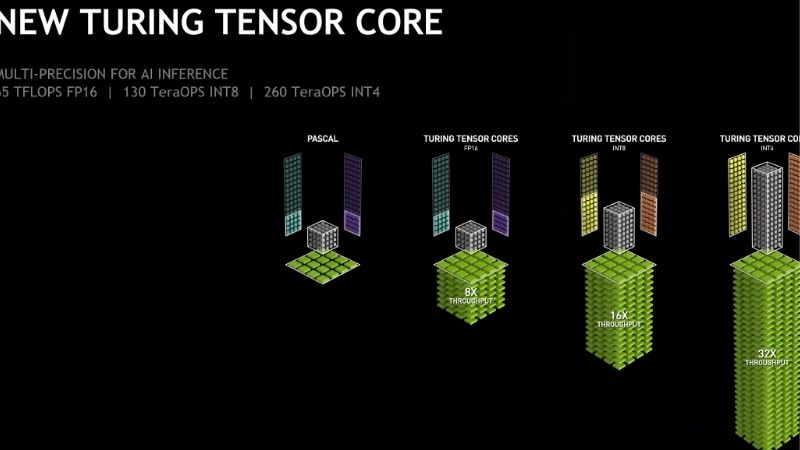
What are tensor cores is a question that has moved from niche to mainstream, because these specialized units now power some of the most exciting features in modern Nvidia GPUs. In simple terms, tensor cores are dedicated AI accelerators built into RTX graphics cards that handle the matrix math behind machine learning at incredible speed. They are the reason DLSS upscaling, frame generation, and many creative AI tools run smoothly in real time. This guide explains what tensor cores do, how they differ from the more familiar CUDA cores, and why they have become a key reason to choose an RTX card in 2026.
Understanding What Tensor Cores Actually Are
To appreciate why tensor cores matter, it helps to see them as a separate kind of engine inside the GPU. They sit alongside the regular cores and exist for one purpose: to crunch the specific math that artificial intelligence relies on, far faster than general-purpose hardware can.
As an Amazon Associate we earn from qualifying purchases at no extra cost to you.




How Tensor Cores Accelerate AI Math
AI workloads are built on matrix multiplication, repeating the same multiply-and-add operation across huge grids of numbers. Tensor cores are designed to perform many of these operations in a single step, which is something standard cores do far less efficiently.
This specialization delivers enormous speedups. A task that would bog down ordinary cores can run many times faster on tensor cores, which is what makes real-time AI features in games and apps possible rather than just theoretical.
The efficiency also matters for power and heat. Because tensor cores do AI work in far fewer steps, they consume less energy for the same result than forcing general-purpose cores to do the same math. That efficiency is one reason RTX cards can run advanced AI features continuously without overwhelming the card’s thermal budget.
Tensor Cores vs CUDA Cores
It is easy to confuse the two, but they do different jobs. CUDA cores handle the broad parallel work of rendering frames, while tensor cores focus narrowly on AI math like the calculations behind DLSS.
Think of it as a division of labor. The CUDA cores draw the scene, and the tensor cores apply AI enhancements such as upscaling a lower-resolution image into a sharp, high-resolution one. Both run together, each doing what it does best.
This teamwork is why RTX cards can deliver effects that pure rendering alone could not at the same frame rate. The CUDA cores would struggle to render a 4K ray-traced scene smoothly, so the card renders at a lower resolution and lets the tensor cores rebuild the detail. The two core types working in tandem are the foundation of modern Nvidia performance.
How Tensor Cores Have Evolved
Tensor cores have improved with every RTX generation, gaining support for new data formats and higher throughput. Each new version processes AI math more efficiently, which is why newer cards run advanced features like multi frame generation that older ones cannot.
This steady progress is why the same feature name can perform very differently across generations. When comparing cards, the tensor core generation often matters as much as the raw count.
It also explains why Nvidia can unlock entirely new features on newer cards through software. As the tensor hardware grows more capable, Nvidia builds more ambitious AI models on top of it, which is how a feature like multi frame generation arrived only on the latest generation. Buying a recent card is the best way to stay eligible for the AI features that arrive next.
Why Tensor Cores Matter for Gaming and Creative Work
Specialized hardware only earns its place if it changes your experience, so let us look at where tensor cores actually deliver. Their impact spans gaming, where they enable Nvidia’s signature features, and creative work, where AI tools increasingly rely on them.
Tensor Cores Behind DLSS and Frame Generation
The most visible payoff is DLSS. Tensor cores run the neural network that reconstructs a sharp, high-resolution frame from a lower-resolution render, giving you big frame-rate gains with minimal quality loss.
They also power frame generation, where the GPU creates entirely new AI frames between rendered ones for smoother motion. None of this would run in real time without dedicated tensor hardware doing the AI math in the background.
For everyday gaming, this means you can enable demanding settings like ray tracing and still hold a playable frame rate, because the tensor cores claw back performance through AI upscaling.
Tensor Cores for AI and Content Creation
Beyond games, tensor cores accelerate a growing list of creative tools. AI-based noise reduction, image upscaling, background removal, and local generative AI all run faster when tensor hardware handles the math.
For creators experimenting with on-device AI, this is a genuine advantage. Tasks that once required cloud services or long waits can now run locally in seconds, which is exactly the kind of forward-looking capability that makes RTX cards appealing for future workflows.
Running AI locally also brings privacy and cost benefits. Keeping your data on your own machine avoids uploading sensitive files, and you skip the subscription fees that cloud AI services often charge. As more creative tools add local AI features, the tensor cores in an RTX card quietly become one of its most future-proof assets.
The Pros and Cons of Relying on Tensor Cores
Tensor cores unlock powerful features, but it is worth understanding both sides before treating them as a deciding factor.
Pros:
- Enable DLSS and frame generation, often the single biggest performance lever on RTX cards.
- Accelerate a fast-growing range of creative and local AI tools.
- Keep improving through driver and model updates, adding value over time.
Cons:
- Their benefits depend on software support, so a game without DLSS gains nothing from them.
- The most advanced features are limited to newer RTX generations.
- The raw count is hard to compare directly across architectures.
On balance, the case for tensor cores grows stronger every year as more software learns to use them. The caveats are real today, but they are shrinking, while the list of games and creative tools that lean on AI keeps expanding. For most buyers planning to keep a card for several years, that trajectory makes tensor capability an asset worth having.
How to Get the Most From Tensor Cores
Owning tensor cores is one thing; actually using them is another. Most of their value is unlocked through settings and software, so a little know-how goes a long way. Here is how to put them to work and what to look for when buying.
Enabling Tensor-Powered Features in Your Games
The simplest way to benefit is to turn on DLSS in any supported game. Set it to Quality for the best image, or Balanced and Performance when you need more frames, and the tensor cores handle the rest automatically.
Keep your Nvidia drivers updated too, since improvements to the DLSS model are delivered through driver and game updates. Staying current ensures your tensor cores run the latest, most refined AI features.
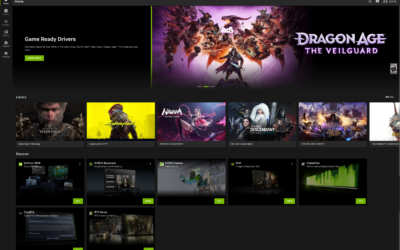
It is also worth exploring the Nvidia app, which can apply DLSS and related settings across many games from one place. Spending a few minutes there ensures you are actually using the tensor hardware you paid for, rather than leaving powerful features switched off simply because you never opened the right menu.
Knowing When Tensor Cores Help You Most
Tensor cores matter most if you play graphically heavy games with ray tracing, game at 1440p or 4K, or use AI-accelerated creative apps. In those scenarios they can be the difference between a stutter and a smooth experience.
If you only play older or competitive titles at 1080p that lack DLSS, the tensor cores will sit largely idle. Knowing your own use case prevents you from paying for capability you will not tap.
That said, software support keeps expanding, so even a library that barely uses DLSS today may benefit more in a year or two. If you keep your cards for a long time, the growing list of tensor-powered games and apps tilts the value in favor of buying into the capability now rather than later.
Choosing an RTX Card With the Right Tensor Cores
Because tensor cores are exclusive to RTX cards and improve each generation, choosing a recent RTX model is the surest way to get the best AI features. Even the mid-range RTX cards include capable tensor hardware, so you do not need a flagship to enjoy DLSS.
To find the right fit, compare current RTX models and their verified prices through the links on this page, matching the tensor core generation to the features you care about. A quick check now helps you choose a card that stays capable as AI features keep expanding.
When you compare, weigh the generation of the tensor cores as heavily as the tier of the card. A newer mid-range RTX card can unlock AI features that an older high-end one cannot, so the smart move is to favor the most recent generation your budget allows rather than an older card with a flashier number.
See More:
Final Thoughts on Tensor Cores
To sum up, tensor cores are the dedicated AI engines that set RTX graphics cards apart, powering DLSS, frame generation, and a widening range of creative tools through high-speed matrix math. Understanding what are tensor cores helps you see why they matter most for ray-traced gaming, high-resolution play, and local AI work, while contributing little when no software taps them. Choose a recent RTX card, enable the features that use them, and tensor cores become one of the smartest reasons to go with Nvidia today. As AI continues to spread across games and creative software, the value of that dedicated hardware only looks set to grow, making it a feature worth prioritizing on your next card.
Top-Rated Picks


| Product | Brand | Rating | Reviews | Price |
|---|---|---|---|---|
| ARCTIC MX-4 (4 g) – Premium Performance Thermal Paste… | ARCTIC | ★ 4.8 | 104k | $4.99 |
| ARCTIC MX-4 (incl. Spatula, 4 g) – Premium Performanc… | ARCTIC | ★ 4.8 | 71.9k | $5.49 |
| Crucial 8GB DDR4 RAM 3200MHz (PC4-25600), Downclockab… | Crucial | ★ 4.8 | 62.8k | $74.99 |
| AMD Ryzen 5 5600X 6-core, 12-thread unlocked desktop … | — | ★ 4.8 | 30.2k | $177.60 |
| NVIDIA Shield Remote; Voice Search, Motion-Activated,… | — | ★ 4.7 | 10.6k | $25.99 |
Frequently Asked Questions
What are Tensor cores used for in games?
They execute the matrix multiplication that neural networks rely on, which powers DLSS upscaling, DLAA anti-aliasing, ray reconstruction denoising and frame generation. Because these units run in parallel with the shader cores, the AI work adds only a small fraction of a millisecond per frame rather than competing for raster resources.
Do Tensor cores help outside of gaming?
Yes, considerably. They accelerate local large language model inference, Stable Diffusion image generation, video upscaling, background removal in streaming software and AI features in creative applications. Tools built on CUDA and TensorRT map directly onto them, which is why Nvidia cards dominate local AI workloads on consumer hardware.
What precision formats do they support?
Support has expanded from FP16 on the original Turing cards to INT8, INT4, BF16, TF32, FP8 and most recently FP4 on Blackwell. Lower precision means more throughput and less memory use, which is why modern AI models quantise weights down to eight or four bits with minimal quality loss.
Does AMD have an equivalent?
Yes. RDNA 3 introduced AI accelerators and RDNA 4 significantly strengthened them, enabling FSR 4 machine learning upscaling. Intel Arc has XMX engines that power XeSS. The concepts are similar, though the software ecosystems differ and Nvidia CUDA remains the most widely supported for third-party AI applications.
Should Tensor core count influence my purchase?
Only indirectly. For gaming, what matters is whether the card supports the DLSS features you want and has enough VRAM. For local AI work, memory capacity is the first constraint, since a model that does not fit in VRAM will not run regardless of how many Tensor cores are available.




Write Your Review
No reviews yet. Be the first to share your experience!