
- Top Pick: ASUS TUF Gaming GeForce RTX 5070 Ti 16GB GDDR7 OC Edition Graphics Card
- Best Value: GIGABYTE GeForce RTX 5070 Ti Eagle OC ICE SFF 16G Graphics Card, 16GB 256-bit GDDR7, PCIe 5.0, WINDFORCE Cooling System, GV-N507TEAGLEOC ICE-16GD Video Card
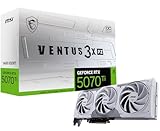
- Premium Choice: msi Gaming RTX 5070 Ti 16G Ventus 3X PZ OC Graphics Card (16GB GDDR7, 256-bit, Extreme Performance: 2482 MHz, DisplayPort x 3 2.1a, HDMI 2.1b, NVIDIA Blackwell Architecture)
The rtx 5070 ti vs 9070 xt decision is the single most searched 1440p and 4K matchup of the year, and it usually comes down to one uncomfortable trade-off: raw feature depth versus dollars saved. Both cards ship with 16GB of memory, both target the same high-refresh gamer, and both sit within roughly 10% of each other in most real games. Yet the price gap, the ray tracing gap, and the 2026 memory market can swing the answer hard in either direction. This face-off breaks down the numbers so you can decide in minutes, not hours.
As an Amazon Associate we earn from qualifying purchases at no extra cost to you.



Quick Verdict: RTX 5070 Ti vs 9070 XT at a Glance
If you only read one section, read this one. The RX 9070 XT is the better pure-gaming value, delivering roughly 90-95% of the RTX 5070 Ti’s rasterized performance for about 20% less at launch MSRP. The RTX 5070 Ti is the more complete card, pulling clearly ahead in ray tracing, upscaling quality, and creator or AI workloads. Your priorities decide the winner, so the table below and the two mini-verdicts underneath it do the sorting for you.
Who Wins the RTX 5070 Ti vs 9070 XT Value Race
At MSRP, the math favors AMD. The RX 9070 XT launched at $599 while the RTX 5070 Ti launched at $749, a 25% price premium for Nvidia. Across large 50-plus-game test suites, the RTX 5070 Ti averages a lead in the 5-13% range depending on settings, which means AMD is delivering close to full performance at four-fifths of the cost.
The nuance is that averages hide big per-title swings. In Call of Duty the 9070 XT can lead by double digits; in Crimson Desert or Final Fantasy XIV the 5070 Ti pulls ahead by 10-14%. If your library leans toward AMD-friendly raster titles, the value case for the 9070 XT gets even stronger.
Buyers who want the shortest answer: pick the 9070 XT to maximize frames per dollar, and pick the 5070 Ti if ray tracing and AI features are non-negotiable. Keep in mind that at inflated 2026 street prices the value gap can shrink, so always re-check the live price ratio before you decide, because a deal that looks obvious on paper can flip the moment one card is discounted and the other is not.
The Full RTX 5070 Ti vs 9070 XT Comparison Table
Numbers cut through marketing faster than paragraphs, so here is the core spec sheet side by side. Use it to sanity-check any deal you find before you click through to a retailer.
| Spec | RTX 5070 Ti | RX 9070 XT |
|---|---|---|
| Architecture | Blackwell (GB203) | RDNA 4 (Navi 48) |
| Shader cores | 8,960 CUDA | 4,096 (64 CUs) |
| Memory | 16GB GDDR7 | 16GB GDDR6 |
| Bus width | 256-bit | 256-bit |
| Board power | ~300W | ~304W |
| Upscaling | DLSS 4 + Multi Frame Gen | FSR 4 |
| Launch MSRP | $749 | $599 |
| Best for | Ray tracing, 4K, creators | Raster value, 1440p |
Note the memory type difference. Nvidia’s GDDR7 gives it higher bandwidth, which helps at 4K and in bandwidth-hungry AI tasks, while AMD leans on a strong RDNA 4 raster engine to stay competitive with older GDDR6.
Why 2026 Prices Reshape the RTX 5070 Ti vs 9070 XT Math
Here is the part most spec sheets ignore: neither card is selling at MSRP right now. A tight memory market has pushed GPU street prices well above launch figures, and component prices across laptops and PC parts have been trending upward rather than falling. That inflation compresses the value gap, because a 9070 XT bought at inflated pricing is no longer 20% cheaper in every store.
There is cautious good news, but it is weak and sits in the future. Prices have stopped climbing as steeply as they did in late 2025, and some hardware makers have reported a period of relative stability, while still warning that volatility is not over. Translation for a buyer: the free-fall has paused, not reversed.
New supply is being lined up. Memory makers are opening fresh capacity, including DDR5 from Chinese suppliers and two new Micron plants in Idaho, but those fabs are not expected to run until 2027-2028. So the practical takeaway is simple: prices have flattened, real relief is still years out, and if you find either card near MSRP with a warranty, that is already a strong deal worth acting on.
Deep Dive Face-Off: Performance, Features and Efficiency
Raster is where these two trade blows game by game, but the gaps widen the moment ray tracing, upscaling, or non-gaming workloads enter the picture. This section walks the three battlegrounds that actually change the buying decision, using measured benchmark behavior rather than adjectives.
Raw Rasterization and 1440p to 4K Frame Rates
In pure rasterization the two cards are genuinely close. Synthetic raster tests like Time Spy have shown the 9070 XT roughly 10% ahead, reflecting its high boost clocks and 48.66 TFLOPS FP32 throughput, while broad in-game suites tilt the average back toward the 5070 Ti by 5-10%.
At 1440p the difference is often invisible in play. Reviewers repeatedly report the 5070 Ti leading by only about 3% at this resolution in mixed workloads, a margin you would never feel without an overlay running.
At native 4K the 5070 Ti’s bandwidth advantage shows more, and in the heaviest cinematic presets it is sometimes the only one of the two to hold 60 fps. For a 4K-first buyer that consistency matters; for a 1440p high-refresh buyer, the gap rarely justifies the premium. Concretely, across broad 52-game suites the 5070 Ti’s average lead widens from roughly 10% at medium settings to 13-14% at maxed cinematic quality, so the harder you push visuals, the more Nvidia’s extra bandwidth earns its keep.
Ray Tracing, DLSS 4 and FSR 4 Upscaling Face-Off
Ray tracing is Nvidia’s clearest structural win. In RT-heavy scenes the 5070 Ti typically leads by 14-20%, and in a few path-traced titles the margin can stretch past 20%. If ray tracing is a feature you actually turn on rather than benchmark once, the 5070 Ti buys you real headroom.
Upscaling is where the experimental, forward-looking gap lives. DLSS 4 with Multi Frame Generation can insert additional AI-generated frames, and its image quality and frame-rate uplift still hold an edge over AMD’s newer FSR 4. AMD has closed the gap dramatically compared with prior generations, which is a genuine achievement, but Nvidia’s software ecosystem remains deeper and better supported across titles.
This is also the part most likely to age in Nvidia’s favor. As more games ship with DLSS 4 support and neural rendering features expand, a 5070 Ti bought today may keep gaining usable performance through driver and feature updates, which is a future-optimization argument rather than a launch-day one. AMD’s momentum with FSR 4 is real and closing fast, but Nvidia’s larger install base still means developers tend to prioritize DLSS integration, a practical advantage that compounds over a card’s lifetime.
Power Draw, Thermals and Real-World Build Fit
On paper the power picture is nearly identical: the 9070 XT tops out around 304W and the 5070 Ti around 300W, both built on refined TSMC nodes. For a real build that means both cards want a quality 750W to 850W power supply, with 850W the safer target if you pair a high-end CPU or plan to overclock.
Physically, both are large triple-fan cards on most partner models, so measure your case clearance before buying rather than after. A mid-tower with under roughly 320mm of GPU clearance can force you into a specific shorter model.
Efficiency in frames per watt slightly favors Nvidia, especially in ray-traced loads, but neither card is a heat problem in a case with basic front-to-back airflow. Practically, transient spikes make the PSU headroom advice the more important takeaway than the small nominal-wattage difference. If you are reusing an older 650W unit from a previous build, treat that as the real bottleneck rather than the GPU choice itself, and budget for a modern high-quality supply before either card lands in your case.
Pros, Cons, Alternatives and Final Buying Advice
You have the specs and the benchmarks; now for the honest scorecard. This section lays out the pros and cons of each card, offers a cheaper alternative if both feel too expensive in today’s inflated market, and closes with a clear who-should-buy-what recommendation.
RTX 5070 Ti vs 9070 XT: Pros and Cons Breakdown
The RTX 5070 Ti’s strengths are ray tracing leadership, DLSS 4 Multi Frame Generation, higher GDDR7 bandwidth, and a big lead in creator and AI tasks such as Blender and Stable Diffusion, where it can run 30-50% faster. Its main con is simply price: you pay a 25% premium at MSRP for a raster lead that is often in single digits.
The RX 9070 XT’s strengths are outstanding price-to-performance, near-parity raster gaming, strong high-clock throughput, and genuinely improved FSR 4 upscaling. Its cons are weaker ray tracing, a smaller software ecosystem, and slower AI and productivity performance for anyone who works as well as plays.
Put bluntly: the 9070 XT wins on value and raster, the 5070 Ti wins on features and versatility. Neither choice is a mistake; the wrong choice is only paying a scalped price for either one. That framing also tells you when to walk away: if the only stock you can find carries a heavy markup, the smartest move is often to wait a week for a restock rather than overpay for either card in a heated market.
A Smart Alternative If Both Cards Feel Too Pricey
If today’s inflated pricing pushes both above your budget, the RX 9060 XT 16GB is the pressure-release valve. It launched at $349 for the 16GB model, trades some frames for a much friendlier price, and keeps the full 16GB buffer that keeps textures happy at 1440p.
For Nvidia loyalists who want DLSS 4 without the 5070 Ti outlay, the standard RTX 5070 near $599 delivers a large share of the experience at 1440p. It is the sensible step-down that keeps you inside Nvidia’s feature set.
Given the memory-driven price environment, buying one tier down and pocketing the savings is a defensible move right now, especially since real price relief is still years away and a mid-tier card bought at a fair price ages fine.
Final Verdict: Which GPU Should You Buy Right Now
Buy the RX 9070 XT if you are a 1440p or high-refresh gamer who wants the most frames per dollar and rarely enables heavy ray tracing. Buy the RTX 5070 Ti if you game at 4K, lean on ray tracing, or double as a creator who benefits from DLSS 4 and faster AI acceleration.
Whichever you choose, timing matters more than usual. With prices flattening rather than dropping and new memory capacity not arriving until 2027-2028, waiting for a big discount is a weak bet. The stronger play is to grab whichever card matches your needs the moment it appears at or near MSRP.
Ready to check today’s live pricing and availability on both cards before stock moves? Follow the link to compare current deals on the RTX 5070 Ti and RX 9070 XT and lock in the better buy while it lasts.
Conclusion
The rtx 5070 ti vs 9070 xt verdict is refreshingly logical once you strip away the hype: the 9070 XT is the value champion for raster gaming, and the 5070 Ti is the feature-rich all-rounder for ray tracing, 4K, and creative work. In a 2026 market where prices have merely stabilized and true supply relief is still years out, the smartest move is not endless waiting but buying the right card at the right moment. Compare current prices through the link above and secure the GPU that fits your build and budget today.
Ready to decide? Our #1 pick for 2026 is the Architecture.
Live price & availability on Amazon.



Write Your Review
No reviews yet. Be the first to share your experience!