
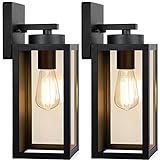
- Top Pick: BesLowe Outdoor Wall Lights, Modern Black Exterior Light Fixtures | Waterproof Metal Construction, Rust-resistant, Quick & Easy Installation, Clear Glass Shades & Standard E26 Socket
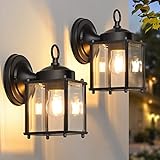
- Best Value: MATAMEYE Outdoor Wall Lantern, Exterior Waterproof Wall Sconce Light Fixtures, Black Front Door Wall Lighting with Clear Beveled Glass Shade, 2 Pack
- Premium Choice: KDG Black Outdoor Waterproof Modern Patio Wall Light Fixtures Set of 2 | E26 Socket Exterior Lanterns & Sconce with Tempered Glass, Wall Mounted Lamps for Home, Front Door, Garden, Garage, Porch
For most homes, a dusk-to-dawn LED wall lantern in a rust-resistant finish is the best all-round outdoor fixture, motion-sensing floodlights suit driveways and side yards, and smart fixtures such as the Philips Hue outdoor range suit people who already run a smart-home system. The right choice depends on the job: welcoming porch light, security coverage, or path safety.
As an Amazon Associate we earn from qualifying purchases at no extra cost to you.


Start with the fixture type
| Type | Best for | Typical makers | Limits |
|---|---|---|---|
| Wall lantern | Front and back doors | Hinkley, Kichler, Progress Lighting, Feit Electric | Modest light spread |
| Motion floodlight | Driveways, garages, side yards | Lithonia, Philips, Ring, Eufy | Can trigger on pets or passing cars |
| Path or landscape light | Walkways, steps, planting beds | Hampton Bay, Philips Hue, Malibu | Low output; needs transformer or solar panel |
| Flush or ceiling mount | Covered porches and carports | Many lighting brands | Needs a protected location |
| Smart fixtures | Scheduling, colour, scenes | Philips Hue, Govee, Ring | Needs hub or Wi-Fi, higher cost |
The makers list product families on their own sites, and home-improvement reviewers consistently group fixtures into these categories. Model lines change often, so match the specifications below rather than chasing one name.
Specifications that matter
Wet or damp rating
Look for a listing mark indicating suitability for damp or wet locations. A fixture under a deep porch roof can be damp-rated, while one exposed to rain must be wet-rated. Using an indoor fixture outdoors is unsafe.
Brightness in lumens
Entry lights usually work well with modest output, while floodlights need far more. Makers list lumens on the box; compare that number rather than watts. Excess brightness causes glare and annoys neighbours.
Colour temperature
Warm white, around 2700K to 3000K, looks inviting. Cooler white at 4000K to 5000K reads as security lighting. Many fixtures let you switch between settings.
Finish and materials
Aluminium and brass resist corrosion better than painted steel. Coastal homes should prioritise marine-grade or powder-coated finishes the maker states are corrosion-resistant.
Light control
Photocells switch lights on at dusk, motion sensors respond to movement, and timers or smart controls set schedules. Some fixtures combine two modes.
Budget tiers
| Tier | What you get | Trade-off |
|---|---|---|
| Budget | Basic LED lanterns and photocell fixtures | Thinner finishes, limited warranty |
| Mid-range | Quality metal bodies, glass panels, built-in sensors | Style options cost more |
| Premium | Solid brass or copper, designer styles, smart integration | Cost and sometimes professional installation |
Pick X if…
| If you want… | Choose |
|---|---|
| A classic look at the front door | Wall lantern with glass panels |
| Security coverage | Motion floodlight with adjustable heads |
| Safe steps and walkways | Low-voltage path or step lights |
| Scenes and phone control | Philips Hue outdoor or similar smart range |
| No wiring | Solar or battery lights with a clear sun position |
Installation and safety
Switch off power at the breaker before touching existing wiring. Hardwired replacements are straightforward for people comfortable with basic electrical work, but a licensed electrician should handle new circuits, junction boxes in wet locations, or anything you are unsure about. Follow the instructions supplied by the maker, and use weatherproof boxes and gaskets so water cannot reach the wiring. Local codes may also affect placement and permitted lighting levels.
Placement tips
- Mount entry lanterns near eye level of the door frame to avoid shadows on the face.
- Angle floodlights downward to limit glare and light trespass.
- Space path lights so pools of light overlap gently.
- Use shielded fixtures where dark-sky friendliness matters.
- Avoid facing sensors at a busy road, which causes false triggers.
Common mistakes
- Choosing only on appearance and ignoring the wet rating.
- Buying cool-white bulbs for a warm home exterior.
- Oversizing a lantern so it dwarfs the door.
- Skipping a photocell and leaving lights on all day.
- Installing solar lights in shade.
Alternatives
If a fixture swap is not practical, screw-in smart bulbs rated for outdoor use can upgrade an existing lantern. Plug-in timers and smart plugs can control string lights, and low-voltage landscape kits avoid line-voltage wiring entirely.
Matching fixture size to the space
A lantern should look proportionate to the door. Many lighting guides suggest a fixture about one third the height of the door, and pairs of lanterns work best when mounted symmetrically. Oversized fixtures look heavy and undersized ones look lost, so read the dimensions the maker lists before buying.
Energy and maintenance
LED fixtures reduce running costs and cut bulb changes. Look for photocells or motion sensors to avoid daytime use. Clean glass panels twice a year, clear spider webs from sensors and inspect seals for cracks so moisture does not enter. Replace any fixture with damaged wiring or a cracked housing.
Neighbour-friendly lighting
Shielded fixtures that direct light downward reduce glare and wasted light. Warm tones are less disruptive to wildlife and neighbours, and motion lights should be aimed so they do not sweep across the street or adjoining windows.
Where each fixture goes
| Location | Suggested type | Notes |
|---|---|---|
| Front door | Wall lantern pair | Warm tone, wet or damp rating as the cover requires |
| Garage | Wall pack or flood with sensor | Aim downward at the apron |
| Back patio | Ceiling flush mount or wall sconce | Consider dimming or smart control |
| Steps and paths | Low-voltage step or path lights | Overlap light pools to avoid dark gaps |
| Side yard | Motion floodlight | Adjust sensitivity to avoid pets and traffic |
Planning the layout on paper first avoids buying mismatched finishes. Pick one finish family, such as black, bronze or brushed nickel, so the house looks consistent from the street.
Frequently Asked Questions
How bright should a porch light be?
Most entrances look good with moderate output, and bright security lights are better handled by a separate floodlight. Check the lumens figure the maker lists and choose a warm tone for comfort.
Are LED outdoor fixtures worth it?
LEDs generally use less energy and last longer than older bulb types, which reduces how often you need to climb a ladder. Integrated LED fixtures cannot have the bulb replaced, so check the warranty.
What does wet-rated mean?
It means the fixture is listed for locations where rain can fall directly on it. Damp-rated fixtures belong under cover.
Can I install an outdoor fixture myself?
Straightforward replacements can be a DIY job if you cut the power first and follow the instructions. Call a licensed electrician for new wiring or if anything looks damaged.
Are solar fixtures reliable?
They work well in sunny spots and for accent lighting, but output drops in shade or in winter. Use wired fixtures for lighting that must be consistent.







Write Your Review
No reviews yet. Be the first to share your experience!