
- Top Pick: iBayam 8.5" Heavy Duty Scissors All Purpose for Office School Crafts Sewing | 3-Pack, Ultra-Sharp 2.5mm Stainless Blades, Comfort Grip Handles, Left & Right Handed – Teacher Desk & Classroom Must-Have
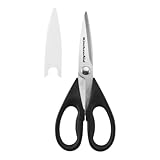
- Best Value: KitchenAid All Purpose Kitchen Shears with Protective Sheath Durable Stainless Steel Scissors, Dishwasher Safe, Soft Grip Comfort Handle, 8.72 Inch, Black
- Premium Choice: Fiskars 8" SoftGrip Everyday All Purpose Scissors, Office & Crafts, Grey | Ideal for Paper, Cardboard & Photos, Precision Stainless Steel Blades, Ergonomic SoftGrip Handles for Comfort & Control
If you want one pair for paper, cardboard, fabric, packaging and light household work, a full-size stainless steel pair with a comfortable handle, such as the Fiskars orange-handled scissors, is the practical starting point; add kitchen shears if food prep is part of the job, and heavy-duty shears if you cut thick material often.
As an Amazon Associate we earn from qualifying purchases at no extra cost to you.



What “multi-purpose” should mean
No single pair does everything well. A true all-rounder should cut paper cleanly, slice cardboard without crushing it, handle fabric and ribbon, and open stubborn packaging. It should also be comfortable enough that you do not avoid using it. Reviewers at outlets such as Wirecutter and Good Housekeeping generally look at blade sharpness, handle comfort, and how well the pivot holds up over time.
At a glance
| Option | Best for | Key traits stated by the maker or reviewers | Limits |
|---|---|---|---|
| Fiskars Original Orange-Handled Scissors (8 inch and 10 inch sizes) | All-round home and office | Stainless steel blades, contoured handle, long-running design | Not designed for thick leather or wire |
| Fiskars Everyday or similar softgrip models | Hands that need extra cushioning | Padded handles, general-purpose blade | Handles can wear over time |
| Joyce Chen Original Unlimited Kitchen Scissors | Food prep and herbs | Takes apart or opens for cleaning, as the maker describes | Less suited to heavy craft use |
| Victorinox kitchen shears | Poultry, herbs, packaging | Stainless blades, built-in bottle opener on some models | Check dishwasher guidance in the maker instructions |
| Kershaw Taskmaster shears | Heavy-duty cutting, outdoors, tough materials | Heavy, sturdy shears; models often include a tool-like feature set | Bulkier; overkill for paper |
How to choose
Blade length and shape
An 8-inch scissor is the usual compromise for hands and desks. Longer blades, around 10 inches, make straight long cuts in wrapping paper or fabric easier but are less comfortable for detail work. Short blades suit trimming and small jobs.
Blade material
Stainless steel resists rust and is the common choice. Some makers add non-stick coatings that help with adhesive tape; those coatings can wear and should be cleaned carefully according to the instructions.
Handle design
Closed loops are more stable for repetitive cutting. Soft-grip handles reduce pressure, while spring-assisted designs help people with weak grip. Left-handed users should look for true left-handed models with reversed blades, because ambidextrous handles do not fix blade geometry for left-hand use.
Pivot and tension
A smooth, tight pivot gives clean cuts; a loose pivot chews paper and fabric. Some higher-quality scissors have an adjustable screw, while others are riveted and cannot be tightened.
Scissors by job
| Task | Better tool | Why |
|---|---|---|
| Paper, wrapping, light card | 8-inch all-purpose scissors | Clean edge, good control |
| Cardboard boxes | Heavy-duty shears or a box cutter | Thick fibre dulls light blades |
| Fabric | Dedicated fabric scissors | Using paper-cutting blades dulls them |
| Kitchen | Kitchen shears | Designed for food hygiene and cleaning |
| Hard plastic clamshell packaging | Packaging shears or heavy-duty scissors | Strong blades and serrations |
Pick X if …
- You want one pair for the home office drawer: a Fiskars orange-handled model in an 8-inch size.
- You cook frequently: a take-apart kitchen shear such as the Joyce Chen or a Victorinox shear.
- You cut tough materials: heavy-duty shears such as the Kershaw Taskmaster.
- Your hands tire quickly: a soft-grip or spring-assisted design.
- You sew: buy dedicated fabric scissors and keep them off paper.
Budget tiers without numbers
At the budget tier, basic stainless scissors in multi-packs do light chores, but pivots often loosen. In the mid-range, the Fiskars classics and kitchen shears offer reliable edges and comfortable grips. The premium tier covers heavy-duty or professional shears, which are made with better steel and can sometimes be sharpened by a professional. Whatever the tier, keep the pair you use for paper and fabric separate.
Safety and care
- Cut away from yourself and keep fingers clear of the pivot.
- Store sharp scissors with blades closed and out of reach of young children.
- Wipe blades after use and dry them to reduce rust.
- Use a knife-sharpening service or the maker’s recommended method rather than improvising on a grinder.
- Do not cut wire or metal unless the maker states the scissors are rated for it.
Alternatives
- Utility knife or box cutter: better than scissors for cardboard, but requires careful handling.
- Rotary cutter and mat: good for long fabric cuts and craft projects.
- Precision snips: for small trimming, thread and fine craft work.
Common mistakes
- Using one pair for everything, including tape and food, which dulls and contaminates the blades.
- Choosing handles that are too small, leading to blisters.
- Ignoring left-handed designs.
- Soaking scissors that have a pivot screw in water for long periods.
- Buying the longest blade by default.
Building a small scissors kit
Many households do better with two or three specialised pairs than one pair stretched across every task. A common setup is an 8-inch general pair for paper and packaging, a take-apart kitchen shear kept near the stove, and a small precision pair for trimming thread and loose edges. Labelling or colour-coding the kitchen pair stops it drifting into the craft drawer. Replace any pair whose blades no longer meet cleanly along their full length, because a pair that tears instead of cutting forces you to squeeze harder and raises the chance of a slip. Reviewers also point out that heavier handles tire the wrist in long craft sessions, so test the weight in your hand where you can.
Frequently Asked Questions
What size scissors are best for general use?
An 8-inch pair covers most paper, craft and household jobs for adult hands. Go to 10 inches for long cuts in fabric or wrapping paper. Choose shorter scissors for detail work.
Can I use kitchen shears for crafts?
You can, but it is better to keep kitchen shears for food. Craft materials such as glue-coated paper and tape can leave residue and dull the blades. Using a separate pair keeps both jobs cleaner and safer.
Why do my scissors chew paper?
This usually means the blades are dull, the pivot is loose, or the blades have residue on them. Clean the blades and check the pivot screw if your model has one. If the edges are damaged, replacement may be easier than repair.
Can scissors be sharpened?
Many stainless scissors can be sharpened by a professional or with a sharpener designed for scissors, but coated blades may lose their coating. Follow the maker’s care instructions. Cheap scissors are usually replaced rather than sharpened.
Are scissors with non-stick blades worth it?
They can help when cutting tape and adhesive materials. The coating may wear with use and cleaning. They are useful if sticky materials are a regular task.
Which is better for left-handed users?
Choose scissors specifically made for left-handed use, with the blades reversed. Symmetrical handles alone do not change which blade sits on top. This makes cuts easier to see and cleaner.







Write Your Review
No reviews yet. Be the first to share your experience!