
- Top Pick: FODESAN Retractable Golf Swing Trainer, Training Aid with Grip Trainer, Swing Mechanics for Beginners & Tempo Training for Advanced, Click Feedback, Muscle Training, Indoor/Outdoor
- Best Value: 13 Under Golf TA25 Weighted Golf Swing Trainer with Grip Trainer, No Ribbon | 3 Stackable Weights for Swing Speed, Tempo & Lag, Built-In Grip Trainer, 40 Inch Warm-Up Stick That Fits in Your Bag
- Premium Choice: Orange Whip Golf Swing Trainer Aid, Patented Counterbalanced Golf Swing Aid, Made in the USA, 47"
The Orange Whip is the tempo trainer most 2026 roundups name first, the SKLZ Gold Flex is the usual value alternative, and Tour Tempo style audio or metronome apps suit golfers who want a numeric rhythm to follow rather than a swing implement. Which is best comes down to what you want to fix: a rushed transition, an uneven backswing-to-downswing ratio, or a general lack of feel for sequencing.
Roundups on golf sites are largely affiliate-style, so treat their rankings as a starting point. The notes below stay with what makers describe and what reviewers broadly report, and they avoid promising a score drop, because tempo work is a practice habit and results vary by player.
As an Amazon Associate we earn from qualifying purchases at no extra cost to you.

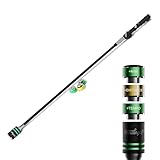


At a glance: tempo trainer types
| Option | Best for | How it works | Limits |
|---|---|---|---|
| Orange Whip | Feel for sequencing and rhythm | A flexible shaft with a weighted head, used for swinging slowly and in rhythm; the maker offers several lengths | No digital data or app measurements |
| SKLZ Gold Flex | Value pick, strength and flexibility | A flexible training club that loads on the transition; head-heavy feel | Less specifically about tempo than the Orange Whip, according to roundups |
| Tour Tempo style ratio training | Golfers who want a 3 to 1 backswing-to-downswing ratio | Audio tones or a metronome mark the backswing and downswing durations | Needs you to sync your own swing to the sound |
| Metronome or swing-tempo apps | Practice at home or on a range | Beeps set a rhythm; some apps use phone sensors or video | Phone placement and accuracy vary, check the app notes |
| Wearable or club sensors | Golfers wanting measured tempo data | Sensors report swing data to an app, per the maker | More costly, setup and subscriptions can vary |
| Weighted flexible budget trainers (Balight, CHAMPKEY and similar) | Tight budgets | Flexible shaft with a weighted end | Build quality and grip detail differ by maker |
What tempo actually means
Tempo is the rhythm of the swing: how long the backswing takes compared with the downswing. Many instructors describe a smooth backswing about three times as long as the downswing, which is the idea behind ratio-based programmes such as Tour Tempo. It is not the same as speed. A golfer can swing hard with good tempo or slowly with poor tempo, and a trainer that makes you feel the transition without rushing is the aim.
Why a flexible trainer helps
A flexible shaft with a weighted head bends and lags if you jerk it into the downswing. Makers of such trainers say this gives feedback on timing, and reviewers commonly report that the swish and the feel of the loading make a rushed transition obvious. It is a feel-based tool, so it helps you notice, not measure.
Why a metronome or ratio helps
A number or beat is easy to follow and repeat. Ratio training gives you a target that can be rehearsed without a club, even at home, and can be matched against a short video of your own swing.
Choosing among them
Length, weight and flex
The Orange Whip is sold in a few sizes, and the maker has size guidance by height. Heavier trainers promote strength training and feel; lighter ones are easier on beginners and older golfers. Pick the version the maker suggests for your height unless you have been advised otherwise by a coach.
Grip and fit
A trainer’s grip should be comfortable and secure. Cheaper options may use thinner or harder grips. If you have hand or wrist concerns, speak to a coach or a health professional before adding a new swing tool to your routine.
Data versus feel
If you want numbers, look at sensors or apps that report tempo ratio and backswing time. If you want feel without screens, a flexible trainer wins. Some golfers use both: a metronome app for rhythm, the trainer for warm-ups.
Safety and space
Swing in an open area, away from people, windows and ceiling lights, particularly indoors. Check the shaft and head before each session for cracks or looseness, since a broken trainer can fly off, and replace it if you see damage.
Pick this if you…
| You are… | Choose | Why |
|---|---|---|
| Rushing the downswing from the top | Orange Whip | Flexible shaft gives immediate timing feedback |
| On a budget and want something simple | SKLZ Gold Flex or a similar budget flexible trainer | Low-cost entry point |
| Wanting a repeatable numeric target | Ratio-based audio or metronome app | Gives a beat you can practise anywhere |
| Interested in measured data over time | A swing sensor or launch monitor with tempo data | Reports numbers, though it costs more |
| A beginner or older golfer | Lighter trainer in the right length | Easier on the body and simpler to learn |
Budget tiers without prices
Budget tier: metronome apps, free audio tracks and basic flexible trainers. Mid-range: the Orange Whip and similar branded trainers. Premium: sensor-based systems and launch monitors that report tempo among other metrics.
How to use a tempo trainer well
- Warm up gently with a few small swings before any full-effort practice.
- Swing slowly at first, aiming for a smooth change of direction at the top instead of a snap.
- Count a rhythm, such as three beats back and one beat down, if using a ratio.
- Move to your normal club and repeat the same feel before hitting balls.
- Record a short video from time to time to check whether the feel matches what you see.
Short, regular sessions are generally recommended over a rare long one. If you feel pain, stop and seek advice from a coach or a health professional.
Alternatives
- A lesson with a coach who can look at tempo, since a trainer cannot diagnose why your timing is off.
- A simple counting routine with no equipment at all: say a rhythm in your head during practice swings.
- Alignment sticks and drills for other swing faults, since tempo is only one part of consistency.
Common mistakes
- Swinging the trainer as hard as possible, which defeats the tempo purpose.
- Expecting instant changes. Habits take repeated practice to carry onto the course.
- Choosing the wrong size, which makes the feel unnatural.
- Using a ratio blindly. Some golfers find different rhythms comfortable, and a coach can help match tempo to your build and swing.
- Ignoring safety space and equipment checks.
Frequently Asked Questions
What is the best golf tempo trainer for beginners?
The Orange Whip is the most commonly named choice in roundups, with a flexible budget trainer as a lower-cost alternative. A free metronome app is also a reasonable start. Choose the length that fits your height according to the maker.
What is a good golf tempo ratio?
Ratio-based programmes use about three parts backswing to one part downswing. Different players find different rhythms natural, so treat it as a starting point and consider a coach’s input.
Do tempo trainers fix a slice or hook?
Not directly. Tempo affects sequencing and consistency, which can influence contact and path, but face and path problems often need other changes. A coach can tell whether tempo is part of the issue.
Can I use a tempo trainer indoors?
Yes with enough clear space, away from people, lights and fragile objects. Use shorter swings if space is tight, and check the equipment for damage before each session.
Is a metronome app as good as a physical trainer?
They do different jobs. An app gives a repeatable beat, while a flexible trainer gives physical feedback. Many golfers combine them.
How often should I practise tempo?
Short sessions several times a week are commonly suggested. Warm up first and stop if anything hurts. Results vary by player, so judge progress through consistent contact and repeatable rhythm rather than a single round.







Write Your Review
No reviews yet. Be the first to share your experience!