
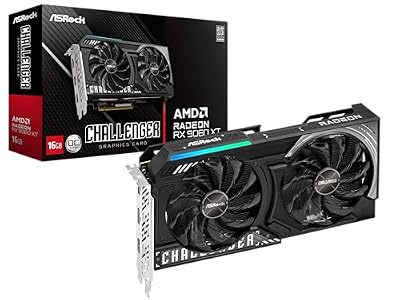
- Top Pick: ASRock Radeon RX 9060 XT Challenger 16GB OC, RDNA 4, 3290MHz Boost, 16GB GDDR6 128-bit, PCIe 5.0, Dual Fans, 0dB Silent, LED Indicator, DisplayPort 2.1a, HDMI 2.1b
- Best Value: ASRock Radeon RX 7700 XT Challenger 12GB OC Graphics Card, AMD RDNA 3 Architecture, 12GB GDDR6, 2584 MHz Boost Clock, 3X DisplayPort 2.1, 1x HDMI 2.1, Dual Fan Cooling
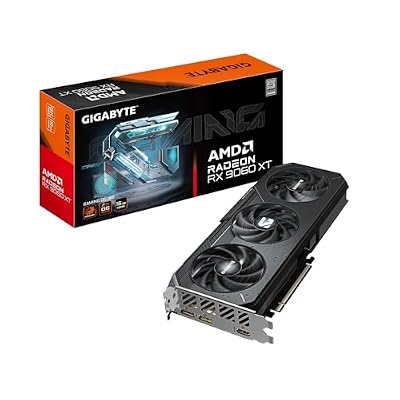
- Premium Choice: GIGABYTE Radeon RX 9060 XT Gaming OC 8G Graphics Card, PCIe 5.0, 8GB GDDR6, GV-R9060XTGAMING OC-8GD Video Card

Prime
Limited Time
ASUS Dual Radeon RX 9060 XT 16GB GDDR6 Graphics Card, AMD, for Desktop (PCIe 5.0, HDMI 2.1b, DisplayPort 2.1a, 2.5-Slot, Axial-tech Fan, 0dB Technology, and More)
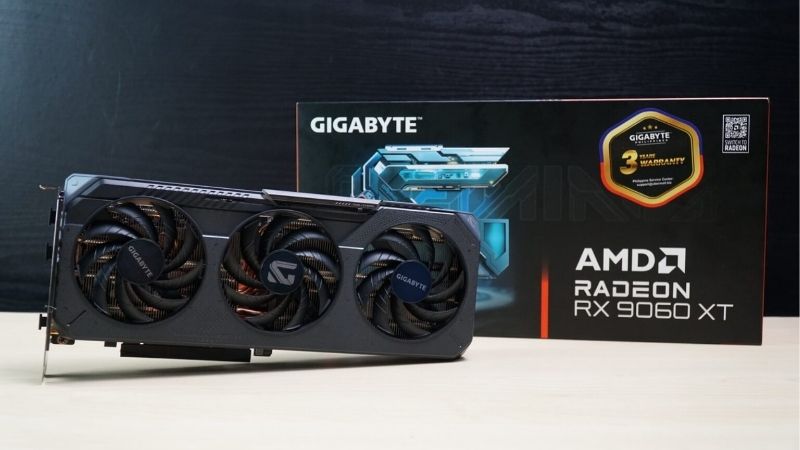
The rx 7700 xt vs rx 9060 xt comparison is a classic old-versus-new showdown, and it delivers a surprising result: the newer, cheaper, lower-power card is also the smarter buy. The 2023 RX 7700 XT brings more raw shaders, a wider 192-bit bus, and 12GB of memory, while the 2025 RX 9060 XT counters with RDNA 4 efficiency, a larger 16GB buffer, exclusive FSR 4 upscaling, and a lower price. This breakdown shows exactly where the generational shift pays off and when the older card still makes sense.
Quick Verdict: RX 7700 XT vs RX 9060 XT at a Glance
Here is the short version. The RX 9060 XT 16GB is the better all-round buy, matching or slightly beating the RX 7700 XT in raster while costing less, drawing far less power, carrying more VRAM, and supporting AMD’s newer FSR 4. The RX 7700 XT only makes sense if you can find one heavily discounted, since its wider bus and higher shader count no longer translate into a real-world win. The table and mini-verdicts below explain why the newer card takes it.
As an Amazon Associate we earn from qualifying purchases at no extra cost to you.





Who Wins the RX 7700 XT vs RX 9060 XT Race
On performance, the newer card noses ahead. At 1080p the RX 9060 XT 16GB lands around the level of the older RX 7800 XT and just ahead of the RX 7700 XT, which is a strong result given it uses fewer shaders and a narrower bus. RDNA 4’s architectural efficiency is doing the heavy lifting.
The 7700 XT’s advantages look good on paper but fade in practice. Its 3,456 stream processors and 192-bit bus outnumber the 9060 XT’s 2,048 processors and 128-bit bus, yet the newer card’s higher clocks and refined design close and then reverse the gap in most games.
The shortest answer: choose the RX 9060 XT 16GB for a new build, since it wins on value, efficiency, VRAM, and features. Only reach for the RX 7700 XT if it turns up at a steep discount that undercuts the newer card significantly. Even then, the discount has to be large, because the older card’s higher running costs and missing features quietly erode any upfront saving over the life of the build.
The Full RX 7700 XT vs RX 9060 XT Comparison Table
Specs settle arguments faster than prose, so here is the core sheet side by side. Use it to sanity-check any deal before you click through to a store.
| Spec | RX 7700 XT | RX 9060 XT 16GB |
|---|---|---|
| Architecture | RDNA 3 (Navi 32) | RDNA 4 (Navi 44) |
| Stream processors | 3,456 (54 CUs) | 2,048 (32 CUs) |
| Memory | 12GB GDDR6 | 16GB GDDR6 |
| Bus width | 192-bit | 128-bit |
| Upscaling | FSR 3.1 | FSR 4 |
| Board power | ~245W | ~160W |
| Launch MSRP | $449 (2023) | $349 (2025) |
| Best for | Discounted deals | New 1080p / 1440p builds |
The two lines that matter most are power and price. The 9060 XT draws about 85W less than the 7700 XT and launched $100 cheaper, so the newer card delivers equal or better performance while costing and consuming noticeably less. It is unusual for a newer, cheaper card to also be the more powerful one, but that is exactly the position RDNA 4 efficiency puts the 9060 XT in against its older sibling.
Why 2026 Prices and Availability Reshape the Decision
Here is the context spec sheets skip: a tight 2026 memory market has pushed GPU prices up rather than down, and component prices across PC parts have trended higher. Because the RX 7700 XT is a 2023 card being phased out, finding one new at a real discount is getting harder, which weakens its only genuine advantage over the newer card.
There is cautious good news, but it is weak and in the future. Prices have stopped climbing as steeply as they did in late 2025, and some hardware makers have reported a stretch of relative stability, while still warning that volatility is not over. For a buyer, the free-fall has paused rather than reversed.
Fresh supply is coming but is years away. New memory capacity, including DDR5 from Chinese suppliers and two Micron plants in Idaho, is not expected to run until 2027-2028. The practical takeaway: a new RX 9060 XT 16GB near $349 with a warranty is the reliable buy today, and the 7700 XT is only worth chasing if a clearance price makes it dramatically cheaper. In a market where new-card prices have crept upward, a genuine 7700 XT clearance deal does occasionally appear as retailers clear old stock, so it is worth a quick price check, but it should never be your default assumption.
Deep Dive Face-Off: Performance, Features and Efficiency
The raster gap is small, so the decision leans on upscaling, ray tracing, efficiency, and how each card fits a real build. This section walks those battlegrounds with measured behavior rather than adjectives.
Raw Rasterization and 1080p to 1440p Frame Rates
At 1080p the two cards trade blows, with the RX 9060 XT 16GB generally landing just ahead of the RX 7700 XT despite its leaner specs. The newer card’s high 3.13GHz boost clock and RDNA 4 efficiency compensate for its smaller shader count.
At 1440p the 7700 XT’s wider 192-bit bus becomes more relevant, narrowing the gap in bandwidth-heavy scenes, yet the 9060 XT’s larger 16GB buffer keeps it comfortable where the 7700 XT’s 12GB is merely adequate. In practice the two remain close at this resolution.
The analytical read is that the newer card is at least equal and often slightly faster in raster, while carrying more VRAM. For a buyer weighing raw frames, this removes the older card’s expected advantage and shifts the decision to features and efficiency. The intuition that more shaders and a wider bus must mean more speed is exactly the trap RDNA 4 springs, and it is why comparing cards across generations on paper specs alone leads buyers to the wrong conclusion.
FSR 4, Ray Tracing and Future Support
Upscaling is the clearest generational divide. The RX 9060 XT supports AMD’s newer FSR 4, which delivers better image quality and performance than the FSR 3.1 the RX 7700 XT is limited to, because FSR 4 is exclusive to RDNA 4 hardware.
Ray tracing also favors the newer card despite its fewer units. RDNA 4 substantially improved ray tracing over RDNA 3, so the 9060 XT can match or exceed the 7700 XT in ray-traced titles even though the older card has more raw compute resources on paper.
The forward-looking angle is decisive. As AMD expands FSR 4 game support and matures its RDNA 4 drivers, the 9060 XT stands to keep improving, while the 7700 XT is locked out of the newest upscaling entirely. For anyone keeping a card several years, that support gap matters. Upscaling has become the single biggest lever on perceived performance at this tier, so being locked to an older version is a real and lasting disadvantage rather than a minor footnote on a spec sheet.
Power, VRAM and Real-World Build Fit
Efficiency is a rout for the newer card. At roughly 160W the 9060 XT draws about 85W less than the 7700 XT’s 245W, which means less heat, a quieter build, and a far more forgiving power supply requirement.
For real builds, the 9060 XT runs happily on a modest 550W unit, whereas the 7700 XT’s higher draw pushes you toward 650W or more for safe headroom. Upgraders reusing an older supply will find the newer card the easier fit.
On VRAM, the 9060 XT’s 16GB buffer beats the 7700 XT’s 12GB, giving it more comfortable headroom as game texture demands climb. Both are capable at 1080p and 1440p, but the newer card is better positioned to age gracefully into future titles. The combination of lower power draw and more VRAM is precisely what buyers should prize at the mainstream level, because it keeps a build cool, quiet, and capable well past the point where an older, hungrier card starts to feel its age.
Pros, Cons, Alternatives and Final Buying Advice
With performance close and efficiency decisive, the recommendation gets simple once you weigh the honest scorecard against price and stock. This section covers the pros and cons, a stronger alternative if your budget can flex, and a clear verdict.
RX 7700 XT vs RX 9060 XT: Pros and Cons Breakdown
The RX 7700 XT’s strengths are its wider 192-bit bus, more raw stream processors, and solid 12GB of VRAM, and it can be a bargain if discounted. Its cons are high 245W power draw, no FSR 4 support, weaker ray tracing, and an aging RDNA 3 design.
The RX 9060 XT 16GB’s strengths are equal or better raster, a larger 16GB buffer, exclusive FSR 4, improved ray tracing, class-leading efficiency near 160W, and a lower $349 price. Its cons are the narrower 128-bit bus and fewer shaders, which rarely hold it back in practice.
Put plainly: the 9060 XT wins on value, efficiency, VRAM, and features, while the 7700 XT is only competitive when heavily discounted. The wrong move is paying full price for the older card when the newer one costs less and does more. Brand nostalgia and raw spec sheets can tempt buyers toward the 7700 XT, but on every metric that shows up in daily use, the newer card is the more sensible spend.
A Smart Alternative If You Want More Power
If your budget can stretch beyond both, the RX 9070 offers a large performance jump for 1440p high-refresh and entry 4K gaming, and it is the natural step up from the 9060 XT for higher-resolution ambitions.
For Nvidia shoppers cross-comparing at this price, the RTX 5060 Ti 16GB brings DLSS 4 and stronger ray tracing, making it a sensible alternative for anyone who prioritizes Nvidia’s feature set over AMD’s value.
Given the 2026 market, buying a newer, more efficient card at a fair price beats chasing an older model that costs more to run and misses the latest features. Real price relief is years away, so a well-chosen current card holds its value longer.
Final Verdict: Which AMD GPU Should You Buy
Buy the RX 9060 XT 16GB for almost any new build, since it matches or beats the 7700 XT in raster while winning decisively on price, power, VRAM, and FSR 4 support. It is the clear modern choice at this tier.
Only buy the RX 7700 XT if you find it at a steep clearance price that meaningfully undercuts the 9060 XT, and even then, weigh its higher running costs and missing FSR 4 before committing. A card that costs more to power and misses the latest upscaling can quietly cost you more over its lifetime than the small upfront saving a clearance deal appears to offer.
Whichever you choose, timing and price matter in this market. Compare live pricing and availability before you commit, and grab the card that offers the best real value in your region. Follow the link to check current prices and lock in the better buy.
See more:
- amd driver auto-detect tool
- nvidia geforce rtx 5080 best buy
- TechPowerUp GPU-Z
- nvidia china
- nvidia etf price
Conclusion
The rx 7700 xt vs rx 9060 xt verdict lands firmly with the newer card: the RX 9060 XT 16GB matches or beats the older RX 7700 XT in raster while costing less, drawing far less power, carrying more VRAM, and unlocking exclusive FSR 4 upscaling. In a 2026 market where GPU prices have merely flattened and real relief is still years out, a new 9060 XT at a fair price is the smart buy, with the 7700 XT worth considering only at a deep discount. Compare current prices through the link above and secure the AMD GPU that fits your build and budget today.
Frequently Asked Questions
Which is faster, the older RX 7700 XT or the newer RX 9060 XT?
They land close in rasterised games, with the 7700 XT sometimes ahead thanks to its wider 192-bit bus and 12GB of memory. The RDNA 4 based 9060 XT pulls clearly ahead in ray tracing, where AMD rebuilt the ray accelerators, and in any title supporting FSR 4 machine learning upscaling. Raster parity, ray tracing win for the newer card.
Does FSR 4 work on the RX 7700 XT?
No. FSR 4 uses machine learning acceleration built into RDNA 4, so it is limited to the RX 9000 series. The 7700 XT is restricted to FSR 3.1 and its frame generation, which looks noticeably softer in motion. AMD has shipped FSR 3.1 to FSR 4 upgrade paths through the driver for supported titles on RDNA 4 only.
How do VRAM and bus width compare?
The RX 7700 XT has 12GB on a 192-bit bus. The RX 9060 XT comes in 8GB and 16GB versions on a narrower 128-bit bus with higher clocked GDDR6 and a large Infinity Cache. If you compare against the 16GB model you get more capacity than the 7700 XT, but less raw bandwidth, so cache hit rate matters.
What are the power and PSU differences?
The 7700 XT is a 245W card typically needing two 8-pin connectors and a 700W recommendation. The RX 9060 XT sits near 150W to 160W on a single 8-pin with a 500W to 550W recommendation. That is a large efficiency gain and makes the newer card far easier to fit into compact or lower-wattage systems.
Which one should I actually buy?
If you find a heavily discounted 7700 XT and play mostly rasterised games at 1440p, it remains reasonable value. For anyone who cares about ray tracing, upscaling image quality, power draw, or long-term driver feature support, the 16GB RX 9060 XT is the better purchase. Avoid the 8GB 9060 XT unless you are strictly at 1080p.
Ready to decide? Our #1 pick for 2026 is the Architecture.
Live price & availability on Amazon.

Write Your Review
No reviews yet. Be the first to share your experience!