
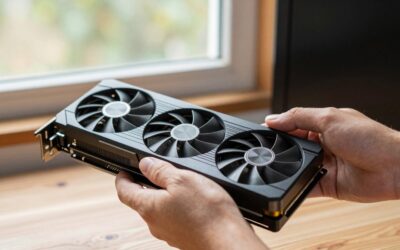
- Top Pick: ASRock Radeon RX 9060 XT Challenger 16GB OC, RDNA 4, 3290MHz Boost, 16GB GDDR6 128-bit, PCIe 5.0, Dual Fans, 0dB Silent, LED Indicator, DisplayPort 2.1a, HDMI 2.1b
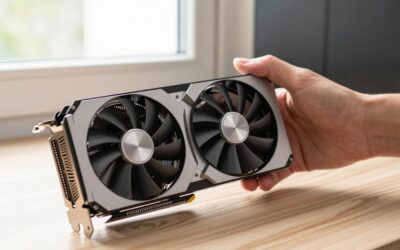
- Best Value: ASUS Dual Radeon RX 9060 XT 16GB GDDR6 Gaming Graphics Card
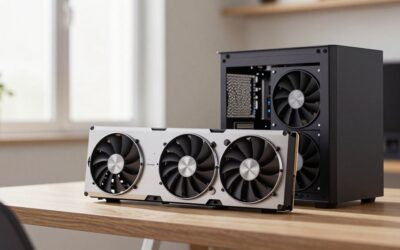
- Premium Choice: GIGABYTE Radeon RX 9060 XT Gaming OC 8G Graphics Card, PCIe 5.0, 8GB GDDR6, GV-R9060XTGAMING OC-8GD Video Card


The 5070 vs 9060 xt comparison is a cross-tier decision rather than a like-for-like fight, and it hides a curious twist: the pricier card actually has less VRAM. The RTX 5070 is a genuine 1440p powerhouse with far more raw performance, DLSS 4, and a wider memory bus, yet it carries 12GB against the RX 9060 XT’s 16GB. The Radeon costs $200 less and sips far less power. This breakdown shows whether the 5070’s big performance step justifies its price, or whether the cheaper card is the smarter buy.
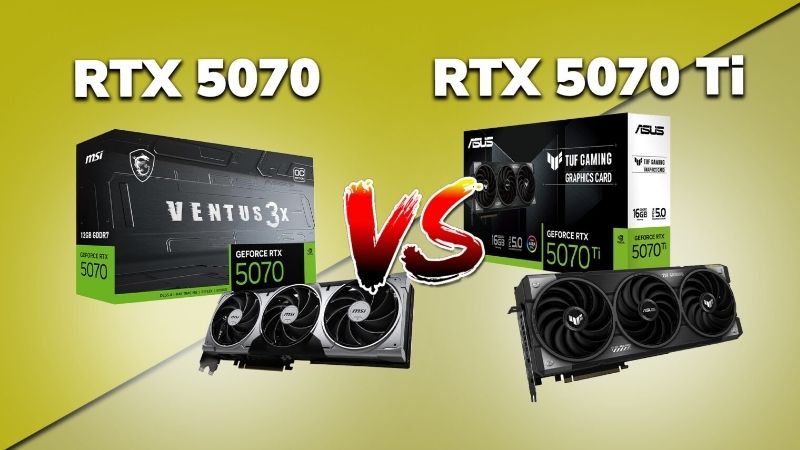
Quick Verdict: RTX 5070 vs RX 9060 XT at a Glance
Here is the short answer. The RTX 5070 is roughly 48% faster than the RX 9060 XT, making it the clear choice for 1440p max settings and entry-level 4K with DLSS 4. The RX 9060 XT is the value and efficiency pick for 1080p and lighter 1440p, costing $200 less and drawing far less power while carrying more VRAM. Your resolution and budget decide the winner, as the table and mini-verdicts below explain.
As an Amazon Associate we earn from qualifying purchases at no extra cost to you.






Is the RTX 5070 Step Up Worth It Over the 9060 XT
On raw performance the 5070 is in a different class. With 6,144 CUDA cores, a 192-bit bus, and 672 GB/s of GDDR7 bandwidth, it delivers around 48% more performance than the RX 9060 XT, enough to move you from a 1080p-and-1440p card to a genuine 1440p-max and entry-4K machine.
Price is the counterweight. The RTX 5070 launched at $549 against the RX 9060 XT 16GB’s $349, so you pay about 57% more for that roughly 48% performance jump. For a 1080p gamer, that is money spent on headroom you may never use.
The shortest answer: the RTX 5070’s step up is worth it if you game at 1440p high-refresh or dabble in 4K and want lasting performance, while the RX 9060 XT is the smarter buy if you play at 1080p or lighter 1440p and want to save $200 and run cooler. The decision is genuinely about your monitor: a high-refresh 1440p or 4K panel unlocks the 5070’s advantage, while a 1080p screen leaves most of that extra money doing nothing you can see.
The Full 5070 vs 9060 XT Comparison Table
Specs settle arguments faster than prose, so here is the core sheet side by side. Use it to sanity-check any deal before you click through to a store.
| Spec | RTX 5070 | RX 9060 XT 16GB |
|---|---|---|
| Architecture | Blackwell (GB205) | RDNA 4 (Navi 44) |
| Shaders | 6,144 CUDA | 2,048 (32 CUs) |
| Memory | 12GB GDDR7 | 16GB GDDR6 |
| Bus width | 192-bit | 128-bit |
| Bandwidth | ~672 GB/s | ~320 GB/s |
| Board power | ~250W | ~160W |
| Launch MSRP | $549 | $349 |
| Best for | 1440p max / entry 4K | 1080p / value 1440p |
The twist is in the memory rows. The RTX 5070 has far more bandwidth thanks to its wider bus and GDDR7, yet it carries only 12GB against the 9060 XT’s 16GB, so the cheaper card actually holds the larger buffer even as the pricier one moves data faster. It is an unusual inversion that trips up spec-sheet shoppers, and it means the VRAM comparison and the bandwidth comparison point in opposite directions here rather than reinforcing each other.
Why 2026 Prices and the VRAM Twist Reshape the Decision
Here is the context spec sheets skip: a tight 2026 memory market has pushed GPU prices up rather than down, and component prices across PC parts have trended higher. That inflation matters more for the pricier RTX 5070, where a larger dollar figure means a larger absolute markup over MSRP when stock is tight.
There is cautious good news, but it is weak and in the future. Prices have stopped climbing as steeply as they did in late 2025, and some hardware makers have reported a stretch of relative stability, while still warning that volatility is not over. For a buyer, the free-fall has paused rather than reversed.
Fresh supply is coming but is years away. New memory capacity, including DDR5 from Chinese suppliers and two Micron plants in Idaho, is not expected to run until 2027-2028. The practical takeaway: buy the tier your monitor needs at a fair price rather than overreaching, because a 5070 bought well above MSRP erodes its value, and the 9060 XT near $349 remains a strong deal for its bracket. Because the 5070 sits at a higher price point, it is also more exposed to the markups that appear when stock tightens, so patience in finding one near MSRP pays off more here than it does on the cheaper card.
Deep Dive Face-Off: Performance, Features and Efficiency
The performance gap is large, so the decision leans on how each card scales with resolution, their feature sets, and how they fit a real build. This section walks those battlegrounds with measured behavior rather than adjectives.
Raw Rasterization and 1440p to 4K Frame Rates
At 1080p the RTX 5070 is often overkill, its performance partly wasted as other parts of the system limit frame rates before the GPU is stretched. The RX 9060 XT already handles this resolution comfortably, so the 5070’s advantage here is real but underused.
At 1440p the 5070 comes into its own, holding high frame rates at maxed settings where the 9060 XT starts making compromises. This is the resolution the 5070 was built for, and the roughly 48% gap is felt directly in smoother, more consistent gameplay.
At 4K the 5070 remains playable in many titles with DLSS 4, while the 9060 XT leans heavily on upscaling to keep up. For a 4K-curious buyer, the analytical case points firmly at the 5070, provided its 12GB buffer suffices for your games. In practice, testing suggests 12GB remains sufficient for the vast majority of current 1440p titles and most 4K ones, so the buffer is a caveat to note rather than a dealbreaker for the resolutions the 5070 targets.
DLSS 4, FSR 4 and Ray Tracing Face-Off
Ray tracing strongly favors the 5070. Its greater compute and fourth-generation RT cores deliver far higher performance in ray-traced titles, where the 9060 XT’s lighter hardware falls well behind despite RDNA 4’s improvements.
Upscaling widens the divide. DLSS 4 with Multi Frame Generation can push the 5070 past 120 frames per second in heavy ray-traced titles at 1440p, and it still leads AMD’s newer FSR 4 on breadth and image quality, giving Nvidia a clear experiential edge.
The forward-looking angle also favors the 5070’s raw headroom, though its 12GB buffer is the one caveat. For current 1440p gaming that capacity is generally sufficient, but VRAM-conscious buyers should note the 9060 XT’s larger 16GB pool as a hedge against future memory demands. How much weight to give that hedge depends on how long you keep hardware: for a two-year upgrade cycle the 5070’s 12GB is fine, while for a five-year hold the extra headroom on the cheaper card becomes more tempting.
Power, VRAM and Real-World Build Fit
Efficiency strongly favors the 9060 XT. At roughly 160W it draws far less than the 5070’s 250W, which means a smaller cooler, a quieter build, and a more forgiving power supply requirement for budget systems.
For real builds, plan a quality 550W unit for the 9060 XT and a 650W to 750W supply for the 5070 to absorb transient spikes safely. If you are reusing an older supply, the Radeon is far more likely to slot in without an upgrade.
On VRAM the cheaper card unexpectedly leads, with 16GB against the 5070’s 12GB. The 5070’s faster bandwidth offsets much of this for gaming, but memory-heavy workloads and future texture-rich titles are where the 9060 XT’s larger buffer quietly earns its keep. For a pure gamer the 5070’s speed wins the day regardless, but anyone running memory-hungry creative or AI tools should factor that capacity gap into the decision rather than assuming the pricier card leads on every metric.
Pros, Cons, Alternatives and Final Buying Advice
With a big performance gap on one side and value plus VRAM on the other, the recommendation comes down to an honest scorecard and your monitor. This section covers the pros and cons, a middle-ground alternative, and a clear verdict.
RTX 5070 vs RX 9060 XT: Pros and Cons Breakdown
The RTX 5070’s strengths are roughly 48% more performance, strong ray tracing, DLSS 4 Multi Frame Generation, and high bandwidth for 1440p and entry 4K. Its cons are the higher $549 price, greater 250W power draw, and a 12GB buffer that is smaller than its cheaper rival’s.
The RX 9060 XT 16GB’s strengths are excellent value, class-leading efficiency near 160W, a larger 16GB buffer, and full FSR 4 support. Its cons are far lower raw performance and weaker ray tracing, which cap it at 1080p and lighter 1440p.
Put plainly: the 5070 wins on performance and features, the 9060 XT wins on value, efficiency, and VRAM. The wrong move is buying the 5070 for a 1080p screen, or forcing the 9060 XT to chase 1440p max settings and 4K. Matching the card to the resolution is the entire game here, because both are well-made products whose value is decided almost entirely by whether the display can use what they offer.
A Smart Middle-Ground Alternative
If the 5070 is a stretch but the 9060 XT feels light for your 1440p goals, the RTX 5060 Ti 16GB or RX 9070 sit between them, offering more performance than the 9060 XT without the full 5070 outlay.
For buyers who want the 5070’s tier from AMD, the RX 9070 delivers similar performance and pairs it with a 16GB buffer, making it a strong cross-shop for anyone bothered by the 5070’s 12GB capacity.
Given the 2026 market, buying exactly the tier your monitor needs at a fair price beats overreaching for future-proofing. Real price relief is years away, so match the card to your display and budget rather than chasing the biggest number. Overspending on a tier your monitor cannot exploit is one of the most common budget mistakes in PC building, and this pairing makes that trap especially easy to fall into given the wide performance gap.
Final Verdict: Which GPU Should You Buy
Buy the RTX 5070 if you game at 1440p high-refresh, dip into 4K, and want strong ray tracing with DLSS 4. Its roughly 48% performance lead justifies the price when your display can use it.
Buy the RX 9060 XT 16GB if you play at 1080p or lighter 1440p, want to save $200, and value a cool, efficient build with a larger VRAM buffer. It is the sensible value pick for mainstream gaming. Paired with a modern mid-range CPU and a 1080p or 1440p display, it delivers a smooth experience while leaving a healthy chunk of your budget for the rest of the build.
Whichever you choose, timing and price matter in this market. Compare live pricing and availability before you commit, and grab the card that matches your monitor the moment it appears near MSRP. Follow the link to check current prices and lock in the better buy.
See more:
- amd driver auto-detect tool
- nvidia geforce rtx 5080 best buy
- TechPowerUp GPU-Z
- nvidia china
- nvidia etf price
Conclusion
The 5070 vs 9060 xt decision is a classic tier-versus-value call with a VRAM twist: the RTX 5070 delivers roughly 48% more performance and stronger features for 1440p and entry 4K, while the cheaper RX 9060 XT 16GB counters with better efficiency and a larger memory buffer. In a 2026 market where prices have merely flattened and real relief is still years out, the smart move is buying the tier your monitor needs at a fair price rather than overreaching. Compare current prices through the link above and secure the GPU that fits your build and budget today.
Frequently Asked Questions
How big is the performance gap between the RTX 5070 and RX 9060 XT?
The RTX 5070 is a clear tier above. With 6144 CUDA cores, 12GB of GDDR7 on a 192-bit bus and a 250W power budget it typically delivers thirty to fifty percent more performance than the 150W RX 9060 XT, and the lead widens with heavy ray tracing. The 9060 XT is a 1080p to entry 1440p card, the 5070 a proper 1440p one.
Is 12GB on the RTX 5070 a problem next to a 16GB RX 9060 XT?
It is the main criticism of the 5070. At 1440p 12GB is generally sufficient today, but path-traced titles with frame generation and high-resolution texture packs can push close to the limit, and 4K is tighter still. The 16GB 9060 XT has more headroom but not enough core performance to use it, so neither card is fully balanced.
What do the two cards cost to run and power?
The RTX 5070 needs a 650W supply and uses a 12V-2×6 connector, usually with a two 8-pin adapter in the box. The RX 9060 XT runs from a single 8-pin with a 500W to 550W recommendation. Over a few years of heavy gaming the extra 100W on the 5070 is a real, if modest, electricity cost difference.
How do DLSS 4 and FSR 4 compare on these cards?
Both now use machine learning upscaling and both look far better than the old spatial methods. DLSS 4 with the transformer model still holds a small image quality edge and has much broader game support, plus multi frame generation. FSR 4 has closed most of the gap and is the reason the RDNA 4 based 9060 XT is worth considering at all.
Is the step up to the RTX 5070 worth the extra money?
If you game at 1440p high refresh or want ray tracing enabled without heavy compromise, yes, the performance per extra dollar is reasonable. If you play at 1080p, mostly esports or older titles, the 16GB RX 9060 XT saves a large amount of money and a power supply upgrade for performance you may never miss.
Ready to decide? Our #1 pick for 2026 is the Architecture.
Live price & availability on Amazon.

Write Your Review
No reviews yet. Be the first to share your experience!