
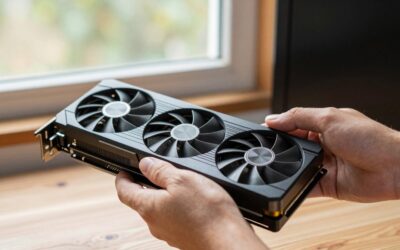
- Top Pick: ASRock Radeon RX 9060 XT Challenger 16GB OC, RDNA 4, 3290MHz Boost, 16GB GDDR6 128-bit, PCIe 5.0, Dual Fans, 0dB Silent, LED Indicator, DisplayPort 2.1a, HDMI 2.1b
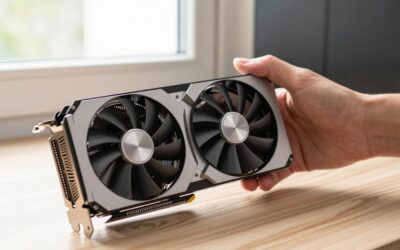
- Best Value: ASUS Dual Radeon RX 9060 XT 16GB GDDR6 Gaming Graphics Card
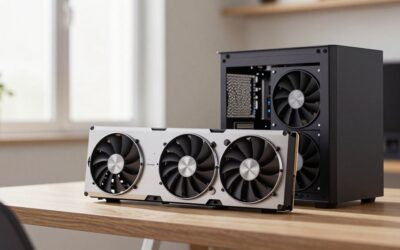
- Premium Choice: GIGABYTE Radeon RX 9060 XT Gaming OC 8G Graphics Card, PCIe 5.0, 8GB GDDR6, GV-R9060XTGAMING OC-8GD Video Card


The 5060 vs 9060 xt matchup pits Nvidia’s features against AMD’s value and VRAM, and in 2026 that memory gap matters more than ever. The RTX 5060 brings faster GDDR7, DLSS 4 Multi Frame Generation, and strong ray tracing, but ships with just 8GB. The RX 9060 XT counters with a 16GB buffer, competitive raster performance, and a lower running cost, for only a little more money. This breakdown shows exactly where each card wins and which one is the smarter buy for your resolution and budget.
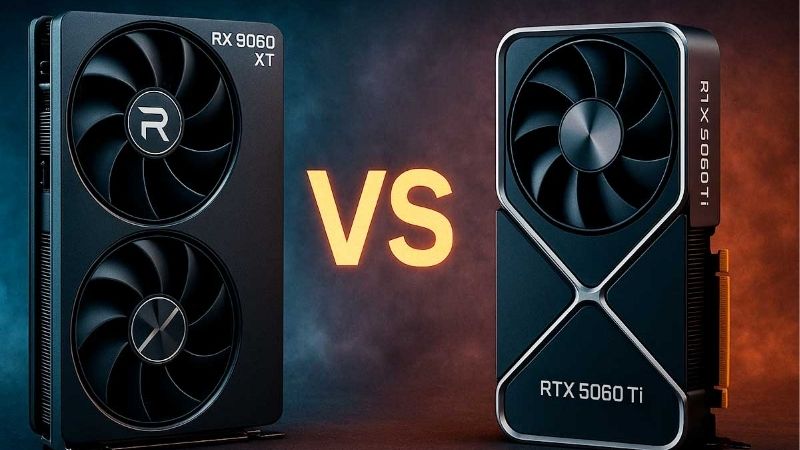
Quick Verdict: RTX 5060 vs RX 9060 XT at a Glance
Here is the short answer. The RX 9060 XT 16GB is the better all-round value, edging ahead in raster and carrying double the VRAM for about $50 more, which makes it the safer pick for 1440p and longevity. The RTX 5060 fights back with DLSS 4, faster memory bandwidth, and often stronger ray tracing, so it earns its place for feature-focused buyers. The table and mini-verdicts below sort it by what you actually play.
As an Amazon Associate we earn from qualifying purchases at no extra cost to you.




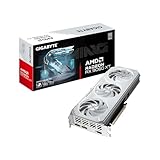


Who Wins the 5060 vs 9060 XT Value Race
On raster performance, AMD noses ahead. At 1080p the RX 9060 XT 16GB runs anywhere from 2% to 17% faster than the RTX 5060, typically around 10%, and that lead tends to widen at 1440p where the 5060’s 8GB buffer starts to limit it in memory-hungry games.
Price frames the decision. The RTX 5060 launched at $299 and the RX 9060 XT 16GB at $349, so you pay roughly $50 more for the AMD card and get both a raster edge and twice the VRAM. In pure value terms, that is a strong argument for Radeon.
The shortest answer: choose the RX 9060 XT 16GB for the best raster value and 1440p headroom, and choose the RTX 5060 if DLSS 4, faster bandwidth, and ray tracing matter more to you than raw frames and memory. Put another way, this is the familiar AMD-versus-Nvidia trade of value and capacity against features and polish, sharpened this generation by a VRAM gap that grows more relevant every year.
The Full 5060 vs 9060 XT Comparison Table
Specs settle arguments faster than prose, so here is the core sheet side by side. Use it to sanity-check any deal before you click through to a store.
| Spec | RTX 5060 | RX 9060 XT 16GB |
|---|---|---|
| Architecture | Blackwell (GB206) | RDNA 4 (Navi 44) |
| Shaders | 3,840 CUDA | 2,048 (32 CUs) |
| Memory | 8GB GDDR7 | 16GB GDDR6 |
| Bus width | 128-bit | 128-bit |
| Upscaling | DLSS 4 + Multi Frame Gen | FSR 4 |
| Board power | ~145W | ~160W |
| Launch MSRP | $299 | $349 |
| Best for | DLSS, ray tracing | Raster value, 1440p |
The line that matters most is memory. The RTX 5060’s faster GDDR7 moves data more quickly, but it cannot manufacture capacity it does not have, and the RX 9060 XT’s 16GB buffer is the more future-proof configuration as game texture demands rise. Bandwidth helps a card use the memory it has more efficiently, but it is no substitute for capacity once a game genuinely needs more than 8GB, at which point the buffer size becomes the hard limit.
Why 2026 Prices and the VRAM Gap Reshape the Decision
Here is the context spec sheets skip: a tight 2026 memory market has pushed GPU prices up rather than down, and component prices across PC parts have trended higher. That backdrop sharpens the VRAM debate, because an 8GB card bought at an inflated price is a riskier long-term investment than a 16GB one at a fair price.
There is cautious good news, but it is weak and in the future. Prices have stopped climbing as steeply as they did in late 2025, and some hardware makers have reported a stretch of relative stability, while still warning that volatility is not over. For a buyer, the free-fall has paused rather than reversed.
Fresh supply is coming but is years away. New memory capacity, including DDR5 from Chinese suppliers and two Micron plants in Idaho, is not expected to run until 2027-2028. The practical takeaway: with prices flat and VRAM demands climbing, the 16GB RX 9060 XT near $349 is a strong buy today, and the RTX 5060 makes sense mainly if you value its features and can find it near its $299 MSRP. The gap between these two is small enough in dollars that an inflated price on either card can flip the value verdict, so checking live pricing on the day you buy is essential rather than optional.
Deep Dive Face-Off: Performance, Features and Efficiency
The raster edge is modest, so the decision leans on ray tracing, upscaling, VRAM, and how each card fits a real build. This section walks those battlegrounds with measured behavior rather than adjectives.
Raw Rasterization and 1080p to 1440p Frame Rates
At 1080p the RX 9060 XT holds a modest lead, typically around 10%, thanks to its high 3.13GHz boost clock and efficient RDNA 4 design. In many games the two are close, but the AMD card is the more consistent performer at maxed settings.
At 1440p the gap widens in AMD’s favor, and the reason is VRAM rather than raw power. The RTX 5060’s 8GB buffer becomes the limiter in texture-heavy games, forcing compromises the 16GB RX 9060 XT simply does not face at this resolution.
The analytical read is that AMD wins raster overall, with the margin growing as resolution and texture settings climb. For a buyer eyeing 1440p or planning to keep the card several years, that trajectory strongly favors the 9060 XT. The pattern is consistent across independent testing: the higher you push resolution and texture quality, the more the 8GB card struggles and the more the 16GB card pulls ahead, which is the opposite of what you want from a purchase meant to last.
Ray Tracing, DLSS 4 and FSR 4 Face-Off
Ray tracing is where Nvidia claws back ground. In many ray-traced titles the RTX 5060 leads, though the result swings wildly by game, and in cases where the 5060 runs short on VRAM the 9060 XT’s larger buffer can flip the outcome entirely.
Upscaling is the RTX 5060’s clearest advantage. DLSS 4 with Multi Frame Generation still leads AMD’s newer FSR 4 on breadth of support and image quality, even though FSR 4 marks a genuine leap for Radeon and closes much of the historical gap.
For creation and AI, the RTX 5060’s faster GDDR7 bandwidth and Tensor acceleration give it an edge in some workloads, while the 9060 XT’s larger buffer helps in memory-bound tasks. The two trade wins depending on the job, so match the card to your specific use. A pure gamer will rarely notice these workload differences, but a buyer who edits video or experiments with AI should weigh them carefully, since the right choice there depends entirely on which tasks dominate their time.
Power, VRAM and Real-World Build Fit
On efficiency the RTX 5060 edges ahead, drawing about 145W against the 9060 XT’s 160W. Both are easy to cool and run comfortably on a quality 450W to 550W power supply, so neither is a demanding install for a mainstream build.
The defining practical difference is VRAM. The 9060 XT’s 16GB buffer keeps textures happy at 1440p and guards against future game demands, while the 5060’s 8GB is adequate at 1080p but increasingly tight beyond it. For longevity, more memory is the safer bet. VRAM shortfalls do not announce themselves gently either; they show up as sudden stutters and texture pop-in that no amount of raw speed can smooth over, which is why capacity is the spec most likely to determine how well a card ages.
Both cards suit compact builds and modern displays, with AV1 and the latest outputs on each. The decision therefore rests less on physical fit and more on whether you prioritize AMD’s VRAM and value or Nvidia’s features and bandwidth. Both are sensible mainstream cards, so there is no wrong answer here in terms of quality, only a choice about which set of strengths matches the way you actually play and for how long you plan to keep the card.
Pros, Cons, Alternatives and Final Buying Advice
With raster leaning AMD and features leaning Nvidia, the recommendation comes down to an honest scorecard and your priorities. This section covers the pros and cons, a stronger alternative if your budget can flex, and a clear verdict.
RTX 5060 vs RX 9060 XT: Pros and Cons Breakdown
The RTX 5060’s strengths are DLSS 4 Multi Frame Generation, faster GDDR7 bandwidth, often stronger ray tracing, and slightly better efficiency. Its cons are the 8GB VRAM ceiling that limits 1440p and a modest raster deficit to the AMD card.
The RX 9060 XT 16GB’s strengths are a raster lead, double the VRAM, strong value, and full FSR 4 support. Its cons are weaker ray tracing in some titles, slower memory bandwidth, and a smaller AI ceiling for creators.
Put plainly: the 9060 XT wins on raster, VRAM, and value, while the 5060 wins on features and bandwidth. The wrong move is buying the 8GB 5060 for 1440p ambitions, or paying an AMD premium if you mainly want DLSS-driven ray tracing. Each card is honestly built for a slightly different buyer, and recognizing which one you are is the whole task, rather than searching for an overall winner that does not really exist at this tier.
A Smart Alternative If Your Budget Can Stretch
If you can add a little more, the RTX 5060 Ti 16GB brings Nvidia’s features together with a 16GB buffer, neutralizing the VRAM concern while keeping DLSS 4 and stronger ray tracing for buyers who prefer the Nvidia ecosystem.
For a bigger jump on either side, the RX 9070 offers a clear step up for 1440p high-refresh and entry 4K, and it is the natural upgrade path from the 9060 XT for higher-resolution ambitions.
Given the 2026 market, buying the card that matches your resolution and VRAM needs at a fair price beats overspending or skimping. Real price relief is years away, so a well-specced card bought now holds its usefulness longer.
Final Verdict: Which GPU Should You Buy
Buy the RX 9060 XT 16GB if you want the best raster value, 1440p headroom, and a future-proof 16GB buffer for a small premium. For most mainstream gamers, it is the smarter long-term purchase.
Buy the RTX 5060 if DLSS 4, faster bandwidth, and ray tracing are your priorities, you game mainly at 1080p, and you can find it near its $299 MSRP. It is the feature-rich pick at the lower price. Just go in clear-eyed about the 8GB ceiling, and treat 1080p as its comfort zone rather than a springboard to higher resolutions it is not equipped to sustain.
Whichever you choose, timing and price matter in this market. Compare live pricing and availability before you commit, and grab the card that offers the best real value in your region. Follow the link to check current prices and lock in the better buy.
See more:
- amd driver auto-detect tool
- nvidia geforce rtx 5080 best buy
- TechPowerUp GPU-Z
- nvidia china
- nvidia etf price
Conclusion
The 5060 vs 9060 xt verdict comes down to VRAM and value versus features: the RX 9060 XT 16GB wins raster and doubles the memory for a small premium, while the RTX 5060 counters with DLSS 4, faster bandwidth, and often better ray tracing. In a 2026 market where prices have merely flattened and VRAM demands keep climbing, the 16GB Radeon is the safer long-term buy for most gamers, with the 5060 reserved for feature-focused 1080p players. Compare current prices through the link above and secure the GPU that fits your build and budget today.
Frequently Asked Questions
Which card wins on raw performance?
They trade blows in rasterised games, with the RX 9060 XT usually a few percent ahead at 1440p and the RTX 5060 competitive at 1080p. NVIDIA pulls clearly ahead once ray tracing is heavy, and AMD pulls ahead in memory-limited scenarios if you compare against the 16GB 9060 XT rather than the 8GB version.
How important is the 8GB versus 16GB memory difference?
Very important for longevity. The RTX 5060 is 8GB only, while the RX 9060 XT offers 8GB and 16GB variants. Modern titles at 1440p with high textures and ray tracing already exceed 8GB, causing stutter rather than a clean frame rate drop. If you plan to keep the card three or more years, the 16GB option is the safer buy.
Which has better upscaling and frame generation?
NVIDIA still leads on breadth. DLSS 4 is implemented in far more games and its multi frame generation can insert up to three frames per rendered frame. FSR 4 on RDNA 4 has closed the image quality gap significantly and AMD added a driver-level override for many FSR 3.1 titles, but the game count is smaller.
What are the power supply requirements for each?
Both are efficient midrange parts. The RTX 5060 is a 145W card on one 8-pin with a 550W recommendation. The RX 9060 XT sits near 150W to 160W, also one 8-pin, with a similar 500W to 550W recommendation. Either will work in most existing systems without a power supply upgrade.
Does driver quality still favour NVIDIA?
The gap has narrowed considerably. AMD Adrenalin is a strong control panel with per-game profiles and built-in recording, and RDNA 4 launch drivers were solid. NVIDIA has broader day-one game validation and better support in professional and CUDA workloads. For pure gaming, driver quality should no longer be the deciding factor between these two.
Ready to decide? Our #1 pick for 2026 is the Architecture.
Live price & availability on Amazon.

Write Your Review
No reviews yet. Be the first to share your experience!