


Editor's Pick
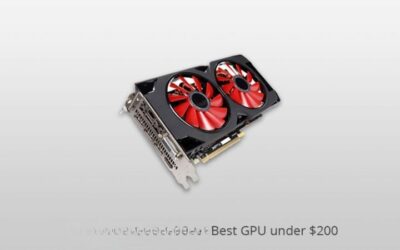
EVGA GeForce GTX 1060 3GB GAMING, ACX 2.0 (Single Fan), 3GB GDDR5, DX12 OSD Support (PXOC) Graphics Cards 03G-P4-6160-KR


The best gpu under 500 is where high-refresh 1440p gaming becomes effortless, giving you the power to crank settings without draining your wallet. At this price you get serious VRAM, strong ray tracing and the latest upscaling tech, making it the most popular tier for enthusiasts who want flagship-style smoothness on a sensible budget. Using current benchmarks, owner feedback and street prices, this guide ranks the standout sub-$500 cards, shows what each delivers at 1440p, and explains how 2026 pricing trends affect the smart buy. Let’s find your ideal 1440p card.
As an Amazon Associate we earn from qualifying purchases at no extra cost to you.



Quick Picks: Best GPU Under 500 at a Glance
If you want the short version, these three cards cover the main paths in this bracket, balancing DLSS features, raw 1440p power and VRAM so you can choose quickly based on what you value most. Each one is a genuinely strong 1440p card, so there is no wrong answer here, only the choice that best fits your particular games and budget.
Best Overall: Nvidia RTX 5060 Ti 16GB ($429) – DLSS 4 plus 16GB VRAM make it the most complete 1440p package.
Best Value: AMD Radeon RX 7800 XT ($479, 16GB) – the strongest raw rasterized performance for the money.
Best Budget: AMD Radeon RX 9060 XT 16GB ($349) – excellent 1440p performance at the lowest price here.
| Card | VRAM | Price | Best For |
|---|---|---|---|
| Nvidia RTX 5060 Ti 16GB | 16GB | $429 | Complete 1440p package |
| AMD RX 7800 XT | 16GB | $479 | Raw rasterization |
| AMD RX 9060 XT 16GB | 16GB | $349 | Budget 1440p |
Best Overall: RTX 5060 Ti 16GB
The 16GB version of the RTX 5060 Ti is the most complete card in this bracket because it marries Nvidia’s DLSS 4 with Multi Frame Generation to a generous memory buffer. That combination removes the VRAM worry while delivering the smoothest motion in its class.
At 1440p it runs modern games at high settings with comfortable frame rates, and ray-traced titles look superb thanks to Nvidia’s strong RT hardware. The AI frame generation makes even heavy games feel fluid.
It gives up a little raw rasterization to the RX 7800 XT, but the feature set and memory headroom make it the best all-rounder for most 1440p gamers spending under $500.
Best Value: RX 7800 XT
The RX 7800 XT offers the strongest raw, rasterized 1440p performance in this price range, often leading in games that do not lean on ray tracing or upscaling. Its 16GB of VRAM ensures it never runs short on memory at this resolution.
For players who prioritize maximum native frame rates over Nvidia’s feature stack, it is the performance-per-dollar leader. It is a brute-force pick in the best sense.
Ray tracing is a step behind Nvidia and FSR is good rather than great, so you are trading features for raw speed. If pure frame rate is your goal, that is a trade worth making.
Best Budget: RX 9060 XT 16GB
At $349, the RX 9060 XT delivers a genuinely capable 1440p experience for the lowest price in this guide, with 16GB of VRAM that keeps textures smooth. It is the entry point to comfortable 1440p gaming.
It maxes high-refresh 1080p easily and holds a solid 60-plus frames per second at 1440p in most titles. For budget-conscious buyers stepping up to 1440p, it is outstanding value.
It is the least powerful card here, so the most demanding games may need a setting or two dialed back at 1440p ultra. For the price, that is an easy compromise to accept.
In-Depth Reviews of the Top 1440p Cards
Choosing among these cards comes down to whether you weight Nvidia’s features, AMD’s raw speed or outright value, so here is a closer look at how each performs where it counts. The gaps between them are modest in raw frame rate but widen noticeably once ray tracing and upscaling features enter the picture.
RTX 5060 Ti 16GB: The Feature Leader
In real-world play, DLSS 4 and Multi Frame Generation let this card deliver buttery-smooth motion that belies its mid-range positioning, and the 16GB buffer means no texture compromises at 1440p. Ray-traced games are a particular highlight.
Owners praise how it handles demanding titles with the upscaling enabled, often hitting high-refresh targets that raw specs alone would not suggest. It is the smoothest, most modern feeling card in the bracket.
RX 7800 XT: The Raw Performer
Benchmarks consistently show the 7800 XT leading in native 1440p rasterization, making it the choice for competitive players who chase the highest native frame rates. Its memory and bandwidth keep it confident at ultra settings.
Where it trails is ray tracing and upscaling quality, so eye-candy enthusiasts may prefer the Nvidia option. For pure performance seekers, it remains a benchmark favorite.
RX 9060 XT 16GB: The Smart Saver
This card proves you do not have to spend close to $500 for a good 1440p experience, delivering strong frame rates and ample VRAM at $349. It frees up budget for a better monitor or CPU.
It is the pragmatic pick for buyers who want 1440p without stretching, and its memory buffer means it will not feel cramped in modern games. Value-focused builders will find little to complain about.
Pros and Cons of a GPU Under 500
This is the enthusiast value tier, but it still involves choosing between competing strengths, so here is a clear-eyed look at the pros and cons that come with a sub-$500 card. Knowing them upfront makes it far easier to pick the option you will still be happy with a few years down the line.
The Strengths That Stand Out
Pros: Effortless high-refresh 1440p, 16GB VRAM across the top picks, strong ray tracing on the Nvidia option, and access to DLSS 4 and FSR. This tier delivers a near-flagship feel for far less money.
It is the sweet spot where you stop compromising at 1440p, which is why it is the most recommended bracket for serious gamers in 2026.
The Trade-Offs to Consider
Cons: You still choose between Nvidia’s features and AMD’s raw speed, and native 4K maxed out remains a stretch for these cards. The most punishing path-traced games will tax them.
None of that affects the core 1440p experience, which all three cards handle with ease. For the resolution they target, the compromises are minor.
Who Should Buy in This Range
This bracket is ideal for 1440p high-refresh gamers and anyone who wants a long-lasting card without paying flagship prices. It is the default pick for enthusiasts on a sensible budget.
If your sights are set on native 4K or maximum path tracing, the next tier up is a better fit. For 1440p excellence, though, this is the range to shop.
How 2026 Pricing Trends Affect the Buy
Deciding whether to buy now hinges partly on the direction of component prices, so it helps to understand the current market forces before committing to a mid-range card.
The Climb Has Paused
Following the steep increases of late 2025, GPU prices in this tier have leveled off through 2026. The encouraging news is that the rapid escalation has stopped, giving buyers a steadier market to plan around.
Hardware makers including Framework have acknowledged this relative stability while warning that the market remains volatile. It is a plateau, not a recovery, and prices could move again with little notice.
New Supply Is Years Away
Genuine new capacity is being built, with CXMT expanding DDR5 output and Micron constructing two new fabrication plants in Idaho. In time, this added supply should ease the memory costs baked into today’s prices.
The problem is timing, since those facilities are not expected to run fully until roughly 2027 to 2028. Real relief is therefore far off, and current pricing reflects a market that has merely stopped getting worse.
What This Means for You Now
With laptop and component prices still trending up in places, waiting is far from a guaranteed saving. The plateau could just as easily edge upward if demand for memory and wafers intensifies.
The sensible move is to buy a strong card when you spot a real deal rather than gambling on a 2027 price drop. Two years of excellent 1440p gaming is worth more than an uncertain future discount.
Buying Guide and FAQs
A few last fundamentals will help you pick the right sub-$500 card and steer clear of the mistakes that commonly trip up 1440p buyers.
What to Look For Under 500
Prioritize 16GB of VRAM for 1440p longevity, then decide whether DLSS 4 ray tracing or raw rasterization matters more to you. Confirm your power supply wattage and case clearance before buying any card here.
If you play visually rich single-player games, the Nvidia feature set adds real value; if you chase native competitive frame rates, AMD’s raw speed leads. Match the card to how you actually play.
It also pays to size your power supply with a little headroom, since these cards draw meaningfully more than budget options and a stable supply keeps performance consistent under load.
Can These Cards Handle 4K?
They can manage 4K in lighter or well-optimized games, especially with upscaling enabled, but native 4K at max settings is not their comfort zone. They are built to excel at 1440p, where they truly shine.
If 4K is your main target, you should step up to the next price tier. For sharp, high-refresh 1440p, these cards are exactly right.
Pairing one of these cards with a 1440p monitor running 144Hz or higher is the configuration that gets the most out of the hardware and feels noticeably smoother in fast-paced games.
See More:
Is Ray Tracing Worth It at This Price?
Yes, particularly on the Nvidia option, where strong RT hardware and DLSS 4 make ray-traced games both beautiful and smooth. It transforms the look of supported single-player titles.
On the AMD cards, ray tracing is usable but more costly to performance, so you may use it more selectively. For RT enthusiasts, the Nvidia pick is the clear choice in this bracket.
In many titles you can also mix settings, enabling ray-traced reflections or shadows while leaving the heaviest effects off, which keeps frame rates high while still improving the visuals.
To sum up, the best gpu under 500 in 2026 is the RTX 5060 Ti 16GB for its blend of DLSS 4, ray tracing and ample VRAM, with the RX 7800 XT for raw 1440p power and the RX 9060 XT for budget value. Prices have plateaued and real relief is years out, so securing a strong card now beats waiting for a crash that the supply timeline says is far away. Check current pricing on these cards through the links above before you buy. As an Amazon Associate we may earn from qualifying purchases.
Frequently Asked Questions
What can a GPU under 500 achieve?
This is the 1440p sweet spot. Cards in this range typically deliver 80-120 FPS at 1440p high in modern titles and easily exceed 144 FPS at 1080p. Light ray tracing is usable with upscaling, though heavy path traced titles will require aggressive DLSS or FSR settings to stay playable.
Which cards should I consider in this bracket?
Depending on current pricing, look at the RTX 5060 Ti 16GB, RTX 5070, Radeon RX 9060 XT 16GB and RX 9070. Also compare discounted previous generation options such as the RX 7800 XT, which frequently offers excellent raster performance per dollar with a generous memory buffer.
Should I prioritise VRAM or raw speed at this price?
Prefer 16GB where the price difference is small. At 1440p, an 8GB card can be forced to reduce texture quality in newer titles even when its raw performance is adequate. A slightly slower card with more memory generally ages better than a faster card that runs out of frame buffer.
What CPU and power supply should I pair with it?
A Ryzen 5 7600, Ryzen 7 7700 or Core i5-14600K class chip avoids bottlenecking these cards at 1440p. Power draw is typically 180-260W, so a good quality 650-750W supply is appropriate, leaving headroom for transient spikes and any future upgrade within the same tier.
Is ray tracing worth using on a card in this class?
Selectively. Ray traced shadows and ambient occlusion cost relatively little and improve image quality noticeably. Full ray traced reflections or path tracing will halve your frame rate, so reserve those for less demanding titles or accept heavy upscaling. NVIDIA cards generally handle ray tracing better than equivalently priced Radeon models.



Write Your Review
No reviews yet. Be the first to share your experience!