


Editor's Pick
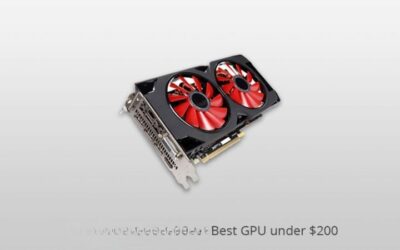
EVGA GeForce GTX 1060 3GB GAMING, ACX 2.0 (Single Fan), 3GB GDDR5, DX12 OSD Support (PXOC) Graphics Cards 03G-P4-6160-KR


The best gpu under 200 is the sweet spot for budget builders who want smooth 1080p gaming without overspending. At this price you are buying carefully, so every dollar of value and every gigabyte of VRAM counts. Drawing on real benchmark patterns, owner feedback and current street prices, this guide ranks the top sub-$200 cards, shows you exactly what to expect at 1080p, and explains how 2026 pricing trends affect what you can buy right now. By the end you will know which card delivers the most frames for your money.
As an Amazon Associate we earn from qualifying purchases at no extra cost to you.





Quick Picks: Best GPU Under 200 at a Glance
If you only have a minute, these three cards cover the most common budget needs, balancing raw 1080p performance, VRAM and price so you can match a card to your build without reading every review below.
Best Overall: AMD Radeon RX 6600 ($189, 8GB) – the most consistent 1080p performer for the money.
Best Budget: Intel Arc A750 ($179, 8GB) – the most raw power per dollar if your CPU supports Resizable BAR.
Best Nvidia Pick: Nvidia RTX 3050 ($179, 8GB) – the only sub-$200 card with mature DLSS support.
| Card | VRAM | Price | Best For |
|---|---|---|---|
| AMD RX 6600 | 8GB | $189 | 1080p value |
| Intel Arc A750 | 8GB | $179 | Raw power per dollar |
| Nvidia RTX 3050 | 8GB | $179 | DLSS and efficiency |
Best Overall: AMD Radeon RX 6600
The RX 6600 remains the default budget recommendation because it delivers reliable 60-plus frames per second at 1080p high settings across the vast majority of modern games. It draws very little power, runs cool and quiet, and slots into almost any system without a beefy power supply.
Its 8GB of VRAM is enough for 1080p textures today, and its efficiency makes it ideal for small or prebuilt systems with weaker power delivery. For most people spending under $200, this is the safe, no-drama choice.
The one caveat is ray tracing, which is weak on this card. If you want eye-candy lighting you will be disappointed, but for pure rasterized frame rate per dollar it is hard to beat at this price.
Best Budget: Intel Arc A750
Intel’s Arc A750 frequently drops to $179 or lower, and at that price it offers the most raw horsepower in the group. When paired with a CPU that supports Resizable BAR, it can outrun the RX 6600 in several titles, especially newer games built on modern APIs.
Intel’s drivers have matured dramatically since launch, fixing most of the early stutter complaints. The card also includes capable hardware-accelerated upscaling through XeSS, which helps in supported games.
The trade-off is that performance still varies more game to game than the AMD or Nvidia options, and Resizable BAR is essentially mandatory. On the right system, though, it is the value champion of the sub-$200 tier.
Best Nvidia Pick: RTX 3050
The RTX 3050 is the only sub-$200 card with Nvidia’s mature DLSS ecosystem, which lets it punch above its raw specification in supported titles by upscaling from a lower internal resolution. That makes a real difference in demanding games where raw frame rate falls short.
It is also extremely efficient and quiet, and it benefits from Nvidia’s broad driver support and NVENC encoder, which is a bonus for anyone who streams or records gameplay.
Raw rasterization is a step behind the RX 6600, so you are partly paying for the software stack. For buyers who value DLSS, streaming and low power draw, it is the pick that ages best.
In-Depth Reviews of the Top Budget Cards
Quick picks are a starting point, but the right budget card depends on your monitor, your power supply and the kind of games you play, so here is a closer look at how each option performs in the real world.
RX 6600: The 1080p Workhorse
In practice the RX 6600 delivers exactly what budget gamers want: a steady, predictable experience. Esports titles run at well over 144 frames per second, and demanding single-player games hold a comfortable 60 at high settings with minor tweaks.
Owners consistently praise its plug-and-play reliability and silent operation. It is the card you recommend to a friend who just wants their games to run without fuss or tuning.
Arc A750: The Performance Surprise
Benchmarks show the A750 trading blows with much pricier cards in well-optimized modern titles, particularly those using DirectX 12 and Vulkan. Its larger memory bandwidth helps it stretch its legs at 1080p ultra.
The experience does demand a modern platform with Resizable BAR enabled to avoid leaving performance on the table. Set up correctly, it offers a genuine taste of mid-range power at a budget price.
RTX 3050: The Feature-Rich Option
Where the RTX 3050 shines is the software. DLSS can transform a borderline 45 frames per second into a smooth 60-plus in supported games, and the card handles light ray tracing better than its AMD rivals at this tier.
It is the most well-rounded option for creators on a budget thanks to NVENC, even if it gives up a little raw gaming performance to the competition. For a do-everything budget build, it is the most flexible choice.
Pros and Cons of Buying a GPU Under 200
Shopping at this price means accepting clear trade-offs, so it helps to go in with eyes open about what a sub-$200 card can and cannot do before you spend your money.
The Strengths That Make It Worthwhile
Pros: Excellent value per frame at 1080p, low power consumption that fits cheap or prebuilt systems, and silent, cool operation. These cards make smooth 1080p gaming accessible to almost any budget.
They also pair well with budget CPUs, so you can build a complete capable gaming PC without a single expensive component, which is the whole appeal of the category.
The Trade-Offs to Accept
Cons: Weak ray tracing across the board, 8GB VRAM that limits future-proofing, and noticeably lower performance at 1440p or above. These are 1080p cards, full stop.
You also miss out on the highest-end upscaling and frame-generation features reserved for newer, pricier silicon. For most buyers at this price, that is an acceptable compromise.
Who Should Buy in This Range
This tier is ideal for 1080p gamers, esports players, first-time builders and anyone reviving an older system on a tight budget. If your monitor is 1080p, these cards are all you need.
If you game at 1440p or care about ray tracing, it is worth saving for a higher tier instead. Buying down to this range only makes sense when 1080p is your target.
The good news is that all three picks here deliver that 1080p experience well, so your choice comes down to whether you favor AMD value, Intel raw power or Nvidia features rather than worrying about basic playability.
How 2026 Pricing Trends Affect Budget GPUs
Budget buyers feel price swings more than anyone, so the current state of the component market matters a great deal when deciding whether to buy now or wait for relief that may or may not arrive.
Why Prices Finally Stopped Climbing
After the steep increases of late 2025, GPU and component pricing has largely leveled off heading into 2026. The relentless climb that frustrated budget builders has paused, which is the first piece of good news in a while.
Industry voices, including Framework, have noted this relative stability, but they are careful to warn that the situation remains volatile and could shift again. In short, prices stopped rising, but nobody is calling it a recovery yet.
New Memory Supply Is Coming, But Not Yet
There is real new capacity on the way. CXMT is ramping up DDR5 memory production and Micron is building two new fabrication plants in Idaho, which should eventually ease the memory shortages that pushed prices up.
The catch is timing: these facilities are not expected to be fully running until roughly 2027 to 2028. That means meaningful price relief is still well over a year away, and today’s prices reflect a market that has only just stopped getting worse.
What It Means for Budget Buyers Right Now
With laptop and component prices still trending upward in places, waiting carries its own risk. There is no guarantee budget cards get cheaper soon, and the leveling-off could just as easily tip back upward if demand spikes.
For most people, the practical move is to buy when you find a genuine deal rather than holding out for a price crash that the supply timeline says is years off. A solid sub-$200 card today will game happily for years regardless of where the market drifts.
Buying Guide and FAQs
Before you check out, a few quick fundamentals will help you avoid the most common budget-GPU mistakes and pick the card that fits your specific system and goals.
What to Look For Under 200
Prioritize a card with at least 8GB of VRAM, confirm your power supply has the right connectors, and check that your case has enough clearance. At this price, value and compatibility matter more than chasing the last few frames.
If you choose Intel Arc, verify your CPU and motherboard support Resizable BAR, since it is essentially required to get full performance. Matching the card to your platform is the single most important step.
Is 8GB of VRAM Enough in 2026?
For 1080p gaming, yes, 8GB is still enough in the vast majority of titles, especially with sensible texture settings. A handful of the most demanding new games may force minor compromises, but nothing that breaks the experience.
If you plan to move to 1440p later, you will want to step up to a 12GB or 16GB card. For staying at 1080p, 8GB remains perfectly serviceable.
See More:
Should I Buy New or Used at This Price?
A new budget card brings a warranty and known history, which matters when you are spending carefully and cannot afford a dead card. The cards here are affordable enough that new is usually the smarter call.
Used can stretch your budget further, but you inherit unknown wear and no protection. Unless you find an exceptional deal from a trusted seller, buying new in this tier is the lower-risk choice.
Ultimately, the best gpu under 200 for most people in 2026 is the AMD RX 6600 for its rock-solid 1080p value, with the Intel Arc A750 for bargain hunters and the RTX 3050 for anyone who wants DLSS and streaming features. Prices have stopped climbing but real relief is still years out, so the smart play is to grab a genuine deal when you see one rather than waiting. Check current pricing on the recommended cards through the links above before you build. As an Amazon Associate we may earn from qualifying purchases.
Frequently Asked Questions
What can I realistically expect from a GPU under 200?
This is entry level 1080p territory. Expect 60 FPS at medium to high settings in modern AAA titles, and well over 144 FPS in esports games like CS2, Valorant, Rocket League and League of Legends. Ray tracing is technically supported on some models but rarely practical at playable frame rates.
Which new cards are available at this price?
New options are limited, typically covering the Intel Arc B570 and lower end Radeon and GeForce models. The Arc B570 stands out for offering 10GB of memory at this price. Availability varies by region, and older cards like the RX 6600 often remain the best value new option.
Should I buy used instead of new at this budget?
Used can offer far more performance per dollar, with cards like the RTX 3060 12GB, RTX 3060 Ti or RX 6700 XT often available in this range. The trade-offs are no warranty, unknown mining or thermal history and no returns. Test the card thoroughly within any return window you have.
How much VRAM do I need at this budget?
Aim for at least 8GB, and prefer 10GB or 12GB where available. Four and six gigabyte cards are severely limited in modern games, forcing low textures even at 1080p. Memory capacity is where budget cards most often fail first, so treat it as a hard requirement rather than a bonus.
What CPU should I pair with a budget GPU?
Match the tier, since an expensive CPU is wasted here. A Ryzen 5 5600, Ryzen 5 7600 or Core i5-12400 is a sensible partner. Also verify PCIe generation, because some budget cards use a narrow x8 or x4 link that loses performance on older PCIe 3.0 motherboards.



Write Your Review
No reviews yet. Be the first to share your experience!