
- Top Pick: Activated Charcoal Odor Absorber for Strong Odors in Car, Closet, Shoe, Basement. 10 Activated Charcoal Bags Odor Absorbers for Home. Bamboo Charcoals Air Purifying Bag Charcoals Deodorizer Eliminator
- Best Value: Activated Charcoal Odor Absorber, 6P Shoe Odor Eliminator for Strong Odor | Nature Bamboo Charcoal Air Purifying Bags for Shoe, Home, Car, Closet, Pet, Sneaker Deodorizer, Smoke Deodorizer Eliminator
- Premium Choice: Activated Charcoal Shoe Odor Elimination Bags. Remove Strong Odors in Car, Closet, Basement. 6 Activated Charcoal Bags Odor Absorbers for Home. Bamboo Charcoals Air Purifying Bag Charcoals Deodorizer
For most rooms, a loose bag of bamboo-charcoal pellets or granules suits small, damp or stale spaces such as a gaming closet, gym bag or shoe cabinet, while a refillable tub of granular activated carbon suits a larger room, a PC den or a basement where the smell is constant. If you are after a way to keep a desk setup, gear bag or spare room from smelling stale, the right pick depends on the size of the space, the source of the smell and how often you are willing to swap or refresh the material.
As an Amazon Associate we earn from qualifying purchases at no extra cost to you.


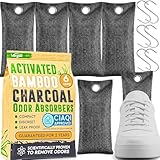

What a charcoal odor absorber actually does
Activated charcoal, also called activated carbon, is carbon that has been processed so it carries a huge network of tiny pores. Odor molecules in the air stick to the surface of those pores, a process called adsorption. Makers of bamboo-charcoal bags describe them as passive absorbers that work best in enclosed or semi-enclosed spaces. They do not remove the source of a smell, so a damp towel, a leaking pipe or a dirty filter will keep producing odor no matter how much carbon sits nearby.
Two points are worth knowing before you shop. First, carbon fills up. Once the pores are saturated the bag stops helping, which is why most makers say to reactivate it in sunlight on a schedule or replace it after a stated period. Second, charcoal is aimed at gases and smells, not at mold spores, dust or allergens, and it is not a substitute for ventilation or moisture control.
Formats you will see
Bamboo charcoal pouches
Small fabric bags filled with bamboo charcoal are the most common format. Brands such as Moso Natural sell these in several sizes, and the maker states that the bags can be refreshed by placing them in direct sunlight for a few hours every month or so. They are light, hang from a hook or sit on a shelf, and suit shoes, drawers, cars and small closets.
Granular carbon in a tub or canister
Larger tubs or open canisters hold loose activated carbon, often coconut-shell based. These offer more surface area per unit and are intended for bigger rooms, boats, basements or storage units. Some are refillable, which cuts waste.
Carbon inside an air purifier or filter
Many room air purifiers, including units from Levoit, Coway and Blueair, include a carbon layer alongside the main particle filter. Makers describe these layers as aimed at household odors and gases. The amount of carbon varies a lot between models, and reviewers often note that thin carbon sheets saturate quickly compared with a deep granular bed.
Charcoal gel or cabinet inserts
Some products pair charcoal with other absorbers for refrigerators, litter boxes or cabinets. Their instructions usually specify a replacement interval, so follow the packaging.
At a glance
| Format | Best for | Typical limit | Budget tier |
|---|---|---|---|
| Bamboo charcoal pouch (for example Moso Natural style bags) | Shoes, gym bags, drawers, cars, small closets | Small coverage area, needs periodic sun refresh | Budget |
| Multi-pack of small pouches | Spreading across several lockers or cabinets | Each pouch handles only a tiny space | Budget |
| Refillable granular carbon canister | Basements, spare rooms, storage, boats | Bulkier, refills needed over time | Mid-range |
| Air purifier with a carbon layer | Whole room, constant smells, shared living spaces | Carbon layer capacity varies by model | Mid-range to premium |
| Dedicated carbon-heavy purifier | Strong smoke, cooking or chemical odors | Higher cost, filter replacement | Premium |
How to choose
Match the format to the space
A pouch placed in a two-door cabinet can make a noticeable difference. The same pouch in a large room is unlikely to. As a loose rule, think of pouches as local helpers and canisters or purifiers as room-level tools. Makers usually state a coverage figure in square feet on the label, and it pays to read it rather than assume.
Look at the carbon itself
Coconut-shell activated carbon is widely used in filters because it is hard and has fine pores, while bamboo charcoal is popular in pouches because it is a renewable source. If a maker lists the weight of carbon in grams, compare that number, since more carbon generally means more capacity.
Consider the refresh or replace cycle
Some bags are rated for around two years with regular sunning, while filters in purifiers have a replacement schedule from the maker. A product that looks cheap but needs frequent swaps may cost more over time than a refillable one.
Think about pets and children
Carbon granules are not meant to be eaten. Keep loose granules and torn bags away from pets and young children, and choose sealed fabric pouches if the area is within reach. If a pet or child swallows charcoal or its packaging, contact a vet or poison control for advice.
Pick this if
| Your situation | Pick | Why |
|---|---|---|
| Sweaty gaming gear, shoes, gym bag | Bamboo charcoal pouches | Small, hangable, easy to refresh in sun |
| Musty closet or storage cabinet | Pouch multi-pack plus airflow | Several points of coverage; address moisture too |
| Basement or spare room with a lingering smell | Refillable granular canister | Larger carbon load |
| Shared room with cooking or pet odor | Purifier with a thick carbon filter | Moves air through the carbon |
| Car interior | Pouch under a seat | Compact and passive |
Common mistakes
- Expecting it to fix a moisture problem. If walls, fabrics or a mini fridge are damp, dry them and find the leak first.
- Using too little for the space. One pouch will not clear a whole room.
- Forgetting to refresh. Once saturated, carbon simply sits there. Follow the maker’s schedule.
- Buying scented products by mistake. Some odor products mask smells with fragrance instead of adsorbing them. Look for plain carbon if you want no scent.
- Placing bags where airflow is blocked. Open air contact matters, so do not bury a pouch under clothes.
Where it fits in a gaming setup
Gamers often deal with a few specific smells: warm dust baking on PC components, stale headset foam, energy drink spills and takeout. A pouch near the headset stand or in a gear bag helps with the last two cases, but dust smell is a cleaning issue. Cleaning intake filters and fans on schedule, wiping surfaces and keeping a window cracked usually matters more than any absorber. If a burning or electrical odor ever comes from the PC or a power strip, power down, unplug and have a technician look at it rather than trying to mask it.
Alternatives
- Baking soda boxes. Common in refrigerators and shoe cabinets, they work on certain acidic odors and are cheap to replace.
- Zeolite or silica-based absorbers. Some makers sell mineral-based absorbers for damp spaces, which are not carbon but can help with moisture and smell.
- A dehumidifier. If dampness drives the smell, removing moisture is more effective than adsorbing odor after the fact.
- An air purifier with a thick carbon bed. A better fit for large rooms than passive bags.
Frequently Asked Questions
How long does a charcoal odor absorber last?
It depends on the product and the smell load. Many bamboo charcoal pouch makers state a lifespan of around two years when the bag is refreshed in direct sunlight regularly, while purifier carbon filters follow the maker’s replacement schedule. Heavy odors fill carbon faster, so a smelly shoe cabinet needs attention sooner than a drawer.
How do I recharge a charcoal bag?
Most pouch makers suggest placing the bag in direct sunlight for a few hours at set intervals. The warmth helps release trapped moisture and some odor molecules. Follow the instructions on your specific product, and do not microwave or wet a bag unless the maker says so.
Does charcoal remove mold?
No. Charcoal adsorbs gases and odors, but it does not kill mold or remove the growth. If you see mold, fix the moisture source and clean the area, and consider professional help for large areas.
Are charcoal odor absorbers safe around pets?
Sealed pouches are generally treated as low risk, but loose granules should not be eaten. Keep them out of reach, and call a vet or poison control line if an animal chews through a bag.
Is a charcoal bag better than an air purifier?
They solve different scales. A bag is a quiet, passive helper for small spaces, while a purifier moves room air through its filters and can cover larger areas. For a whole room, a purifier with a substantial carbon layer is usually the stronger option.
Can I put one inside my PC case?
It is not a good idea. Loose granules or fabric can interfere with airflow or fall onto electronics, and carbon dust can be conductive. Keep absorbers around the room instead and clean the PC itself.







Write Your Review
No reviews yet. Be the first to share your experience!