
- Top Pick: ASUS ROG Astral GeForce RTX 5090 32GB GDDR7 OC Edition Gaming Graphics Card
- Best Value: GIGABYTE AORUS GeForce RTX 5090 Master ICE 32G Graphics Card, WINDFORCE Cooling System, 32GB 512-bit GDDR7, GV-N5090AORUSM ICE-32GD Video Card
- Premium Choice: ASUS ROG Astral LC GeForce RTX 5090 32GB GDDR7 OC Edition Gaming Graphics Card
Top Nvidia Rtx 5090 4090 Upgrade Picks for 2026
Here are our current top nvidia rtx 5090 4090 upgrade picks, compared on real Amazon owner reviews, price, and features. Live prices update below.


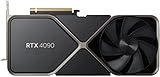
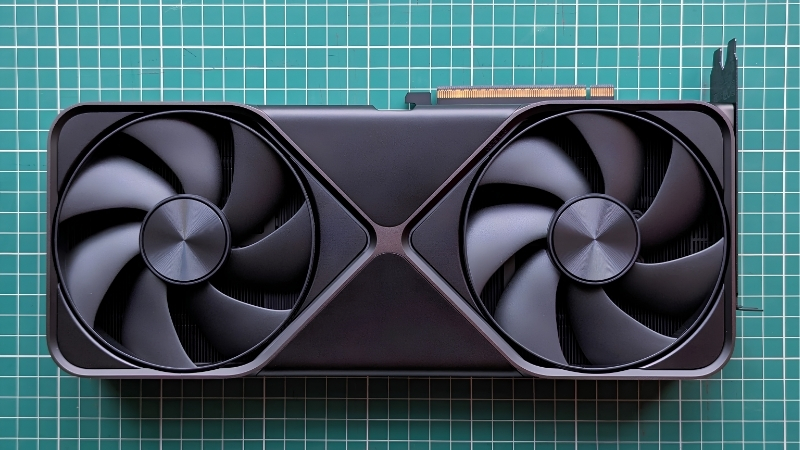
Nvidia RTX 5090 vs 4090 is the flagship question of this generation, pitting Blackwell’s halo card against the Ada champion it replaces. The 5090 brings more cores, 32 GB of GDDR7, and DLSS 4, while the 4090 remains a phenomenally capable card at lower power and price. This 2026 comparison breaks down the specs, the real benchmarks, the power and value picture, and exactly whether the upgrade is worth it before component prices climb further.
As an Amazon Associate we earn from qualifying purchases at no extra cost to you.


Quick Verdict: Nvidia RTX 5090 vs 4090
This is a battle of titans where both cards are elite, so the decision turns on how much extra performance you need and what you are willing to spend and power. Here is the fast answer, the spec sheet, and the honest pros and cons.
Because both cards sit at the very top of the consumer stack, this comparison is less about finding the faster card, which is plainly the 5090, and more about whether that extra speed justifies its cost, power, and size. The sections that follow weigh each factor so you can decide whether the flagship premium is worth paying for your particular use case rather than for bragging rights alone.
The Fast Answer
The RTX 5090 is the faster card, typically 25 to 35 percent ahead of the 4090 at 4K while adding 32 GB of GDDR7 and exclusive DLSS 4 Multi Frame Generation. For the absolute best performance, it is the clear winner.
The RTX 4090 remains outstanding, delivering elite 4K performance at lower power and, increasingly, a lower price. For most flagship buyers it offers the bulk of the experience for meaningfully less money.
For those who want the best regardless of cost, the 5090 is the pick; for value-conscious enthusiasts, the 4090 is still superb. Checking current pricing below is wise given the tightening market.
The short version for skimmers: buy the 5090 if you want the outright fastest card and need 32 GB for AI or creation, and stick with the 4090 if you want elite 4K gaming at lower power and price. Both are superb, so the choice is about how much extra you need rather than whether either is enough.
Specs Comparison
The spec sheet shows a clear generational step up in cores, memory, and bandwidth, balanced by a notable increase in power draw.
| Specification | RTX 5090 | RTX 4090 |
|---|---|---|
| Architecture | Blackwell (GB202) | Ada Lovelace (AD102) |
| CUDA Cores | 21,760 | 16,384 |
| Memory | 32 GB GDDR7 | 24 GB GDDR6X |
| Memory Bus | 512-bit | 384-bit |
| Bandwidth | ~1,792 GB/s | ~1,008 GB/s |
| Board Power (TGP) | 575 W | 450 W |
| DLSS Support | DLSS 4 (Multi Frame Gen) | DLSS 3 (Frame Gen) |
| Launch MSRP | $1,999 | $1,599 |
Pros and Cons of Each Card
The Nvidia RTX 5090 vs 4090 trade-offs come down to peak performance versus efficiency and value, with both cards sitting at the top of the stack.
RTX 5090 — Pros: fastest consumer performance, 32 GB GDDR7, DLSS 4, huge bandwidth, exceptional for AI and creation. Cons: 575 W draw, highest price, very large footprint, steep 2026 increases.
RTX 4090 — Pros: still elite 4K performance, 24 GB VRAM, lower 450 W draw, often cheaper now, mature drivers. Cons: no DLSS 4, slower than the 5090, also exposed to high prices.
The key point is that both are flagship-tier cards, so the question is not whether the 4090 is enough, since it usually is, but whether the 5090’s extra performance and memory justify its cost and power.
It is worth being clear that this is a luxury comparison. Both cards sit far above what current games require at 4K, so neither owner will feel short-changed. The decision is therefore less about necessity and more about headroom, future-proofing, and the specific professional workloads that benefit from the 5090’s larger memory.
Deep Dive Face-Off: Nvidia RTX 5090 vs 4090
Beyond the spec sheet, the difference shows up at the highest resolutions, in the build, and in the feature stack. The face-off compares the cards by these criteria.
Each of these areas matters more at the extreme end of performance, where small differences in power, cooling, and features have outsized effects on the ownership experience. Reading them against your own resolution and workload is the best way to judge whether the 5090’s advantages are ones you would actually use day to day.
Gaming Performance and Benchmarks
At 1440p, both cards are so fast that they are routinely CPU-limited, so the 5090’s advantage often goes unused unless paired with a top-tier processor. At this resolution the two can look nearly identical.
At 4K, the 5090 stretches its legs. In a demanding AAA title the 4090 typically posts 90 to 120 FPS while the 5090 holds 115 to 150 FPS, a 25 to 35 percent lead that grows in bandwidth-heavy and path-traced scenes where the 5090’s memory system shines.
The analytical takeaway is that the 5090’s advantage is a 4K-and-beyond story, most visible at native 4K, in path tracing, and at 8K, exactly the scenarios its buyers target, while the 4090 remains more than enough for high-refresh 4K today.
It helps to frame the gap in upgrade terms. A 4090 owner gains roughly 25 to 35 percent and DLSS 4 by moving to a 5090, a real improvement but rarely a transformative one for gaming alone. The upgrade is easiest to justify for those chasing 8K, heavy path tracing, or AI work rather than mainstream 4K play.
Power, Efficiency, and Real-World Setup
Power is where the 4090 holds an edge. At 450 W it is demanding but manageable on an 850 W supply, while the 5090’s 575 W pushes toward a 1,000 W unit and generates more heat that the case must handle.
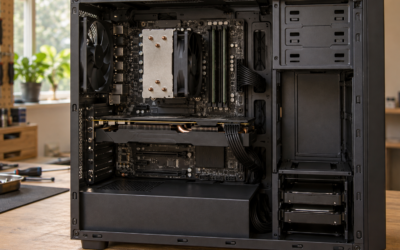
Both use the 12V-2×6 connector and both are physically large, but the 5090’s partner cards are among the biggest GPUs ever made, so case clearance and airflow planning are essential. The 4090 is the easier card to integrate into an existing build.
For real-world setup, the 5090 is a system-level commitment that may require a power supply and cooling upgrade, while a 4090 often slots into a capable high-end build with less disruption.
The power difference also affects long-term running costs and acoustics. The 5090’s 575 W produces more heat and demands stronger cooling, which can mean a louder system under sustained load, while the 4090’s 450 W is easier to keep quiet. For some buyers that practical difference matters as much as the frame-rate gap.
Features and Future-Proofing
This is where Blackwell separates itself. The 5090 supports DLSS 4 with Multi Frame Generation, lifting frame rates well beyond the 4090’s DLSS 3 in supported titles, and its 32 GB buffer outpaces the 4090’s 24 GB.
The experimental angle worth testing is how much DLSS 4 and the larger memory pool benefit future titles and AI workloads, where the 5090 can run larger local models and handle heavier creative projects than the 4090. Both remain excellent for current creation work.
For future-proofing, the 5090’s extra memory, bandwidth, and DLSS 4 give it a longer horizon, though the 4090’s 24 GB and DLSS 3 keep it highly relevant for years to come.
The memory angle is particularly important for non-gaming use. The 5090’s 32 GB opens up larger local AI models and heavier creative projects than the 4090’s 24 GB can hold, so for professionals the buffer alone can justify the upgrade even where the gaming gap would not.
Pricing, Alternatives, and Final Recommendation
The 2026 market context is crucial here, because both flagships carry large memory pools that make them especially exposed to the shortage.
How the 2026 Price Surge and H200 News Change the Math
GPU prices are rising in 2026 as a memory shortage drives up GDDR and DRAM costs. The Blackwell 5090, with 32 GB of GDDR7, faces steeper increases of roughly 15 to 23 percent, while the 4090’s 24 GB keeps its price elevated too as demand for high-VRAM cards stays strong.
The H200 export decision intensifies the pressure. With the U.S. approving capped H200 shipments to China in January 2026, advanced memory is being diverted to AI accelerators, tightening the supply that high-VRAM consumer flagships compete for first.
For this matchup, the implication is that neither card is likely to get cheaper soon, and both may get more expensive. If a 5090 or 4090 is available near its respective MSRP, that is the window to act rather than waiting for relief the market is unlikely to deliver.
The launch prices frame the premium. The 5090 arrived at $1,999 and the 4090 at $1,599, a $400 gap that the 2026 shortage can widen further. Because both cards carry large, in-demand memory pools, neither is likely to discount soon, which makes buying near MSRP when stock appears the most reliable strategy.
The Alternative if Both Are Too Expensive
If both flagships are beyond your budget, the RTX 5080 offers 16 GB of GDDR7 and DLSS 4 at a far lower price, delivering strong 4K performance for those who do not need the absolute top tier.
For buyers who want maximum value, a used RTX 4090 is often the sweet spot, providing elite performance and 24 GB of VRAM at a discount to the 5090 while still handling everything today’s games demand.
A third route suits patient enthusiasts: because 5090 and 4090 prices move independently with supply, watching both and buying whichever lands nearest its MSRP avoids overpaying in a volatile market.
Patient enthusiasts have one more consideration. Because flagship stock is volatile, the better-value card can change week to week, so setting a target price for each and buying whichever reaches it first avoids the trap of overpaying in a thin, fast-moving market.
Final Verdict: Who Should Buy Which
Buy the RTX 5090 if you want the fastest card available, need 32 GB for AI or creation, and can absorb the power and price. It is the no-compromise flagship for those who demand the best.
Buy the RTX 4090 if you want elite 4K performance at lower power and a better price, and are comfortable with DLSS 3. For most flagship buyers it delivers the bulk of the experience for meaningfully less.
To settle a genuinely close call, weigh your workload alongside gaming. If you do serious AI or content creation that benefits from 32 GB, the 5090 pays for itself in capability; if you game at 4K and little else, the 4090 captures nearly all the value for noticeably less money and power.
Once you have weighed the Nvidia RTX 5090 vs 4090 gap against current prices, check the latest availability below before the next adjustment.
Whichever you choose, both cards will handle everything today’s games demand at 4K with ease, so the decision is ultimately about headroom and future-proofing rather than present-day capability. Let your budget, workload, and tolerance for power draw guide the final call between two genuinely elite cards.
See More:
- Graphics cards RTX 4090
- RTX 4070 Ti vs 5080
- 4090 vs 4070 Ti Super
- RTX 3080 Ti vs RTX 5080
- Nvidia RTX 4090 vs 5090
Conclusion
The Nvidia RTX 5090 vs 4090 comparison rewards the newer card on raw capability: the 5090 is 25 to 35 percent faster, adds 32 GB GDDR7 and DLSS 4, and leads in AI and creation, while the 4090 counters with lower power, a better price, and performance that remains elite. With the 2026 memory shortage and the H200 export shift keeping flagship prices high, the smart move is to choose the card that matches your needs and budget, and secure it at today’s price rather than waiting for a discount the market is unlikely to deliver.
Frequently Asked Questions
What is the best nvidia rtx 5090 4090 in 2026?
The best nvidia rtx 5090 4090 depends on your budget and how you plan to use it. The options compared above are our top-rated picks based on real customer ratings, build quality, and overall value — start with the highest-rated model that fits your budget.
How much should I expect to spend on a nvidia rtx 5090 4090?
Prices vary by brand and features. Budget options cover the essentials, while mid-range and premium models add durability, performance, and extra features. Compare the prices in the list above to find the best value for your needs.
What should I look for when buying a nvidia rtx 5090 4090?
Focus on what matters most for your use case — build quality, compatibility, performance, warranty, and verified customer reviews. Every pick above is selected to balance these factors.
Are budget nvidia rtx 5090 4090 options worth it?
Yes. For most people a well-reviewed budget or mid-range nvidia rtx 5090 4090 delivers excellent value. You only need to spend more if you specifically require premium materials or top-tier performance.
How did we choose these nvidia rtx 5090 4090 picks?
We compare current Amazon ratings, review counts, key features, and price to surface the options with the best real-world value. The list is refreshed as ratings and availability change.





Write Your Review
No reviews yet. Be the first to share your experience!