
- Top Pick: NVDIA GeForce RTX 3070 8GB GDDR6 PCI Express 4.0 Graphics Card – Dark Platinum and Black (Renewed)
- Best Value: ZOTAC Gaming GeForce RTX 3070 Twin Edge OC 8GB GDDR6 256-bit 14 Gbps PCIE 4.0 Gaming Graphics Card, IceStorm 2.0 Advanced Cooling, White LED Logo Lighting, ZT-A30700H-10P (Renewed)
- Premium Choice: GIGABYTE AORUS Radeon RX 6800 Master 16G Graphics Card, MAX-Covered Cooling, 16GB 256-bit GDDR6, GV-R68AORUS M-16GD Video Card
For most buyers in 2026 the RX 6800 is the better card: it is roughly 8-15% faster in traditional rendering and, more importantly, its 16 GB of VRAM avoids the stutter and texture problems that now affect the RTX 3070’s 8 GB in demanding games. The RTX 3070 remains the pick for players who value DLSS 4 image quality and stronger ray tracing at 1080p, or who can buy it for noticeably less than an RX 6800.
- The Matchup That Became a VRAM Case Study
- Raster Performance Across Resolutions
- Ray Tracing and Upscaling: NVIDIA’s Side of the Ledger
- Drivers, Software and Platform Notes
- VRAM Planning by Resolution
- Power Supply, Connectors and Case Fit
- Value Math: Launch and Today
- Who Should Buy Which
- Frequently Asked Questions
As an Amazon Associate we earn from qualifying purchases at no extra cost to you.



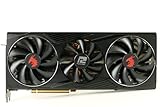
The Matchup That Became a VRAM Case Study
When these cards launched two months apart in late 2020, the decision looked close. The RTX 3070 arrived at $499 with 5888 CUDA cores, 8 GB of GDDR6 and NVIDIA’s ray tracing and DLSS ecosystem. The RX 6800 followed at $579 with 3840 stream processors, 16 GB of GDDR6 and a 128 MB Infinity Cache. TechPowerUp’s launch verdict was that the RTX 3070 was slightly slower but made up for it with better ray tracing performance.
Time changed that balance. As games grew more memory-hungry, the RX 6800’s extra 8 GB went from a spec-sheet bonus to a real advantage, and these two cards became the textbook example of why VRAM capacity matters.
| Specification | RTX 3070 | RX 6800 |
|---|---|---|
| Architecture | Ampere | RDNA 2.0 |
| Release date | 1 September 2020 | 28 October 2020 |
| Launch MSRP | $499 | $579 |
| Shaders | 5888 CUDA cores | 3840 stream processors |
| Boost clock | 1725 MHz | 2105 MHz |
| Process | 8 nm | 7 nm |
| TDP | 220 W | 250 W |
| VRAM | 8 GB GDDR6 | 16 GB GDDR6 |
| Memory bus | 256-bit | 256-bit |
| Bandwidth | 448.0 GB/s | 512.0 GB/s |
| Cache | 4 MB L2 | 4 MB L2 + 128 MB L3 (Infinity Cache) |
| Interface | PCIe 4.0 x16 | PCIe 4.0 x16 |
| Power connectors | 1x 12-pin (Founders Edition) | 2x 8-pin |
| Length (reference) | 242 mm | 267 mm |
| Width | 2-slot | 2-slot |
| Outputs | 1x HDMI, 3x DisplayPort | 1x HDMI, 2x DisplayPort, 1x USB Type-C |
Raster Performance Across Resolutions
Launch reviews consistently put the RX 6800 ahead. TechPowerUp measured it about 8-9% faster than the RTX 3070 on average. Hardware Unboxed/TechSpot’s 18-game launch suite found it about 10% faster at 1080p, 14% faster at 1440p and 15% faster at 4K, and its later follow-up with a larger game list settled at around 11% at 1440p and 10% at 4K. A reasonable range is 8-15% in favor of the RX 6800, varying by game. A few titles, such as World of Tanks in TechSpot’s testing, run notably better on the GeForce card.
As a rough illustration, a game averaging 80 fps on an RTX 3070 at 1440p would typically run around 87-92 fps on an RX 6800, assuming neither card is short on memory. Actual results vary with settings, CPU, patches and drivers.
When memory runs out
Hardware Unboxed/TechSpot’s 2023 revisit comparing these exact cards showed what happens when 8 GB is exceeded. In The Last of Us Part I, the RX 6800 was much faster and delivered dramatically smoother frame times. In The Callisto Protocol with ray tracing, the RX 6800 ran at playable frame rates while the RTX 3070 became effectively unusable because of its memory buffer. In such games, the gap is not 10% but the difference between smooth and stuttering gameplay. Lowering texture quality on the 3070 restores performance but sacrifices visual detail.
Ray Tracing and Upscaling: NVIDIA’s Side of the Ledger
The RTX 3070 has the stronger ray tracing hardware. TechPowerUp placed the RX 6800’s ray tracing performance roughly around RTX 2080 level, which is below the RTX 3070. In games with moderate ray tracing at 1080p, the 3070 typically comes out ahead, though its 8 GB can still become the limit when ray tracing and high textures combine at 1440p.
Upscaling is the 3070’s other major strength. It supports DLSS 4 Super Resolution with the transformer model and Ray Reconstruction, which produce cleaner and more stable images than FSR 2 and FSR 3 on the RX 6800. Neither card supports DLSS Frame Generation, which requires an RTX 40 or RTX 50 card, but both can use FSR 3 frame generation in supported games. AMD brought FSR 4.1 to the RX 7000 series in June 2026 and has announced it for the RX 6000 series in early 2027, which should narrow the image-quality gap once it arrives.
Drivers, Software and Platform Notes
Both cards remain fully supported in 2026. NVIDIA continues to ship Game Ready drivers for the RTX 30 series, and AMD continues regular driver releases for the RX 6000 series. The RTX 3070 benefits from NVIDIA’s broader ecosystem, including the NVENC encoder for streaming, Reflex latency reduction in many competitive shooters and wide CUDA support in creative applications. The RX 6800 offers Radeon Anti-Lag, Radeon Super Resolution for driver-level upscaling and generally excellent open-source driver support on Linux. Neither card has a meaningful platform requirement beyond a PCIe x16 slot; both work in PCIe 3.0 boards with negligible loss when the game fits in VRAM.
VRAM Planning by Resolution
- 1080p high: 8 GB is mostly sufficient, though some new releases need textures reduced. Both cards are viable.
- 1440p high/ultra: many current games want 9-12 GB. The RX 6800 is comfortable; the RTX 3070 often needs texture or ray tracing compromises.
- 4K with upscaling: 12 GB or more is ideal. The RX 6800 holds up far better.
Power Supply, Connectors and Case Fit
Applying the formula GPU TDP + CPU power + about 150 W headroom with a 125 W gaming CPU:
- RTX 3070: 220 + 125 + 150 = 495 W, so a quality 550-650 W unit is comfortable.
- RX 6800: 250 + 125 + 150 = 525 W, so a quality 650 W unit is a safe choice.
The 1x 12-pin connector listed for the RTX 3070 refers to the Founders Edition, which ships with an adapter for two 8-pin cables. Most partner RTX 3070 cards use one 8-pin plus one 6-pin or two 8-pin connectors. The RX 6800 uses two 8-pin connectors. The RTX 3070 reference card is shorter at 242 mm versus 267 mm, which can help in compact cases, though many partner models of both cards are longer. In efficiency terms, TechPowerUp rated the RX 6800 as one of the most efficient designs it had tested at launch, so its higher TDP translates into proportionally higher performance.
Value Math: Launch and Today
With the RTX 3070 indexed at 100 and the RX 6800 at about 111 for 1440p raster:
- RTX 3070: $499 / 100 = about $4.99 per performance point.
- RX 6800: $579 / 111 = about $5.22 per performance point.
At launch, the RTX 3070 had a slight cost-per-frame edge, before accounting for the RX 6800’s double memory. On the 2026 used market, an RTX 3070 usually sells for roughly $200-$270 and an RX 6800 for roughly $250-$330. If the RX 6800 costs around $40-$60 more, its extra memory justifies the premium for 1440p players. If the gap is larger, the 3070 becomes the value pick for 1080p. Both cards were widely mined on, so inspect fans and thermals before buying.
Who Should Buy Which
| Buyer profile | Better pick |
|---|---|
| 1440p gamer who plays new AAA releases | RX 6800 |
| 1080p gamer focused on DLSS and ray tracing | RTX 3070 |
| Wants to keep the card three or more years | RX 6800 |
| Streams with NVENC or uses CUDA apps | RTX 3070 |
| Plays modded games with texture packs | RX 6800 |
| Tight budget, RTX 3070 much cheaper used | RTX 3070 |
| Linux gaming | RX 6800 |
Current cards such as the RTX 5060 Ti 16 GB and Radeon RX 9060 XT 16 GB compete in a similar price bracket with newer features and warranties, so compare them against used prices before deciding.
Frequently Asked Questions
Is the RX 6800 faster than the RTX 3070?
Yes, in traditional rendering. TechPowerUp measured about 8-9% and TechSpot about 10-15% in favor of the RX 6800. In games that exceed 8 GB of VRAM, the advantage can be much larger.
Is 8 GB on the RTX 3070 a real problem?
It increasingly is in demanding new games at 1440p. TechSpot’s revisit showed severe stutter on the 3070 in titles like The Last of Us Part I and The Callisto Protocol with ray tracing, where the RX 6800 ran smoothly. Reducing texture settings usually resolves it at the cost of visual quality.
Which card is better for ray tracing?
The RTX 3070 generally performs better with ray tracing enabled, and DLSS 4 helps it maintain playable frame rates. Its 8 GB of memory can still limit ray tracing at 1440p with high textures.
What power supply do I need for the RX 6800?
A quality 650 W power supply is a safe choice for a typical gaming build. The RX 6800 is rated at 250 W and uses two 8-pin PCIe connectors.
Will the RX 6800 get FSR 4?
AMD has announced FSR 4.1 for the RX 6000 series in early 2027, following its June 2026 release on the RX 7000 series. Until then, the RX 6800 uses FSR 2 and FSR 3 upscaling.
Ready to decide? Our #1 pick for 2026 is the Architecture.
Live price & availability on Amazon.










Write Your Review
No reviews yet. Be the first to share your experience!