
- Top Pick: ASUS TUF Gaming NVIDIA GeForce RTX 3080 V2 OC Edition Graphics Card (PCIe 4.0, 10GB GDDR6X, LHR, HDMI 2.1, DisplayPort 1.4a, Dual Ball Fan Bearings, Military-Grade Certification, GPU Tweak II)
- Best Value: ASUS TUF Gaming NVIDIA GeForce RTX 3080 Graphics Card (PCIe 4.0, 10GB GDDR6X, HDMI 2.1, DisplayPort 1.4a, Dual Ball Fan Bearings, Military-Grade Certification, GPU Tweak II) (Renewed)
- Premium Choice: ASUS TUF Gaming NVIDIA GeForce RTX 3080 OC Edition Graphics Card (PCIe 4.0, 12GB GDDR6X, LHR, HDMI 2.1, DisplayPort 1.4a, Dual Ball Fan Bearings, Military-Grade Certification, GPU Tweak) (Renewed)
The RTX 3080 12GB is the better card, but only slightly. It’s about 3-6% faster on average, and its extra 2 GB only changes the outcome at 4K, with heavy ray tracing, with high-resolution texture packs, and in some modded games. At 1080p and 1440p the original 10 GB RTX 3080 plays essentially the same. Buy the 10 GB version if it’s clearly cheaper and you play at 1440p. Pay a little more for the 12GB model if you game at 4K or plan to keep the card for several more years.
As an Amazon Associate we earn from qualifying purchases at no extra cost to you.


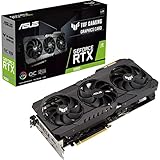
More Than Just Extra Memory
NVIDIA’s January 2022 refresh is usually described as “a 3080 with 12 GB,” but it changed more than that:
- Memory capacity: 10 GB to 12 GB of GDDR6X.
- Memory bus: 320-bit to 384-bit, which raised bandwidth from 760.3 GB/s to 912.4 GB/s, about 20% more.
- L2 cache: 5 MB to 6 MB, because L2 slices are tied to memory controllers on GA102.
- CUDA cores: 8,704 to 8,960, a small 3% increase.
- Power: 320 W to 350 W rated TDP.
Small as they are, these changes add up to a consistent but modest performance gain even in games that don’t need more than 10 GB.
Spec Table
| Specification | RTX 3080 (10 GB) | RTX 3080 12GB |
|---|---|---|
| Architecture / process | Ampere, 8 nm | Ampere, 8 nm |
| Release date | 1 September 2020 | 11 January 2022 |
| Launch MSRP | $699 | $799 |
| CUDA cores | 8,704 | 8,960 |
| Boost clock | 1,710 MHz | 1,710 MHz |
| Memory | 10 GB GDDR6X | 12 GB GDDR6X |
| Bus / bandwidth | 320-bit / 760.3 GB/s | 384-bit / 912.4 GB/s |
| L2 cache | 5 MB | 6 MB |
| TDP | 320 W | 350 W |
| Power connector (spec listing) | 1x 12-pin | 1x 12-pin |
| Length / slots | 285 mm / 2-slot | 285 mm / 2-slot |
| Outputs | 1x HDMI, 3x DisplayPort | 1x HDMI 2.1, 3x DisplayPort 1.4a |
The 12-pin entry describes NVIDIA’s Founders Edition connector. Retail partner cards for both models generally use two or three standard 8-pin connectors. The 12GB model officially launched as partner cards only, and the original 3080 Founders Edition used the 12-pin with an adapter.
Average Performance: A Small, Steady Lead
Reviews of the RTX 3080 12GB, including TechPowerUp’s partner-card reviews, generally placed it about 3-6% ahead of the 10 GB card. The gain is slightly larger at 4K, where the extra bandwidth helps most. At 1080p the two cards are often within 2%, because both run into CPU limits. In everyday terms, a game running at 100 fps on the 10 GB card would run at roughly 103-106 fps on the 12GB card when VRAM isn’t a factor. Exact results vary with game, CPU and settings.
Ray-tracing results follow the same pattern: a single-digit lead in most titles, sometimes more in RT-heavy games where the extra bandwidth matters.
Where the Extra 2 GB Changes the Outcome
Average frame rates hide the real reason to care about the 12GB model. When a game needs more VRAM than the card has, the problem usually isn’t a lower average fps. It’s stutter, poor 1% lows and textures that load late or render blurry. Those are the situations where 12 GB pays off:
4K with high or ultra textures
Many 2024-2026 releases allocate 10-12 GB at 4K with maximum textures. The 10 GB card often stays playable but may stutter when moving through new areas. The 12GB card handles most of these settings without trouble.
Ray tracing and path tracing
Ray tracing adds memory for BVH structures and extra buffers. A game that fits in 10 GB with RT off may exceed it with RT on at 1440p ultrawide or 4K. Here the 12GB card’s lead can grow from about 5% to well into double digits, mostly through steadier 1% lows.
High-resolution texture packs and mods
Optional HD texture downloads and heavily modded games are the clearest cases where 10 GB isn’t enough. Modded open-world RPGs in particular can use VRAM well beyond what the base game needs.
Frame generation overhead
Neither card supports DLSS Frame Generation, but both can use FSR 3 frame generation. Frame generation keeps extra frame buffers in memory, which takes up some of the remaining headroom on a 10 GB card.
Where it doesn’t matter
At 1080p and 1440p with high, rather than maximum, textures, nearly every current game fits within 10 GB. Esports titles, older games and most single-player releases at 1440p show only the small baseline gap described above.
VRAM Planning by Resolution
| Resolution and settings | Typical VRAM use (2025-2026 releases) | 10 GB card | 12 GB card |
|---|---|---|---|
| 1080p high | About 6-8 GB | Comfortable | Comfortable |
| 1440p high | About 8-10 GB | Usually fine | Comfortable |
| 1440p ultra with RT | About 9-12 GB | Borderline in some games | Usually fine |
| 4K high with DLSS | About 10-12 GB | Lower textures one step | Usually fine |
| 4K ultra with RT and HD textures | 12 GB or more | Stutter likely | Borderline |
These are broad planning ranges, not measurements. Usage varies greatly from game to game, and some engines simply allocate whatever memory is available.
Upscaling and Features
Both cards are Ampere with identical feature sets: DLSS Super Resolution with the transformer model, DLSS Ray Reconstruction, Reflex and the same NVENC encoder. DLSS is especially useful on the 10 GB card, because rendering at a lower internal resolution also reduces VRAM use. DLSS Quality at 4K often brings memory use back within 10 GB in games that would otherwise go over.
Power, PSU and Size
The 12GB card’s extra 30 W hardly affects PSU choice:
- RTX 3080: 320 W + 125 W CPU + 150 W headroom = 595 W, so a quality 750 W unit.
- RTX 3080 12GB: 350 W + 125 W + 150 W = 625 W, so a quality 750 W unit, or 850 W with a high-power CPU.
Both reference specifications list 285 mm and two slots, and partner cards for both are often 300-330 mm long and 2.5-3 slots thick. A case that fits one will almost always fit the other model from the same manufacturer.
Value Comparison
At launch MSRP, the 12GB card cost $100 more (14%) for about 5% more average performance. On a launch-price basis, the 10 GB card was better value per frame: $6.99 per index point versus about $7.61 for the 12GB at 100 vs 105. The VRAM insurance was the real reason to pay the premium.
On today’s used market the premium is smaller. A used RTX 3080 10 GB usually sells for about $280-$350, and a used 3080 12GB for about $320-$400. A gap of $30-$60 for steadier 4K performance and longer usefulness is reasonable for most buyers who game at high resolutions.
Used-Market Notes for Both Versions
Both RTX 3080 variants were popular with cryptocurrency miners in 2021-2022, so many used cards have run around the clock for long periods. That alone doesn’t mean a card is failing, but GDDR6X memory runs hot, and worn thermal pads are common on these boards. Ask the seller for a monitoring screenshot showing memory junction temperature under load, and look for stable clocks without artifacts in a stress test. Fans that rattle or spin unevenly are a bargaining point. Cards from brands with transferable warranties and an original receipt are worth a small premium, because these are now four- to six-year-old products.
Which One to Buy
| Your situation | Pick |
|---|---|
| 1080p or 1440p, standard textures | RTX 3080 10 GB if it’s cheaper |
| 1440p ultrawide or 1440p with heavy RT | RTX 3080 12GB |
| 4K gaming | RTX 3080 12GB |
| Heavily modded games or HD texture packs | RTX 3080 12GB |
| Prices within about $30 | RTX 3080 12GB |
| Need 16 GB or more and frame generation | Neither. Look at RTX 5070 Ti or RX 9070-class cards. |
Frequently Asked Questions
Is the RTX 3080 12GB worth it over the 10 GB version?
For 4K, heavy ray tracing or modded games, yes, especially when the used price gap is small. For 1080p and standard 1440p gaming the difference is only about 3-6% and rarely noticeable. Buy whichever is cheaper in that case.
How can I tell which RTX 3080 version a used listing is?
Ask for a screenshot of GPU-Z or the system’s display adapter details showing the memory size, 10240 MB or 12288 MB. The box label and model number also identify the version. Many sellers simply write “RTX 3080” without saying which one.
Does the 3080 12GB use more power?
Its rated TDP is 350 W versus 320 W, so it uses about 30 W more under load. Both are comfortable on a quality 750 W power supply with a typical gaming CPU.
Is 10 GB still enough in 2026?
For 1440p it’s usually enough with high textures. At 4K or with maximum textures and ray tracing, more games now go past 10 GB, which causes stutter. DLSS and one notch lower texture quality usually fix it.
Do both versions support the same DLSS features?
Yes. Both support DLSS Super Resolution with the transformer model and Ray Reconstruction. Neither supports DLSS Frame Generation, which requires RTX 40 or RTX 50 cards.
Ready to decide? Our #1 pick for 2026 is the Architecture / process.
Live price & availability on Amazon.









Write Your Review
No reviews yet. Be the first to share your experience!