
- Top Pick: GIGABYTE GeForce RTX 5070 Ti Gaming OC 16G Graphics Card, 16GB 256-bit GDDR7, PCIe 5.0, WINDFORCE Cooling System, GV-N507TGAMING OC-16GD Video Card
- Best Value: ZOTAC Gaming GeForce RTX 5070 Ti Solid SFF OC DLSS 4 16GB GDDR7 256-bit 28 Gbps PCIE 5.0 Gaming Graphics Card, IceStorm 2.0 Advanced Cooling, ZT-B50710J3-10A
- Premium Choice: BAKLUCK msi Gaming RTX 5070 TI 16G Shadow 3X OC Graphics Card (16GB GDDR7, 256-bit, Extreme Performance: 2497 MHz, DisplayPort x3 2.1a, HDMI 2.1b, NVIDIA Blackwell Architecture)
Top Rtx 5070 4080 New 749 Picks for 2026
Here are our current top rtx 5070 4080 new 749 picks, compared on real Amazon owner reviews, price, and features. Live prices update below.
- Top Rtx 5070 4080 New 749 Picks for 2026
- RTX 5070 Ti vs 4080: Quick Verdict and Specifications
- Deep Dive Face-Off: Where Five Percent Hides and Where It Doesn’t
- The 2026 Market: Why the Price Collision Won’t Last
- Final Verdict: Who Should Buy Which Card?
- Conclusion
- Related Guides
- Frequently Asked Questions
- Related Articles


Prime
Editor's Pick
msi Gaming RTX 5070 Ti 16G Ventus 3X OC Black Graphics Card (16GB GDDR7, 256-bit, Extreme Performance: 2482 MHz, DisplayPort x 3 2.1a, HDMI 2.1b, NVIDIA Blackwell Architecture)


RTX 5070 Ti vs 4080 is 2026’s most direct money question, because the market priced these two cards into a collision: the new 5070 Ti lists at $749, and used RTX 4080s — a $1,199 near-flagship at launch — now trade at $700 to $750. Same money, two philosophies: fresh Blackwell silicon with GDDR7 and DLSS 4, or a bigger Ada die with a flagship pedigree and no warranty. Their raster performance lands close enough that the decision turns entirely on the surrounding details, and those details have a clear winner. This comparison lays out the benchmarks, the feature gaps, the risk math, and the exact prices at which each card makes sense.
As an Amazon Associate we earn from qualifying purchases at no extra cost to you. Product prices and availability are accurate as of the date shown and are subject to change.


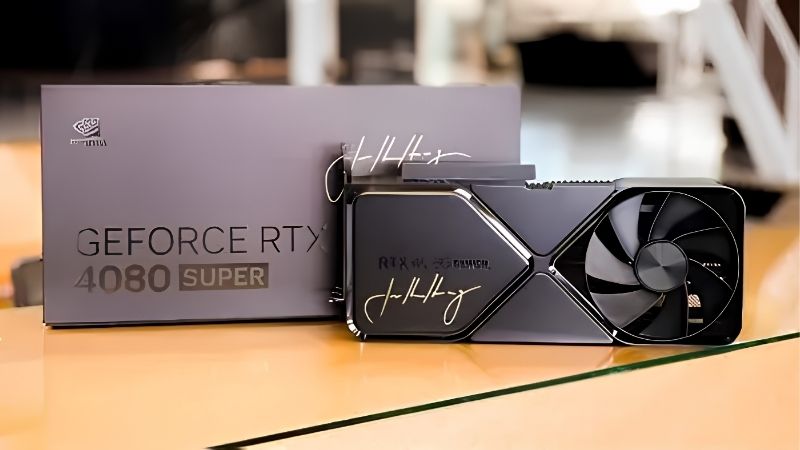
RTX 5070 Ti vs 4080: Quick Verdict and Specifications
A new upper-midrange card catching a previous-generation flagship at the same price is how GPU generations are supposed to work — and this pairing executes it almost perfectly. The answer first, then the numbers that produce it.
The Quick Verdict for Busy Buyers
The RTX 5070 Ti wins at equal money. The two cards trade raster benchmarks within roughly 5 percent of each other — the 4080 edges some older titles, the 5070 Ti pulls ahead in newer, bandwidth-sensitive ones — but at matching prices, the new card’s warranty, DLSS 4 Multi Frame Generation, lower 300W draw, and clean history settle it without drama.
The used 4080’s case requires a discount the market rarely grants anymore: below $650 with a return window, its flagship build quality and equal 16GB make it a legitimate buy. At $700-plus, it is the wrong answer to a solved question. Check the 5070 Ti’s live Amazon price first — at $749, this comparison is shorter than its word count.
Specification Comparison Table
The sheet shows a familiar generational pattern: fewer cores, faster memory, lower power — and a tie on the line that matters most for longevity.
| Specification | RTX 4080 | RTX 5070 Ti |
|---|---|---|
| Architecture | Ada Lovelace (2022) | Blackwell (2025) |
| CUDA Cores | 9,728 | 8,960 |
| VRAM | 16GB GDDR6X | 16GB GDDR7 |
| Memory Bandwidth | 717 GB/s | 896 GB/s |
| Board Power | 320W | 300W |
| DLSS Support | DLSS 3 (Frame Generation) | DLSS 4 (Multi Frame Generation) |
| Price in 2026 | ~$700-750 used | $749 new |
Eight percent fewer cores against 25 percent more bandwidth is the whole architectural story — and the matching 16GB capacity removes VRAM from the debate entirely, a rarity in cross-generation matchups.
Pros and Cons of Each Card
Equal money demands equally honest columns, and the used flagship’s remaining strengths deserve their listing.
RTX 4080 pros: raster parity with the newer card, occasionally better in older engines; famously overbuilt coolers run cold and silent; 16GB matches the new option; flagship-grade boards and power delivery; price flexibility on the used market. Cons: capped at single-frame DLSS 3 forever; no warranty and an unknowable history; 320W with Ada-era transients; its fair-price window keeps shrinking against the new card’s MSRP.
RTX 5070 Ti pros: DLSS 4 Multi Frame Generation and the full Blackwell runway; 896 GB/s of GDDR7 that wins the newest titles; 300W on a 750W supply; warranty, resale value, and zero used-market risk at $749. Cons: street prices drift above MSRP when supply tightens; partner coolers are merely good rather than the 4080’s absurd; loses a handful of legacy benchmarks by low single digits.
Deep Dive Face-Off: Where Five Percent Hides and Where It Doesn’t
Near-parity headlines conceal real texture: resolutions where the cards swap leads, workloads where one runs away, and ownership costs that never appear on a chart. Four sections cover the full picture.
1440p and 4K Gaming Performance
At 1440p both cards are overqualified — 140 to 190 fps in demanding AAA titles at high settings — and the differences disappear into CPU limits on anything short of a top-tier processor. High-refresh 1440p buyers can score this section a draw and move on. The exception is 240Hz-plus ambition, where Multi Frame Generation hands the new card the only meaningful lead this resolution produces.
At 4K the architecture shows: the 4080 holds 75 to 100 fps with its larger die doing honest work, while the 5070 Ti lands in the same band but with flatter frame times in bandwidth-heavy scenes, where GDDR7’s 25 percent advantage stops the brief spikes the older card shows in texture-streaming open worlds. Averages tie; one-percent lows lean new.
Path-traced titles break the tie loudly: Multi Frame Generation lets the 5070 Ti present frame rates the 4080’s single-frame DLSS 3 cannot approach, turning showcase games from managed to effortless — the single largest experiential gap between these cards.
Power, Thermals, and the Used-Risk Ledger
System demands are nearly identical — 300W against 320W, both on the 16-pin connector family, both happiest on a quality 750W ATX 3.0 supply with careful cable routing. Thermals favor the 4080’s comically oversized coolers in absolute terms, though no current 5070 Ti design runs loud. Size slightly favors the newer card too: typical 5070 Ti models run shorter and thinner than the 4080’s era-defining bricks, widening case compatibility for compact builds.
The real divergence is risk accounting. A used 4080 arrives with three-plus years of unknown duty — gaming, rendering, or round-the-clock AI work — no warranty, and a connector that deserves photographic inspection before purchase. The new card arrives with none of that. At equal prices, the risk column is not a tiebreaker; it is the verdict’s foundation. Sellers know it too, which is why honest 4080 listings increasingly advertise stress-test screenshots up front.
Used buyers proceeding anyway should demand returns, stress test in week one, and watch memory temperatures — the standard Ada checklist, applied without exceptions.
DLSS 4, Software Runway, and Creative Work
Both cards receive Nvidia’s transformer-based upscaler by driver, so image quality in plain DLSS Super Resolution matches. The fork is generational: the 5070 Ti adds Multi Frame Generation, Reflex 2, and Blackwell’s newer media engines with measurably better AV1 quality per bitrate — and it sits where Nvidia’s optimization effort will live for years.
For creators and AI dabblers, the equal 16GB buffers fit the same models and timelines, but fifth-generation Tensor Cores with FP4 support give the newer card a clear throughput lead in local generation workloads. Nothing here rescues the 4080’s case at parity pricing; everything extends the 5070 Ti’s. Streamers in particular gain a visible bitrate-quality step from the newer encoders at no performance cost while gaming.
Value per Frame: The Cost Math
At equal prices the per-frame math degenerates into a formality — call it $749 against $720 for statistically matching performance — so the real arithmetic is risk-adjusted lifespan. The new card carries a multi-year warranty, a fresh thermal interface, and a resale story beginning at zero hours; the used flagship carries an unknown odometer and a feature ceiling one tier lower.
Amortized per comfortable year, the 5070 Ti wins at any used-4080 price above $650. Below that line, the discount finally buys enough to argue: $600 for a clean, returnable 4080 is roughly a 20 percent saving for accepting DLSS 3 and used risk — a defensible trade for raster-focused buyers.
The market section explains why listings below $650 keep getting rarer, which is the same as explaining why this comparison’s verdict keeps getting simpler.
The 2026 Market: Why the Price Collision Won’t Last
These two cards meeting at $750 is a moment, not an equilibrium — and two current industry forces are actively pulling the pairing apart. Their direction decides how long the used card’s window stays open at all.
The H200 China Approval Tightens the New Side
The United States has approved Nvidia selling the H200 — among its most powerful AI accelerators — to China, releasing data-center demand that competes with GeForce production for memory, packaging, and wafer priority. High-demand cards like the 5070 Ti feel it as shrinking MSRP windows and creeping third-party premiums — the early signs are already visible on retailer pages during tight weeks.
The actionable read: $749 listings are events. Buyers who have settled on the new card should hold an alert and act inside the window rather than assuming it.
Rising Component Prices Hold the Used Side Up
Simultaneously, laptop and PC component prices are climbing industry-wide, led by memory costs — and the same pressure has frozen used-GPU depreciation. The 4080’s stubborn $700-plus band, which by normal cycles should have eroded toward $600 by now, is this force at work; listings have traded flat for consecutive quarters.
That firmness is precisely what ruins the used card’s case: a discount that refuses to grow against a new alternative at MSRP is a discount in name only. Unless supply normalizes, time narrows the 4080’s lane further.
Buy Now or Wait?
Buyers wanting the 5070 Ti should buy at the next $749-to-$779 window — the trend threatens that price, not promises it. Used-4080 hunters should set a hard $650 ceiling and accept that the market may simply never serve it.
Either way, decide before shopping: in this pairing, hesitation converts directly into paying the premium or accepting the risk you meant to avoid.
Final Verdict: Who Should Buy Which Card?
The recommendation is unusually lopsided for a benchmark tie, with one narrow lane left for the old flagship and one alternative above both.
Who Should Buy the RTX 4080
Buy a used 4080 only below $650, only with a return window, and only if your library is raster-and-hybrid-RT focused where its parity holds fully. Inside that lane, flagship build quality at a steep discount remains a real pleasure.
Run the full used checklist on arrival — stress test, outputs, memory temperatures, connector inspection — and treat any seller resisting returns as the answer to a question you didn’t ask.
Who Should Buy the RTX 5070 Ti
Everyone else: at $749 the new card delivers matching performance, a superior feature tier, lower power, and a warranty — the complete package this price point has ever offered. It is this comparison’s recommendation for the large majority of readers.
Watch Amazon for MSRP stock and execute inside the window; this card’s listings reward the prepared.
The Alternative: RTX 5080
If you are spending $750 and hesitating, the honest upsell is the RTX 5080 at $999: roughly 15 to 20 percent more performance, 960 GB/s of bandwidth, and headroom that converts a 1440p build into a legitimate 4K one.
For buyers planning a monitor upgrade within the card’s lifespan, the $250 stretch frequently beats both options here — price all three on Amazon before deciding.
See More:
- Nvidia Reflex low latency
- RTX 4070 vs 5060 Ti
- Zephyr RTX 4070
- RTX 3080 Ti price
- Nvidia RTX 2060 Super
Conclusion
The RTX 5070 Ti vs 4080 collision resolves cleanly: at the near-equal prices 2026 has produced, the new card’s DLSS 4, warranty, GDDR7 bandwidth, and clean history beat the used flagship’s matching raster and superior coolers — leaving the 4080 a narrow lane below $650 that the market rarely opens anymore. The benchmark tie makes the decision; everything around the benchmarks settles it. With the H200 export approval squeezing new supply and rising component prices freezing used depreciation, the window for either card at today’s numbers is finite. Pick your side of the RTX 5070 Ti vs 4080 question, check both live prices on Amazon, and buy while your number still appears.
Frequently Asked Questions
What is the best rtx 5070 ti 4080 in 2026?
The best rtx 5070 ti 4080 depends on your budget and how you plan to use it. The options compared above are our top-rated picks based on real customer ratings, build quality, and overall value — start with the highest-rated model that fits your budget.
How much should I expect to spend on a rtx 5070 ti 4080?
Prices vary by brand and features. Budget options cover the essentials, while mid-range and premium models add durability, performance, and extra features. Compare the prices in the list above to find the best value for your needs.
What should I look for when buying a rtx 5070 ti 4080?
Focus on what matters most for your use case — build quality, compatibility, performance, warranty, and verified customer reviews. Every pick above is selected to balance these factors.
Are budget rtx 5070 ti 4080 options worth it?
Yes. For most people a well-reviewed budget or mid-range rtx 5070 ti 4080 delivers excellent value. You only need to spend more if you specifically require premium materials or top-tier performance.
How did we choose these rtx 5070 ti 4080 picks?
We compare current Amazon ratings, review counts, key features, and price to surface the options with the best real-world value. The list is refreshed as ratings and availability change.










Write Your Review
No reviews yet. Be the first to share your experience!